Solo Leveling: ARISE OVERDRIVE, an Ambitious Adaptation That Fails to Make the Leap - The Review
A visually powerful action RPG, but held back by technical limitations, repetitiveness, and an overly cumbersome mobile legacy.



Solo Leveling is one of those works that functions because it speaks to a universal desire: to witness the transformation of fragility into strength. It's the same alchemy that made sagas like Dragon Ball immortal, where every narrative arc coincides with a new overcoming of limits, or like Naruto, which built an entire poetic around growth through pain and determination. In the webtoon, Sung Jinwoo embodies this archetype with almost surgical precision: a boy who starts at an absolute disadvantage, too weak even by the standards of his world, but who, thanks to a power as mysterious as it is ruthless, undergoes a metamorphosis that no other hunter can match.
This progression — made of tension, revelations, sacrifices, and moments of uncertainty — is what has captivated millions of readers. The anime amplified this effect, succeeding in the non-trivial feat of bringing the webtoon's panels to life without betraying their scope, offering direction that transforms the protagonist's simple “level up” into a rite of passage capable of imprinting itself on memory.
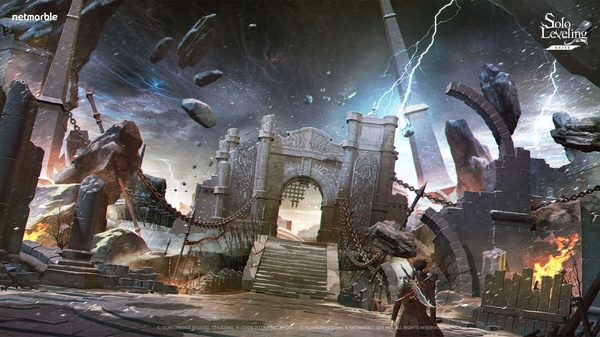
With Solo Leveling: ARISE OVERDRIVE, Netmarble Neo promised to translate this experience into a cooperative action RPG. A premium title, free of gacha, designed to give players the primal thrill of “getting stronger,” leveraging the physicality of a modern combat system, the immediacy of visual feedback, and the freedom of progression built on choices and builds. On paper, ARISE OVERDRIVE represented the perfect opportunity to bring together the imagination of the paper medium with the language of video games, or anime, as already happened with other successful adaptations, from Castlevania to Cyberpunk: Edgerunners, capable of creating a credible bridge between different mediums.
Despite official statements, it's hard to ignore how much ARISE OVERDRIVE inherits from the mobile game Solo Leveling: Arise not only its structure but also much of its conceptual limitations. The menus, mission management, fragmentation into instances, and even the hub's construction constantly refer to a “cleaned-up” free-to-play setup, rather than a project born for PC and consoles. The gameplay loop, instead of expanding the world, tends to compress the experience into short functional sections, designed more for repeatability than for variety.
The result is a clear contrast. On one hand, there's the ambition to make us experience Jinwoo's ascent as if we were inside the original panels, with visual moments that faithfully reproduce key sequences from the webtoon and anime. On the other hand, there's the feeling that this climb is continuously filtered by mechanics designed to dilute the experience instead of enhancing it, as if the game never truly manages to sustain its initial promise.
Solo Leveling Matures but Bites Off More Than It Can Chew
Solo Leveling matura ma fa il passo più lungo della gamba
The plot of Solo Leveling: ARISE OVERDRIVE retraces the initial and intermediate events of the original work, focusing on Sung Jinwoo's ascent from his first E-Rank missions to the phases following his awakening as a “player.” The game does not cover the entire webtoon story, preferring to stop before the central turning points and selecting episodes that lend themselves more to the mission structure and typical repeatability of a cooperative action RPG.
The most well-known elements are present: the trap dungeon, the sacrifice of companions, the awakening of the System, the first assignments at the Hunters Association, and a portion of subsequent field operations. However, the representation of these moments is heavily condensed. Sequences that receive more extensive treatment in the webtoon or anime are transformed into brief connecting cutscenes, designed to introduce gameplay rather than develop characters and relationships.
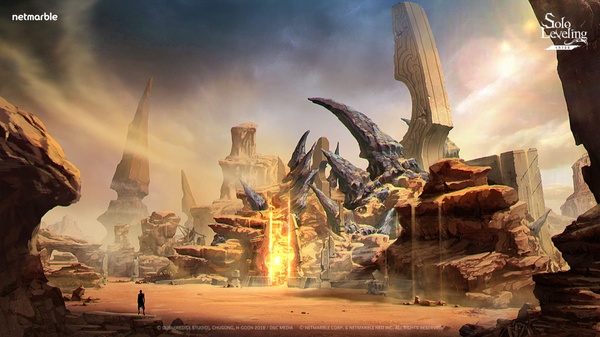
This choice leads to a narrative that proceeds in autonomous blocks: each mission introduces a minimal context, stages the action, and concludes with a quick update on the protagonist's progression. The emotional continuity, a cornerstone of the original work, is attenuated; fundamental passages lose some of their impact because they are inserted into a flow broken by loading screens, lobbies, and repeated instances. The result is a story recognizable in its main points, but lacking the gradual growth rhythm that characterized Jinwoo in other adaptations.
The limitation becomes even more evident when compared to video game adaptations that have effectively integrated their sources. Titles like Naruto: Ultimate Ninja Storm or Dragon Ball Z: Kakarot show how it's possible to respect the original narrative structure by using well-crafted cutscenes and gameplay segments designed to enhance emotional moments. ARISE OVERDRIVE, on the other hand, tends to reduce every event to a narrative function, prioritizing the transition between battles rather than the construction of a coherent dramatic arc.
The overall result is a plot that informs but rarely engages. The narrative turning points are present and immediately recognizable, but they are filtered by a mission structure that favors repetition over depth. What remains is an abbreviated version of the story: useful for orienting the player, but distant from the complexity and cohesion that the franchise expresses in its original forms.
The Level Up Is There, But in the Long Run It Feels Empty and Inconclusive
Il level up c'è, ma sulla lunga risulta vuoto e inconcludente
The heart of ARISE OVERDRIVE is its combat system, and it's here that the game tries more than any other component to assert its identity as a “PC and console” action RPG. The initial impact is effective: entering battle combines particle effects and dynamic animations designed to evoke the same hyperkinetic energy of the webtoon. It's an immediate approach that enhances the protagonist and gives the player the feeling of a more physical and reactive combat compared to the mobile title.
However, this impact quickly fades. After a few sessions, the roots of the game structure become clear: short instances, linear level design, systematic enemy recycling, standardized corridors, and bosses re-proposed with minimal variations. It's not a matter of difficulty, but of identity. ARISE OVERDRIVE re-proposes a typical free-to-play rhythm, with very rapid cycles — enter, eliminate, exit — that are closer to the logic of a mobile title than to that of an action RPG built for broad and variable sessions.
The weapon and ability system, while richer than the mobile version, fails to fully express its potential. Jinwoo can combine styles, chain skills, and switch weapons fluidly, but the actual flow tends to crystallize into a recurring pattern: use available abilities, switch weapons, unleash the second set, and repeat. It's a functional structure, sometimes satisfying, but rarely surprising, far from the expressive freedom of a Devil May Cry or the tactical complexity of a Xenoblade Chronicles.
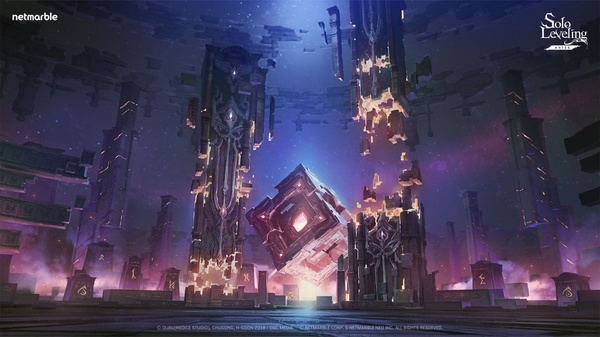
Statuses introduce an additional layer of variety, but often remain limited to the scenic aspect. Their impact on player choices or enemy reactions is reduced, and the system ends up expanding the range of visual impact more than that of strategic possibilities. The result is a perceived variety rather than a substantial one.
Co-op, which should represent one of the foundational components of the experience, fails to guarantee the necessary continuity. In addition to matchmaking problems, frequent desynchronizations occur during combat, with enemies appearing in different positions for various players, abilities not activating simultaneously, and delays in hit registration. The general stability of cooperative sessions is also intermittent, with performance drops and forced returns to the lobby. This is a significant limitation, as it prevents co-op from becoming the added value that should expand the gameplay dimension, instead accentuating the repetitiveness of instances.
Finally, the direction of the encounters shows evident fluctuations. The camera struggles to maintain readability in larger arenas, introduces unwanted rotations, and tends to favor aesthetic choices that sacrifice clarity. This is a limitation already present in the mobile title, made more evident here by the increased scale of encounters and the high density of effects. The result is an action management that recalls some anime sequences where the pursuit of visual impact prevails over the understanding of movement.
The overall impression is that of a combat system that has the necessary elements for organic growth, but which is compressed into a structure that is too rigid and repetitive. Co-op, instead of expanding the experience, further exposes its limitations, while the staging — even with valid ideas — struggles to sustain the rhythm imposed by the mission structure.
Solo Leveling Looks Good but Doesn't Dance
Solo Leveling è bello da vedere ma non balla
Every video game carries the imprint of its production, and ARISE OVERDRIVE highlights a clear structural tension from the very first minutes: the distance between what it wants to be and what its infrastructure allows it to become. Netmarble Neo's stated goal was to emancipate the Solo Leveling universe from the gacha model, giving it new dignity through a premium title. However, this attempt at rebalancing clashes with technical limitations, architectural choices, and conceptual legacies that continue to tie it to its mobile past, preventing it from acquiring a true autonomous identity.
The first indicator of this continuity is the resource management and the need for a constant online connection, even in single-player mode. This is a direct legacy of the service-based model, which entails not only structural constraints but also very concrete side effects: inaccessible servers, communication latencies with the infrastructure, forced synchronizations, and stuttering related to remote game state management. It's a structure that hasn't been rethought, but simply expanded, carrying with it rigidities and problems that belong to a different ecosystem and are poorly compatible with the expectations associated with a premium title.
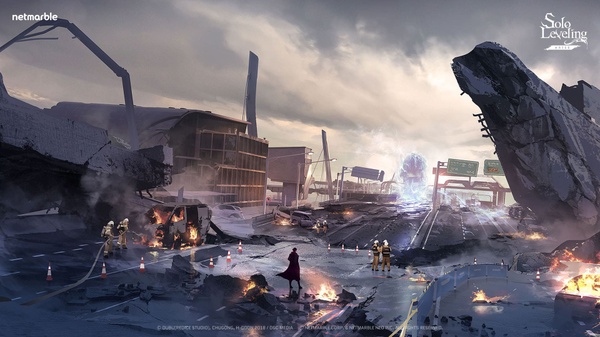
On a technical level, ARISE OVERDRIVE alternates moments of decent stability with critical situations. The game suffers from frame drops, irregular frame pacing, performance dips in areas with foliage, and frequent loading screens even for minimal operations, in addition to a rendering distance that flattens any detail beyond twenty meters, reducing the perceived depth of the environments. Visual glitches traceable to preliminary builds also persist: portions of Jinwoo's model disappearing during ultimates, shadows vibrating at low resolution, enemies getting stuck in the linear level design. These problems are neither rare nor isolated: they impact the game's rhythm and reveal a QA cycle less extensive than would have been necessary.
The user interface represents one of the most explicit signals of the project's hybrid nature. Despite being a port for PC and consoles, the UI continues to respond with mobile environment logic: rigid scrolling, evident input lag, overlapping menus with a visual hierarchy poorly suited for interaction via controller or mouse. This choice breaks the fluidity of the experience and reveals a precise design direction: to preserve the portability of the original framework instead of rewriting it for a different audience, accustomed to more reactive and consistent navigation systems.
The production sector reflects the same ambivalence. On one hand, some main cutscenes, boss design, and a portion of the animations demonstrate an authentic investment in attempting to transpose the monumentality of the webtoon through broader direction and dramatic use of lighting. On the other hand, the work is riddled with optimization problems that suggest tight deadlines or insufficient testing cycles. Muted dialogues, audio distortions, unstable camera in Shadow Trials, and sudden freezes are not marginal defects: they are interruptions that directly impact the perception of final quality.
This dichotomy raises an identity question. On one hand, the intention to build a visually ambitious adaptation, capable of enhancing the key scenes of the story, emerges; on the other hand, a technical architecture that has never undergone a structural revision persists. The result is a product that lives in an intermediate condition: rich in individual technically and visually effective moments, but limited by a framework that continues to operate according to the logic of a mobile title.
Score
Editorial team

Solo Leveling: ARISE OVERDRIVE, an Ambitious Adaptation That Fails to Make the Leap - The Review
ARISE OVERDRIVE is an ambitious project that only partially succeeds in enhancing the world of Solo Leveling. Some sequences are effective, and the art direction shows authentic attention to key scenes from the webtoon, but the repetitive structure, technical instabilities, and reliance on a framework still tied to mobile logic reduce the scope of the experience. In relation to the asking price, the content appears limited and uneven, leaving the feeling of a work that glimpses a direction but fails to sustain it all the way through.
Similar articles

Beast of Reincarnation Review: The Game Freak Without Pokémon That Fails to Make a Mark

Stuart Fails to Save the Universe – Review: The New Big Bang Theory Spinoff That Can't Recapture the Magic Formula
Elementallis – Review: An Indie Adventure That Conquers With Heart