Project Songbird, review of a psychological horror that fails to take flight
Conner Rush's intent in creating this game is clear, but the execution doesn't keep pace
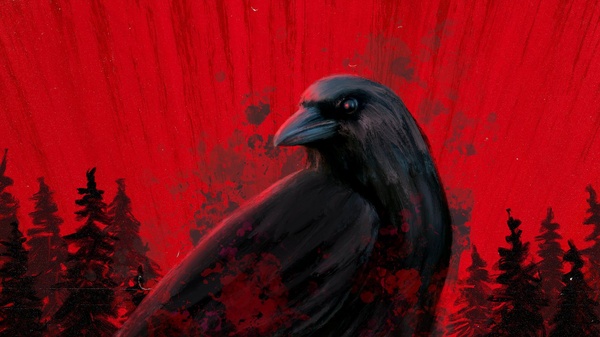


The independent production landscape is enriched by a new and ambitious project: Project Songbird. Developed by FYRE Games, an independent studio led by author Conner Rush (already known in the indie circuit for the title Summerland), the game presents itself as a first-person narrative adventure with strong psychological horror undertones. The work moves away from traditional pure survival horror dynamics to embrace a hybrid structure, where environmental exploration and puzzle-solving merge with a markedly cinematic and introspective progression.
At the center of the story is Dakota, known to the public by the stage name "The Neon Songbird". Dakota is a musician, a non-binary artist who is in the midst of a deep and paralyzing creative crisis. Crushed by the weight of expectations, the pressures of a demanding record label, and the fear of disappointing their fans, the protagonist makes a drastic decision: to abandon civilization and isolate themselves in a remote cabin hidden among the dense forests of the Appalachian Mountains. The initial goal is to rediscover the inspiration needed to compose their next album in total solitude. However, what was supposed to be a peaceful retreat quickly transforms into a dizzying descent into the darkest recesses of the mind. Isolation becomes the catalyst for surreal and unsettling manifestations, turning the surrounding woods into a stage for tangible fears.
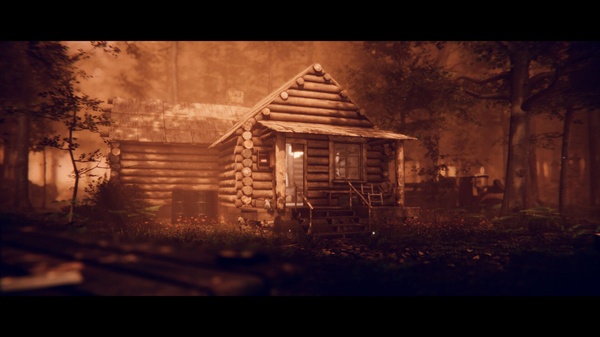
The title aims to explore delicate and mature themes, depicting inner demons related to writer's block, imposter syndrome, anxiety, and depression. The creative process is represented here not only as an act of artistic genesis but as a potential source of psychological wear and tear. FYRE Games' work strongly focuses on immersion, relying on meticulously crafted sound design – an essential element given the protagonist's musical nature – and a prominent voice cast for the video game landscape.
With these premises, Project Songbird enters the market posing a crucial question: how far can an artist push into darkness before getting lost permanently to find their voice again? It is precisely starting from this question, and analyzing how Conner Rush's narrative ambitions have concretely translated with controller in hand, that we will delve into the merits and criticisms of this descent into creative madness.
Project Songbird: When the Author Devours the Work
Despite fascinating premises and a wealth of mature and current themes, the narrative ambition of Project Songbird ends up getting tangled in itself. The game is structured into three acts, over a thirty-day period, of which the player experiences only a targeted selection. The structure is divided into an alternation between day and night. Daytime sequences see Dakota engaged in mostly mundane and sometimes tedious activities, such as exploring the area and solving small environmental puzzles. It is evident, from the very beginning, that these phases represent the weakest part of the experience, only enlivened towards the end of the adventure when the boundaries between nightmare and reality begin to blur, forcing the player to try to distinguish what is real from the artist's mental projections.
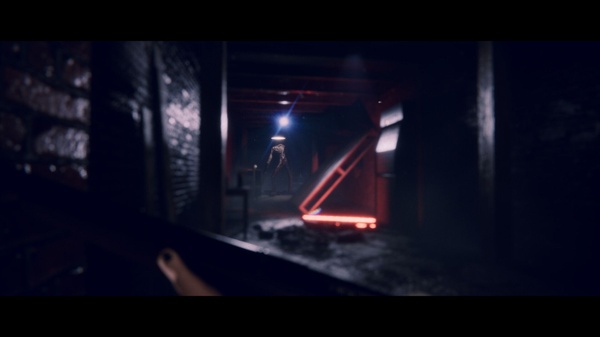
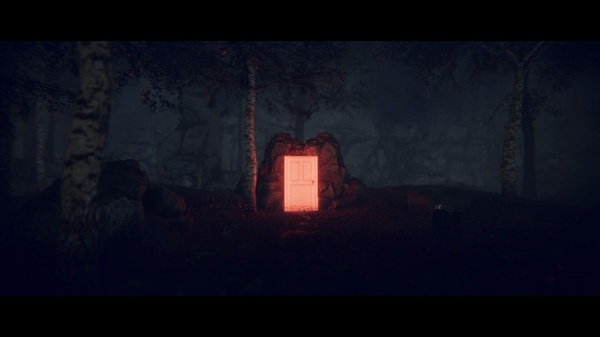
The beating heart of the work manifests at night. Passing through a mysterious red door, Dakota plunges into a phase of psychological nightmare where they are forced to confront tangible demons, a direct reflection of their inner torments, in a desperate attempt to rediscover the inspiration needed to complete their album. Unfortunately, the writing struggles to effectively convey the drama of imposter syndrome and creative block. Although these concepts are evident, their exposition never truly hits the mark. Despite this, in the first two acts, the game still manages to stand on its own thanks to the focus on Dakota's character, whose family trauma – evident from the first scenes and at the root of their block – creates a tangible emotional anchor. Dakota is crushed by guilt, unable to overcome their pain and free themselves as they wish.
The real collapse, however, occurs in the third and final act, which should have represented the emotional and narrative climax. Here, we witness an overexposure of Conner Rush. It becomes evident, or at least this is the impression given, that Dakota and their brother Finn are actually direct projections of the author himself. While in theory this autobiographical parallelism could make sense within a work focused on creative torment, the execution proves questionable. For about fifteen minutes, we are catapulted into a live-action "behind the scenes" segment, real footage in which the doubts and anxieties that Rush himself experienced during the development of Project Songbird are revealed. This segment, however genuine in the author's intentions, feels completely out of place, resulting in a quarter of an hour that is ineffective and even artificial. The choice is even more incomprehensible when considering that during this sequence, negative reviews of Summerland, FYRE Games' previous title, are shown. Despite 91% positive ratings visible on the Steam platform, the author chose to morbidly focus on the criticisms, conveying a sense of unjustified victimhood that poorly aligns with the drama experienced by Dakota.
This authorial intrusion irreparably breaks the narrative pact with the player. The focus is torn from Dakota precisely at the moment of their resolution, reducing the protagonists to mere and all too obvious megaphones. A display that is not only out of place but undermines the entire coherence of an already fluctuating narrative.
A Fragmented Identity
With controller in hand, the gameplay of Project Songbird suffers from a deep and unresolved identity crisis. The general feeling is that of facing a work that wants to incorporate a bit of everything, drawing heavily from numerous genre exponents, but which ends up appearing as a mosaic of forcibly inserted mechanics. A striking example is the weapon upgrade system: in a primarily psychological and introspective experience, the fact that Dakota comes to possess a real arsenal consisting of an axe, pistol, and even a shotgun feels strongly out of tune and out of context.
It would have been much more coherent and impactful to focus on hide-and-seek mechanics. Or at least, to limit combat possibilities, even with a certain parsimony in providing ammunition for firearms. Although the basic idea seems to suggest a stealthy approach, the first of the two types of monsters present is encountered very early and very often throughout the game, and can be defeated with very few hits, effectively nullifying the usefulness of stealth. It is true that the axe breaks after a few parries to simulate a precarious defense system, but this dynamic poorly aligns with the brevity of the adventure and the consequent search for resources to repair or upgrade it. This action-oriented drift is the result of a very specific backstory: in the live-action moment during the third act, we are shown how the suggestion for these mechanics came from an acquaintance of Conner's, in an attempt to cater to the short attention span of today's audience. The result is a succession of artificial justifications to explain dynamics that, in practice, prove completely ineffective.
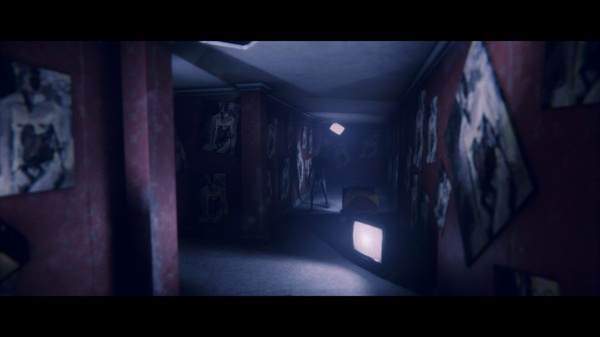
Things partially improve with the second type of enemies, clearly inspired by the Weeping Angels from Doctor Who: creatures that remain still and move rapidly towards us only when we look away. This idea generates an excellent dose of anxiety and tension, especially because it is closely linked to puzzle-solving. As if disarming a bomb while keeping an eye on the timer, one finds oneself having to manage space and vision strategically so as not to be caught by surprise. Unfortunately, even in this instance, the game stumbles. While in titles like the Shadows of Rose expansion of Resident Evil Village, the inability to defend against mannequins was consistent with the protagonist's forcibly defenseless state, here Dakota is armed to the teeth. Yet, inexplicably, against these enemies, the game prevents us from using firearms or physical attacks without providing a logical explanation. It would have been much more elegant and immersive to allow the player to attack the creatures only to discover they are very, even too resistant to be defeated without consuming excessive resources, and then decide for themselves what to do about it. Whether to risk consuming bullets or breaking their axe, or to play it smart and observe.
As for the environmental puzzles, these are rather classic but well-designed, in line with the horror atmosphere of the work. However, the experience is undermined by a significant technical problem related to Dakota's journal. This tool, designed to jot down reflections and especially solutions, codes, and vital clues, tends to randomly empty itself, overwriting and deleting essential information. Dealing with a faulty inventory, I found myself having to rely solely on my good memory to recall passwords and numerical sequences multiple times, a frustrating flaw that further diminishes the enjoyability of the title.
All these criticisms paint an unequivocal picture. The game undoubtedly had the thematic premises and elements to shine, but these were developed and amalgamated clumsily, uncertainly, and derivatively.
Project Songbird's Aesthetics and Sound Design
Shifting the analysis to the technical side, Project Songbird holds its own with both strengths and weaknesses. From a visual standpoint, the work done on lighting and the management of ambient light sources is undoubtedly commendable and contributes to creating a suspended and unsettling atmosphere, without ever being groundbreaking. The artistic direction attempts to mask the physiological budget limitations by relying on a dirty and grainy cinematic filter which, although fascinating and in line with the dark tones of the work, results in a sometimes inconsistent visual impact.
Of a completely different caliber, however, is the sound design, the true highlight of the entire production. Being an adventure intimately revolving around a musician's creative block, the attention paid to audio was a crucial point, and fortunately, the target was hit squarely. In addition to top-notch voice acting that gives depth and dimensionality to Dakota's pain, it is the songs included in the game that steal the show. The tracks strike straight to the heart, conveying all of the protagonist's artistic essence and delivering the most authentic and emotional moments of the entire journey.
However, one must be honest: while it is necessary to acknowledge the enormous quality of this sound component, an excellent soundtrack and good use of lighting are not enough to save a work burdened by such deep-rooted criticisms. When the narrative pact breaks and the gameplay gets lost in a sea of uncertainties and dissonances, the overall harmony inevitably shatters.
Score
Editorial team
Project Songbird, review of a psychological horror that fails to take flight
Project Songbird is a title that crumbles under the weight of its own ambitions. The mature themes related to creative block, depression, and imposter syndrome are initially introduced with great courage, only to be cannibalized by writing that descends into misplaced self-referentiality. With controller in hand, good intuitions related to puzzles and exploration are suffocated by a discordant combat system, poorly calculated stealth elements, and a somewhat excessive arsenal for the experience it aims to be. While the excellent sound design and inspired music manage to convey Dakota's tormented soul, they are not enough on their own to salvage a fragmented and derivative experience. Project Songbird turns out to be a concert that had all the makings of leaving a mark, but ends disastrously out of time.
Similar articles
The Shore: Enhanced Edition, review of a psychological horror that wastes its valid premises

Beast of Reincarnation Review: The Game Freak Without Pokémon That Fails to Make a Mark
The Pines: Psychological Horror Coming to Steam in 2027