OPUS: Prism Peak - Review of a Fabulous Inner Journey
the review of SIGONO's latest work: a dreamlike journey between photography and the difficult search for forgiveness.


The OPUS saga is a small indie gem that in recent years has been able to explore human emotions by placing ordinary, everyday characters before decidedly extraordinary challenges.
Whether it's searching for Earth in the universe in (The day we found Earth), laying the souls of the deceased to rest in (Rocket of Whispers), or honoring old promises (Echo of Starsong), the pillars upon which Sigono has built its works are the inner journey and the fragility of bonds.
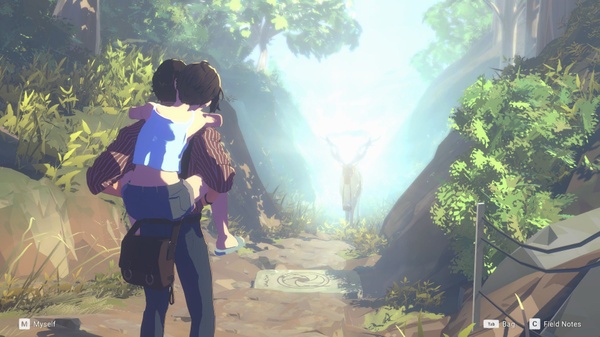
Prism Peak does not betray the pillars of the Opus anthology and takes us on an inner journey of self-discovery, inviting us to confront our mistakes, the weight of regrets, and the need to make peace with our ghosts.
Getting Lost and Found. The Plot of Opus: Prism Peak
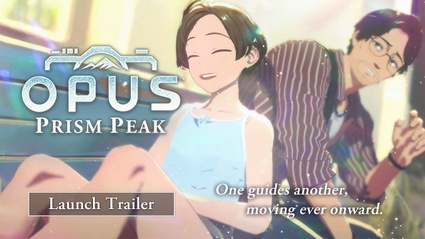
Opus Prism Peak puts us in the shoes of Eugene, a 40-year-old man who returns to his childhood village to attend his grandfather's funeral, the figure who accompanied him throughout his childhood.
From the very first minutes, it's clear that Eugene has a special bond with his grandfather, who took care of him when his parents argued.
The time spent with his grandfather sparked Eugene's passion for photography, leading him to leave the village for the city, where he found a good job and the woman who would become his wife.
Unfortunately, shortly after, his marriage failed and the newspaper he worked for closed down.
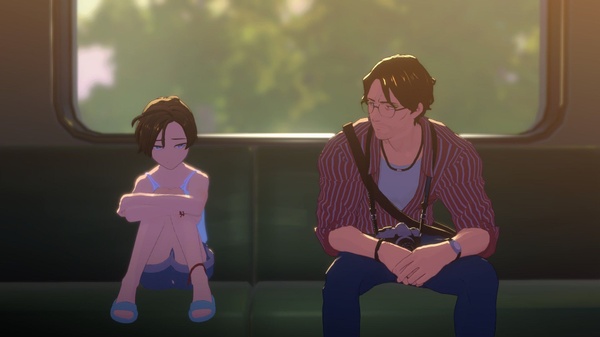
With the help of a friend, Eugene tries to get back on his feet, opening a photography-themed café, but unfortunately, this venture also fails shortly after.
On the verge of his 40s and burdened by many failures, Eugene receives news that his grandfather has passed away, and as if life hadn't been hard enough on him already, he's involved in a car accident during the journey.
After the shock of the accident, he finds himself in front of a little girl who asks him to help her get home.
The two then embark on a journey that will lead them to encounter places and spirits whose stories seem more intertwined than they appear.
The Past, One Click at a Time. The Gameplay of Opus Prism Peak
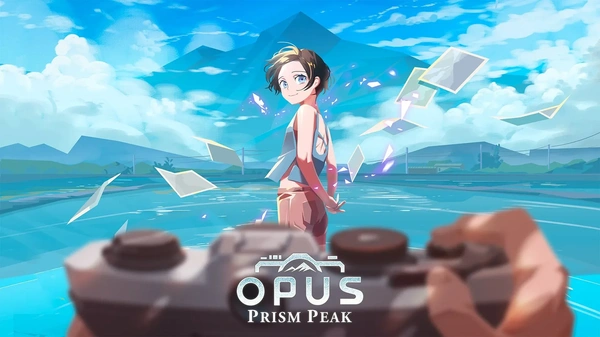
Controller in hand, Opus Prism Peak offers a gameplay system that revolves entirely around the use of the camera, through which we can immortalize scenes and characters that will bring back Eugene's old memories.
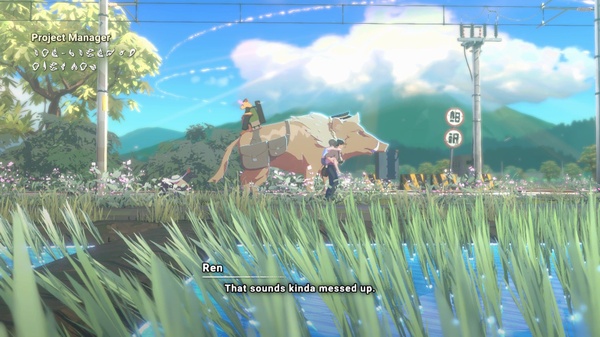
The more elements we photograph, the more memories we unlock, and the more we remember, the more we can organize and reconstruct the events that marked our character's life.
The game not only demands attention to events but also the ability to recall both the moments and the feelings associated with each character we meet.
Throughout the adventure, we will always have a journal available to take notes about the events in Eugene's life and those who were part of it.
The better we are at connecting the various moments, the more memories we will unlock, and the more Eugene will be able to "see."
The quantity of unlocked memories will allow us to unlock 1 of the 3 endings of the game, to which another 25 endings are added, linked to the different "wrong" choices we can decide to have Eugene make (much like Nier Automata).
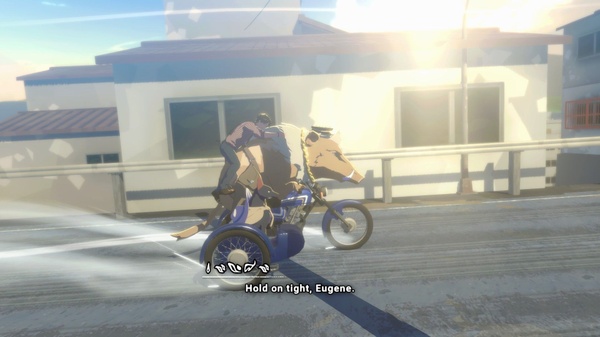
It must be said that the gameplay, while original and intriguing, would have benefited from some additional mechanics.
The continuous wandering through the various areas, never too large, in search of elements to photograph, quickly loses its appeal, and the curiosity of the search soon gives way to the boredom of having to manually change the exposure and focus for every single shot; things that make the game slow and cumbersome.
Prism Peak tries to introduce some elements to vary the gameplay, but the few camera filters and the few boss fights (very similar to each other) fail to lift a gameplay system that ends up being the weak link of the experience.
An Ode to Asian Culture. The Technical Aspect of Opus Prism Peak
In contrast to the gameplay, the technical aspect of the title is its true strength.
Opus Prism Peak is the child of many cultural elements from the Sinosphere, and it is able to unite Japanese mangaka with cultural references from the Taiwan region.
While references to the works of Studio Ghibli in the atmosphere and tone of the game world are immediate, the allusions to another master of Japanese animation, Makoto Shinkai, should also be highlighted, from whom the development team drew inspiration for the management of light effects and that sense of nostalgia typical of the director's works from Koumi.
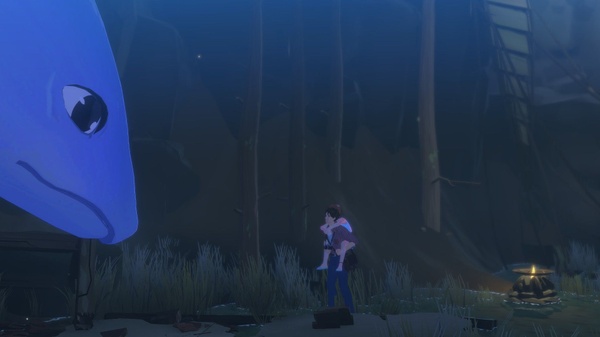
But Sigono went far beyond simple visual inspiration; Opus Prism Peak drags the player into a dreamlike world that dances on the fragile boundary between Eugene's memories and the reality of the Dusklands, echoing a narrative style typical of Satoshi Kon.
If Japan is the land of artistic inspiration for Opus Prism Peak, Taiwanese and Chinese cultures have inspired the cultural and architectural framework upon which the game is built.
Sigono has drawn heavily from Taoist and Buddhist syncretism, where spirits are not malicious elements but guardians and souls linked to earthly events.
But Chinese literature is also central to Prism Peak; Eugene and Ren's journey follows that of Tao Yuanming's fable, The Peach Blossom Spring, which is one of the cornerstones of children's literature in the old Celestial Empire.
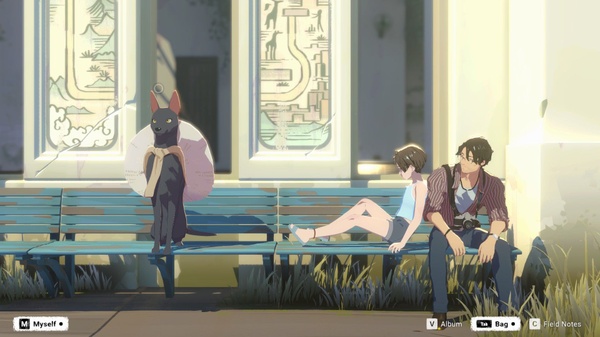
On the sound front, an excellent English voice acting should be noted; however, as usual for Asian productions, I always recommend the original language voice acting due to the typical emphasis of Asian voice acting schools; which, through the use of reflective pauses, fluctuating voice tones, and narrative silences, manage to give greater depth to the various characters.
The game also boasts a top-tier soundtrack. Whether it's instrumental pieces or lyrics written specifically for the game; every piece of the soundtrack perfectly accompanies the various moments of Eugene and Ren's journey, and I'm sure some of these tracks will find a place in your playlists.
We Are the Sum of the People We've Met and the Events We've Experienced
Opus Prism Peak is a game that will reward and captivate players who are willing to trust it and let themselves be drawn into its world.
To enjoy the magic of the title, Sigono asks for a series of compromises from the player in terms of gameplay and narration; a choice that terrifies many software houses that try to offer products that satisfy everyone's needs, only to fail.
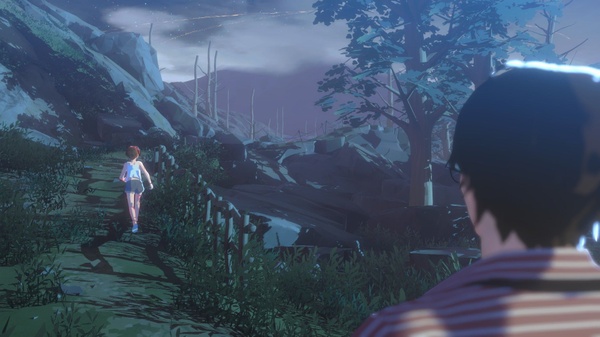
If you are looking for complex mechanics, you should look elsewhere. In Opus Prism Peak, interaction strips away all frenzy and becomes an intimate ritual between Eugene and the events and people who marked his life; to which we players are invited to participate.
The game makes a series of conscious renunciations in terms of gameplay to focus on a narrative that dictates the pace of the game and abandons the linearity of three acts, but accompanies us in a continuous back and forth of events between what happens in the Dusklands and Eugene's memories.
Every shot tears through reality and helps us discover more about the non-places before us, and how these were once full of life.
Opus Prism Peak wants to take the player by the hand and accompany them on a journey whose ultimate goal is to free themselves from the weight of past events and mistakes and understand that in life things happen and we cannot always do something to change them, but only accept what has happened, learn from it, and continue with our lives.
Score
Editorial team
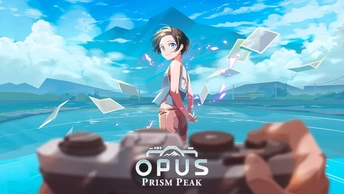
OPUS: Prism Peak - Review of a Fabulous Inner Journey
OPUS: Prism Peak is the most intimate and mature chapter of SIGONO's anthology. An introspective journey that abandons the immensity of the cosmos to explore the fragile fragments of human memory through the lens of a camera.
The interaction, entirely focused on photography, is original but eventually repetitive. The cumbersome nature of some operations slows down the pace, making the mechanics the weak link in an otherwise profound experience.
The game is visually splendid, blending the aesthetics of Japanese animation masters with a solid Taiwanese cultural heritage. The masterful use of lighting and a top-tier soundtrack create a dreamlike and vibrant atmosphere, capable of evoking emotion with every shot.
Despite its gameplay limitations, the game is a necessary cathartic ritual for those seeking an authorial narrative. A work that teaches us to make peace with our ghosts and accept the weight of the past.
Similar articles