Deer & Boy - Review of a Fantastic Inner Journey
Deer & Boy is an adventure capable of surprising me from every point of view, read the review
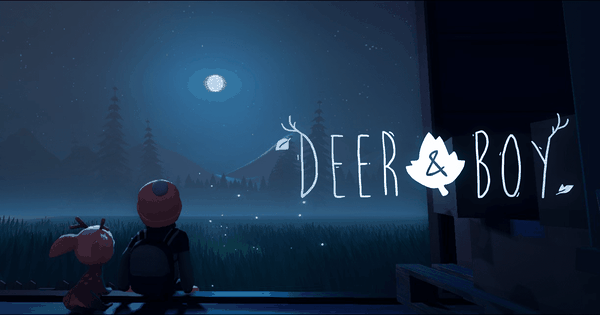


In recent years, the indie genre has experienced significant growth, both technically, thanks to easier access to technologies provided by Unity and Unreal, and in terms of writing and creativity, due to a greater number of artists and writers deciding to enter the video game industry.
This has meant that in recent years we have been able to enjoy low-budget productions capable of combining a high-level narrative with unique and distinctive graphic presentations such as Neva, Nine Sols, Planet Of Lana and Journey.
If you agree with what has been written so far and the games I have mentioned have brought a smile to your face, then Deer & Boy, the debut work of the French studio Lifeline Games, is for you and seriously risks becoming one of your favorite games.
Deer & Boy, the story of an inner pilgrimage
Deer & Boy immediately creates a significant distance between itself and the games with which it shares genre and ideas; there is no apocalypse, no environmental disaster, no post-war scenario. The world of Deer & Boy is a very normal and real world, made of families celebrating a birthday and people working on construction sites or in factories, and where the police are looking for our character; a boy who one evening decided to run away from home.
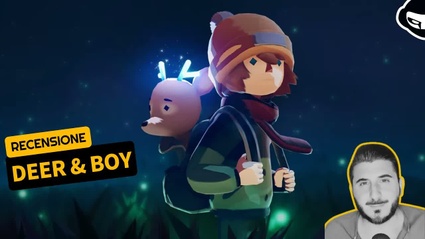
Alone in this world, the protagonist soon meets a fawn, who has recently seen its mother perish at the hands of a hunter.
The two decide to share their loneliness and fears and seal a kind of silent pact of mutual trust; supporting and helping each other.
During their journey, the two encounter a strange slime that transforms animals into ferocious beasts. However, to the great surprise of both the boy and the fawn, it is discovered that the latter has the power to erase the effects of the slime and restore the beasts to calm.
Around the slime lies the great secret of Deer & Boy, and step by step we will discover that it hides much more than one might believe, and that every dissolved patch of slime becomes an opportunity for the boy to confront his past, his fears, and his traumas.
The gameplay of Deer & Boy is like pizza at the end of the week: predictable but excellent
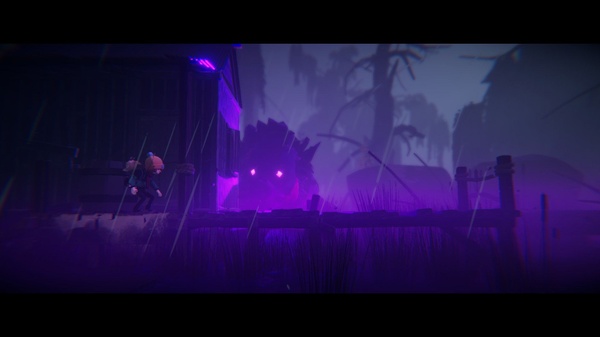
Deer & Boy is based on the now consolidated scheme of a protagonist accompanied by a companion endowed with a set of abilities useful for overcoming a series of obstacles and solving the various puzzles that arise along the way.
It's a formula we've come to appreciate in many indie titles like Planet Of Lana, Koira, Neva, and many other productions that have adapted it in different ways.
Deer & Boy recalls elements already present in the great titles of the genre and improves them in many aspects.
At its core, there is cooperation with the fawn to solve various puzzles and avoid being discovered during exploration phases. However, this cooperation is not static; rather, it is a continuous crescendo of mechanics that goes hand in hand with the animal's growth, which ensures that the gameplay is constantly renewed.
If at the beginning the fawn will be a simple cub to defend and care for, as the game progresses, we witness its growth; consequently, if in the initial phases the environmental puzzles are aimed at helping the animal overcome certain areas, in the more advanced phases, it will be the fawn that helps us, making way for more complex and articulated puzzles.
Also noteworthy is the presence of a series of decidedly successful pure platforming sessions, where precise timing is essential to avoid game over.
All this ensures that the gameplay of Deer & Boy always feels fresh and varied, offering continuous evolution that accompanies us until the very last moments of the game.
A fantastic palette of colors, the technical department of Deer & Boy
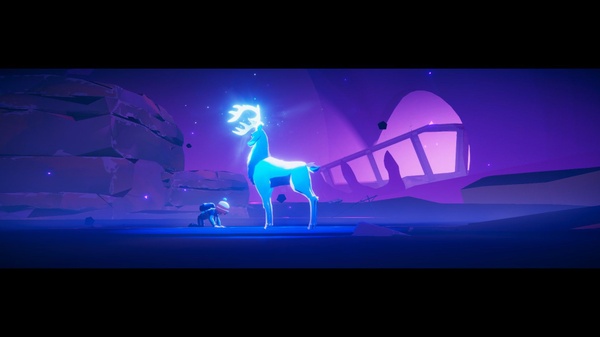
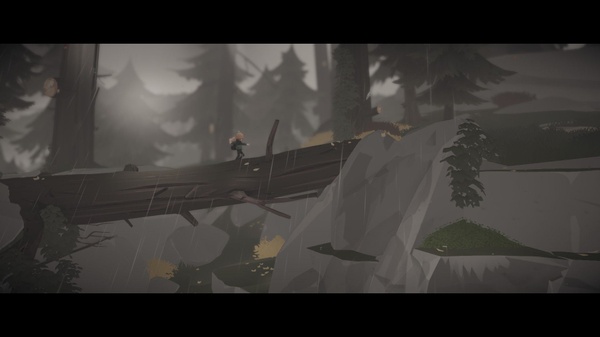
Technically speaking, Deer & Boy features a low-poly style and a 2.5D world that abandons the race for photorealism to make way for environments that, despite their simplicity, are simply breathtaking.
The strong point of the title is its ability to play with colors and lights to convey the narrative. During gameplay, warm pastel palettes alternate with colder, darker palettes; a choice that not only follows the potential danger on the duo's path but also reflects the character's state of mind.
All of this is then framed by a skillful use of the camera, which often shifts to highlight the vastness of the environments, fueling the sense of solitude and adventure that the protagonist is experiencing.
Deer & Boy also boasts an excellent audio department, consisting of high-quality accompanying music and good environmental sounds, plus a masterful soundtrack composed by Corentin Brasart and the track “The words I’d wish to say” which, if it doesn't bring a tear to your eye, means you're truly heartless.
Deer & Boy forcefully enters the pantheon of the genre
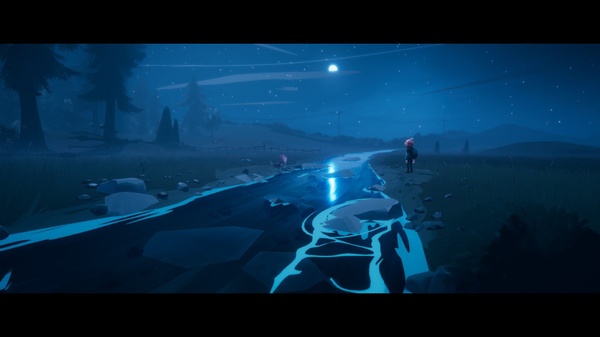
Lifeline Games' debut work manages to find a perfect balance between the story it tells, the way it stages it, and how it asks the player to experience it.
Although there are a number of things where more could have been dared, Deer & Boy treads a well-worn path, clinging to solid pillars; yet bringing its own very personal interpretation of the genre.
This ensures that the title maintains a strong identity and has no fear of guiding the player through the adventure; accelerating when necessary and imposing a slower narrative when it's time to catch one's breath.
If you loved the escapes of Limbo or the complicity of Mui in Planet Of Lana, Deer & Boy is a must-have for your collection.
Score
Editorial team
Deer & Boy - Review of a Fantastic Inner Journey
Deer & Boy earns its place in the pantheon of 2D adventures.
The title offers all those elements that made games like Limbo, Neva, and Planet Of Lana great, but elevates them to the nth degree.
With controller in hand, the game offers varied gameplay that evolves with the story. Although the environmental puzzles do not represent a challenge for more experienced players, they shine in terms of design and are decidedly inspired.
The game focuses heavily on the story it wants to tell and does so by leaving room for colors, emotions, silences, hugs, and the fears of the two protagonists.
The result is a decidedly positive debut for Lifeline Games.
Similar articles