Mistfall Hunter review: the extraction RPG works, but plays it too safe to truly succeed
Bellring Games brings action RPG combat into the extraction formula, with six classes, PvPvE, and very accessible progression. Perhaps even too accessible.
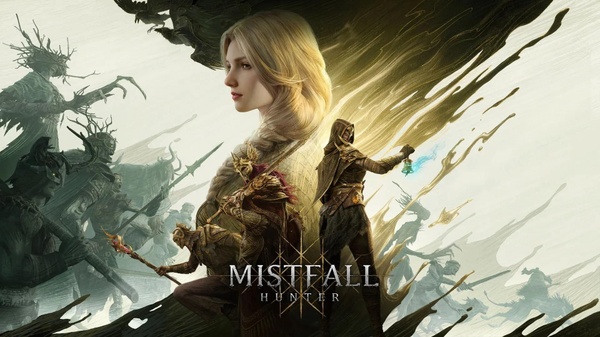


In extraction shooters, there comes a moment when you have to decide whether to continue being greedy or go home. The loot is perhaps enough, healing is starting to run low, but we know that, in most cases, we players end up feeling that mental push that forces us to stay on the field, hoping for some special find that rewards us for daring so much (knowing full well, deep down, that in ninety percent of cases we are making the wrong choice!).
Mistfall Hunter starts from the same principle, but changes almost everything around it. Bellring Games replaces rifles and scopes with swords, hammers, bows, and magic, transporting the genre to a dark fantasy world consumed by the Gyldenmist, a golden fog born after the fall of the ancient gods. The player takes on the role of a Gyldhunter, a warrior brought back to life and freed from the threads of fate, sent to the corrupted lands to recover the blood of the gods and contribute to the healing of the world.
Gallery
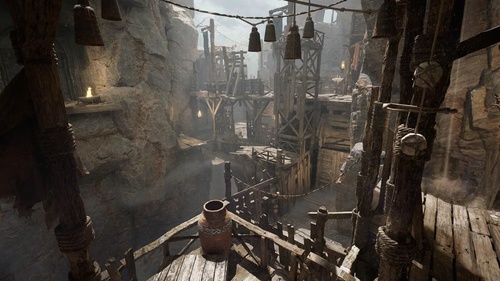
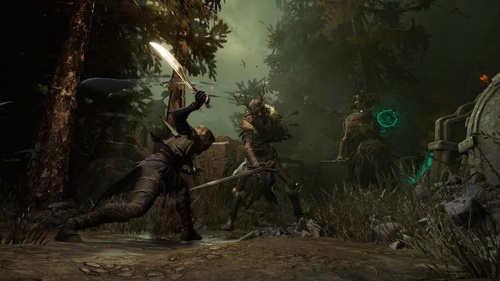
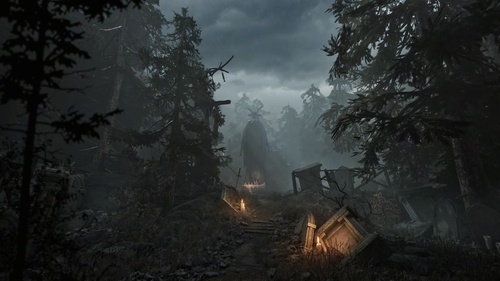
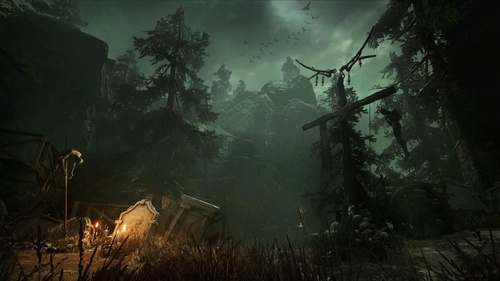
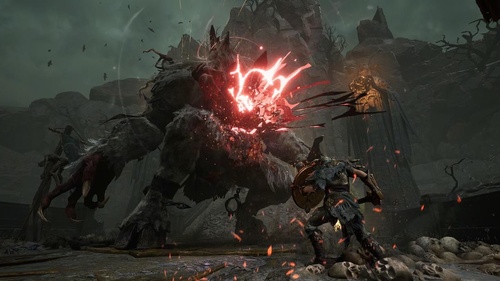
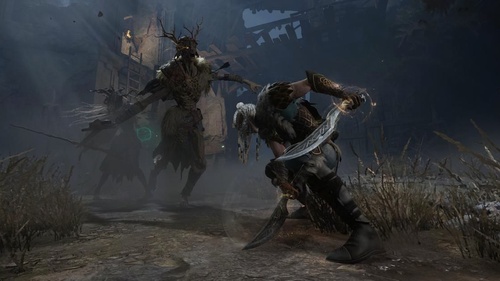
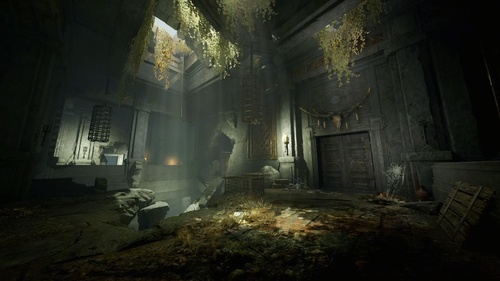
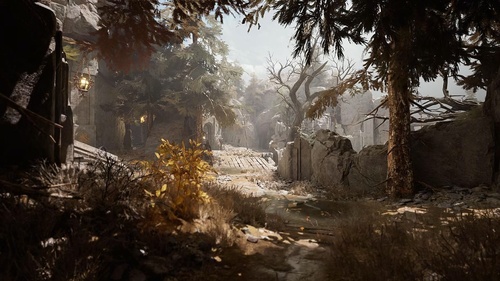
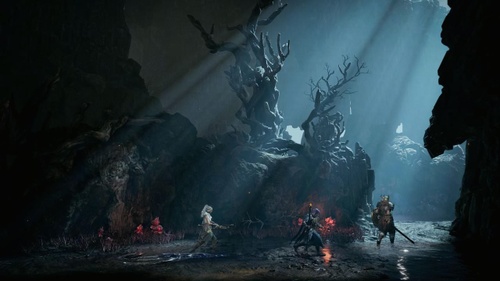
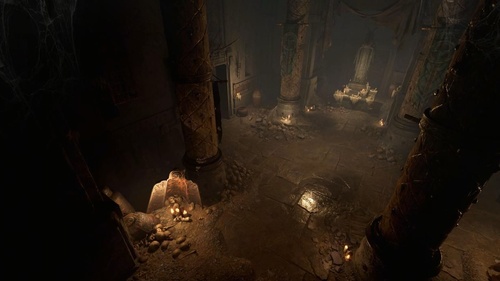
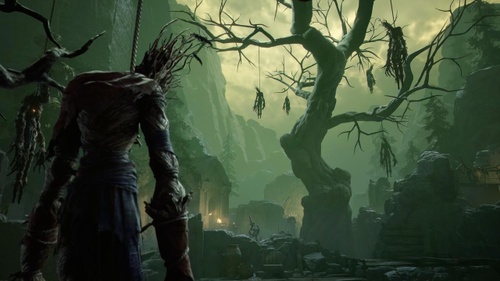
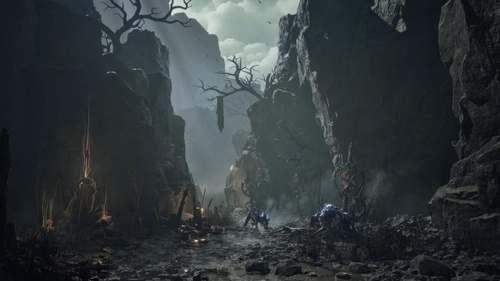
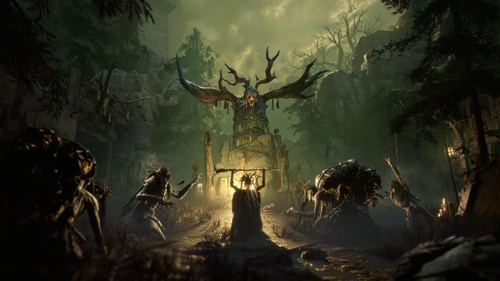
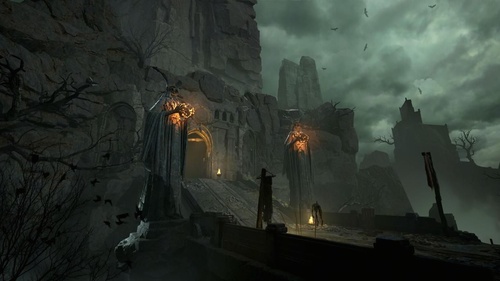
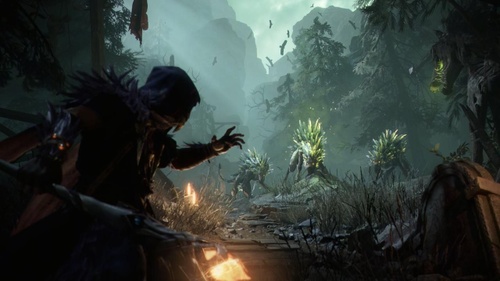
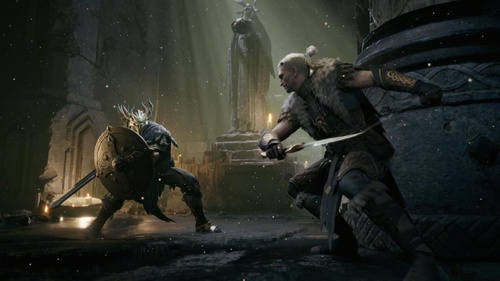
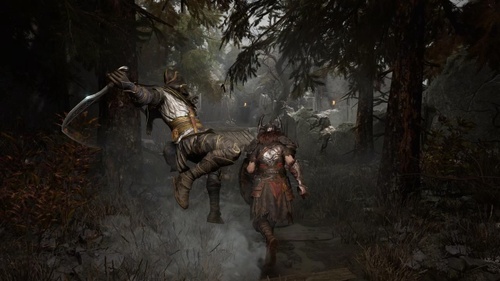
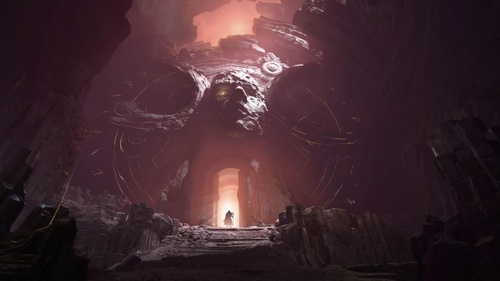
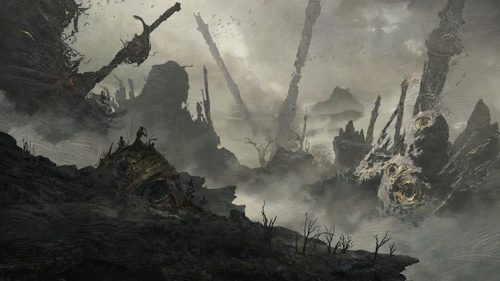
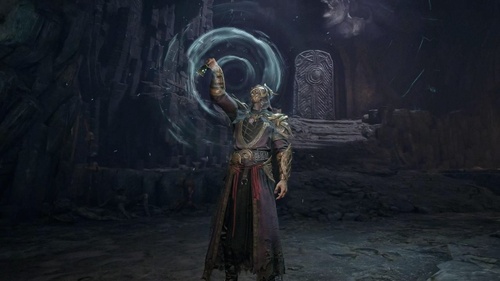
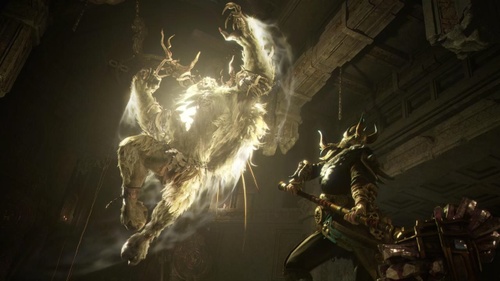
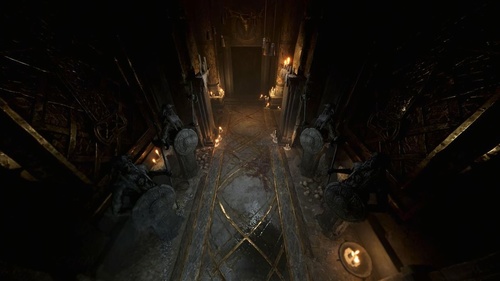
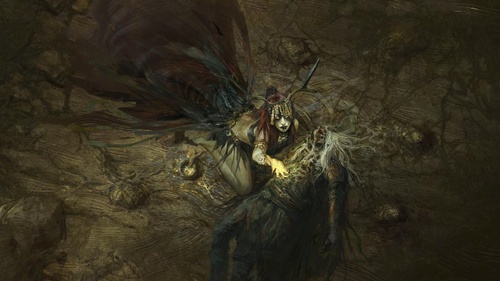
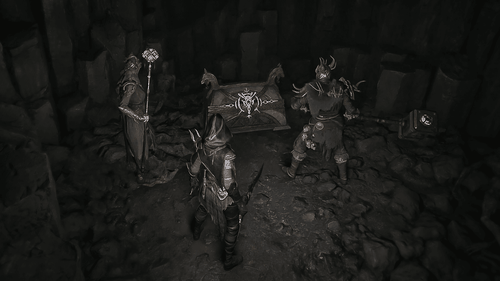
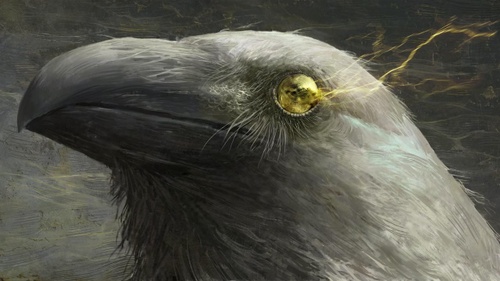
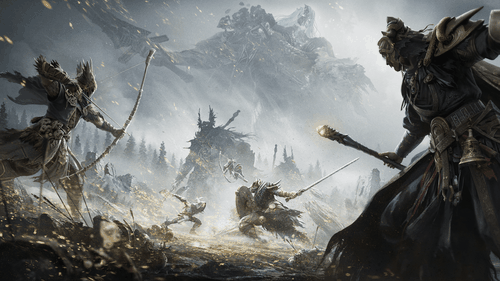
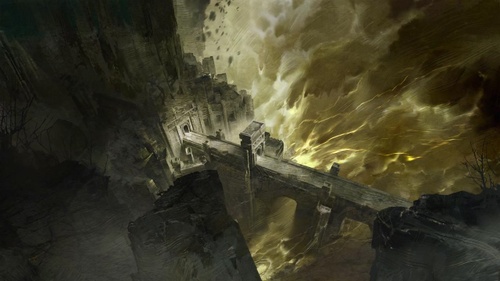
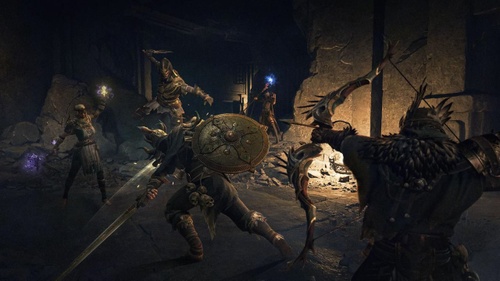
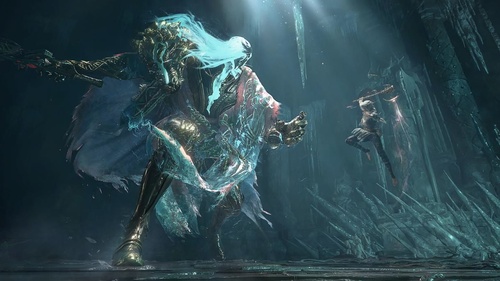
All very beautiful at first glance, and indeed, the whole story of the threads of fate seemed like a brilliant idea, but the narrative premise mainly serves to provide context for the expeditions without going much further. And that's a shame, because it almost seems to stop there, without continuing to fuel that sense of danger that should accompany an experience of this type.
In the first few hours, the result seemed convincing. You progress quickly, builds encourage experimentation, and a death doesn't necessarily mean a wasted evening. Later, however, that same generosity begins to change the relationship with the loot. Because an overly generous extraction risks weakening the very tension that should make it interesting.
The Threads of Fate Seemed Like the Beginning of Something Greater
The narrative idea of Mistfall Hunter, at least on paper, appealed to us a lot. The ancient gods have fallen, the threads of fate that regulated existence have been broken, and from that fracture, the Gyldenmist was born, a golden fog capable of spreading madness and corruption. Our Gyldhunter belongs to this same disaster: he is a warrior brought back to life, now free from destiny, who traverses the contaminated lands to collect the blood of the gods and try to heal the world. In short, not exactly the usual pretext for sending us to loot corpses.
The problem is that Mistfall Hunter seems to stop just when it should start telling a story. The premise introduces interesting concepts like the fall of deities, the breaking of destiny, and a resurrection that should make the protagonist an anomaly within that world, but during expeditions, these ideas almost always remain in the background. We know why we are there, much less what it truly means to be there.
And it's a shame especially because the Gyldenmist could have done for Mistfall Hunter what the Zone does in S.T.A.L.K.E.R.: not just justify monsters and setting, but become something to progressively understand, capable of giving a different meaning to the places traversed and the creatures encountered. Here, however, the mystery largely remains a framework. You enter, you fight, you collect loot, and you return to the camp, while the story rarely changes how we interpret what we are doing.
So, the simplicity of the plot isn't the real problem. An extraction doesn't need to interrupt every expedition with long narrative sequences (and perhaps it would even be counterproductive). It's that Mistfall Hunter presents enough elements to make us think there's something to discover behind the Gyldenmist, and then it doesn't really fuel that curiosity. The story of the threads of fate still seems like a good idea to us. For now, however, it's mostly a good idea that remained at the beginning of the game.
The Soulslike Is There, But Mistfall Hunter Finds Its Identity in Melee Combat
Third-person combat borrows heavily from the language of soulslikes. You need to manage stamina, choose the moment to attack, and learn that greed, even in front of an opponent with very little health (and those are always more treacherous than bosses!), can be costly.
However, Bellring Games doesn't aim for the same severity as FromSoftware. Hitboxes are more forgiving, it's possible to adjust your position during some slashes, and the overall experience retains an arcade component that makes encounters less rigid and more manageable even for those who don't spend their evenings memorizing every single frame of a dodge. There's no classic lock-on either, so distance, orientation, and position become integral parts of combat, especially when facing not a game-controlled creature but another player.
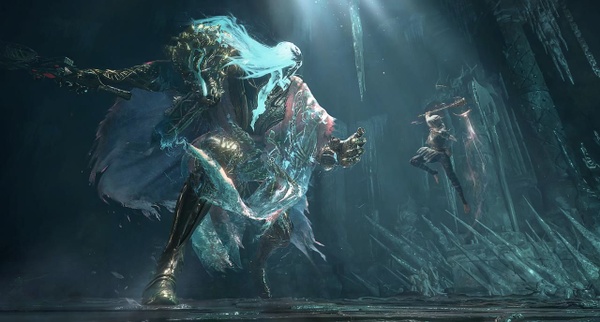
In practice, this greater freedom works, because Mistfall Hunter has to make PvE, PvP, and group combat coexist in the same space. With a more rigid system, brawls would risk quickly turning into something too chaotic, especially when monsters and players start attacking simultaneously.
Among the available classes, the Withered Knight is probably the one that best illustrates what Bellring Games wants to achieve from melee combat. They can use a greatsword or a polearm accompanied by a shield, but it's not simply a matter of choosing between two equipment sets with different stats. With the first configuration, combat rewards combinations of abilities and the ability to chain attacks, while with the shield, the rhythm changes completely: you wait for the blow, block it, and try to exploit the subsequent opening to counterattack.
Each weapon has three dedicated ability slots, while the talent tree allows for further modification of the class's behavior. In the case of the shield, for example, it's possible to invest in bonuses obtained after a successful parry. Talent points can also be redistributed without consuming resources, so you can switch from a more aggressive to a more defensive configuration without feeling like you've permanently compromised your character.
It's a freedom we appreciated because it allows for experimentation without necessarily consulting a guide before even understanding how we like to fight (which should be normal in an RPG, but we all know it's not always the case).
The other five classes complete a fairly recognizable range without needing to turn the review into a manual. The Mercenary focuses on brute force and heavy weapons, Shadowstrix prioritizes speed and explosive damage, the Sorcerer controls larger areas through magic, Blackarrow primarily fights from a distance with a bow, while the Seer occupies the support role and gains much more value when placed in a team. The initial choice therefore genuinely changes how expeditions are approached, instead of merely altering the type of damage dealt.
And it's precisely when these differences enter PvP that the system shows its best side.
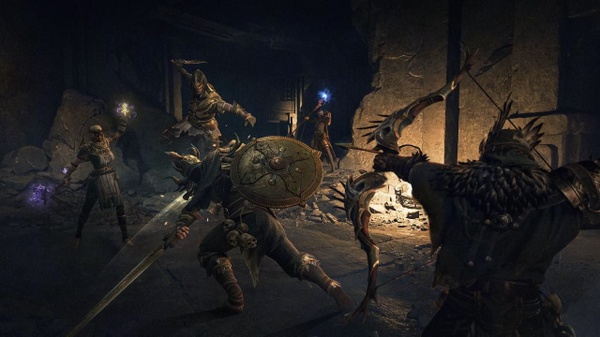
One of the historical problems with extraction shooters is death coming from someone you never saw. A shot, a black screen, and a few seconds spent wondering which hill they were watching from. Mistfall Hunter doesn't eliminate ranged classes, but the prevalence of melee significantly changes this dynamic.
When two melee characters meet, you really have to get in front of your opponent. You try to drain their stamina, wait for a dodge, try to provoke a reaction, and only then do you look for an opening. With the Withered Knight, this dynamic becomes particularly evident: with the greatsword, we can try to dictate the pace through combos, while the shield almost encourages the opposite behavior, waiting for the other to make the first mistake.
Duels can therefore last longer than we would have expected from an extraction and give a good sense of weight when two weapons meet. The system isn't perfect. Some interactions between players remain imprecise, and when multiple characters fill the scene with blows and effects, readability can quickly deteriorate. However, in most encounters, you understand who is attacking you, what one of the two did wrong, and why someone eventually falls.
The situation becomes even more interesting when PvP and PvE stop being two separate moments. Maps contain contested objectives, elite enemies, and a Mist Lord who represents the main challenge of the area. Some activities can also be completed by only one player or group during the expedition, thus inevitably attracting more people to the same place.
Being engaged against a powerful enemy and seeing a second team arrive immediately changes priorities. The boss can become an obstacle to leave to others, a diversion, or, if we are particularly opportunistic, the best way to wait for someone to consume healing and stamina before intervening (it may not be elegant, but we are still in an extraction).
It is in these moments that the hybridization truly works. Mistfall Hunter doesn't just put swords into a structure designed for guns: close combat changes how the presence of other players is interpreted, makes many encounters more understandable, and allows PvPvE to produce situations that would hardly have the same rhythm with a system built almost entirely on distance.
Outside of Expeditions, Mistfall Hunter Tries to Make Us Lose Almost Nothing
The most peculiar part of Mistfall Hunter begins precisely when an expedition goes wrong. Bellring Games seems to have analyzed much of what makes extractions off-putting to a segment of the audience and built a rather extensive safety net to prevent a death from turning into hours of wasted progression.
The Combat Bags are probably the most obvious example. After losing your best equipment, they allow you to restart with mid-level weapons and consumables, enough to get back into the game immediately without having to face a long recovery phase. Pip, the merchant connected to the auction house, can even give you one after a bad expedition.
But it's not the only help. The White Raven assigns additional objectives during matches and can occasionally recover some lost items, while at the camp, Twig and his companion can be sent to search for resources for a small fee. Even some bosses grant a brief window after death to re-enter your body and continue the fight.
The result, especially in the first few hours, we liked a lot. Mistfall Hunter allows you to fail without feeling like you've wasted an evening. Even a poorly concluded expedition can leave something behind: experience, talent points, unlocked abilities, or items to convert into Gyldenblood. Progression continues even when extraction fails, and it's probably one of the most effective ideas to attract those who have always looked at the genre with interest but can't stand its more punitive component.
The problem arises when you return to camp and discover how easy it is to recover even what, theoretically, you would have just lost.
Pip's auction house allows you to sell weapons, equipment, and materials to other players, or buy what you're missing. Need a resource to upgrade your camp? Check the market. Lost an important weapon? With enough money, you can replace it. Does a build require something you haven't found yet? The solution, very often, is the same. It's incredibly convenient, we can't deny it.
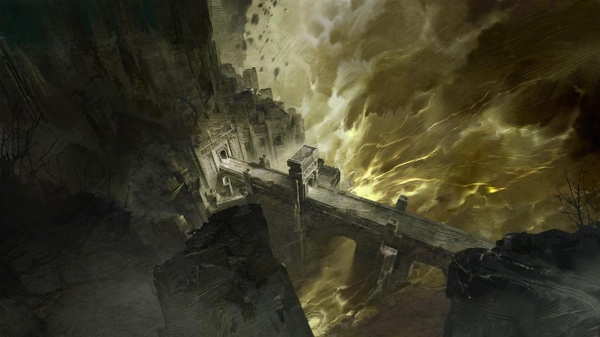
Except that in an extraction game, loot shouldn't only have value because it can be converted into money. Recovering something rare should change behavior during the expedition: up until a moment ago, we were exploring without too many worries, then we find the item we've been looking for for hours, and suddenly every sound becomes a good reason to go home (and maybe, for once, stop being greedy).
Mistfall Hunter manages to produce this feeling, but tends to lose it as the hours pass. Many items end up interesting us mainly for their price, because we know that once we return to camp, they can be transformed into what we really need. The cycle progressively becomes collect, sell, buy, and restart.
And it is here that the generosity shown after a defeat begins to conflict with the chosen genre. If a good part of the equipment can be replaced quickly, the question is no longer "can I afford to lose this stuff?", but "how much will it cost me to buy it back?". It seems like a minimal difference, but it changes the relationship with risk quite a bit.
Around this economy, Mistfall Hunter then builds a rather rich camp with many systems. Returning from the expedition, you have to deal with repairs, forging, equipment, talents, gems, consumables, and upgrades. Here we also find Dew, the goddess of fate through whom level advancement and new points to invest are managed. So, depth is not lacking. It's readability that suffers a bit.
As the hours pass, vendors, materials, and currencies increase, while the interface doesn't always make it immediately clear which resource is needed and where it can be obtained. There's also no truly effective function to track the materials needed for upgrades, forcing you to check what's needed multiple times before returning to an expedition.
It's a curious difference compared to combat. On the field, Mistfall Hunter starts with fairly simple rules and allows them to be gradually deepened through class, weapons, and builds. Outside of expeditions, it almost follows the opposite path: it progressively adds new layers on top of systems that were already working.
The same goes for the in-game shop. Purchases mainly concern cosmetic elements, and we found no reason to talk about pay-to-win. The problem is rather that this part also introduces other rewards and currencies into a meta-game that already had a lot to remember.
In the end, the paradox is quite evident. Mistfall Hunter does a good job of respecting the player's time: even when you lose, you rarely feel like you have to truly start over. But in an attempt to ensure there's always something to gain, it ends up demanding much more attention than would be necessary once you return to camp. And above all, it makes losing precisely those items that should convince us to survive less and less painful.
Two Maps, Three Players, and a Bell That Changes Everything
One of the aspects that surprised us most about Mistfall Hunter concerns solo play. On paper, it seems like a title built entirely around the team, while in practice, expeditions undertaken alone develop a different and, in our opinion, quite pleasant rhythm. You proceed with greater caution, choose your fights better, and can focus on your objectives without constantly having to mediate with two other players.
Naturally, some classes suffer more than others. The Seer loses much of its utility when it has no one to support, and facing a Mist Lord without someone to divide its attention can quickly turn into a bad idea. But overall, the system holds up, and it is precisely for this reason that we found it difficult to understand the decision to prevent solo players from accessing the second map.
Considering that there are only two available scenarios, it's not about losing some secondary activities: it means giving up half of the available content. The direction chosen by Bellring Games becomes even more evident when looking at matchmaking. You can enter alone or in a team of three players, while there is no dedicated queue for duos. Two friends must therefore add a random companion or accept to start with an incomplete formation.
It must be said that in a trio, Mistfall Hunter actually works better. One combatant can absorb pressure, the Seer can keep the group alive, and a ranged class can control space, while the different abilities finally begin to overlap. At times, it almost feels like tackling an MMORPG dungeon, with the small difference that at any moment a second group might appear, intent on sending everyone to the other world (and perhaps taking what we just earned).
The problem, therefore, isn't that cooperative play is prioritized. It's that Mistfall Hunter progressively seems to suggest that it's the way we should play it, despite the solo mode proving to work well enough to deserve greater freedom.
The number of maps, however, remains difficult to defend. Two scenarios are few for a game built on the need to visit them continuously, even if Bellring Games at least tries to compensate through size and verticality. During the first expeditions, it often happens that you reach an apparently nearby waypoint only to discover that the objective is one floor above, below you, or on the other side of a path you hadn't yet identified. As the hours pass, however, something happens that we have always appreciated in extraction games: you learn the map by traversing it.
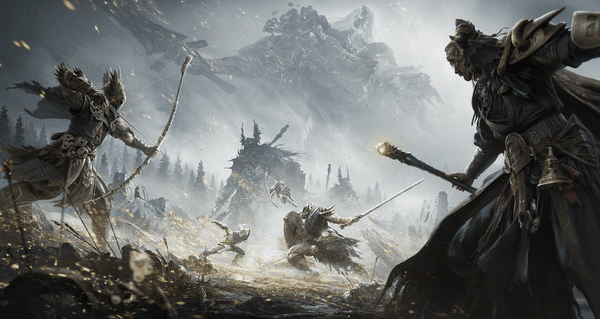
Corrupted forests, ruined docks, industrial complexes, and settlements devoured by the Gyldenmist slowly cease to be mere backdrops and become reference points. You start to remember where to pass, which areas can become dangerous, and above all, which paths allow you to exit quickly when an expedition starts to go wrong.
The second map further modifies this balance by introducing a progressively shrinking poisonous area, borrowing one of the most recognizable rules of battle royales. Its function is quite evident: to prevent groups from indefinitely avoiding each other and force them to converge into an increasingly smaller space. It works in creating encounters, even if it sacrifices some of the freedom that makes map exploration enjoyable. But the moment Mistfall Hunter truly manages to use its space well comes when we decide it's time to leave.
In addition to the normal extraction points, it's possible to use a bell to summon the creature needed to open the passage to safety. An apparently simple system, with one small problem: the bell reveals our position to other players. And that's where things change.
Perhaps we've already defeated an important enemy, our healing supplies aren't what they were at the start, and our backpack holds enough loot to make any further display of courage unwise. We ring the bell, and at the exact moment we decide to secure everything, we communicate our location to anyone nearby. We have to wait, check the access points, and simultaneously manage what is being summoned. Every second spent in that position leaves room for the same question: did anyone hear?
It's a dynamic that inevitably recalls Hunt: Showdown, where recovering a bounty means suddenly becoming very interesting to other hunters. Mistfall Hunter uses a similar principle but focuses it on extraction: the closer we are to securing what we've collected, the more vulnerable we become. And it's probably here that the game best manages to show what its risk system could be.
For much of the progression, Bellring Games builds tools that make death less painful. In front of the bell, however, those protections stop mattering to us for a few minutes. We have something in our backpack, someone might arrive, and suddenly we no longer want to find out how easy it is to replace it once we return to camp. It's that fear of losing that Mistfall Hunter should manage to make us feel more often.
Mistfall Hunter on PC: RTX 4060 Ti Holds Up, But 8 GB of VRAM Should Be Monitored
We tested Mistfall Hunter on a configuration featuring an AMD Ryzen 7 3700X, NVIDIA GeForce RTX 4060 Ti with 8 GB of VRAM, 16 GB of RAM, and an SSD. This machine allows for playing the game without particular issues, but also offers a good reference for understanding how much the most crowded situations truly impact the graphics card.
The most interesting parameter is not so much the frame rate while traversing quieter areas, but rather the GPU's behavior when the screen starts to fill with players, enemies, spells, and particle effects. That's where Mistfall Hunter concentrates the greatest load and where any fluctuations become most evident.
The RTX 4060 Ti manages the game well, but the 8 GB of video memory represent the limit to observe most carefully when increasing resolution, texture quality, and effects. This doesn't mean that VRAM will necessarily be saturated or that it's essential to immediately reduce details, but it leaves less margin in situations where the engine has to simultaneously load environments, characters, and effects.
Precisely for this reason, the most useful data during the test is not just the average number of frames, but their stability. A high value during exploration is relatively unimportant if the frame time then starts to fluctuate in heavier encounters. In the final version of the review, we will therefore indicate the average frame rate, recorded minimums, and behavior in the most crowded PvPvE battles, to understand how much the actual load impacts fluidity.
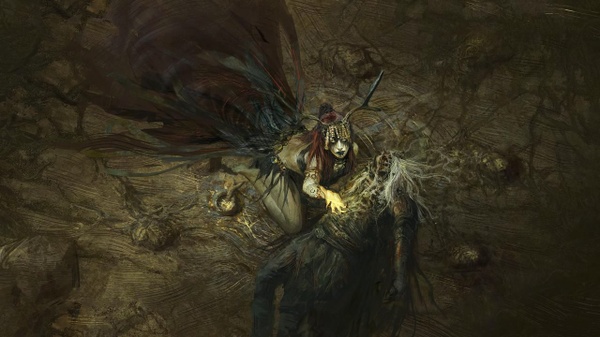
Even 16 GB of RAM are starting to represent a rather tight allocation for a current gaming setup. Mistfall Hunter doesn't automatically make them insufficient, but between the operating system, launcher, background services, and the game, there's less room compared to a machine equipped with 32 GB. The risk isn't necessarily losing dozens of frames per second, but rather having less margin when the system has to simultaneously manage area loading, video memory, and applications open in the background.
In other words, on our configuration, the GPU doesn't represent a real obstacle, but 8 GB of VRAM and 16 GB of RAM are the two elements on which it is most worthwhile to keep an eye. The RTX 4060 Ti has the necessary power, while video memory and system memory can become the point where the first compromises begin to emerge when increasing resolution and graphic quality.
Visually, Mistfall Hunter still offers a convincing result. The Gyldenmist, lighting, ruins, and ability effects contribute to building a clean and readable image even during combat, while it is precisely in the most crowded battles that we will have to verify how much this richness translates into a real increase in GPU load.
The audio compartment accompanies the action well: weapon impacts, spells, parries, and nearby fights remain distinguishable and help to interpret what is happening around the character. The music, on the other hand, remains more discreet and tends to leave room for environmental effects and the noise of the conflict.
On the online front, episodes of latency or disconnections may occur, but it is important to keep them separate from machine performance: a slowdown in connection and a drop in frame rate are two different problems, and in the technical evaluation, they will be treated as such.
Score
Editorial team
Mistfall Hunter review: the extraction RPG works, but plays it too safe to truly succeed
Mistfall Hunter succeeds where it seemed most difficult: transforming extraction into a credible action RPG, with well-differentiated classes, good melee combat, and PvPvE situations capable of creating tension. The problem is that, outside of expeditions, Bellring Games protects the player so much that it progressively reduces the weight of loss. The result is a solid and accessible title that entertains more than it truly makes us fear losing what we have gained.
Similar articles