Katanaut: Review of a Game That Cuts Deep
Katanaut is a fast-paced action game based on katanas and firearms
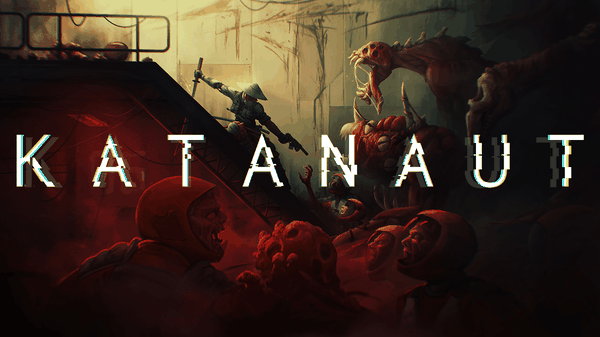


Katanaut is the debut of Voidmaw, aka Eugene, a one-man studio who chose to launch into the indie scene with an action roguelite set in a space station infested with zombies and alien creatures. Published by Acclaim, back on the scene after years of silence, the game is in fact a very particular mix of metroidvania, soulslike - well managed - and sci-fi horror, with a strong cyberpunk imprint - in colors and settings - and pixel art that does not seek nostalgia but disturbance, as is typical of this genre. The aesthetic is elaborate, while remaining minimal: corridors lit by neon, blood-stained walls, grotesque creatures that fuse flesh and metal, and a synthwave soundtrack that manages to emphasize unsettling moments even with electronic silences. The atmosphere is oppressive, each run is a descent into nightmare, and the fragmented souls-like narrative invites the player to reconstruct the story through audio logs, memory fragments, and digital remains scattered throughout the levels. The plot, though not original, manages to engage thanks to good environmental construction and an elegant narrative justification for the cycle of death and rebirth: every time Naut dies, his biomarkers are reconstructed thanks to accumulated data, making respawn an integral part of the game world.
Katanaut's Gameplay: A Hit to the Mark and a Hit to the Katana
This title is almost entirely gameplay, which is the beating heart of Katanaut. It's a brutal 2D action game, where the katana is the absolute protagonist. Slashes are fast, brutal, and leave trails of blood that often make it difficult to distinguish enemies and objects on screen. The initial pistol is weak and must be reloaded by inflicting damage with the sword, creating an aggressive and satisfying gameplay loop. As runs progress, more powerful weapons are unlocked, such as laser rifles, railguns, and grenade launchers, each with unique abilities that allow for ever-changing builds. The perk and upgrade system is vast and deep, with spectacular synergies that, however, in some cases, prove unbalanced: cooldowns that are too short and combinations that are too powerful can transform the experience from a claustrophobic survival to a walk in the park. The ability to equip two abilities simultaneously, such as slowing down time or summoning explosive orbs, adds further variety and strategy. Each run is different thanks to procedural level generation, which alternates hand-designed sections with random areas. However, procedurality itself is one of the game's weaknesses: it often results in linear corridors or empty areas, with level design that does not encourage exploration and enemy artificial intelligence that struggles to use platforms convincingly. All in all, it must be said that in about ten hours you can say you have completed the game.
Katanaut's Technical Aspects: Pixels That Kill
From a technical standpoint, Katanaut runs well even on modest configurations and on Steam Deck, although some frame rate drops have been reported, I read, but I haven't tested it directly. The central hub, where you return after each death, hosts useful NPCs like the Keeper, the Specialist, and the Weaver, who allow you to save, improve, and install upgrades. Progression is tangible and mitigates the frustration of starting over, encouraging continuous experimentation. The difficulty is high, almost merciless, and the game makes no allowances: every mistake can be fatal, every boss fight is a test of skill and patience. It was not designed for everyone, it doesn't want to be, and it shows you from the very first moments, but for those who seek a real challenge, for those who love punishing roguelikes and dark atmospheres. Its replayability is very high, thanks to the variety of builds, the randomness of runs, and constant progression. Despite some bugs and a steep learning curve, it has a powerful artistic direction, a refined combat system, and a clear authorial vision. It is a title that rewards perseverance and, though not perfect, deserves attention from fans of the genre.
Score
Editorial team
Katanaut: Review of a Game That Cuts Deep
It's not the most original game in the world, but it has a precise identity and if it gets the right exposure and the public manages to understand it, it could make its way in a particularly crowded indie market of similar games. Fun, immediate, and it works, while not bringing anything new or innovative.
Similar articles