Screamer: Review of the game that blends Inertial Drift with Wipeout
Screamer is a high-octane arcade game
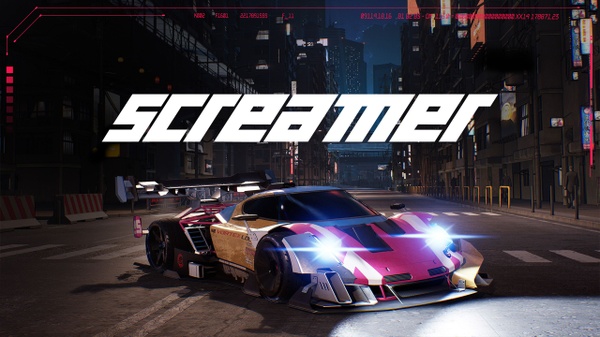


I was there when Milestone was called Graffiti and released Screamer in 1995, but above all, I grew up on Sega Rally 2 in arcades, while the perfect Screamer 2 still runs on my PC today – go download it from GOG and you won't regret it. I'm a fan of arcade racing games and I enjoyed the golden age of the maximum evolution of this type of video game, namely the PS3-360 era, with Motorstorm, Split/Second, Burnout, etc., which unfortunately closed a period of infinite innovation, killing (almost) this splendid genre, reducing productions to a bare minimum. But if you're wondering about the reason for the review's title, then keep reading.
Between future and drift: what is Screamer like?
The new Screamer blends twinstick mechanics with Inertial Drift's drifting style and Wipeout's typical attack/defense system through a driving model where the left stick handles steering and the right stick controls drifting, allowing for tight, reactive turns with precision similar to the “twin-stick” drifting of Level 91 Entertainment's work. This is integrated with the Echo System, which offers abilities like Boost, Strike, and Overdrive, transforming every turn into an adrenaline rush with management that must be balanced between offensive or defensive actions, precisely in the spirit of Wipeout's futuristic battle races, where pure speed and power management determine the outcome of the track confrontation.
Screamer
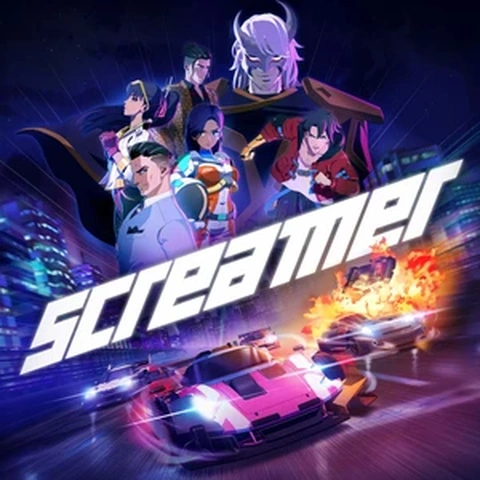
In addition to the anime imprint curated by Polygon Pictures in the cutscenes, which gives visual coherence and rhythm to the Story mode, Screamer openly draws on the imagery of Initial D and the related subculture of night racing: rivalries between crews, identities built around powerful cars and their tuning, and that crazy way of exploiting physics to its limits to control the cars on the road. There is, of course, a neon-cyberpunk aesthetic and a linguistic and social choice that is very close to the way gangs speak, elements recognizable both in the narrative sequences and on the track, thus clearly marking the objectives that are not simple races, but real bets on one's life.
The campaign — structured into over 100 episodes that alternate visual novels, cinematics, and races — progressively introduces the various mechanics through an extended tutorial at the beginning, so that learning becomes part of the story and the characters' journey, who come from different cultural backgrounds and speak different languages, reflecting the international nature of the clandestine Neo Rey tournament. In terms of plot, the story follows five teams and drivers with personal motivations — revenge, money, redemption — summoned by a mysterious organizer (Mr. A); the Echo therefore goes beyond being a mere racing ability but serves as a narrative node to tie the destinies of the protagonists (we even see it installed on stage by Gage, the mechanic) and imposes lethal but spectacular rules on the street confrontation, between Boost, Strike, and Overdrive; the first chapters introduce the Green Reapers/Banshee team (Hiroshi, Frederic, and Róisín), outline their secrets and objectives, and set up rivalries — for example against ruthless figures like Gabriel of Anaconda Corp — in a crescendo that recalls the “urban legend” progression typical of Initial D, but reinterpreted in a futuristic and combative key.
Bold... rides
Before adding any other words, it's right to dwell on the beauty of the cars. It's not just a superb artistic work, it's also pure aesthetic pleasure, an arrogance of polygons, pixels, and chrome that gleam under neon lights. Rarely have I seen something so beautiful to behold, and if an aggressive campaign of physical miniature reproductions were to start, I would want to collect them all. In all this gargantuan beauty, which is also joined by good track level design, we must necessarily insert ourselves like a wedge to talk about the pros... but also the cons.
You will necessarily have to keep your eyes glued to the road, because the curves arrive where you least expect them and almost always you will not be able to establish the calculations for braking, drifting, and speed calibration. In practice, if your vehicle makes a micron error in interpreting a curve, too early or too late, it will make you crash, delaying your recovery and making it really tough to catch up. The game is extremely unforgiving and it won't even be enough to memorize the tracks; sometimes you have to go beyond that. One brake too many and you're overtaken, touch the roadside and you're overtaken, you're hit too much and you can't regain the lead, not even with the boosts you get by racing and trying your best. The AI is poorly calibrated even at the "easy" level, and frankly, I have serious doubts that these settings will be maintained on day one, but even if not, there will certainly be several post-release revisions following player feedback; it's impossible (or almost) to play it with not just excellent, but at least decent results.
Opponents live and die like you, yes, and sometimes you regain positions despite falling behind, but others travel like trains while you're on a bicycle. You have to keep an eye on the car's gear changes; if you mess up there, you lose even more time… the end result is only frustration. I love complexity, I like to be challenged, I platinum Souls games, but this challenge is too high. I've done and redone some races in the tournament for hours (literally), without getting anywhere or barely scraping a decent result by the skin of my teeth, but only after I knew those roads better than the one from my house to work, and it's objectively "too much." If you add to all this that the gear lever makes you nervous because you can't follow it and your "engine seizes," and you don't have eyes to look at the other boosts... you'll go crazy.
The game I wish for
I am very disappointed, I am because with the right adjustments it could have been not a great game, but the best arcade on the market: getting rid of the annoying gear change, a better view of the boosts on screen, a more adequate car speed for those cursed asphalt snakes whose coils you'll never know how to intervene before finding yourself in front of those hairpin bends... well, it would have been final, but unfortunately it's not. Despite this, you will have before you the most beautiful cars ever created in a video game, excellent (potential) ideas that I am sure will be rewritten to satisfy all tastes, but at the moment there is still work to be done.
Score
Editorial team
Screamer: Review of the game that blends Inertial Drift with Wipeout
Screamer è uno dei giochi arcade più affascinanti (dal punto di vista estetico) e retro-gustosi che siano apparsi sul mercato dai tempi di PS3-Xbox 360, ovvero la golden age dei racing. Purtroppo il gioco è minato da una IA frustrante e un level design che non permette di godersi appieno l'esperienza che invece meriterebbe per ciò che ha da offrire.
Similar articles
Denshattack!: Review of a game that lets you skate with a train

The Relic: First Guardian – Review of the game that combines soulslike and RPG
Elementallis – Review: An Indie Adventure That Conquers With Heart