Inazuma Eleven: Victory Road: review of the arcade soccer game we desperately needed
Inazuma Eleven: Victory Road is the new over-the-top soccer game that's taking the world by storm
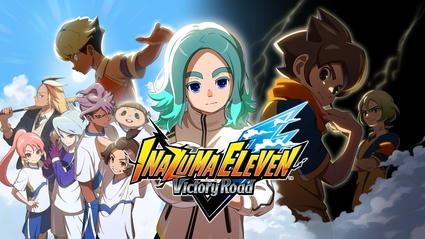


The Story Mode of Inazuma Eleven: Victory Road
The story mode of Inazuma Eleven is a narrative campaign that follows the journey of the Raimon team, led by goalkeeper Mark Evans, in an attempt to save the school's soccer club and face increasingly challenging tournaments. The plot unfolds through dialogues, cutscenes, and missions that push the player to explore environments such as the school, streets, and other locations, meeting characters and recruiting new members for the team. Despite the sports tone, the story is rich in twists and challenges that go beyond traditional soccer, with opponents equipped with spectacular techniques and situations that test the protagonist and his teammates.
The Gameplay of Inazuma Eleven: Victory Road
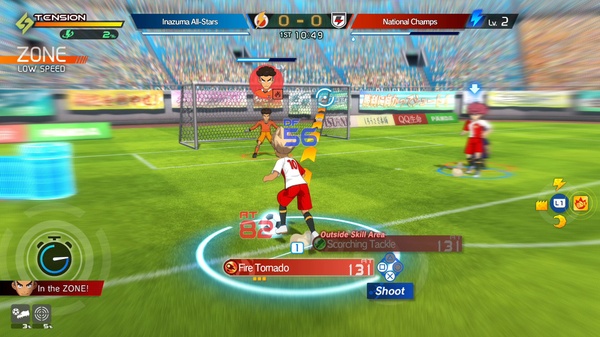
The gameplay in this mode is unique because it blends JRPG elements with arcade soccer. During exploration, the player moves freely, talks to characters, completes missions, and manages the team, improving stats and techniques. Some challenges include particular mechanics, such as recovering invisible balls or clashes that require quick decisions and precise strategies, creating moments of tension that go beyond a simple match. There are also "verbal battles," interactive dialogues where choosing the right answer can influence the course of the story or the outcome of a challenge, adding an active narrative component.
How long is Inazuma Eleven: Victory Road?
The duration of the story mode varies based on the time dedicated to secondary activities and recruitment, but on average it takes between twenty and thirty hours to complete the main plot, with the possibility of extending it through extra challenges and optional content. While this part is useful for understanding the story that might otherwise be less impactful, I confess that I found this part incredibly tedious. Both the "verbal challenges" and the "running around doing things" missions are tremendously tedious and practically almost useless… on the other hand, you then get to play the "real" (fake?) arcade soccer, and here things change.
Is Inazuma Eleven: Victory Road the best arcade soccer game?
If you grew up with Captain Tsubasa or this latest anime, you know perfectly well that the spectacularization of moves is at the heart of visual pleasure. In this case, however, they have managed to make both the aesthetics epic and the gameplay an integral part.
Player recruitment is the crucial first step: you start with a basic team, but to face the most challenging tasks, you need to expand your roster by choosing from hundreds of characters scattered throughout the game world. Some join simply by talking to them, others require specific conditions such as reaching a certain level, winning matches, or possessing particular items. In more advanced chapters, there is a scouting system that allows you to search for players based on role, stats, and elemental affinities, while special characters are unlocked through secret codes.
Each player has distinct parameters such as speed, power, technique, and stamina, as well as special moves that influence performance on the field, so the choice is never random but must respect a balance between roles and abilities. Before each match, you enter the tactical phase, where you define the formation by choosing the most suitable scheme and positioning players according to their characteristics.
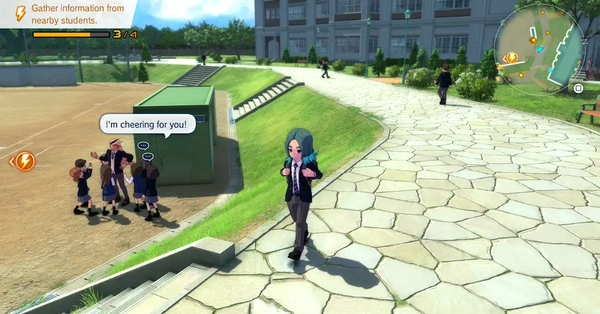
Here you also set game strategies, such as pressing or high defense, and manage the special moves that each player can equip, keeping in mind that these consume energy points and that elemental affinities (Fire, Wind, Earth, Legend) determine advantages and disadvantages in clashes. This phase is crucial because it establishes team synergy and the possibility of exploiting combos between characters. The heart of the gameplay is the match, which takes place in real-time with tactical controls: the player moves the ball carrier, passes, dribbles, and shoots, while other teammates move automatically but can receive quick orders.
When two players face each other, the game enters a choice phase where you decide whether to use a special move or a basic action, and the outcome depends on stats, energy points, and affinities. Special shots are the hallmark of Inazuma Eleven, with spectacular animations and the possibility of combining multiple players to create devastating moves, but they require careful stamina management because characters get tired and can lose effectiveness. The goalkeeper also has special moves to save, and the duel between shot and save is one of the most intense moments. The pace is frantic, but behind every action there is a strong strategic component: it's not enough to have powerful moves, you need planning, resource management, and knowledge of elemental affinities to make the most of every opportunity.
Leaving aside the (questionable) story, the rest of the game is amazing and incredibly addictive. The thousands of characters to unlock, combined with team combinations and the crazy attempt to play to earn coins and in turn unlock other characters is an irresistible combo. Suggested? I'd say so!
Score
Editorial team
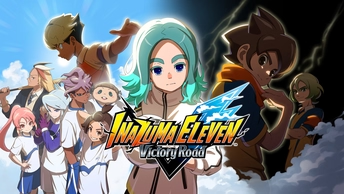
Inazuma Eleven: Victory Road: review of the arcade soccer game we desperately needed
If you love arcade games, RPGs, and action games where playing a soccer character is just an excuse to ignite a fierce diatribe of dialogues and actions bordering on madness, don't miss it.
Similar articles