I Am Future Review: Cozy Apocalypse Survival, the "Cozy" Survival Game on Xbox
A bright and relaxing cozy apocalypse: here's what it's like to play on Xbox Series X, covering performance, UI, repetitiveness, and post-game content.
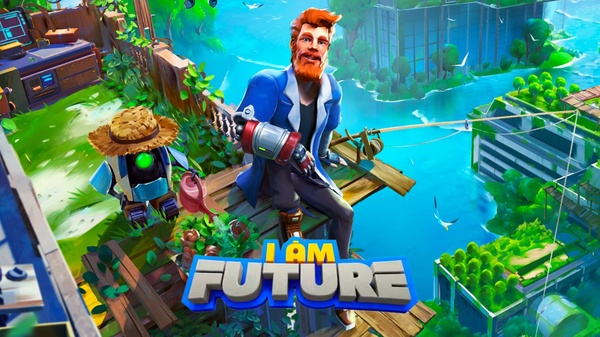


After a long gestation period, between Early Access and full release on PC, I Am Future: Cozy Apocalypse Survival finally arrives on consoles, giving a much wider audience the chance to try it without going through Steam and mouse and keyboard. This transition is important for this reason: not because the game changes its skin, but because it changes the type of player who can encounter it—the one who plays from the couch, with a controller, and wants to quickly understand if this “cozy survival” is really for them.
And here it's worth clarifying immediately what “cozy” means, because it's not just a marketing label. A cozy adventure is a game where the pressure remains low: you don't live with the constant anxiety of dying, losing resources, or starting over. The core of the experience is to build and improve little by little, to tidy up, to make your routine more comfortable, more efficient, more your own. In practice, it doesn't push you to survive “against” the world: it invites you to make a place “within” the world.
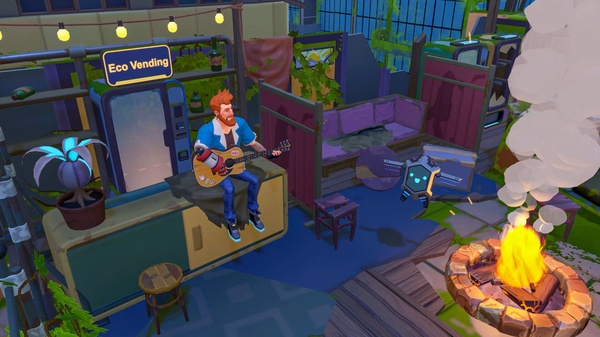
For this reason, too, the apocalypse of I Am Future is different from the usual. In many titles, the end of the world means continuous threats, scarcity, and tension: you run, fight, gather, escape. Here, the catastrophe is more of a landscape than an enemy: a submerged city, Cosmopolis, where nature is returning and the general tone is more contemplative than aggressive. A landscape with few threats works better, because the heart of the game is not fear, but reconstruction: you build a shelter on the roof, transform scrap into resources, and, over time, begin to make daily life smoother, until it almost works on its own. It's an end of the world that doesn't besiege you: it lets you breathe, and it lets you do.
One question remains, however, and it's worth keeping in mind as we go on: when the routine becomes stable and the story demands answers, does I Am Future really manage to close the loop, or does it leave you with a perfect roof and few reasons to continue?
Cozy Apocalypse, Cosmopolis Survival Guide
The story of I Am Future starts well because it immediately presents you with a clear absence, without turning it into a continuous threat. You awaken from a long cryogenic sleep on the roof of a skyscraper, with Cosmopolis below you, now empty, and you quickly realize that you weren't “meant” to end up there: something went wrong. The protagonist is customizable, but the premise revolves around two strong details: amnesia, which justifies discovering the world step by step, and a missing hand, replaced by a cybernetic implant. It's not just a useful gameplay element; it's also a simple narrative idea to interpret: you are incomplete, and as you put your space back together, you also try to put yourself back together. The main mystery revolves around the disappearance of humanity, apparently having left for Eden, while you remain behind due to a pod malfunction. It's not the classic “hero” premise: it's more a condition of isolation, where the question isn't “how do I save the world?” but “what happened, and what can I do about it now?”
Filling that void isn't a plot full of twists, but a small ecosystem of characters that adds color to your days. The robots hosting digitized human consciousnesses work because they aren't just quest givers: they become an alternative community, strange but present, capable of keeping you company and giving a precise tone to the experience, suspended between irony and melancholy. Characters like Earl the Refrigerator or Bombshell Barbara don't so much “push the story forward” as make you feel that, even in an empty city, you're not entirely alone. The relationship system, with dialogues and gifts, makes interaction warmer without turning the game into a true social simulation. And then there's a detail that adds a more subtle tension: the hypothesis that you might have been connected to Unicorp, the company behind the consciousness transfer technology. It's an interesting idea because it slightly dirties the comfort zone: if you're building a shelter and a “serene” routine, where does that serenity truly come from? And how clean is the story you're telling yourself?
Even longevity has a fairly clear profile. The campaign tends to conclude in 15–20 hours, depending on how much you get lost in crafting and daily optimization, and then gives way to a freer, almost sandbox phase, where the goal becomes expanding the base, refining automation, and making your small ecosystem more fluid. This is consistent with the type of game it is, but it brings with it a side effect: when the main missions thin out, what remains is mostly routine—that is, improving, organizing, repeating. For those who love this kind of experience, that's precisely the point; for those who seek constant narrative drive, it can become a weaker trait. Even the ending, for some, arrives with a certain haste, leaving the feeling of a mystery that started well but doesn't always manage to conclude everything with the same strength with which it began.
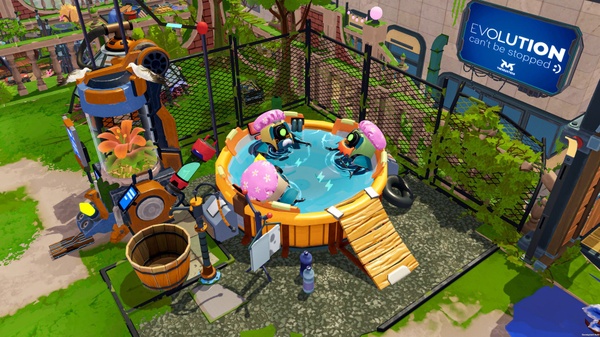
Dismantle, Build, Automate: A Relaxing but Eventually Repetitive Loop
The gameplay of I Am Future immediately clarifies its intentions: to build everything around a loop of gathering, dismantling, crafting, and management that remains interesting and, at times, even fun, because it manages to make activities enjoyable that in other games end up being just “side jobs.” The first hour is often decisive for this very reason. It doesn't win you over with a plot twist, but because it puts its key idea in your hands: here, you don't traverse the apocalypse by running and shooting, you traverse it by fixing. If you get into the rhythm, the game naturally finds its pace: you go on a trip to collect materials, return to base, organize your inventory, build an upgrade, and set off again with a slightly clearer objective than before.
The mechanic that truly gives the package its identity is the dismantling of the “old world.” It's not an instant click and it's not abstract destruction: it often becomes a concrete mini-game, where you separate components and recover useful pieces, transforming a common object into cables, chips, and metal. It works because it makes you feel a “before” and an “after”: you're not just accumulating resources, you're performing an operation that produces a visible result. And it's also why the game manages to be simply, almost physically, fun: gratification comes not just from the rising number, but from the successful action, from the feeling of having set something in motion again.
At that point, the center of the experience shifts to the rooftop base, which becomes the true play space. You don't just build objects; you build a system: you organize structures, plan where to put what, and start thinking in terms of flow, efficiency, and order. Energy management, between generators and connections, forces you to think about the layout and rewards those who love to optimize without feeling under siege. Completing the picture is automation with robotic minions: they serve to reduce some of the repetitive activities and bring out the more managerial component, i.e., assigning tasks, organizing storage, keeping the base running. When everything is running smoothly, it's one of the most satisfying moments, because it gives you the idea of having built a small ecosystem that works with you, instead of forcing you to do everything by hand.
That said, it's important to state it plainly: I Am Future is a repetitive game, and it doesn't even try to hide it. The same actions return often—you dismantle, cultivate, cook, transport, optimize—and as the hours pass, there's a risk that what was initially comfort becomes routine in the less noble sense of the word. For this very reason, it is especially suited for fans of the genre, for those who find gratification in that kind of loop where the pleasure lies in improving, tidying, and making what you've built more fluid. If, on the other hand, you're looking for constant variety or sharp gameplay shifts, monotony can set in, especially when objectives flatten out and threats, deliberately tamed by difficulty adjustment, remain a slight corrective rather than a true engine capable of breaking the cyclical nature.
Xbox, Between Solidity and Friction: When the Comfort Zone Shifts from Optimization to UI
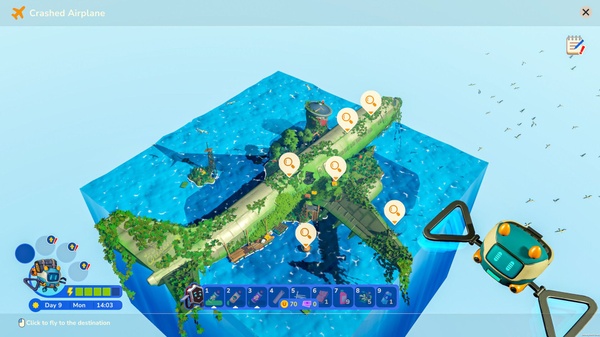
On Xbox Series X, where I played for about 20 hours, I Am Future holds up well technically and, above all, does justice to its visual identity. The clean and “colorful” art direction works because it doesn't try to sell you a dark and dirty end of the world, but a submerged city that should convey serenity rather than decay. The low poly style, essential but orderly, maintains good sharpness even when the base fills up and becomes more complex, with structures, cables, machinery, and objects to manage. The audio also remains consistent with the tone: soft and discreet music, designed to accompany the routine without overpowering it. The voice acting, when present, is more functional than expressive: enough to give character to NPCs, but it doesn't become a truly central element.
The most delicate point on console isn't power itself. It's ergonomics, that is, how the game translates its promise of comfort into the actions you actually perform, every minute. I Am Future thrives on inventory, resource movement, and continuous micro-decisions, so it thrives on interfaces: if they are fluid, repetition becomes relaxing; if they get bogged down, the “cozy” transforms into friction. With the controller, menu navigation and item management are sometimes less immediate than one would expect from a title that makes order a promise. Some quality of life choices, especially regarding storage and transfer, end up being burdensome because these are operations you repeat dozens of times in a single session. It's the most evident paradox: a game designed to reduce stress can create it not with difficulty, but with the friction of trivial actions that you resolve with a single gesture on PC but require multiple steps on console.
Remaining in the Xbox realm, a note should also be made for Series S. When the base grows and you start pushing for expansion and automation, visual density and management load increase, and on less powerful hardware, the rendering can change significantly compared to Series X. For this reason, if you want to evaluate the “endurance” of the experience, it makes sense to consider Series X as a reference and use Series S as a platform to personally verify your tolerance for any compromises in definition and fluidity. In a game so based on readability and precision of actions, a stable image and responsive controls are not aesthetic details: they directly impact the feeling of comfort.
Score
Editorial team

I Am Future Review: Cozy Apocalypse Survival, the "Cozy" Survival Game on Xbox
I Am Future is a survival game that chooses care over siege: dismantling, building, and automating become an interesting and often pleasant ritual, provided you accept its repetitive nature. On Xbox Series X, the rendering is solid and the art direction holds up, but the controller UI can introduce friction precisely where the game aims to be comfortable. If you love the genre, it's a consistent and “colorful” refuge, more to inhabit than to finish.
Similar articles