God of War: Sons of Sparta: Review of Santa Monica Studio's Indie Project
God of War: Sons of Sparta marks Kratos' return in indie form
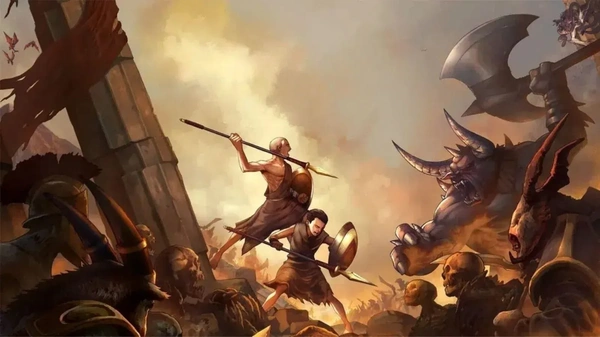


On paper, I was truly happy to see a brand like God of War tailored into a concept that wasn't a Triple-A. We've had examples of pure excellence in returns to the (more or less) 16-bit era with Teenage Mutant Ninja Turtles Shredder's Revenge or re-dimensioning of historical brands in 2D with Prince of Persia: The Lost Crown (and we could go on for a long time), although the trailer, I confess, made me slightly wrinkle my nose, but then I told myself… would they have managed to condense the heart of the brand into a compressed project?
A New Old God of War
Sons of Sparta is born with a clear idea: to offer a contained and less ambitious experience compared to the main chapters, while maintaining an emotional and thematic connection with the universe it comes from. In this sense, the game manages to carve out its own space, especially thanks to a surprisingly well-crafted soundtrack, which accompanies every phase of the adventure with an intensity capable of elevating even the most modest moments. The music is undoubtedly (almost) out of context, compared to the entire project, capable of giving color and breath even to the less inspired sequences.
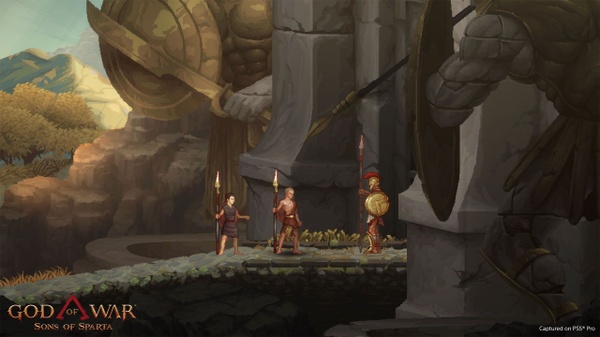
The narrative, while not shining for originality or depth, plays its role discreetly. The story is simple, linear, built on a few elements but consistent from beginning to end. The emotional focus on the characters works, even if it doesn't truly leave a mark: an effort to make the story engaging is perceptible, but the narrative remains confined within very obvious limits. It's a plot that can be followed, that at times can entertain, but that overall doesn't have enough strength to truly stand out.
The story follows a young Kratos during the harsh years of Spartan training, when he is not yet the legendary warrior he is destined to become.
Beside him is his brother Deimos, very different in character: where Kratos is rigid, disciplined, and obsessed with the rules of the Agoge, Deimos is impulsive, emotional, and more inclined to follow instinct. The plot takes shape when one of their training companions mysteriously disappears: this event pushes the two to break their mentors' directives and set off together to track him down. The journey that follows is not only a search mission, but also a path that tests their fraternal bond, exposing them to increasing dangers and forcing them to face wild creatures and threats emerging from the lands of Sparta.
In this journey, Kratos and Deimos are not only looking for the missing boy, but discover parts of themselves that will determine the future of the warrior Kratos will become. Many other mini subplots will join the main story, presented as requests, which will help the player broaden the narrative scope, but also the possibility of accumulating experience and points useful for upgrades. The upgrade system follows the same philosophy of essentiality: Kratos can improve some abilities related to the spear, shield, and acrobatic movements, unlocking modest increments that make attacks slightly faster or increase resistance to blows. There are also special powers linked to the Olympic tradition, which introduce more spectacular but still contained attacks. Overall, the progression is linear and safe, rarely audacious, almost fearful of pushing further. Every improvement is useful, but none truly change the pace of the game or offer a tangible leap in quality.A somewhat… Spartan game!
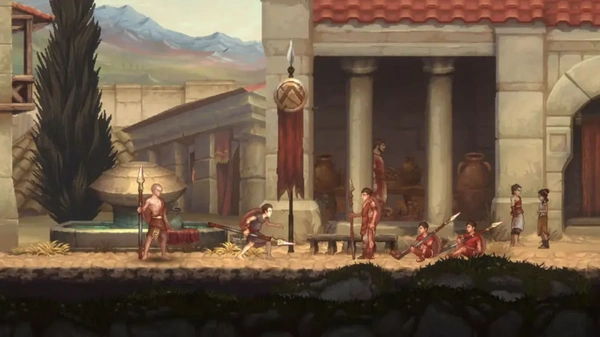
The real problem with Sons of Sparta is its inability to define its own identity. While recalling some elements of the main series, the game never manages to establish a recognizable language nor to propose mechanics or aesthetic choices that make it stand out. The weapons, from an impact perspective, are weak and lack personality; the combat lacks bite, and the violence – a symbolic element of the franchise it derives from – is attenuated, almost sterilized, stripping the title of one of the most essential components of its DNA.
This absence of character does not only concern the playful aspect, but permeates the entire experience. The game seems to exist in a kind of middle ground: too timid to assert itself as a reinterpretation of the series, too tied to the name it bears to be considered a completely autonomous indie. The idea of the “minor project” works on paper, but its realization leaves the feeling that the potential has remained only sketched, never finding a true focal point.
The final result is a title that has some qualities – primarily the excellent soundtrack and an enjoyable narrative – but that carries with it a constant sense of incompleteness, of excessive caution, of a missed opportunity. It's the kind of game you can appreciate for an hour, maybe two, without feeling anything particularly negative… but also without feeling anything memorable.
Ultimately, Sons of Sparta is an experience that lives and dies with the name it carries. If it weren't connected to the series it derives from, if it didn't have that title on the cover, hardly anyone would notice its presence. And this, unfortunately, is its biggest limitation.
Score
Editorial team
God of War: Sons of Sparta: Review of Santa Monica Studio's Indie Project
Similar articles