Fallout 4 Puts Switch 2 to the Test with the Anniversary Edition
We're leaving Vault 111 again, but this time on Switch 2
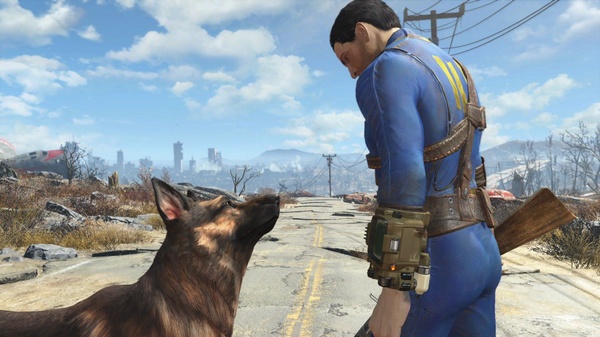


Quietly, video games are taking over cinema and television. Taking advantage of Hollywood's crisis of ideas, now wrapped up in a crazy logic of sequels and franchises, video game brands have proven to be a useful and productive resource, as they generally involve stories and characters already well-known to the general public, "virgin" of big and small screen experience, but above all already equipped with a reusable narrative background, or at least some lore on which to build (as in the case of A Minecraft Movie, for example). From Super Mario to The Last of Us, the list of successes is long, and among them, Fallout certainly deserves its place, transformed into a cult series by Amazon. And since in this new climate of mutual love between cinema, TV, streaming (ah, the good old days when you could use just one word…) and video games, the watchword is synergy, the rediscovery of Bethesda's post-atomic RPG saga coincides with the launch of a series of operations to retrieve old materials and re-propose them updated to modern times (remasters, remakes, and assorted re-editions, in short), of which this Anniversary Edition of Fallout 4 is just a preview (of the rumored remakes of Fallout 3 and New Vegas?).
The First Post-Apocalypse on Nintendo
Indeed, it seems incredible, but no game in the Fallout saga has ever appeared on a Nintendo console, or rather, no main saga title, because the pioneer's palm goes to Fallout Shelter, a free management game also released on Switch in 2018. In some ways, however, the true precursor to Fallout 4 on Switch 2 was Skyrim with its conversion for the first Switch model, also used to demonstrate the console's technical capabilities, as well as to expand its catalog to new types of games and new needs. Fallout 4: Anniversary Edition therefore arrives today to inherit Skyrim's legacy, expand the audience for Bethesda games, but also – why not – serve as a technological benchmark for Switch 2 (obviously the game is also available for all other platforms, but in that case, the technical aspect is less relevant).
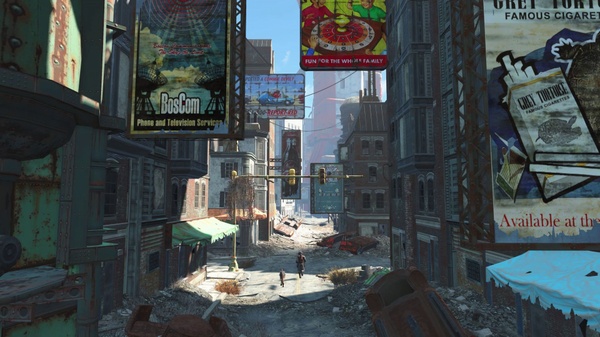
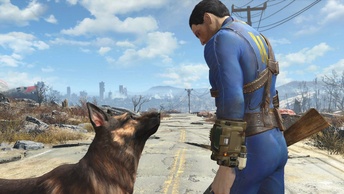
Before jumping to performance and conclusions, however, it's best to take stock of the situation, given that the Fallout saga is, all things considered, a novelty for Big N players. Fallout 4 takes us to the Boston area, in the shoes of a survivor of atomic devastation: the first part of the game allows us to enjoy the peaceful daily life of a suburb blessed by the '50s economic boom, this before an alarm forces us to take refuge in a tunnel sponsored by a corporation to save our lives. Upon awakening from a long cryogenic sleep, we discover that the world we knew no longer exists. Basically like every awakening in 2026, but with the added bonus that atomic bombs have razed almost everything and driven humanity back to the time of tribes, plus malevolent wandering genetic aberrations.
The game, released in 2015 and re-released several times with various additions, is all here, in its entirety: the Anniversary Edition in fact includes not only the base game (quite obviously), but also all six official expansions: Automatron, Wasteland Workshop, Far Harbor, Contraptions Workshop, Vault-Tec Workshop, and Nuka-World. As per tradition, from the moment you step out of Vault 111, you can simply do whatever you want: follow the main storyline that sees you searching for who killed your wife and daughter, leading you to the most remote corners of the map, in the presence of numerous factions and adversaries. Or you can simply decide to mind your own business, exploring at will, conversing or attacking, completely ignoring what the game asks you to do to live an adventure all your own. But not only that, Fallout 4 also brings with it a new mechanic for the series, that of settlements, which allows you to try your hand at building and planning small villages of catastrophe survivors. But this and other topics have been discussed for 10 long years: it's time to clarify how Fallout 4 fares on Nintendo Switch 2.
So, How Does Nintendo Switch 2 Handle Fallout 4?
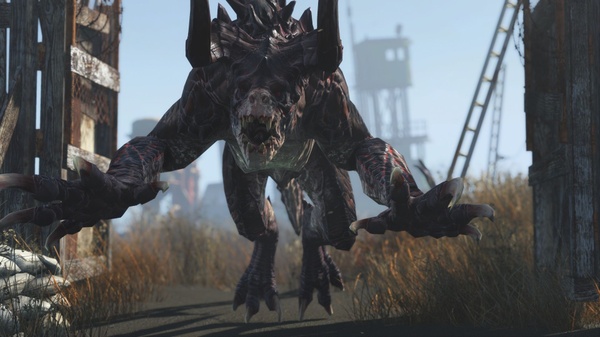
To summarize, one could say well. Without additions, without frills, which gives the idea of an objective achieved, but without results capable of leaving us incredulous in front of the screen. While not having a bionic eye, Switch 2 runs Fallout 4 like its predecessors from the previous generation, the latest models of PS4 or Xbox One. A certainly interesting choice is to offer three possible game modes: at 30, 40, or 60 FPS. The first prioritizes visual fidelity (perceptible especially in the depth and definition of backgrounds), while the latter guarantees greater fluidity at the cost of more nuanced scenarios in the background. In general, the advisable solution (and the one we primarily used) is the middle ground at 40 FPS, which represents a good compromise between quality and fluidity. Expect occasional slowdowns and stuttering in every mode, especially in very detail-rich scenes (basically consoles have become PCs).
For those who know Fallout 4, nothing new under the sun (or under the atomic explosion): bugs, glitches, and other performance issues have always accompanied Fallout 4, and these inseparable companions have followed our game to Switch 2 as well. It's Bethesda's classic modus operandi: even in the past, operations of this type, i.e., new editions of old games like Skyrim on Switch, were handled in the same way, taking care of the porting, but leaving the original game unaltered, with all its well-known problems. Various bugs and glitches are, in some way, part of the fun associated with Fallout, but risking throwing away dozens of hours of gameplay due to a bug that breaks everything or disables some action (as happened reading various experiences posted online) can be particularly indigestible. And after 10 years, not intervening is not justifiable.
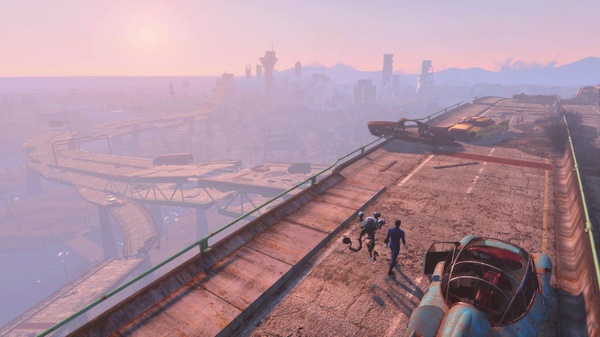
Predictably, in the same way, no new features exploiting the hardware peculiarities of Switch, such as the ability to use Joy-Cons 2 in mouse mode or HD Rumble, have been introduced. And here we come to the critical notes, that is, the essentiality of an Anniversary Edition which is undoubtedly packed with content and represents the best way to fully experience a cornerstone of the genre (keeping in mind that it is still a 10-year-old game re-sold at €59.99), but which stops at the bare minimum to be acceptable today. Ultimately, the Switch 2 edition makes the most sense, because it truly offers an "unprecedented" title on the platform with optimization work on the code that impresses with the performance it extracts from the Nintendo console (and which could further amaze shortly through a DLSS upgrade that will further improve things at 40 and 60 FPS). In terms of video game preservation, the operation is still commendable, but one cannot totally ignore the laziness of not retouching anything on a title with 10 years on its back (which shows on faces and models), nor of exploiting the possibilities offered by the hardware. Fallout 4 remains a great game, but this Anniversary Edition does very little, beyond piquing the curiosity of a tech bro, to make it worth playing on Switch 2.
Score
Editorial team
Fallout 4 Puts Switch 2 to the Test with the Anniversary Edition
The absence of new features, new mechanics tied to Switch 2, or even just fixes for bugs known for 10 years would warrant an official condemnation. The abundance of content alone would not justify either the edition or the price. On Switch 2, however, the operation finds its purpose in the saga's debut on the console and in the curiosity for its technical performance, which is certainly satisfactory, though not exhilarating.
Similar articles