Beyond the Dark: Nightwatch, review of a co-op horror that stumbles on its own ambition
An intriguing cooperative escape room on Nintendo Switch 2 that turns communication into the only weapon for survival, but proves to be limping in many aspects.


The survival horror genre has historically built its fortunes on isolation: throwing the player into the unknown, deprived of any human support, has remained for decades the shortest and most effective way to trigger panic. Overturning this foundational dogma, transforming solitude into a forced symbiosis between two people, is a conceptual gamble that is anything but trivial. It is precisely on this slippery ground that Beyond the Dark: Nightwatch, the new effort from independent French studio Atlantis Studio, published in collaboration with Q-Games exclusively for Nintendo Switch 2, chooses to operate. From the outset, the game presents itself as a radical experience, strictly conceived for two players and structured around the principle of asymmetric cooperation.
Here, it's not simply about sharing the same corridor while wielding two weapons, but rather about splitting the player's very faculties into two complementary sections: on one side, the one who physically acts in the dark, and on the other, the one who observes, analyzes, and directs operations from behind a wall of monitors. By leveraging the console's sharing functionalities – also thanks to a provident Friend's Pass and GameShare system that allows players to face the nightmare on two separate consoles with the purchase of a single copy – the title aims to recreate the claustrophobic tension of a gigantic deadly escape room, where silence equates to a death sentence and a single piece of information communicated late can make the difference between salvation and the abyss.
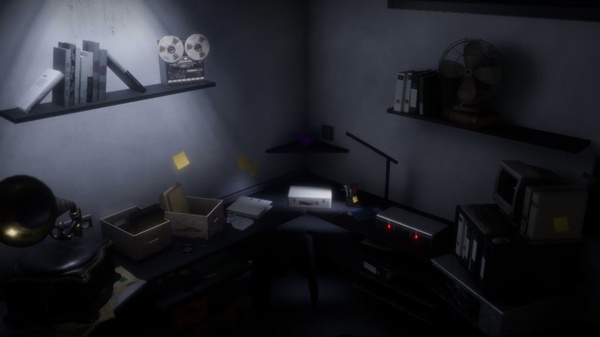
To enhance such a peculiar independent project, we also find two exceptional names that do not go unnoticed: the unmistakable vocal timbre of Troy Baker baptizing the introductory narration and the evocative scores of Oscar Araujo, a composer already appreciated for his gothic past with the Castlevania: Lords of Shadow saga. However, as often happens when a brilliant intuition clashes with the limits of a contained production, the distance between the goodness of the idea on paper and its actual staging can prove merciless. Between an undoubtedly magnetic atmosphere and a series of technical and structural rough edges that severely test the patience of even the most close-knit couples, it's time to understand if Atlantis Studio's journey into darkness truly deserves your time.
Two Screens for One, Uncertain Nightmare
Let's clear the air immediately: if you're looking for a layered narrative in Beyond the Dark: Nightwatch, you'll be disappointed. Despite an undeniably fascinating opening, enhanced by Baker's magnetic voice expertly setting the atmosphere, the diegetic component is reduced to the bare minimum. You awaken as a prisoner inside a gloomy mansion, without coordinates and with the sole, desperate goal of escaping by relying on the voice of a mysterious accomplice connected remotely. The various documents scattered throughout the rooms attempt to outline a dark underlying mythology but remain frayed fragments that, moreover, lead to an abrupt and hasty epilogue, unable to provide a true sense of catharsis after so much effort. The story, in short, is merely a functional pretext to trigger the production's true beating heart: its rigorous gameplay asymmetry.
To understand how Atlantis Studio's work is played, one must imagine splitting the normal faculties of a classic survival horror in half, distributing them across two strictly separate screens. On one side, we find the Explorer, who experiences the nightmare firsthand, physically moving through the dark corridors of the estate: it is he who collects objects, interacts with environmental mechanisms, and risks his life in the field. However, this role is afflicted by total logistical blindness: he has no map, ignores current objectives, and cannot even thoroughly examine or independently equip the tools he collects. This is where the second player, the Watcher (or Navigator), comes in. Barricaded behind a virtual wall of monitors, the latter manages the mansion's security camera circuit, reads and deciphers texts retrieved by his companion, administers utilities, and, above all, acts as a vocal compass to guide the Explorer step by step.
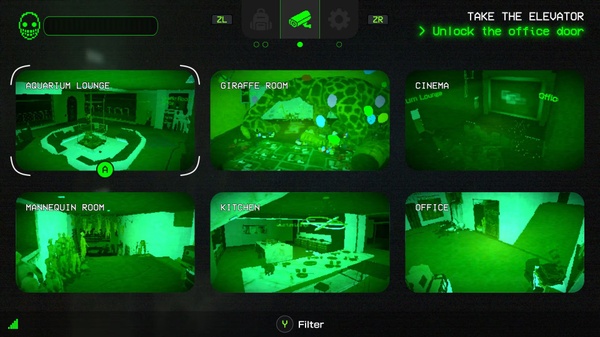
On paper, this mutual dependence should trigger formidable psychological tension, transforming the entire estate into a gigantic deadly escape room where verbal communication becomes the only weapon for survival. Solving environmental puzzles, in fact, requires a continuous cross-referencing of data: the one walking in the dark describes symbols, locks, or architectural configurations, while the one sitting at the monitors sifts through textual notes and closed-circuit footage to extrapolate codes, combinations, and exit routes. The problem is that, in the delicate transition from theory to practice, the gameplay structure begins to creak noticeably, betraying an immature staging from multiple points of view. The first, glaring obstacle encountered is an almost non-existent initial onboarding. Confusing the charm of mystery with a total lack of basic instructions, the developers throw the pair into the darkness without minimally explaining the grammar of the interfaces or the rules of engagement. Understanding how shared menus interact, how the Watcher should unlock or make usable objects collected by the Explorer, or even how on-screen indicators work, requires an initial phase of confused and irritating trial and error that breaks immersion at the outset.
Once the initial bewilderment is overcome with difficulty, evident structural flaws then emerge in the balancing of the two roles, which do not provide the same degree of involvement at all. While the one playing the Explorer experiences a physically active experience, immersed in darkness and constantly on edge, the Watcher remains confined to a conceptual prison that is far too static and passive. Much of the time in the control room is spent staring at fixed and grainy footage or scrolling through text screens, waiting for the partner in the field to reach the next point of interest. Contributing to the Navigator's even more thankless task is a camera management that is far from impeccable: in addition to several blind spots that make it frustrating to follow the companion's movements, the video surveillance system sometimes encounters annoying activation glitches, with video streams that struggle to update or respond unclearly to commands, leaving both players in informational chaos for the wrong reasons.
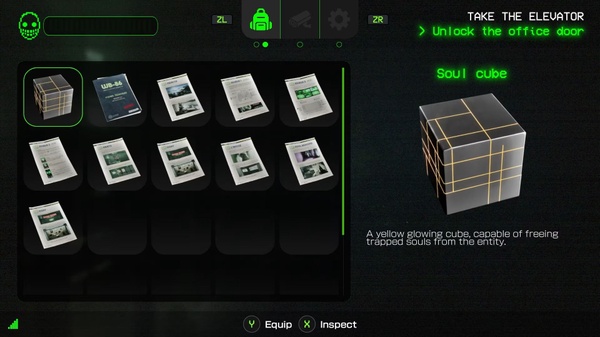
This disparity weighs heavily when the threats patrolling the structure come into play. Several minor sentinels roam the corridors – which the Explorer can choose to stealthily bypass or silently eliminate by catching them from behind, albeit with rather clunky command feedback – but the true bogeyman of the mansion is the Gloam, a lethal entity sensitive to the slightest noise. And it is precisely in the management of danger and defeat that Nightwatch makes its most serious misstep, adopting a needlessly punitive loop structure. Any physical contact with the Gloam, in fact, equates to an instant game over: no second chances or room for maneuver, just an abrupt return to the starting point that forces the pair to restart the entire sequence from scratch, retaining only a negligible fraction of the progress and items unlocked up to that point.
Such punitive rigor would demand millimeter-perfect precision in stealth mechanics and enemy routines; on the contrary, the Gloam's artificial intelligence proves to be, to say the least, inconsistent. The creature alternates moments of unnatural omniscience, where it seems to perceive the Explorer's presence regardless of any acoustic caution, with grotesque short circuits in pathfinding. It is not at all uncommon to see the monster getting stuck in scenario elements or doorframes during its patrols, remaining planted like a mannequin in the middle of a vital room for progression, only to suddenly "unstick" itself at the exact moment the player desperately tries to sneak past it. When an exhausting marathon of already solved puzzles and already explored corridors is ruined not by a communication error by the pair, but by a capricious AI that decrees a death as inevitable as it is unfair, the healthy tension of survival horror instantly evaporates, leaving only a bitter frustration of trial and error.
A Clean Aesthetic Halfway Between Darkness and Screen
From a purely visual standpoint, Atlantis Studio's work moves on tracks of decided stylistic sobriety. Leveraging the technical exclusivity of Nintendo Switch 2, the developers have crafted a clean and functional visual system, which focuses entirely on the management of an oppressive darkness and the claustrophobic geometry of the mansion's interiors. It does not seek photorealistic spectacularization, but rather a dense-gothic atmosphere that manages to visually convey the Explorer's sense of isolation. However, a sometimes sparse polygonal rendering of the environments and an overly basic management of security cameras for the Watcher hinder the visual impact, characterized by grainy video streams and fixed shots that, while aiming to simulate the aesthetic of vintage surveillance systems, often end up being simply annoying to decipher, hindering spatial reading rather than stimulating it.
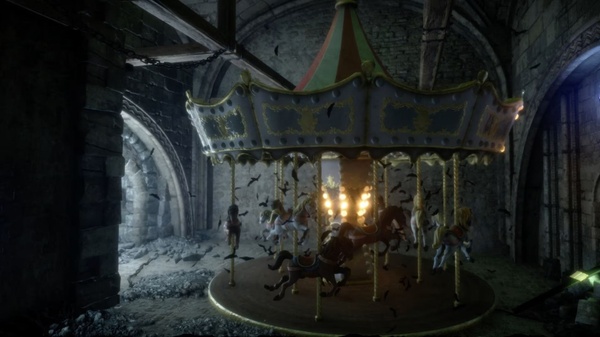
The acoustic aspect, however, is decidedly more inspired, boasting two top-tier names that enhance the entire production. The scores by Oscar Araujo manage to weave an agonizing and rhythmic musical backdrop around the estate, perfect for punctuating the anxiety of escape and maintaining high tension during the Navigator's moments of stillness. Guiding this nightmare, as already anticipated, is the unmistakable voice of Troy Baker, whose vocal performance in the introduction gives the title an authorial depth that the script, unfortunately, struggles to sustain in the long run. The sound design of environmental effects is less memorable: while the soft footsteps or the dull frequencies of the Gloam play a fundamental role in alerting the Explorer to imminent danger, the spatial localization of sounds suffers from too many inaccuracies, forcing players to depend almost exclusively on verbal communication rather than ambient acoustic signals.
Score
Editorial team
Beyond the Dark: Nightwatch, review of a co-op horror that stumbles on its own ambition
Beyond the Dark: Nightwatch is the classic example of how a courageous conceptual intuition can crash against the limits of an immature and unrefined execution. The idea of splitting the normal faculties of a survival horror in half to distribute roles between a "blind" Explorer in the field and a Navigator barricaded behind monitors undoubtedly has the merit of refreshing the dynamics of asymmetric cooperation, providing moments of genuine tension when communication becomes tight. Unfortunately, Atlantis Studio's work sabotages its own ambition due to non-existent onboarding, a deeply unbalanced role distribution that relegates the Watcher to an overly passive role, and a punitive loop structure that is regularly frustrated by capricious and buggy enemy artificial intelligence. Despite an oppressive atmosphere and a high-level sound design by Oscar Araujo, the adventure founders long before the credits roll, leaving a bitter taste of a wasted opportunity. An experience recommended only to the most close-knit and patient pairs of players, willing to turn a blind eye (or both) to a decidedly limping technical and gameplay execution.
Similar articles
Black Jacket: Review of an Alternative Balatro That Holds Its Own
The Shore: Enhanced Edition, review of a psychological horror that wastes its valid premises

Nightsleeper – Out of Control, the review: a railway thriller that stays on track with tension