Remothered: Red Nun's Legacy, the review: secrets finally surface
Stormind Games unravels the mysteries of the Ashmann family and concludes the trilogy with a compelling story. A shame about the stalkers, who are less scary than expected.



Cinema has taught us that entering the home of complete strangers is not always a good idea, especially when the host is overly kind. Take Heretic, for example, where two young missionaries accept an invitation from an seemingly cordial man, played by an unsettling Hugh Grant, only to find themselves trapped in a situation that becomes progressively more absurd and dangerous.
What was supposed to be a simple conversation about faith transforms into a perverse psychological game, made of riddles, forced choices, and doors that would definitely be better left unopened. The problem is that, by the time you realize the owner's true intentions, it's too late to turn back. And let's admit it, watching the film, it's natural to wonder why the two girls didn't just invent an excuse to leave. On the other hand, if horror protagonists always made intelligent decisions, the genre would probably have a very short life.
Gallery
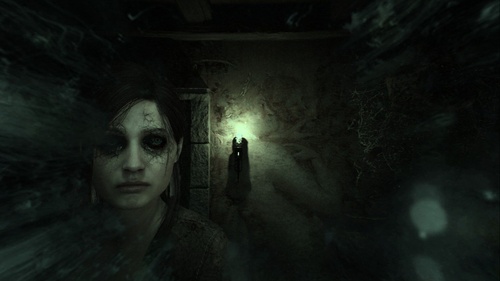
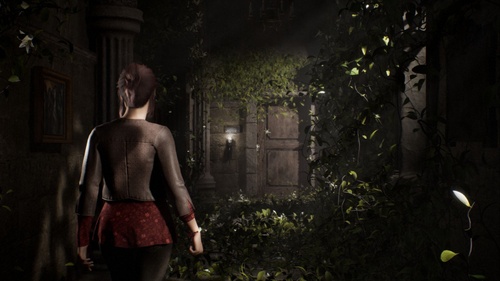
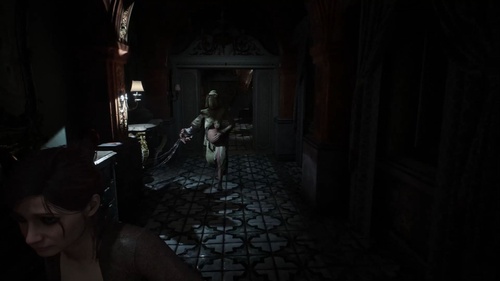
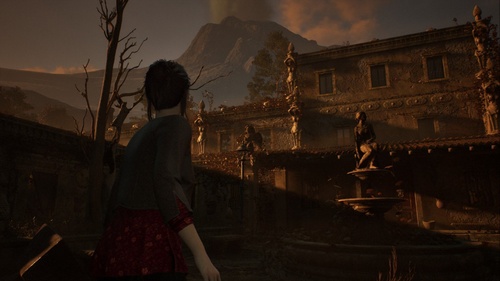
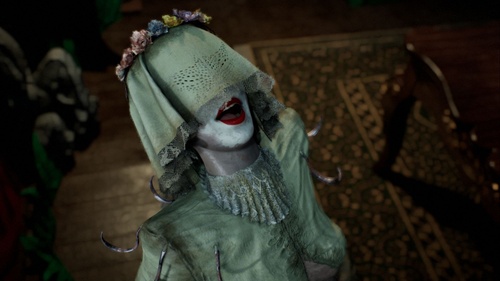
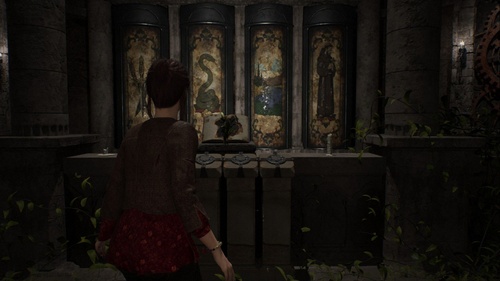
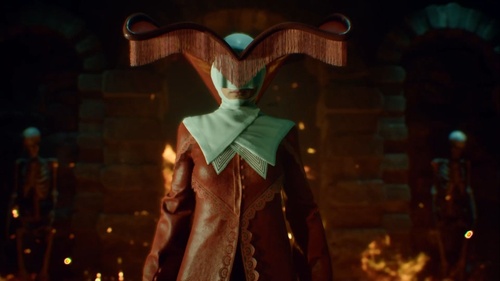
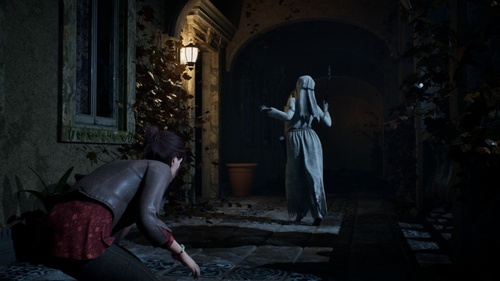
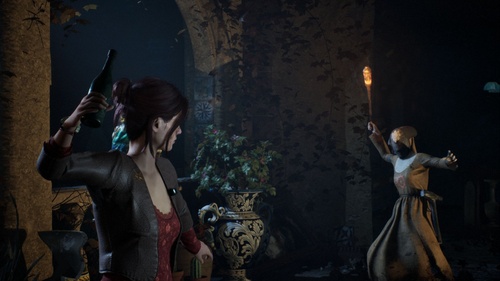
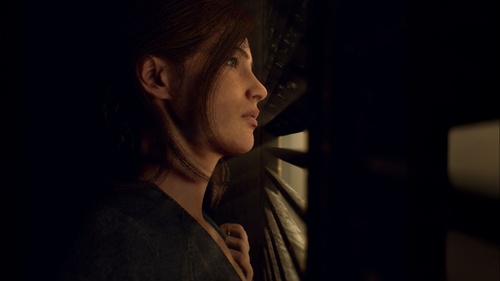
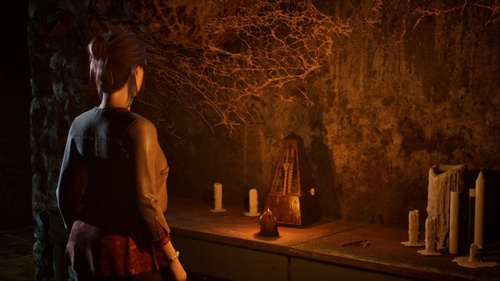
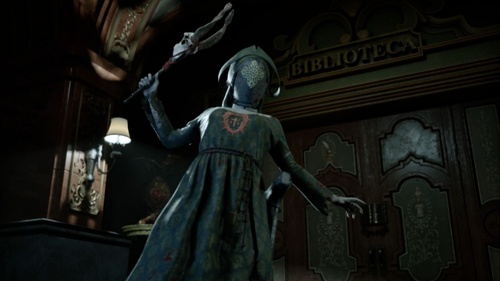
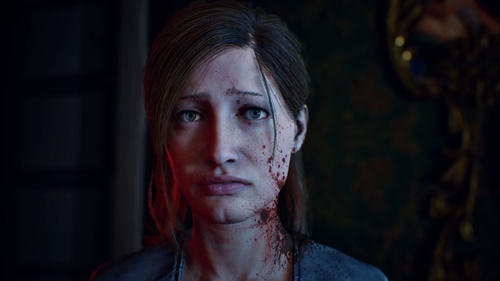
It's a situation that Remothered players know quite well. The all-Italian survival horror series, born in 2018 with Tormented Fathers, built much of its identity around this very concept, recovering that particular formula made famous by Clock Tower, where hiding under a bed or slipping into a closet was often a much smarter solution than directly confronting your persecutor. An interesting recipe, especially for old-school horror fans, which however had shown some cracks with the subsequent Broken Porcelain, due to unreliable artificial intelligence and a series of technical problems that ended up compromising much of the fun.
Six years after the second chapter, Stormind Games finally returns to the Ashmann family with Remothered: Red Nun's Legacy, the third and final episode of the trilogy, carrying a significant responsibility: to provide a sensible conclusion to a story that, between scientific experiments, hidden identities, killer nuns, and a frankly worrying number of moths, had left many questions unanswered.
The question, however, remains the same: will Stormind have managed to worthily conclude the trilogy, while also correcting the problems that had penalized its predecessor? Because a good story can certainly push us to open yet another locked door, but in a survival horror, there should also be someone capable of making us regret that decision.
Everything Returns to the Ashmann Family
If you've played Tormented Fathers and Broken Porcelain, the Ashmann surname should already be enough to make you want to check where the emergency exit is. For those approaching the series for the first time, the story of this third chapter begins in 2012, when Susan, a mother desperate for the disappearance of her daughter Agata, receives a mysterious video that seems to suggest the child is still alive. Fourteen months have passed since her disappearance, and that recording finally represents a concrete lead, convincing her to reach, along with her husband Angelo Trovato, an old residence located on the slopes of Mount Etna. The problem is that the building in question is Villa Ashmann, and considering the previous history of the owning family, we can already imagine that it won't be a quiet real estate visit.
The villa is indeed the home where Gloria Ashmann, the infamous Red Nun, spent part of her childhood, before a series of rather traumatic events led her to the convent of the Dying Christ. Those familiar with the saga will probably remember how important this place was for the experiments involving Phenoxyl, Acherontia moths, and the people used as test subjects. Red Nun's Legacy picks up precisely from these events, trying to reconstruct a past that the first two chapters had told through hidden identities, manipulated memories, and a frankly alarming amount of family secrets that would make any Spanish soap opera pale in comparison.
Don't expect a simple recap of what happened before, however. The search for Agata represents the starting point of a story that progressively expands, using documents, testimonies, and memories to bring to light episodes of which we only knew a part. In this sense, the villa becomes more than just an environment to explore, because many of the objects and clues we encounter help explain the responsibilities of a family that has influenced the lives of many people. And the more information we retrieve, the more we realize how interconnected the events of the previous Remothered games were.
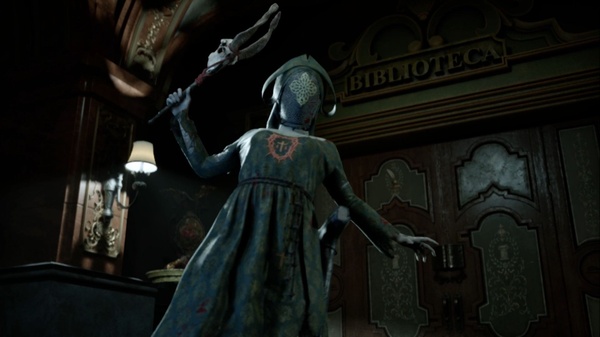
It must be said that the script is not always easy to follow, especially when names, experiments, and situations dating back several decades begin to re-emerge. Susan's story certainly offers an understandable entry point even for new players, but having completed the first two chapters allows for a much better appreciation of the weight of the revelations. It's not necessary to remember every single detail of the story, also because the game provides various pieces of information to reconstruct it, but those familiar with the trilogy will recognize connections that might otherwise go unnoticed.
We particularly appreciated the way Susan's character is developed, a protagonist who doesn't just passively endure what happens around her. The desperation of a mother searching for her daughter progressively gives way to a determination that emerges in the most important moments of the story, especially when the retrieved information begins to question what she thought she knew. There are also plot twists capable of completely changing the perspective on events, some of which we naturally prefer to let you discover for yourselves.
The result is a narrative conclusion that positively convinced us, because Stormind Games finally manages to piece together much of the complicated mosaic built around the Ashmanns, offering answers to questions that had remained open for years. Some choices inevitably leave a bitter taste, but the trilogy finds a satisfying closure, especially for those who have followed the series from the beginning.
Killer Nuns Wanted
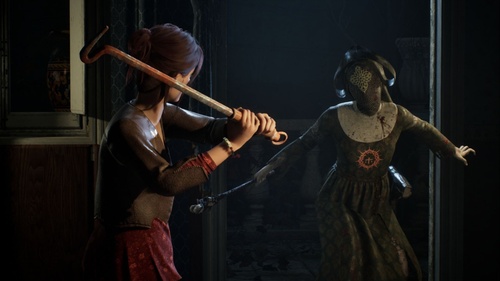
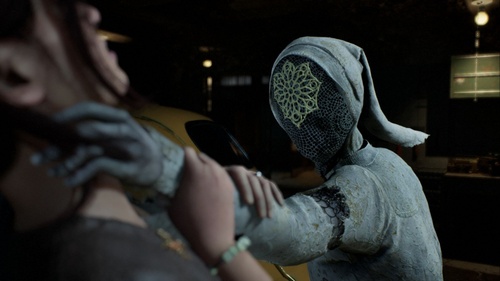
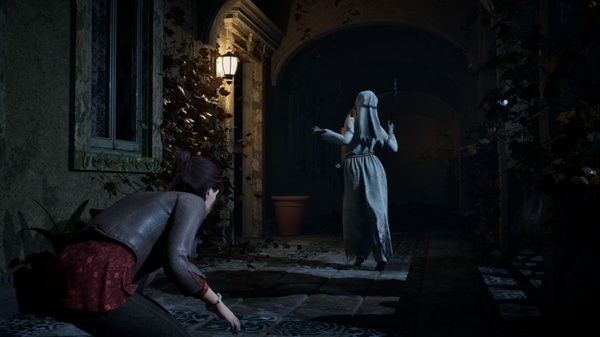
If there's one thing survival horror has taught us over the years, it's that when someone wants to kill you, it's best to know your surroundings well. Red Nun's Legacy retains this philosophy, entrusting much of the tension to the presence of stalkers, enemies who patrol the villa, forcing Susan to move cautiously, using hiding places and improvised objects to avoid being caught. Running, opening a door at the wrong moment, or making too much noise can attract unwanted attention, while walking slowly often allows you to cross entire rooms unnoticed. A formula we know quite well and which, at least on paper, should guarantee that sense of vulnerability typical of the early Remothered games.
The problem is that the pursuers' artificial intelligence doesn't prove particularly convincing. During our six hours of gameplay, we encountered rather erratic behavior, with enemies who sometimes relentlessly try to reach us and at other times seem to lose interest with surprising ease. Often, it's enough to slip into an adjacent room and wait a few moments to resume exploring undisturbed (evidently, even nuns have other things to do). Things improve when the environments become more labyrinthine, because chases force us to quickly identify an escape route, but once the stalkers' habits are understood, bypassing them becomes far too simple.
Further complicating the balance is the resource management, which is decidedly generous compared to what we would expect from a survival horror. The inventory only allows carrying three items, a limitation that we found adequate overall, especially because it encourages choosing what to carry. Personally, we preferred to always have some blunt weapons available, useful for hitting and temporarily immobilizing most of the nuns, thus gaining the necessary time to get away. The so-called Bride is an exception, protected by a shield of moths that makes this strategy practically unusable, forcing us to find an alternative path. An interesting idea, which we would have liked to see applied with greater variety to the other persecutors as well.
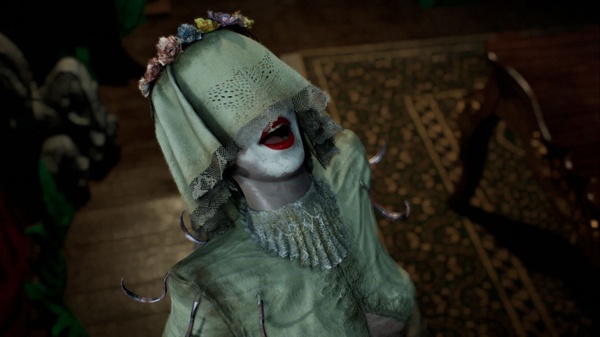
The problem, therefore, is not so much the three inventory slots as the abundance of defensive and healing items, which rarely forced us to make truly difficult choices. The ability to confront stalkers without particular worries significantly reduces tension, transforming what should be terrifying encounters into minor inconveniences to overcome before resuming exploration. It's a shame, especially considering that the game doesn't even allow selecting a higher difficulty level, perhaps capable of making enemies more aggressive and resources less available.
The feeling of danger too often gives way to simple annoyance, and this is probably the most obvious limitation of the survival system. Because hiding from a killer nun should be a matter of life or death, not just a way to waste a few minutes before going back to rummaging through the Ashmann family's drawers.
Three Powers for Three Different Locks
Those who played the first two Remothered games will remember how important it was to observe the surroundings, looking for useful objects and especially some hiding place to take refuge in when things started to go wrong. Tormented Fathers relied almost entirely on this formula, while Broken Porcelain tried to enrich it by introducing new possibilities, including the Moth Eye, an ability that allowed Jennifer to use moths to observe enemy movements and create distractions. With Red Nun's Legacy, Stormind Games decides to take another step forward, entrusting Susan with three powers related to hypnosis and perception, designed to make exploration more than just a simple search for keys and documents.
The most interesting novelty is probably retrocognition, an ability that allows you to retrieve fragments of memory associated with certain objects and places in the villa. Considering that the entire saga revolves around manipulated memories, hidden identities, and questionable experiments, it seemed like a particularly apt choice, especially since it allows for a deeper understanding of past events without relying exclusively on reading documents. Added to this is the power of mirrors, through which Susan can identify normally invisible elements, overcoming some illusions created by hypnotic conditioning. Finally, there is the manipulation of moths, which allows you to direct swarms towards particular cocoons to dissolve them and open new passages.
It's a shame that their use turns out to be much simpler than we had hoped. In practice, these abilities end up functioning like three different keys, each necessary to overcome a specific obstacle. When we encounter an element related to memories, we use retrocognition; in front of an illusion, we resort to mirrors; and when we find a passage infested with moths, we already know that it will be necessary to find a nearby enough nest to manipulate the insects and lead them with us (for a limited time). Retrocognition therefore remains the most fascinating narrative device, while the other two abilities seem mainly a means to pace the advancement of exploration.
A similar discussion applies to the puzzles, which we found generally enjoyable but rarely challenging. Some require careful observation of the scenario, correct interpretation of clues, and connecting information retrieved from different rooms, while others are quite immediate once the object to interact with is identified. The exploration of the villa also follows this philosophy: the initial areas are deliberately contained and easy to memorize, while subsequent ones become slightly more articulated, without however turning into true labyrinths. During our six hours of gameplay, we only found ourselves truly disoriented a couple of times, a result we still appreciated considering how frustrating it can be to find the right path with a stalker on your heels.
The result is a functional, but not very ambitious, exploration system, which complements the story well without managing to significantly evolve the formula of previous chapters. The new powers fit perfectly into the narrative universe of Remothered, but we would have preferred the game to give us more freedom in their use, perhaps forcing us to interpret the environments instead of just recognizing the required ability. After all, after discovering that you can manipulate memories, illusions, and swarms of moths, it would have been pleasant to have a few more opportunities to truly feel in control of these abilities.
A Villa That Can Tell Stories, Especially When You "Listen"
On the technical front, Red Nun's Legacy held some pleasant surprises for us, especially considering the problems that accompanied the launch of Broken Porcelain. Our PC test, with graphics details set to Epic, DLSS, and Frame Generation active, proceeded without particular inconveniences: no obvious bugs, no stuttering, and overall convincing fluidity. We only encountered some slowdowns during cutscenes made with the game engine, nothing particularly annoying, however. A decidedly positive result, especially for a series that in the past had not excelled in optimization.
Visually, the game also maintains its own identity, thanks to an artistic direction that recaptures the taste for Italian horror and uses Unreal Engine 5 to shape the environments of Villa Ashmann. The decadent elegance of the residence is accompanied by rooms and corridors that seem to guard something unsavory, maintaining good continuity with the atmospheres of previous chapters. But if there's one element that particularly struck us, it's undoubtedly the quality of the voice acting. Cissy Jones portrays Susan with great conviction, conveying all the determination of a mother willing to do anything to find her daughter.
Less impactful, however, is the ambient sound design, which adequately accompanies the exploration without always managing to convey the sense of danger we would have expected. The soundtrack, by Akira Yamaoka and Aram Shahbazian, contributes to the atmosphere, but it is primarily the vocal performances that leave their mark, enhancing the most important moments of the script. And considering how much Red Nun's Legacy relies on narration, having a cast capable of giving the right weight to the revelations represents one of its main merits.
The Red Nun's Last Memory
Arriving at the credits, after about six hours of gameplay, we can say that we have finally found many of the answers we had been waiting for since Tormented Fathers. Stormind Games managed to piece together a decidedly complicated story, giving due weight to past events and especially to the characters who lived them. The conclusion of the trilogy convinced us, also thanks to some well-orchestrated plot twists and the ability to give a more precise meaning to events that, until today, had left many questions.
It's a shame that the same enthusiasm didn't accompany us during the survival phases. Because, all things considered, the real reason that pushed us to explore every corner of Villa Ashmann was the curiosity to discover the truth, much more than the fear of encountering one of its unsettling inhabitants. A significant difference for a survival horror, especially considering that the tools to build a more engaging experience were already all present. A more convincing artificial intelligence, accompanied by a less generous resource balance, would have been enough to make the chases decidedly more interesting.
Remothered: Red Nun's Legacy nevertheless remains a more than decent conclusion to the saga, especially for those who have followed its events since the first chapter. The script succeeds where the gameplay falls short, leaving us satisfied with the answers obtained but with some regret for what could have been. After all, when a game manages to intrigue us more than it manages to scare us, it means that something worked really well. Only, in a survival horror, it would be preferable to have both.
Score
Editorial team

Remothered: Red Nun's Legacy, the review: secrets finally surface
Remothered: Red Nun's Legacy satisfactorily concludes a trilogy that still had many secrets to reveal. Susan's story, the connections to previous chapters, and excellent voice acting make the six hours of gameplay engaging until the credits roll. It's a pity that the tension doesn't hold up: easily avoidable stalkers, abundant resources, and three powers reduced to simple keys make survival less challenging. In the end, you explore Villa Ashmann more to discover the truth than out of fear of what lurks in its rooms.
Similar articles