Terrinoth: Heroes of Descent - Review: A dungeon crawler that only works if you accept its rules
Artefacts Studio transforms Descent into a digital board game night: solid tactics, immediate pace, and promising co-op, but not everything holds up outside of combat.


The transition from board game to video game almost always fails due to over-ambition. Not because digital isn't capable of containing the complexity of the "analog table," but because it often tries to replace it with something that doesn't truly belong to the original work: a longer plot, a more layered progression, a more habitable world, an idea of role-playing closer to contemporary video games than to a shared session around a table, a handful of miniatures, and a series of decisions made under pressure (or generated by an unlucky dice roll!).
Gallery
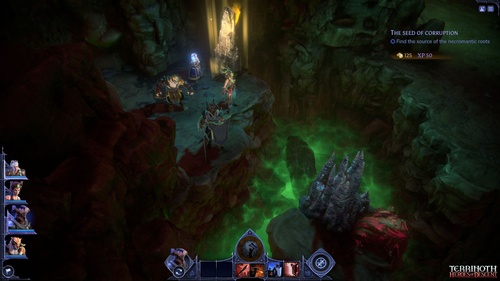
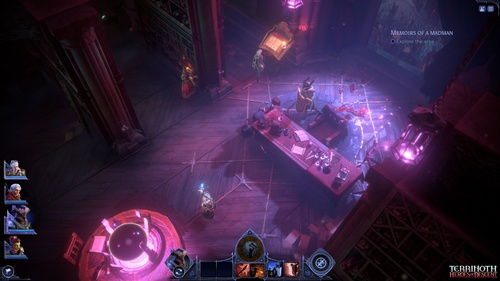
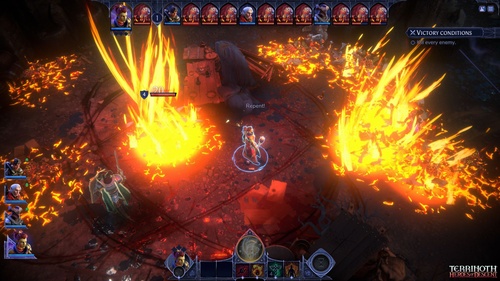
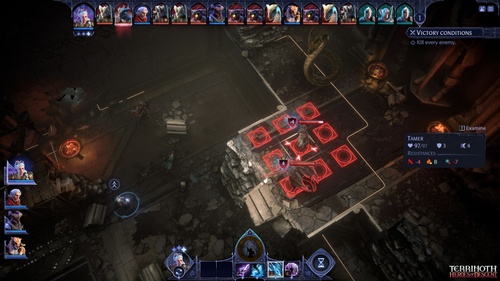
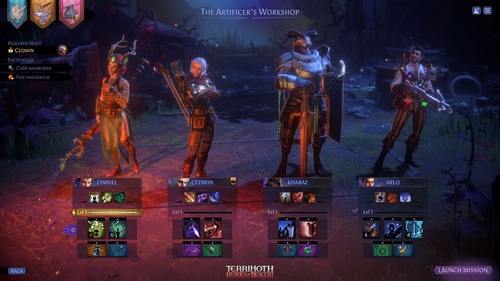
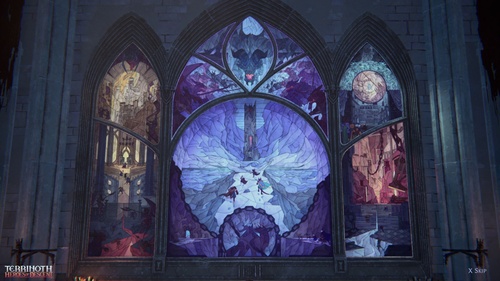
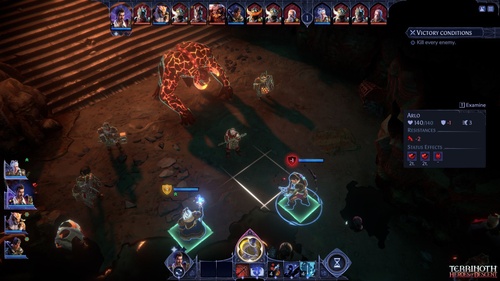
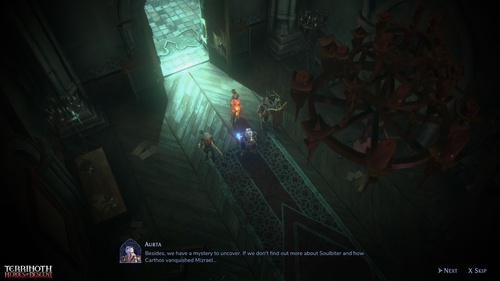
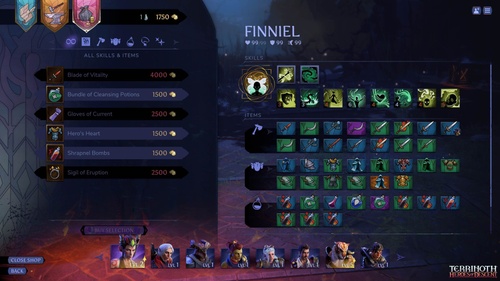
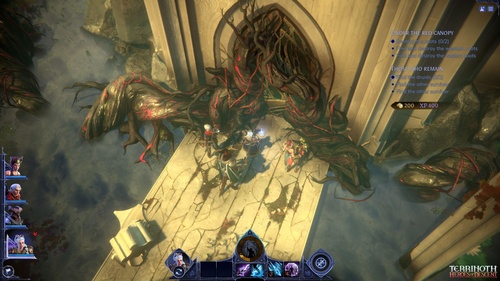
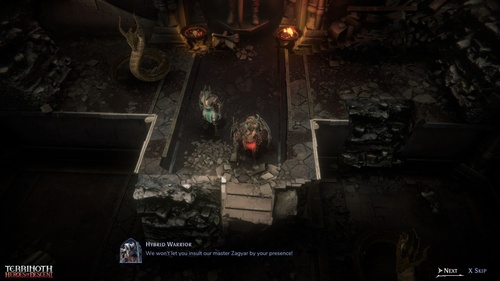
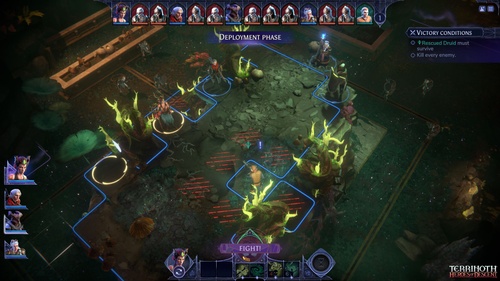
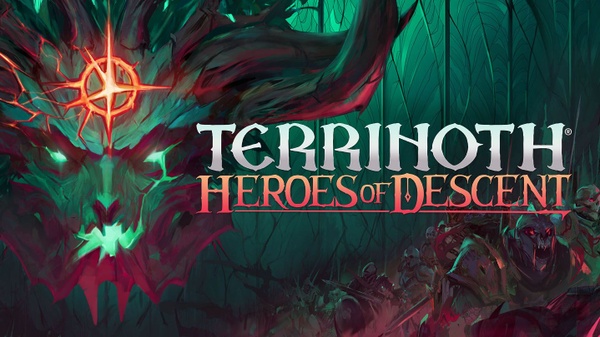
Terrinoth: Heroes of Descent, the first video game adaptation of Fantasy Flight Games' Descent universe, chooses a more cautious direction and, precisely for this reason, a more interesting one. Artefacts Studio, already the author of The Dungeon of Naheulbeuk: The Amulet of Chaos, doesn't try to transform Descent into a grand fantasy RPG, nor to compete with the systemic density of any Baldur's Gate 3 or the interpretive freedom of modern cRPGs. Its choice is -almost- more conservative: to retain the pace of boardgame-style play, translate the tactical weight of decisions into a readable interface, and build missions capable of starting, developing, and concluding in a single session.
It is here that Terrinoth finds its identity, but also its boundary. It works when read as a digitized board game night, with a group of heroes, a dungeon to solve, and an economy of actions to optimize. It becomes more fragile when asked for what it deliberately doesn't want to be: a deeper world to inhabit and understand, a party to get to know over time, or a progression capable of radically transforming the way one plays.
The board game becomes a digital session
A physical dungeon crawler lives by a precise grammar. The scenario is set up, roles are distributed, a mission with a clear objective is tackled, and at the end, the box is closed regardless of who won or lost. The value is not necessarily in the narrative continuity between one evening and the next, but in the quality of the tactical situation created at that precise moment. Terrinoth: Heroes of Descent works on this same logic: four thematic chapters, twenty narrative dungeons, self-contained missions, and a structure designed to be tackled without requiring the player an encyclopedic investment in the Descent universe.
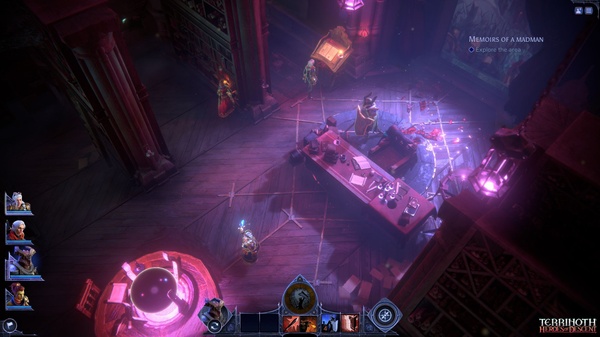
The campaign is set one year before Descent: Legends of the Dark and does not require familiarity with the board game material. The premise is functional, almost deliberately classic: a company of adventurers, a stolen relic, a threat that progressively looms beyond the first assignment. The writing never truly attempts to push the story beyond its function as a glue between missions, but in the chosen context, this is not automatically a flaw. The game does not want to build an interactive fantasy novel; it wants to provide a sufficient reason to enter a dungeon and test the group.
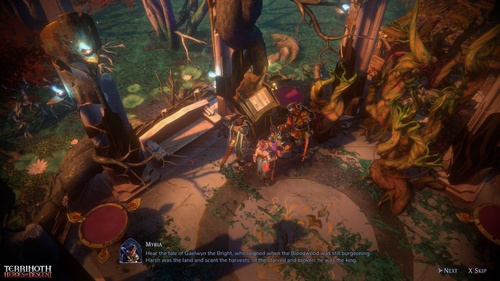
The limit emerges when this essentiality is prolonged for too many hours. The characters are readable, well-differentiated in their roles, and supported by dynamic dialogues and full English voice acting, but they often remain prisoners of their archetype. We talk to them mostly while fighting, we hear jokes and reactions during the mission, but there is no intermediate space where the party can become something other than the sum of its functions. There is no real decompression area, no camp to live in, no dead zone between battles where attachment to characters often develops.
It's a coherent choice, but not a neutral one. For those looking for a quick, orderly, and cooperative experience, this simplicity is an advantage. For those expecting an RPG capable of making relationships, dialogues, and consequences matter outside the battlefield, well, they will have to look elsewhere and not choose this title from marketplace offers. Terrinoth is not poor because it has little plot, but because it concentrates almost all its emotional investment in the moment of conflict.
Three actions, a guard to break, and the value of order
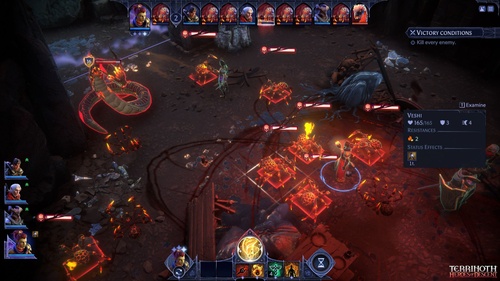
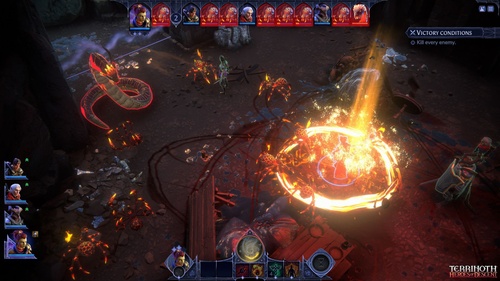
When combat begins, the work clearly shows why the project makes sense. Each hero has three action points per turn, usable to move, attack, use items, or activate abilities. It's a simple rule, but effective, because it eliminates superfluous parallel resources and forces you to evaluate every choice within the same economy. Advancing a few squares can mean giving up an attack. Preparing a combo can mean exposing yourself for a turn. Healing the group can break the offensive rhythm just when the enemy is vulnerable.
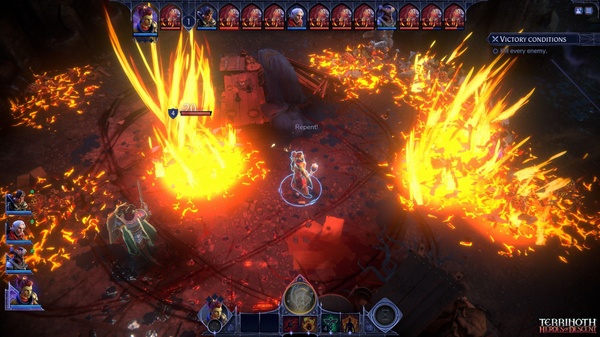
The tactical core lies in the guard system. Enemies react differently to damage types: hitting them with an element or type they resist strengthens their defense, while exploiting a weakness allows you to break it and open a window to inflict more substantial damage. The consequence is clear: combat doesn't just reward those who hit hardest, but those who best prepare their turn. The order of actions becomes as important as the action itself.
In this framework, the synergies between heroes represent the most successful part of the system. Abilities don't just exist to produce immediate damage, but to create favorable conditions for the rest of the group. One character can lower a resistance, another can exploit the opening with an area attack, a third can close the sequence with a heavier technique. The shared synergy bar reinforces this logic, because it rewards party coordination more than individual performance. Terrinoth is at its best when the turn stops being a series of attacks and becomes a small choreography of preparation, breaking, and thrust. It's a system that somewhat recalls Larian's games, especially Divinity, with synergies to be put into practice on the field to get the better of opponents.
Even in solo play, the structure holds, provided you accept that the game is designed around the group and not the individual hero. The player manages the party as a complete team, maintaining the logic of combinations. This is an important choice, because it avoids transforming the single-player experience into an impoverished version of co-op. The game's true identity lies not in the number of people in front of the screen, but in the need to make four roles work within the same tactical problem.
A readable progression, perhaps too controlled
The same cleanliness that makes combat accessible, however, reduces the strength of progression. Terrinoth: Heroes of Descent is not built for those who love to dismantle and rebuild characters, force improbable builds, or transform an archetype into something unexpected. Heroes have clear mechanical identities from the start, and development primarily serves to refine what they already are. The tank remains a tank, the support character remains a support, the damage dealer continues to look for the best possible window to strike.
Equipment and the Forge introduce margins for growth, but rarely change the way a character is played. The enhancement is more vertical than transformative: it increases effectiveness, but doesn't always modify the class's language. It's an understandable choice in a game that wants to remain immediate and readable even in co-op, where an excess of complexity would have risked slowing down each session. However, in the long run, this caution weighs.
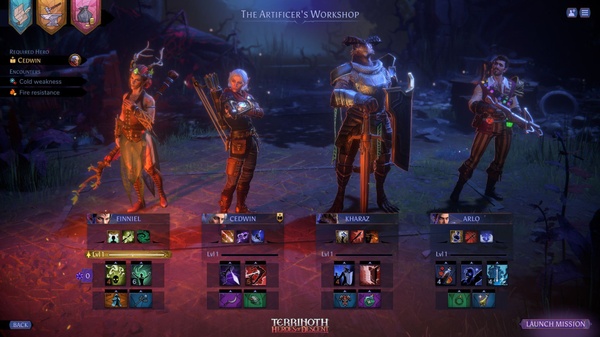
The problem is not simplicity, but predictability. After understanding the functioning of roles and main synergies, growth does not introduce enough elements to radically renew the approach. Variety remains primarily entrusted to dungeon design, enemy composition, and selectable difficulties. When these elements work, controlled progression becomes almost invisible. When the scenario does not present an interesting enough problem, the system more quickly reveals its limits.
Terrinoth is therefore more replayable for those who like to optimize an already clear strategy than for those seeking continuous mechanical discovery. It is a title that asks you to play better, not necessarily to play differently. For a board game adaptation, this can be a virtue; for a video game that must sustain many hours of campaign, it becomes its most exposed point.
Good on the first try, just with a few more tweaks
Technically, Terrinoth: Heroes of Descent is more functional than spectacular. The isometric presentation aims for clarity before visual impact: readable environments, well-separated colors, recognizable characters even in the most crowded skirmishes, and grid management that allows for quick understanding of lines of sight, distances, elevation, and areas of effect. It's not a title that seeks scenic density or heavy special effects, but in the context of a turn-based tactical game, this sobriety works in favor of the experience. Every important piece of information must be visible before it is beautiful, and from this point of view, the interface performs its task well.
The audiovisual rendering thus remains consistent with the project's ambition: clean, orderly, sufficiently expressive in the dungeons, and supported by full English voice acting that gives rhythm to the missions without transforming the game into a cinematic narrative. Controller support also helps keep the experience accessible, especially for those who want to play it as a couch session rather than a desk tactical game. However, some inevitable rigidities remain: menu navigation, ability reading, and fine management of synergies work better when the player has full control of the interface, because Terrinoth remains a game based on order, precision, and action chaining.
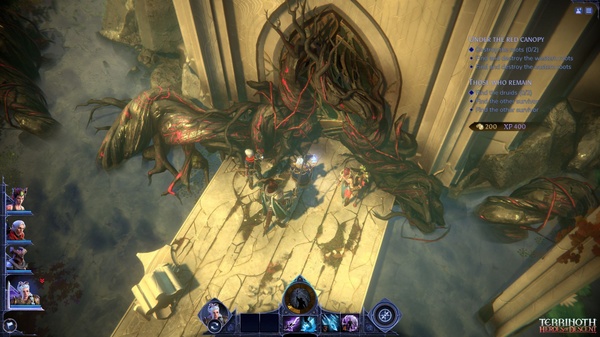
The real technical problem, however, does not concern the graphics, but the stability of the cooperative mode. For a game built around the idea of a "digital board game night," delays in other heroes' movements, infinite loading times on the guest side, softlocks, and maps not always correctly updated for those joining the game weigh more than a visual drop or a marginal imperfection. They don't just compromise an accessory function, but strike at the core of the experience: sitting down with other players, entering a dungeon, coordinating abilities and turns, and closing the mission with the feeling of having solved a tactical problem together.
It must be acknowledged that the studio has intervened quickly on several occasions with targeted hotfixes, a sign that the critical issues were addressed in the first post-launch window. However, the assessment remains clear: Terrinoth appears technically solid when played solo or when the cooperative flow holds up, but shows its fragility precisely in the mode that should represent its ideal form.
Score
Editorial team
Terrinoth: Heroes of Descent - Review: A dungeon crawler that only works if you accept its rules
Terrinoth: Heroes of Descent è un adattamento intelligente perché conosce i propri limiti e li trasforma in struttura. Non vuole essere un grande RPG fantasy, ma una serie di sessioni tattiche cooperative, leggibili e finite. Quando resta dentro questo perimetro, funziona. Quando gli si chiede profondità narrativa, progressione trasformativa e tenuta tecnica impeccabile in cooperativa, mostra la propria fragilità. È un buon tavolo digitale, non ancora una grande avventura.
Similar articles