Diablo Immortal Welcomes the Blood Knight with Patch 5.0 - Preview
The new class uses Life to increase its power, while the update brings players back to Lut Gholein with new bosses, new gems, and endgame progression.


Diablo Immortal is one of those games that constantly changes. Not because they are incomplete, but because they are designed to be updated over time. It's a free-to-play action RPG (meaning free to access, but contains micro-transactions as it's built for the mobile market), with a live service structure: new classes, new zones, new bosses, and new growth systems are added at regular intervals to give players a reason to return.
This approach has always defined Diablo Immortal. On one hand, there's the immediate pleasure of action, with fast combat, flashy abilities, and continuous rewards. On the other hand, there's a very "pressing" economy, made up of gems, equipment, enhancement levels, and endgame progression. In other words, Diablo Immortal is a game where you fight, level up, improve your character, and then start over, trying to make them ever more efficient.
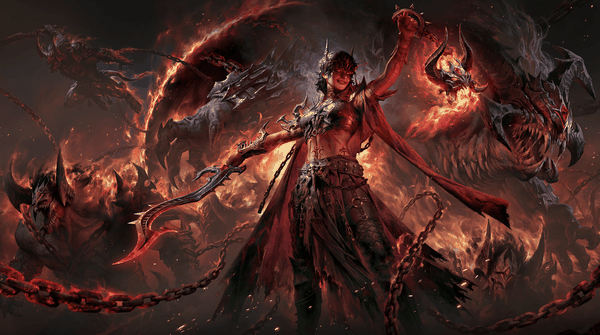
Patch 5.0, titled Crimson Jewel and available from June 17, 2026, fits exactly into this logic. It introduces the tenth playable class, the Blood Knight, brings players back to Lut Gholein, opens a new narrative chapter related to Andariel, and intervenes on various advanced progression systems.
The most interesting point, however, is not just the quantity of content. It's the way the new class fits into the game: the Blood Knight uses their own Life as an offensive resource, thus becoming more powerful by accepting exposure to danger. For a title founded on accumulating strength, defenses, and optimization, it's a very interesting design choice.
A Class That Uses Life as a Resource
The Blood Knight originates from the legacy of the Vizjerei, an ancient order of mages in the Diablo universe linked to the study of demonology. For those familiar with the series, it's an important reference; for those who aren't, suffice it to say we're talking about spellcasters willing to push beyond the limits of traditional magic to control infernal forces. This origin not only adds flavor to the class but also explains its combat mechanics.
The Blood Knight doesn't fight by keeping demons at bay. On the contrary, they summon them, bind them, and use them as offensive tools. Demonic Portal allows the summoning of infernal servants, Infernal Swarm spreads a plague capable of propagating among enemies and generating new creatures, while the Soul Devourer, a primordial beast that powers up by feeding on other summons, becomes one of the central elements of their playstyle.
The most important feature, however, is another: some abilities directly consume the character's Life to gain additional effects. Malevolent Sacrifice converts health into offensive power, while Devouring Darkness fuels infernal anomalies through the Blood Knight's vital energy. The concept is simple to understand: the player can gain more damage, more pressure, or more control, but must pay for that advantage with a portion of their own survival.
Completing the picture are two stances, Command and Restriction. The first focuses on aggression and attack speed, while the second works on field control. To these are added over fifty exclusive legendary items, designed to modify abilities and orient the class towards different configurations: more offensive, more defensive, or more focused on managing summons.
The Blood Knight, therefore, is a class based on the relationship between risk and reward. Every point of Life spent prematurely reduces the margin of error, but can also allow for a quicker end to an encounter. Its depth lies not only in the number of creatures summoned but in choosing the right moment: when is it worth sacrificing health to increase damage? When is it better to slow down, control the field, and not expose oneself too much? This is where the class can find a very strong identity.
Sacrifice Only Works If the Cost Remains Real
The problem, however, arises from the context in which the Blood Knight arrives. Diablo Immortal is a game built on continuous character growth. With Patch 5.0, the Paragon level (the progression system that continues after the main campaign) rises to 1500, with an experience bonus designed to help those who have yet to reach that threshold. Also arriving is Infernal Wish, a five-star legendary gem that increases damage and movement speed, making enemies progressively more vulnerable to the character's attacks.
Blizzard also intervenes on equipment, removing some rarely used legendary Essences and making several set items more readable. This is a sensible choice, because Diablo Immortal has accumulated many layers of progression over time, and not all of them are immediately understandable for those returning after months or approaching the game for the first time.
These interventions, however, have different weights. The equipment cleanup improves the readability of the system. The increase in Paragon level gives more assiduous players a new numerical goal to pursue. Legendary gems, however, remain the most delicate point, because they are one of the elements that most affect the character's real power.
And this is where the Blood Knight becomes interesting, but also fragile. A class that consumes Life to become stronger only works if that Life truly matters. If the character, thanks to progression, gems, and equipment, becomes too resilient or too powerful compared to the content faced, the sacrifice loses meaning. The player spends health, but doesn't truly feel the risk. At that point, the mechanic remains spectacular, but ceases to be an important choice.
To fully function, the Blood Knight must maintain a clear tension: you can deal more damage, but you must accept a real danger. If, instead, the growth system makes that danger negligible, the class risks becoming just another damage machine, very fascinating to watch but less interesting to manage. It's not an automatic flaw, because much will depend on balancing and more advanced content, but it is the main question this patch brings with it.
Lut Gholein Returns, But It Must Serve a Purpose
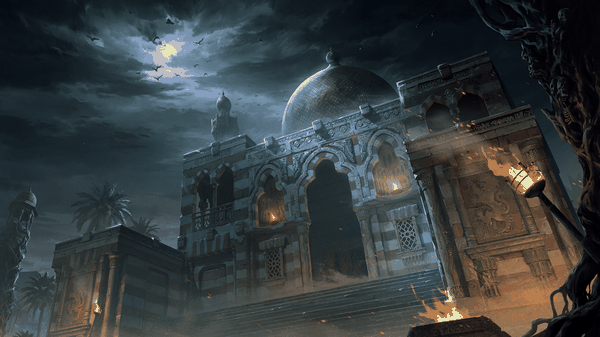
The other important part of the update is the return to Lut Gholein, the desert port city of Aranoch already known to Diablo II players. For veterans, it's an immediate callback, because Lut Gholein is one of the most recognizable locations in the series. For those coming to Diablo Immortal without knowing too much about the franchise's past, it remains a city with strong scenic value: a desert port, marked by demonic corruption and the return of Andariel, the Maiden of Anguish.
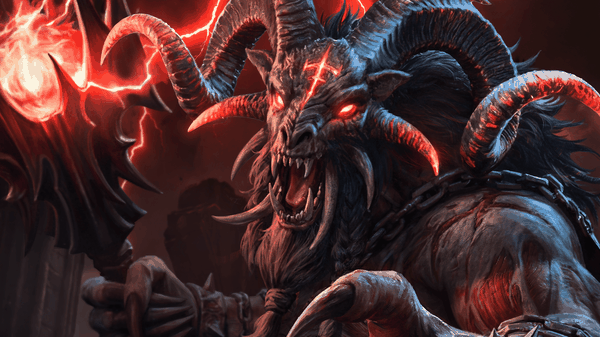
The new sub-zone of the Common Quarter serves as the center for the main quest Crimson Jewel. Here, Andariel's influence has transformed once-lively neighborhoods into ruined docks, abandoned taverns, and infested slums. In the depths of the desert, three new Helliquary bosses also appear, the Damned of the Abyss: Gulakht, a khazra consumed by runic magic, Chained Jaws, one of the first Soul Devourers summoned by the ancient Vizjerei, and Yradus, a serpentine deity worshipped among the sands of Aranoch.
The risk, when retrieving historical places and characters, is always that of easy nostalgia. Lut Gholein and Andariel work because they evoke Diablo II, but an update cannot simply tell the player: “remember this thing?” It must use those references to build something consistent with the game's present.
From this point of view, the connection with the Blood Knight seems quite solid. The fact that one of the bosses is an ancient Soul Devourer is not just a detail for enthusiasts, but a way to link the new class to the update's story. The demonology of the Vizjerei, the infernal summons, the desert bosses, and the threat of Andariel seem to belong to the same thematic block. This doesn't always happen in live services: often a new class, a new zone, and a new activity are simply juxtaposed. Here, at least on paper, they seem to speak the same language.
However, a typical limitation of live service action RPGs remains. The story is played once, while the endgame persists. Lut Gholein can be fascinating, Andariel can work as a callback, the bosses can strengthen the Blood Knight's identity, but it will be builds, gems, rewards, and progression that truly decide how long players will continue to stay within the update. The narrative part gives a reason to return. The game structure must give a reason to stay.
The Blood Knight is probably one of the classes with the clearest identity ever to arrive in Diablo Immortal. It has a recognizable theme, consistent abilities, and a direct link to the patch's story. The idea of consuming Life to increase one's power is strong, because it makes visible a choice that in many action RPGs remains only numerical: how much damage do I want to push, and how much am I willing to risk to do it?
Diablo Immortal Welcomes the Blood Knight with Patch 5.0 - Preview
Crimson Jewel adds a class, a zone, new bosses, and additional progression systems, but it doesn't truly change the fundamental direction of Diablo Immortal. The open question isn't about how fascinating the Blood Knight is. That, at least on paper, is evident. The question is another: will the game's economy allow it to truly be a risky class, or will it end up transforming even sacrifice into another way to accumulate power?
Similar articles