Ridley Scott Fears Neither the Apocalypse Nor the Dolomites: Why He Filmed The Dog Stars in Italy
Ridley Scott and Jacob Elordi discuss building a post-apocalyptic world suspended between violence and humor.
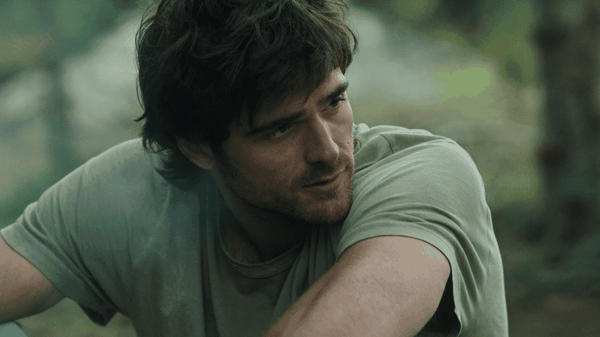


Ridley Scott chose the Dolomites because Canada scared him a bit: he says so himself, because he certainly isn't afraid of journalists. In fact, during the press conference, he affectionately calls us "bad people" for the reviews we've written of his films), while assuring us he never reads them.
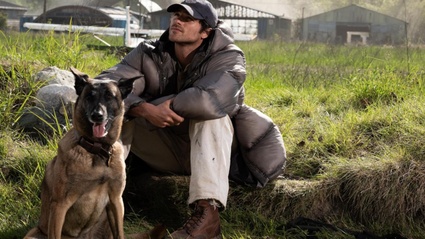
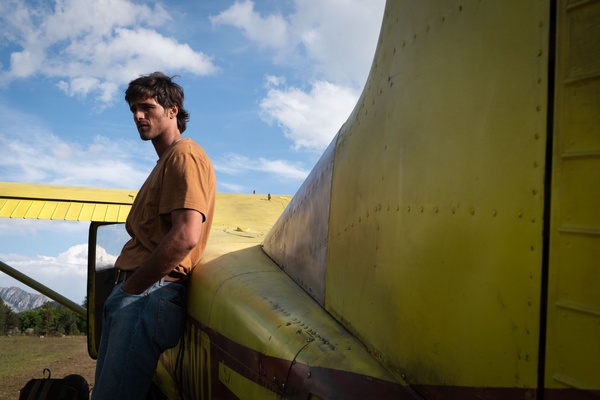
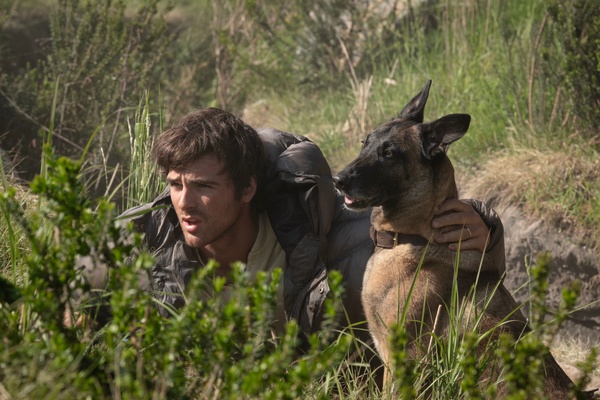
Scott, as always, is gruff but frank, perfectly in tune with The Dog Stars, the English director's new survival film, which adapts Peter Heller's bestselling novel, confirming the great popularity of the post-apocalyptic genre, suspended between horror and hope. After the end of the world in Station Eleven and The Last of Us, star Jacob Elordi takes on what remains, and with his somewhat brooding, man-of-few-words character, he is the perfect companion for the director who helmed him in the Dolomites alongside Margaret Qualley and many canine actors, who alternated in the role of the protagonist's dog, Jasper.
When you read Peter Heller's novel The Dog Stars, what made you think there was something you wanted to turn into your film?
Ridley Scott - When it comes to literary adaptations, everything starts with reading. That first time you read a novel or a script has to spark something in you, then of course there's all the subsequent development. When you decide that's the idea that interests you and you entrust it to a screenwriter, everything is in their hands: if by working together we can make it work, then there's nothing that will stop me and I start shooting.
What changed between Heller's novel and your film?
Ridley Scott – The amount of changes always depends on how good the source material is. If something is perfect, you barely touch anything, but nothing is truly perfect. The dynamics of a film are obviously different from those of the written page. During development, I relied on an excellent screenplay by Mark Smith, but I wanted to make a couple of changes to his script, because I felt his choices were sometimes too much or not enough.
Can you give us an example?
Ridley Scott – Do you really want to know? (laughs) When the film enters the third act, you arrive at a place that Hig had always imagined could be better than where he lived. I had to transform that passage into something very different from the original: we find a kind of refuge that isn't really a refuge at all, it's more of a food factory, because in the situation they're in, even human flesh is food.
Jacob, the dynamic between Hig and Bangley is very funny. How did you find the right way to interpret that relationship? Is it something you built before filming or during?
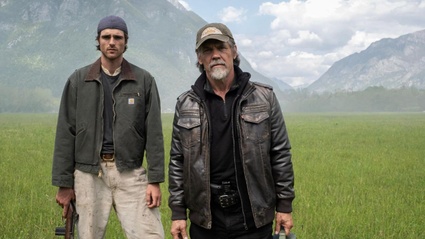
Jacob Elordi – Ridley kept talking to me and Josh, who plays Bangley, about the "odd couple" and I liked that reference.
Ridley Scott – I was referring to Jack Lemmon and Walter Matthau. You know those moments when, for example, Matthau would say: "If you clean that ashtray one more time, I'll smash it over your head." That kind of dynamic.
Indeed, in the film, despite the apocalyptic tones, there's a lot of humor. How can you find it amidst all the pain and darkness of this story?
Ridley Scott – Unless one is making Macbeth, for me, you must always try to find a glimmer, an element of humor. The difficult part is not making it an end in itself; it must have an authentic component.
What was it like filming in Italy?
Ridley Scott – The food was definitely a big plus. I was in Canada for location scouting, in Calgary… Canada is majestic: you get out of the car to pee, walk five minutes into the woods, turn around, and suddenly you don't know where you are. The possibility of dying there is real: there are wolves and bears. That intimidated me. I had already scouted the Dolomites, where the food is better. (laughs) So I asked the small crew with me: "Does anyone else here feel scared of this place?" Some admitted they did, so we all went to Italy. Purely out of selfishness: you eat better in Italy. Sorry, Canada. You are majestic (laughs).
Weren't you afraid the Dolomites would be… less majestic, to use your words?
Ridley Scott – The peaks aren't quite the Rockies, but they're good enough. If you're a climber, that's the place to be.
Jacob, in the film you're accompanied by a dog named Jasper. He was played by several dogs, right?
Jacob Elordi – Yes, they alternated.
For the film The Artist, they said the secret to creating the bond between actor and dog was sausages. Was that the case for you too?
Jacob Elordi – Yes, actually, yes. Dogs react much better to cold cuts and things like that than to the classic treats the trainer gives them. But both work.
How did you find working with these dogs? Did the unpredictability of the animal actor also influence your performance?
Jacob Elordi – I loved working with them. And anyway, they're not much more unpredictable than Josh or Guy. (laughs) In a good way. Working with them is spontaneous, wonderful. They are incredibly talented dogs.
What can you tell us about the protagonist, Margaret Qualley?
Jacob Elordi – Since we were staying in these small towns in the Dolomites, Margaret and I spent quite a bit of time off set with the script. Actually, everyone, we had a lot of time to work on it, to make it our own. Margaret and I tried to make the relationship that develops between our characters in the film more authentic. She's an extraordinary actress: collaborating with Margaret was fantastic.
Similar articles