Resident Evil 2, 3, and 4 Remake on Switch 2: The Portable Horror's Revenge
Having put the bad memory of the Cloud versions behind us, Capcom's modern trilogy arrives natively on the new Nintendo console: an analysis of historical legacy, remake philosophy, and the miracles of the RE Engine.
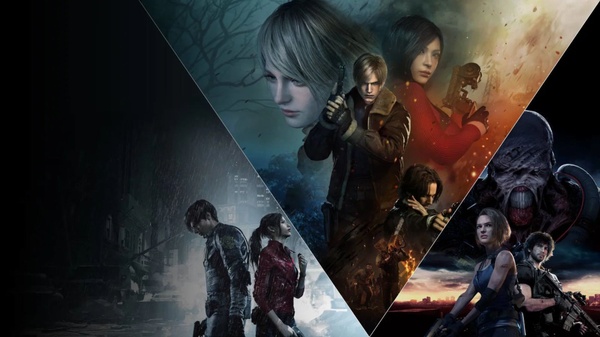


The joint arrival of the Resident Evil 2, 3, and 4 remakes on Nintendo Switch 2 is not just a simple catalog operation, but rather a crucial juncture for understanding the true ambitions of Kyoto's new hybrid flagship. After years spent observing the modern rebirth of the Capcom saga through the unstable and frustrating filter of cloud gaming, the quintessential survival horror finally runs natively on Nintendo hardware, reclaiming a physicality and technical dignity that had been missing since the golden age of the GameCube.
But what does it mean, today, to literally hold the photorealistic nightmare of Raccoon City and the hostile valleys of rural Spain in your hands? To answer this question without limiting ourselves to a sterile pixel count, we traversed the entire trilogy following an analytical path in four acts: a journey that starts from the new psychology of portable terror, re-establishes the historical threads of a legendary alliance, and compares three different philosophies of game design, ultimately revealing the engineering secrets with which the RE Engine won its most arduous bet.
Horror in the Backpack and the Specter of the Cloud: The New Intimacy of Fear
My first true encounter with the grammar of survival has a precise spatio-temporal coordinate: it was 1998, I was just eight years old, and I was visiting my grandparents' house. My uncle lived upstairs, and it was there, in the dim light of his attic game room, that the gray plastic of the first PlayStation – the same console I owned at home, but which in that context took on an almost forbidden allure – began to spin the black disc of Resident Evil 2. It would be entirely legitimate to wonder why an eight-year-old girl would choose a title populated by walking corpses and viscera, but the answer lies in print. In those years, I reflexively devoured the Dylan Dog comics my father habitually read; the figure of the zombie didn't repel me, but rather exerted a magnetic, grotesque, and irresistible fascination over me. In my childish mind, that video game was nothing more than the interactive transposition of "Dawn of the Living Dead," the legendary first issue of the Nightmare Investigator by Tiziano Sclavi. I wanted to experience it firsthand. The result? I died. And I died badly, almost ingloriously, torn apart on the burning asphalt of the very first screens, long before I could even glimpse the neon signs of Robert Kendo's gun shop. The reason for that premature defeat was disarmingly trivial: I clearly saw the pistol in the inventory screen, but in my naivety, I took for granted that simply possessing it was enough to wield it, completely ignoring the mechanical necessity of having to "equip" it via a specific command.
That brutal death, however, left no traumatic scars. On the contrary, it acted as a methodological spark, the trigger for an intellectual challenge that pushed me to decode the ruthless rules of that world, officially initiating a visceral passion that has never faded. That seemingly distant memory encapsulates a fundamental truth about the genre: survival horror only works when there is a tangible, immediate, and ruthless friction between the player's input and the virtual world's response. And it is precisely from this awareness that one must start to understand the historical and sensory significance of the native arrival of the Resident Evil 2, 3, and 4 remakes on Nintendo Switch 2.
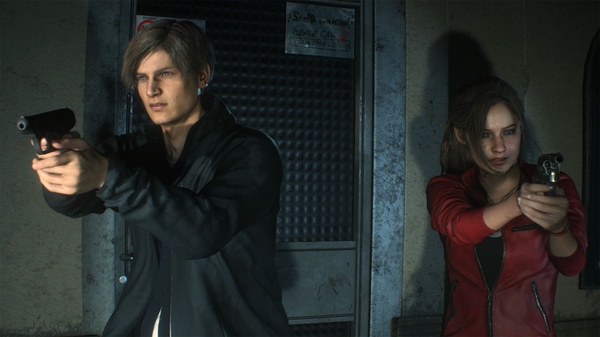
For almost three decades, critics and audiences have fueled the dogma that video game horror requires an untouchable domestic liturgy to express its full potential. We have endlessly repeated that terror demands the big screen of the living room, lowered blinds, the acoustic isolation of a dark room, and the reverential distance between the sofa and the television. The arrival of this monumental trilogy on the hybrid architecture of Kyoto's new flagship definitively demolishes this spatial prejudice, rewriting the very phenomenology of fear. Taking the nightmare of Raccoon City or the desolate lands of rural Spain outside the home, literally stuffing it into a backpack, does not at all mean diluting its tension, but rather subjecting it to a surprising mutation.
Let's dispel once and for all the myth that the portable format is an enemy of horrific immersion. When you detach the console from the dock, put on a pair of noise-canceling headphones, and hold the Switch 2 screen just twenty centimeters from your eyes, perhaps in complete darkness under the covers, a psychological dynamic is triggered that is even more oppressive than the domestic one. In front of a fifty-inch television, however immersive, our eye always retains a peripheral escape route: just shift your gaze slightly to intercept the reassuring outlines of the bookshelf, the edge of the table, the tangible reality of our apartment. In the pocket format, this safety net disappears. The display completely saturates the field of vision, creating an intimate, hermetic, and claustrophobic sensory bubble. The panting breaths of the Lickers, the ticking of rain on the police station windows, and the rotten wood creaking under Leon's boots are no longer projected across a room, but pulse directly in our hands, transforming the physical proximity to the hardware into an unprecedented anxiety amplifier.
However, for this black magic to work, the Nintendo ecosystem needed to overcome its most recent and embarrassing trauma: the ghost of the Cloud Versions. For years, on the hardware of the first Switch, anyone who wanted to try their hand at the modern incarnations of the Capcom saga had to bend to the degrading compromise of streaming. It was an era of profound industrial frustration, where horror was literally rented by the hour from a remote server, stripped of any physicality, and left at the mercy of domestic network fluctuations. In the old streaming editions for the first Switch, the real monster to fear was not the heavy, inexorable footsteps of Mr. X behind a closed door, but the sudden appearance of the unstable Wi-Fi icon in the corner of the screen.
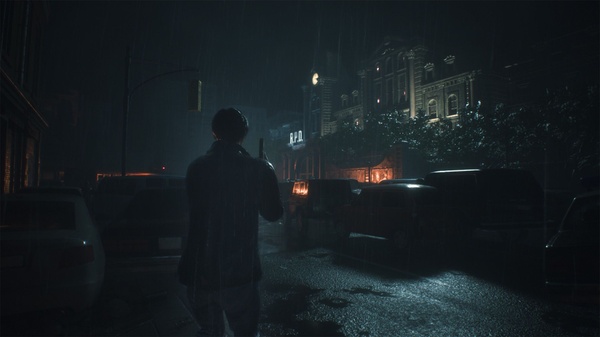
A survival horror mediated by the cloud is, by its very nature, a ludic oxymoron. How can the suspension of disbelief be maintained when a sudden drop in bandwidth transforms the dense, photorealistic shadows of a corridor into a muddled compression of digital macroblocks? How can one experience the thrill of fighting for life when a fraction of a second of input lag turns a millimeter-perfect dodge by Jill or a knife parry by Leon into an unfair and artificial game over? Streaming constantly breaks the spell because it reminds the player, with every single connection hiccup, that the game isn't really there with them.
The native, rock-solid, and local execution of Resident Evil 2, 3, and 4 on Nintendo Switch 2 therefore represents a true act of technological emancipation. Terror once again becomes a matter of silicon, internal memory, and instantaneous responsiveness. Just as it happened to that eight-year-old girl in 1998, today survival in the infected alleys once again depends exclusively on our ability to open the inventory, equip the weapon, and pull the trigger at the exact moment the enemy lunges at us, without the specter of a distant server deciding our fate. Horror has finally found a solid body, and it's ready to follow us anywhere.
The GameCube Between Decapitated Heads, One Hundred Points Short, and a Full Circle
If the native execution of this trilogy sweeps away the uncertainties of the Cloud era, observing the logos of Resident Evil 2, 3, and 4 aligned on the Nintendo Switch 2 dashboard triggers a historical vertigo that goes far beyond mere technological chronicle. For anyone who has experienced the evolution of survival horror across generations, seeing Capcom's production excellence find such a solid and natural home on Kyoto's hardware means witnessing the closing of a perfect circle, begun over twenty years ago in the shadow of a small, unforgettable purple cube.
At the beginning of the new millennium, the very idea that Nintendo – historically perceived in the collective imagination as the colorful and reassuring stronghold of Mario and Zelda – could transform into the exclusive temple of blood, putrefaction, and mature terror seemed like a bizarre anomaly. At the time, I was just a girl and, for obvious reasons, I only cared about certain subtleties related to market wars or board strategies up to a point; yet, the magnetic charm of that counter-current choice reached me loud and clear. I didn't own a GameCube, a non-negligible detail that at the time made my relationship with that generation as visceral as it was painful. While I would only get to Resident Evil Zero many years later thanks to the Wii re-release, the Nintendo cube was still the theater of my true baptism of fire with the legendary Rebirth of 2002. Not having the console, my forays into the corridors of Spencer Mansion were inevitably fragmented, stolen at others' homes, lacking the continuity I would have desperately desired. But just a few minutes in front of those pre-rendered backgrounds of stunning pictorial beauty, caressed by dynamic lights and shadows that seemed to come alive, were enough to understand that I was facing a miracle. With that remake of the progenitor, Capcom was not merely restoring a classic: it was literally inventing the grammar of the modern remake, establishing a qualitative and philosophical canon that remained unsurpassed for decades.
Behind that unrepeatable season, culminating in the announcement of the famous Capcom Five, lay Shinji Mikami's uncompromising vision. The father of the saga sought a machine capable of accommodating his artistic ambition without forcing him to compromise with structural bottlenecks, and he identified the GameCube's architecture as the only fertile ground possible. It was an ironclad pact based on an obsession with technical purity, defended with a dialectical ferocity that today, in the era of fluid multiplatform, almost makes one smile. In 2002, to justify the absolute exclusivity of Rebirth and the then-gestating Resident Evil 4 on the Nintendo console, Mikami publicly declared that development on rival platforms – with a not-so-veiled reference to the complex architecture of PlayStation 2 – "disgusted" him due to the physical and visual compromises it imposed on programmers. His ideological crusade reached its peak with a phrase that went down in video game journalism annals: he solemnly promised that he would "cut off his head" (even miming and evoking seppuku) if Resident Evil 4 ever appeared on another platform.
We all know how that story ended. The ruthless laws of the market and shareholders prevailed over authorial pride, Mikami fortunately kept his head on his shoulders, and the fourth chapter ended up being converted everywhere, starting precisely with that much-maligned PlayStation 2. And it is precisely in the interstitial space between the PS2 version – which I owned and consumed at home – and the original GameCube edition that one of my most absurd, amusing, and at the same time heartbreaking memories related to the saga lies.
On my copy for the Sony console, after weeks of absolute dedication and cold sweat, I had managed the supreme feat: to obtain a five-star rating with every single character in all scenarios of The Mercenaries mode, finally unlocking the legendary and devastating Handcannon. Bolstered by that glorious achievement, I made a kind of pact of honor with a friend of mine at the time – a friendship that has now lasted about twenty years – who, on the other hand, owned the game on GameCube. He lived in Rome, I lived in another region; opportunities to see each other in person were not many, but every single time for one reason or another I happened to pass through the Capital, the sacred ritual would begin. A fixed stop at his house, GameCube controller in hand, and off to grind combos in Mercenaries to unlock the coveted portable cannon on his save file as well.
About twenty years later, and with my friend now permanently moved to England, I still haven't managed to unlock that Handcannon on his GameCube Memory Card.
I had managed to complete almost the entire board with five stars, but there was a single obstacle that continued to elude me in those sporadic Roman sessions: Leon in the port scenario. Anyone who has faced that arena knows the pure terror of having to manage the least explosive equipment of the cast while being hunted by the so-called Super Salvador, the gigantic and furious variant of the hooded madman armed with a double chainsaw, capable of decapitating the protagonist with a single blow and sending anxiety levels through the roof as soon as you heard the sound of that cursed chainsaw. The truly hilarious part – to tell today with a wry smile – happened during one of these very rare impromptu attempts. I entered a state of absolute grace, chaining kills, explosive barrels, and time hourglasses until the last available second. I survived. The counter stopped at a very high, seemingly triumphant score... only to realize, in the sudden chill of the living room, that I had stopped below the five-star threshold (set at sixty thousand points) by only one hundred points. I'll let you imagine the collective reaction that followed: a mixture of disbelief, hysterical laughter, and pure competitive despair.
Thinking back to that anecdote today, as I hold the Nintendo Switch 2 in my hands, brings back the profound meaning of this operation. If at the time the gap between the elite exclusivity of the GameCube and the widespread diffusion of other consoles forced religious wars, threats of decapitation, and interregional pilgrimages to tame a different controller, today the industry has found a pacified maturity. Switch 2 naturally inherits the heavy spiritual legacy of the GameCube, once again becoming a technological and artistic benchmark for the series, but it does so by overturning the assumptions of the past. There is no longer any need to lock games behind exclusivity contracts or to sacrifice an author's vision on the altar of hardware architecture: the flexibility of the new hybrid console allows Capcom to bring the entire modern trinity natively into the palm of our hand.
There is an extraordinary poetic justice in all of this. That modern concept of remake, born and codified in 2002 precisely on a Nintendo machine thanks to Rebirth, finally returns home in its most evolved, layered, and definitive form. And who knows, having Resident Evil 4 always with me in my backpack, free from the constraints of a television and geographical distances, might finally be the good opportunity to settle that old score of one hundred points on the pier once and for all (spoiler, no, because the Mercenaries mode of the remake is different and easier than the original, but I like to dream).
The Rebirth Trilogy: Three Shades of Remake (and a Trunk for the Wrong Console)
Approaching the critical analysis of Resident Evil 2, 3, and 4 united under the same digital roof of Nintendo Switch 2 forces me to confront a bizarre paradox concerning my own library. Those who know me well know how proud and rigorous a collector I am of the physical editions of the Capcom saga; yet, if someone were to run their finger along my shelves today, they would notice the absence – only apparent, as we will see shortly – of the normal disc cases for this specific modern trilogy, for which I am still awaiting a vertical price drop before proceeding with a purely fetishistic purchase. The reason for this physical void lies in my own profession: I reviewed all three of them at the time of their respective launches, receiving them promptly in the form of a digital code.
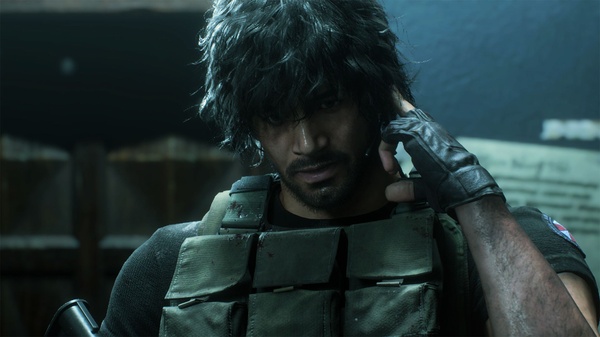
There's an almost poetic irony in how Resident Evil 2 has marked the fundamental stages of my gaming life. Just as the original 1998 chapter represented my baptism of fire with a controller at just eight years old, its monumental 2019 remake marked another crucial debut: it was the very first title in the entire saga that I ever professionally reviewed. From that moment on, a true domino effect of work was triggered, leading me to manage and evaluate, in cascade, all subsequent chapters, whether they were new main iterations or restoration operations. And speaking of atypical paths, there's another curious detail that links my pen to this "Rebirth Trilogy": I ended up writing the review for each of the three remakes for a different video game publication. A fragmented, mutable, and anything but linear professional journey, which, upon closer inspection, mirrors the very soul of these three works. Because, despite what a superficial view might suggest, Capcom did not use the same industrial mold to package its remakes, but adopted three profoundly distinct philosophies of reinterpretation.
Before delving into the geometry of their game design, however, I must make a necessary correction regarding my private collection. Since Resident Evil 2 is my absolute favorite chapter in the entire franchise, it's not entirely accurate to say that I don't own a physical copy of it. At the time of its release, thanks to the valuable intercession of a trusted person, I managed the almost impossible feat of pre-ordering a copy of the highly coveted Collector's Edition for PlayStation 4 – the one contained in the reproduction of the classic item box – having it delivered to the GameStop store near my home. When the fateful launch day arrived, I rushed to the store, full of adrenaline, to pick up my trophy, only to be met with a cold shower: my copy was gone. They had inadvertently sold it to someone else. I was literally furious, not only because of the seriousness of the disservice itself but because I saw the special favor this person had gone out of their way to do for me go up in smoke. I moved heaven and earth, raising a biblical fuss to get back what was rightfully mine, even though the edition was now sold out everywhere. To try to mitigate the damage and compensate for the error, GameStop's management itself scoured the national inventory, finding one last, miraculous unsold copy in a town adjacent to mine. There was only one small, negligible detail: it was the Xbox One version, a console I didn't own at all. But, all things considered, what did it matter? I had already devoured, completed, and reviewed the game thanks to my digital code on PlayStation 4. So, without batting an eye, I shelled out the exorbitant sum requested to take home the unusable disc of an alien hardware, and even today that trunk proudly stands in my room as a relic of a victory of principle.
That physical trunk, conquered tooth and nail in the store, is the perfect symbol of what Resident Evil 2 Remake represents on a gameplay level: the triumph of space management and claustrophobic rigor.
Starting that second chapter on Switch 2 today means rediscovering the masterful lesson imparted by Rebirth in 2002, but translated with rare intelligence into the modern grammar of the over-the-shoulder camera. Capcom's work on the Raccoon City police station is a treatise on the architecture of terror: the building is conceived as a closed, vertical, and labyrinthine box, an immense psychological puzzle where backtracking anxiety reigns supreme. Every dark corridor imposes a mathematical calculation of resources; every bullet fired is a difficult choice, because the living dead are not cannon fodder but tough, unpredictable sponges that refuse to fall, while the binaural rumble of the Tyrant's heavy footsteps through the walls transforms the map into a chessboard of pure paranoia. It is the remake understood as a sacred preservation of tension.
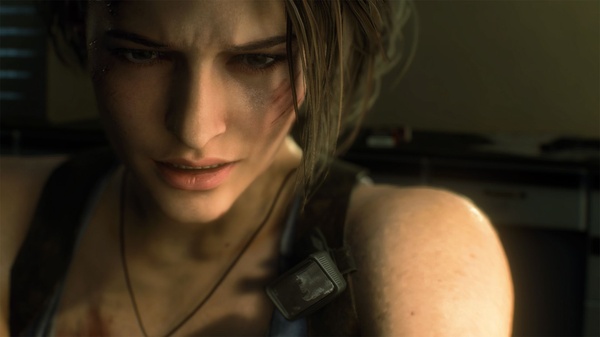
A diametrically opposite approach to what one feels when switching, with a simple return to the console's main screen, to Resident Evil 3 Remake. On paper and in the developers' intentions, Jill Valentine's adventure abandons the closed-box structure to embrace that of the burning urban corridor: a distinctly cinematic, frantic, and linear experience. There's no point in hiding behind a finger: at the time of its debut on fixed living room consoles, this third episode divided critics due to painful content cuts – the absence of the Clock Tower above all – and a decidedly limited overall longevity, which left a bitter aftertaste for those who expected an expanded blockbuster. Yet, and this is where I want to make a provocation, the hybrid nature of Nintendo Switch 2 performs an authentic miracle of recontextualization. Stripped of the heavy expectations of home use and experienced on the go, in the palm of your hand, the frantic and arcade rhythm of RE3 Remake suddenly finds its ideal dimension. Its brevity and lack of downtime transform from structural flaws into perfect advantages for high-octane, "grab-and-go" portable sessions. Jill's perfect dodge mechanic and the heart-pounding chases against Nemesis work on the small screen like a non-stop adrenaline rush, an action rollercoaster that can be replayed with unprecedented pleasure precisely thanks to the lightness of the portable format.
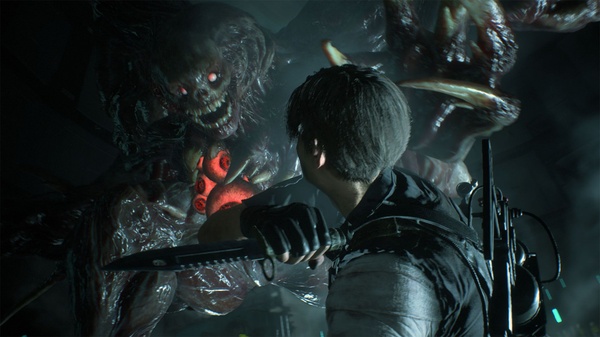
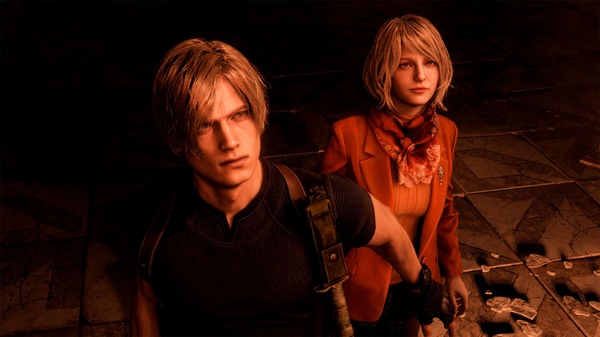
This dialectic between the conservative rigor of the second chapter and the extreme streamlining of the third finally finds its alchemical squaring in Resident Evil 4 Remake, the perfect synthesis of the entire operation. Having to rewrite the title that in 2005 had literally invented the modern third-person shooter was a daunting task, but Capcom responded by expanding the concept of an "open tactical arena." In the desolate valleys of rural Spain and among the Gothic architectures of Salazar's castle, the game succeeds in the titanic feat of preserving the original's campy and lighthearted spirit while immersing it in a much darker, grittier, and more oppressive atmosphere. The introduction of the parry via the combat knife silently revolutionizes the flow of encounters: horror is no longer just flight or barricade, but an aggressive dance of millimeter-perfect reflexes, crowd management, and brutal counterattacks that enhance the responsiveness of Switch 2's controls.
Having the opportunity to experience these three works seamlessly on the same portable ecosystem exposes Capcom's extraordinary design maturity. From methodical claustrophobia to cinematic chases, to the ecstasy of tactical action: three different manifestations of the nightmare that, united, enhance the overall offering on the new Nintendo machine. But for three such distinct design philosophies to run smoothly on a mobile chip, a silent conductor was needed, an engineering marvel capable of bending the laws of physical memory: the RE Engine.
The Verdict and the Optical Illusion of the RE Engine: The Maturity of Portable Horror
Behind the extraordinary success of this triple operation lies a silent protagonist, an invisible conductor without whom the entire conceptual framework we have analyzed so far would collapse at the first loading screen: the RE Engine. It's natural to wonder how a graphics engine originally designed to flex its muscles on fixed living room machines managed to transform into such a chameleon, capable of scaling so effortlessly to the mobile architecture of Nintendo Switch 2. The answer is not to be found in brute force or the sterile count of polygons on screen, but rather in a design philosophy based on engineering cunning and surgical memory management.
On any hybrid console, however modern and powerful, the bandwidth of RAM and cache always represents the most severe bottleneck, the physical obstacle against which the ambitions of the most complex ports are shattered. The RE Engine circumvents the problem at its root thanks to its photogrammetric nature – which generates impactful textures starting from scans of real objects – combined with a highly efficient "modular asset" structure. Capcom has indeed designed the three remakes as a sequence of dynamic blocks: through an aggressive data streaming system, the engine loads into memory only and exclusively what falls within the player's visual cone at that precise millisecond. The exact moment we move the camera, the algorithm "destroys" and instantly removes from memory the background behind Leon or Jill's shoulders, freeing up valuable resources to reconstruct it in real-time in the fraction of a second we decide to turn around sharply.
The technological secret of the RE Engine precisely mirrors the mechanisms of human paranoia: in the darkness of Raccoon City, only what you are staring at in that instant exists, while everything else sinks into the nothingness of the code, ready to materialize behind you as soon as you let your guard down.
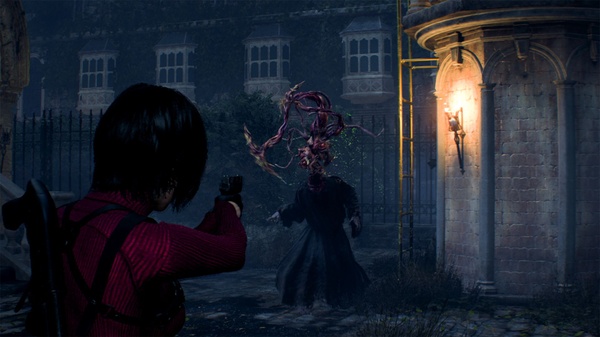
It is precisely thanks to this smart architecture, designed from the outset not to waste even a single megabyte of memory on what is not visible on screen, that today I can wholeheartedly endorse the arrival of the trilogy on Nintendo Switch 2. We are facing a solid, mature, and satisfying native conversion, which definitively erases from collective memory the bad memory of the old and limping cloud versions. Although these are direct ports, lacking new content tailored for this debut, the value of the offering is secured by the choice to propose the titles in their richest and most definitive editions. Those who have never played them elsewhere will find themselves with very dense packages: from the Deluxe Edition for the second chapter to the standard version for the third – wisely purged of the now superfluous multiplayer experiment Resistance – up to the culmination with the Gold Edition of Resident Evil 4, which includes both the fundamental narrative expansion Separate Ways starring Ada Wong, and that same The Mercenaries mode that continues to give me so many sleepless nights.
Analyzing the actual performance in the field, a remarkable scalability of the engine emerges, delivering excellent performance while still showing significant differences between the three chapters, direct consequences of their varying scenic complexity. Before X-raying each individual episode, however, there is a transversal verdict that deserves to be highlighted: portable mode proves to be the most satisfying on a purely visual level. While connecting the console to the dock on a modern 4K panel makes the physiological interventions of dynamic resolution visible to the most trained eye, playing on the integrated display of Switch 2, the screen's high pixel density performs an extraordinary magic, effectively masking small drops in sharpness and delivering a compact, dense, and incisive overall picture.
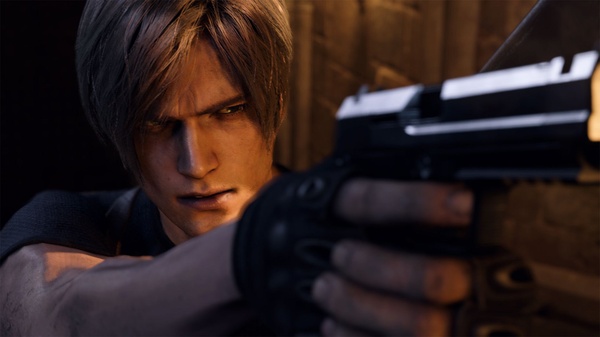
Delving into the details of the individual titles, Resident Evil 2 Remake confirms itself as a top-tier port in terms of pure atmosphere. The sharp contrast between the neon lights and the impenetrable shadows of the police station maximizes the console screen's color rendition, provided, however, that a small preliminary precaution is taken: my passionate advice is to immediately go into the options to deactivate the annoying "film grain" filter and dedicate a few moments to a meticulous HDR calibration. Once the image is cleaned of that artificial grainy patina, the closed and claustrophobic nature of the environments helps the hardware maintain a fluidity firmly anchored around 60 frames per second for the vast majority of the time; only in the most frantic sections, when the camera has to simultaneously manage several moving zombies and a considerable amount of persistent corpses on the floor, a flexible dynamic resolution drop is noticeable in docked mode, a more than acceptable compromise to never affect the responsiveness of the controls.
What surprises with its cleanliness and consistency, however, is Resident Evil 3 Remake, which on Switch 2 emerges without hesitation as the technically most fluid and successful chapter of the entire triptych. That same more linear, guided, and action-oriented cinematic approach that we re-evaluated on the design level, translates here into rock-solid performance stability. The game runs smoothly as silk, without the slightest hitch: even during furious chases with Nemesis, when the alleys are torn apart by chain explosions, fire particles, and flying debris, no noteworthy frame rate drops are encountered. It is the definitive consecration of this episode as the ultimate portable experience of the collection.
Understandably, Resident Evil 4 Remake is the one that shows the most evident visual challenges, being the most recent and ambitious title in the lot technologically. In the wide outdoor sections of the village, dense with wind-blown vegetation, beating inclement weather, and enraged crowds of Ganados attacking simultaneously, Switch 2 is forced to resort to decidedly more pronounced upscaling techniques. The price to pay for such polygonal abundance manifests itself in the form of a slight general loss of sharpness and some visible graphical artifacts, in particular a bit of aliasing and flickering on character hair strands or distant foliage. Yet, and this is what truly matters with the controller in hand, the performance target never falters: the experience always remains extremely fluid, snappy, and responsive. Furthermore, a splendid integration with the physical peculiarities of Nintendo hardware makes one forget any small aesthetic concessions of the fourth chapter. While throughout the trilogy, HD Rumble support deserves sincere praise for its ability to provide crisp, heavy, and differentiated tactile feedback to every single shot, step, or violent impact, it is precisely in Resident Evil 4 that the ace up its sleeve is played: the addition of gyroscopic aiming. Inexplicably absent in the first two chapters, gyro aiming proves to be a decisive added value here, capable of transforming the most frantic encounters by allowing players to refine their aim at enemy weak points with a naturalness and execution speed simply unmatched by analog sticks alone.
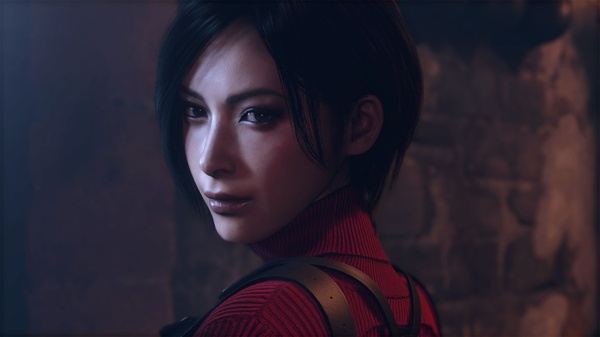
Over twenty years after the golden age of the GameCube and Shinji Mikami's fiery promises of seppuku, the circle closes in the brightest possible way. Nintendo Switch 2 not only succeeds in the titanic feat of making home consoles not missed, but thanks to the magic of hybridization, it establishes itself as the most fascinating, intimate, and visceral place to experience the nightmare of Raccoon City and the heresies of rural Spain. Horror has returned home, it is solid as a rock, and this time, we can take it with us everywhere.
Similar articles