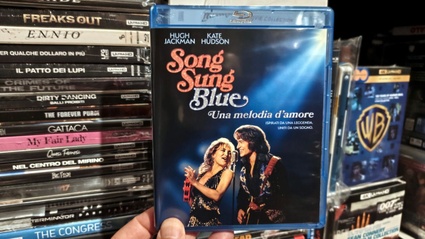
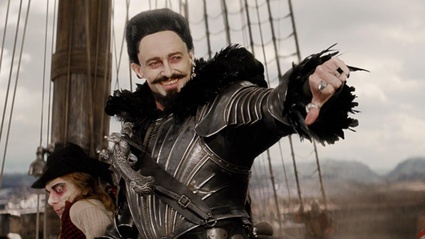
"Phones Don't Ring Anymore": Hugh Jackman and Kate Hudson's Advice on Breaking Through from the Song Sung Blue Red Carpet
For the two stars of Song Sung Blue, this role is a chance to reflect on their beginnings and what it means to keep creating even when success doesn't come.


Set amidst Thai restaurants, county fairs, and small stages across the Midwest, Song Sung Blue tells the true story of a couple of musicians who in the eighties and nineties become a fixture on the local scene as a Neil Diamond tribute band, never achieving mainstream success or recognition. Directed by Craig Brewer, the film looks at music as a calling rather than a career, telling what it means to keep playing when there are no spotlights, contracts, or promises of a future.
I met the film's stars Hugh Jackman and Kate Hudson at the London premiere of the film, an occasion that led them to talk not only about their roles, but also to **recall their own beginnings, when the horizon was made up of neighborhood theaters, failed auditions, and makeshift stages.** "If I hadn't made it, I'd be like them," they say, looking at the characters of Mike and Claire: artists who continue to perform because they don't want to stop.

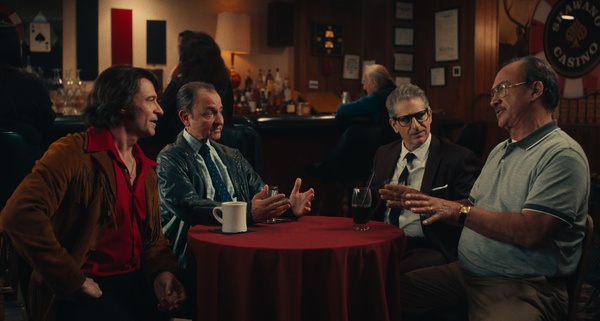
Also featured in the story is Michael Imperioli, who plays Dave in the film, one of those fundamental but often invisible characters: someone who supports the creativity of others without direct personal gain, offering time, trust, or simply a constant presence. It's a figure the actor recognizes well even off-screen, speaking of those who choose to stay close to art even if they're not on stage.
For Brewer, finally, Song Sung Blue continues an authorial journey that for years has observed creative America on the fringes of the industry, from his beginnings in hip hop to this intimate portrait of live music as an emotional and communal glue. A film that uses Neil Diamond's songs to tell of love, resilience, and the need to keep creating even when "the phones don't ring anymore."
Craig Brewer
You open the film by calling it "a true love story." Why this explicit choice?
It's deliberate. We see so many films about young love, about the initial spark. But true love is what comes after, when you've been through tough times and life has already tested you. That's where love truly manifests itself.
You've often worked with performers who later became much more famous. Was it important here too to look for new faces and energies?
Since Hustle & Flow, I'm proud to have helped launch people. With this film, I had the same feeling: I wanted new energy, because the story is precisely about that, about people finally finding their voice.
In the film, there's a moment when the characters play together for the first time and everything seems to click suddenly. How did you build that sequence?
There's a very tense song, Plane, and I remember watching Hugh play after months of guitar lessons. He started singing and in that moment, everything was already there. I was in front of the monitor and I thought that was the magic you always chase as a director. It's like in the studio, when you hit the right note and you know it works.
You said it could also work as a Christmas movie. In what sense?
In my family, going to the cinema at Christmas is a tradition. You need something that everyone likes, and I believe this film has music, humor, and emotion, but above all, a family at its center that stays together.
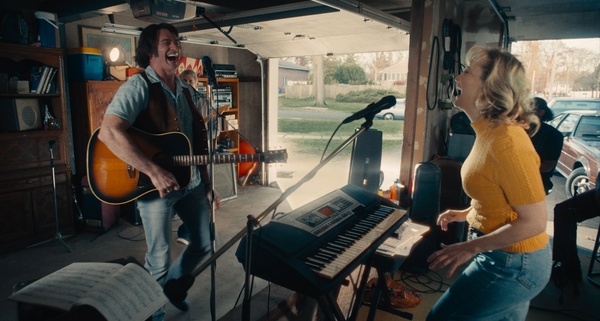
Hugh Jackman and Kate Hudson
The film tells of musicians who play in small venues, often without stability. Why was it important to show that?
Kate Hudson - There are thousands of incredible musicians who live off tips and small venues, but they are successful because they do what they love. They have to do it because they love it. If you don't truly love this profession, it ends up disappointing you.
Hugh Jackman - I recognize those people. Success isn't the point. The point is to keep doing what you are.
Many musical moments in the film are deliberately vulnerable and understated. Was that a shared goal?
Hugh Jackman - Music strips you bare. You can't hide, especially when you play live in small spaces. That vulnerability is exactly what the characters experience.
Kate Hudson - That's where everything becomes real. You're not trying to impress someone, you're simply doing what you love.
How much did it matter to let the music guide the acting?
Hugh Jackman - I had been taking guitar lessons for months and when there's the first scene where we play together, we didn't plan too much. We just played. When that happens, you stop acting and start listening.
Kate Hudson - When you're on a stage, even if it's a neighborhood bar, you can't pretend. You're either there or you're not.
Michael Imperioli
In the film, you play Dave, a key figure who isn't on stage but makes the others' journey possible. What struck you about this character?
It reminded me why I started. Playing in a band in a small town, making movies, being on the street in Memphis, having a premiere in a local bar: honestly, nothing ever felt bigger than that. I've had premieres in the most prestigious cinemas, but nothing ever surpassed the first thing I did, the one I really cared about.
Dave is someone who gives up his own dream to support another's. How interested were you in telling this type of relationship with creativity?
It's a very real dynamic. Dave had an artistic dream, but life didn't take him there. Not everyone is born or grows up in places like New York or Los Angeles, where certain opportunities are more accessible. But he met someone he believed in and helped them however he could. That kind of support can change your life.
You said this aspect is familiar to you even off-set. In what sense?
When I try to raise funds for films, I often meet people like that: people who want to be close to creativity even if they're not the ones on stage. They're not looking for immediate gain, they simply want to be part of something they believe in. Without figures like these, many artistic paths wouldn't even exist.
How much does the Midwest setting matter in making this story credible?
Michael Imperioli – Milwaukee is a working-class city, concrete, no frills. People work hard and care deeply about their roots. It's a place that doesn't need to appear different from what it is, and this sense of reality was fundamental to telling the story of characters like Dave.
Similar articles