Nolan's Odyssey, Filming Locations: Italian Scenarios Becoming Legend
Where the myth of Ulysses meets the magic of cinema.
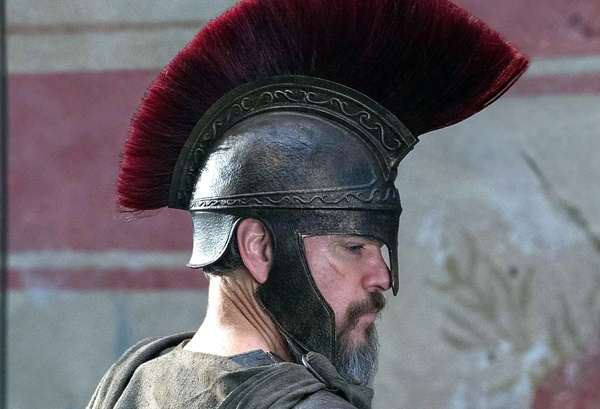


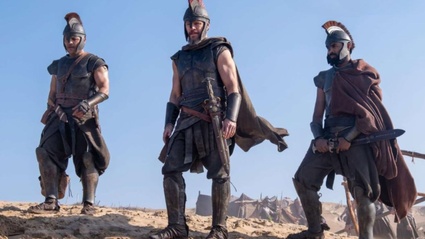
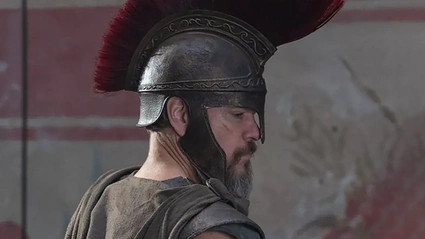
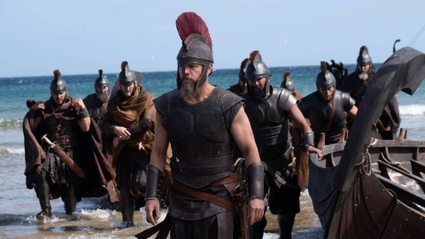
Oscar winner Christopher Nolan takes on one of the foundational narratives of Western culture: Homer's Odyssey. Expected in theaters on July 17, 2026, the film tells the arduous journey of Ulysses, played by Matt Damon, returning to Ithaca after the Trojan War. While the stellar cast, which includes Tom Holland, Anne Hathaway, Zendaya, Lupita Nyong'o, Robert Pattinson, and Charlize Theron, is already a formidable draw, it is the choice of filming locations that fuels anticipation: scenarios designed to give the story an imprint of authenticity and a visual power capable of transporting the viewer into a universe suspended between myth and reality.
The Italian Locations of Nolan's Odyssey
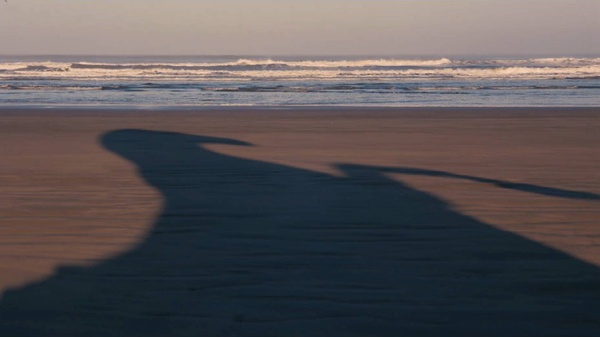
To give form to his personal vision of the Homeric epic, Christopher Nolan chose Italy as one of the visual cornerstones of the project. Among them, Sicily and Lazio stand out, territories where myth and nature merge into landscapes that seem sculpted specifically to host Ulysses' journey. The Mediterranean atmospheres, chromatic contrasts, and primordial power of the selected locations offer the viewer not only a spectacular setting but also an authenticity capable of rooting the myth in tangible reality.
Favignana, the Pearl of the Egadi Islands
The beating heart of the Italian filming is Favignana, the largest of the Egadi Islands. With its rugged and unspoiled landscape, made of sea caves, sheer cliffs, and bays of primordial charm, the island proved to be an ideal natural set to translate the epic dimension of the Odyssey into images.
Some scholars identify Favignana with the "island of goats" mentioned by Homer. The imposing IMAX cameras captured iconic views such as Cala Rossa and Cala Azzurra, along with the caves scattered along the coast, transforming the island into a bridge between reality and myth. The crystalline waters of the archipelago finally offered the ideal setting for spectacular open-sea sequences, destined to become one of the most powerful visual elements of the film.
Ostia, between History and Modernity
Another crucial piece of Nolan's visual mosaic is Ostia, chosen as the set for the naval sequences. The tourist port, with its modern structures, was transformed into a cinematic setting capable of evoking the epic breath of the Mediterranean.
The decision was not accidental: Ostia, located at the gates of Rome, has always been a nerve center for maritime traffic and still maintains a deep connection with its historical vocation. In this context, Nolan was able to combine the logistical efficiency of contemporary infrastructures with the historical authenticity of a place rooted in antiquity, creating a scenario suspended between past and present, tradition and technology.
The Aeolian Islands, Legendary Scenarios
Alongside Favignana, the Aeolian Islands also entered the visual fabric of Nolan's Odyssey. A UNESCO World Heritage site and always enveloped in an aura of legend, these lands offered scenarios that seem born to host myth.
Lipari, Basiluzzo, and Vulcano were chosen as sets to represent the island of Aeolus, the god of winds. The volcanic landscapes, natural fumaroles, and the chromatic palette ranging from the black of the rocks to the deep blue of the sea gave the sequences a suspended atmosphere, capable of making the supernatural dimension of Ulysses' journey palpable. A context in which the power of nature becomes as much a protagonist as the actors on screen.
Cinema and Tourism Hand in Hand
The arrival of a monumental production like The Odyssey in Sicily and Lazio also represents an extraordinary opportunity for cultural and touristic promotion. The islands of Favignana and the Aeolian Islands, already famous for their natural beauty, are preparing to conquer a new international showcase, destined to enter the collective imagination through the lens of IMAX cameras.
Similarly, Ostia could experience a season of renewed interest, thanks to an unprecedented combination of its historical heritage and the aesthetics of contemporary cinema. A side effect that confirms how Nolan's cinema is not limited to telling stories but contributes to redefining the perception of places, transforming them into symbolic scenarios capable of attracting spectators and travelers.
Where was Odyssey filmed abroad?
The cinematic journey of the Odyssey touched various parts of the world.
- In Greece, sets like Pylos, Corinth, and the Castle of Methoni restored the authenticity of scenarios steeped in ancient history, ideal for evoking the atmosphere of Homeric myths.
- In Morocco, on the other hand, the cities of Ouarzazate, Marrakech, and Essaouira were chosen to recreate majestic Troy and the surrounding desert landscapes. Some sequences were even filmed in Dakhla, in Western Sahara, a choice that sparked political and cultural debates.
- The rugged and unspoiled landscapes of Scotland and Iceland brought to life the enchanted islands and darker territories that Ulysses faces on his journey, while Malta and the United Kingdom completed the international mosaic of filming.
The production, which lasted about six months, represented a colossal logistical undertaking, with filming at sea, medieval castles, wind-swept coasts, and vast deserts.
Nolan's Odyssey: The Plot and Release Date
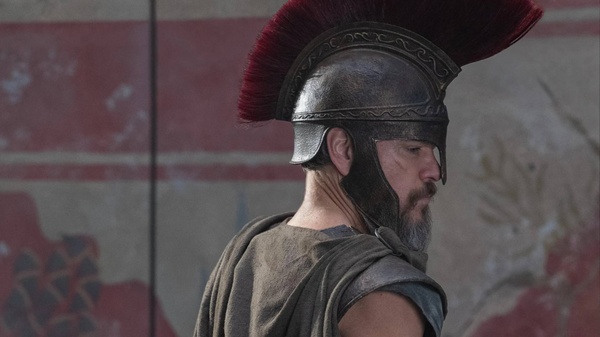
Expected in theaters on July 17, 2026, the film follows Ulysses' tormented return to Ithaca after the Trojan War. On his journey, the hero will have to face superhuman trials: from confrontation with the cyclops to the deception of the sirens, up to the enchantments of witches and the capricious intervention of the gods.
Christopher Nolan (the director of Interstellar, The Dark Knight, Oppenheimer) promises a spectacular and immersive adaptation, in which the eternal charm of myth intertwines with the visual power of contemporary cinema. A work that does not merely retrace Homeric verses but aims to give the audience the sensory and dramatic experience of a story that continues to speak to modern man.
Similar articles