Jodie Foster, splendidly (“French”) in Rebecca Zlotowski’s Private Lives.
“De Niro? At first I found him uninteresting, then he enlightened me. Hopkins: adorable and terrifying.”
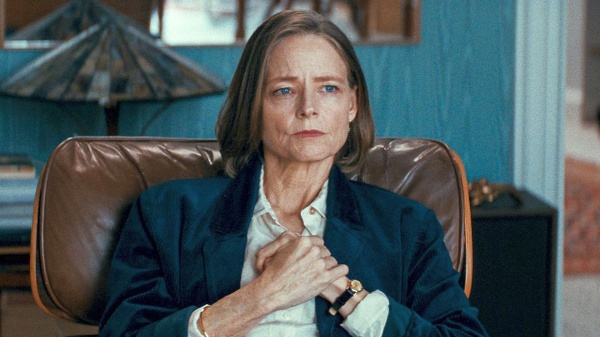


There’s only one Jodie Foster, period. When you hear her speak and recount her career (a full 60 years), which began as a child prodigy, every anecdote and curiosity becomes a starting point for conversation and reflection. She set a precedent, also as further inspiration for women behind the camera, debuting as a director in 1991 (with Little Man Tate), followed by other works (Home for the Holidays, The Beaver, Money Monster). But it is above all Foster the actress, celebrated at the recent Marrakech International Film Festival, who has illuminated the Hollywood system, with two Academy Awards (The Accused and The Silence of the Lambs), reinventing herself every time, from the miniseries True Detective: Night Country to her latest film, Private Lives (in cinemas from December 11 with Europictures, editor's note) directed by Rebecca Zlotowski. Here she plays a psychiatrist whose work is called into question, to the point of having to investigate the suicide-homicide (?) of one of her patients. A psychological and surreal thriller, in which she acts perfectly in French, a language she studied from a very young age, and which is in fact a new piece to add to the puzzle of a life impossible to emulate.
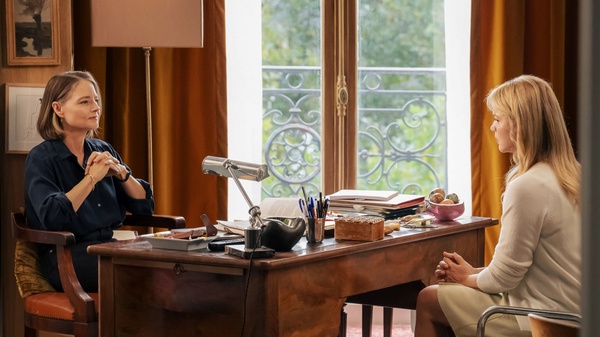
Let's talk for a moment about Private Lives: it's a role you particularly loved.
Rebecca manages to bring together so many different genres in one work that has a serious, intellectual side, but that asks big questions, and at the same time doesn't take itself too seriously, it also has a light side. The script had momentum, I had wanted to make a French film in French for a long time, I've done a few in my life, but only small roles, so this presented itself as an opportunity to do something bigger. I feel different when I speak French, I have a higher voice, I think this makes me a little more insecure, a little more vulnerable, also because I'm always afraid of not being able to find the right words or communicate well. I get nervous, which doesn't normally happen to me, and I'm not, but here it was interesting. We really connected, she put together a miraculous cast, I can't believe how lucky we are.
What is the secret to so much enthusiasm?
I am a huge film enthusiast, I always have been and always will be, I love movies. I think my ideal day is waking up in the morning, maybe doing some skiing, and then spending the rest of the day watching movies and eating. That's all I've ever wanted to do. I don't want to repeat things I've already done in the past, also, if I don't work for a long time I feel very insecure. I have to go back to the set and prove my worth again and shoot a movie, that's where I feel most myself.
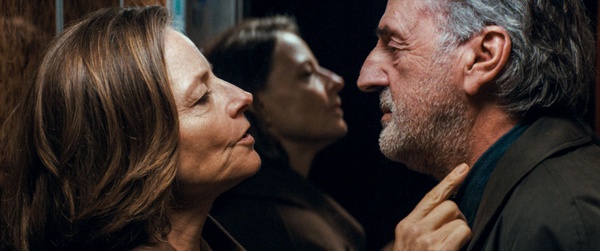
Your characters vary, but they always react, they are very strong: what attracts you most?
When I was young I wanted to be the center of attention, not to be someone's sister, wife, daughter, or girlfriend. I just wanted the film to be about me and to be a solitary journey, I wasn't very interested in who I was in relation to others. I wanted the works to be about my journey and my transformation. I was terribly egocentric, like all of us in those years, but I was also reacting to a second wave of feminist interests that said:
"I want to matter, I want to make films that matter, in which I am a human being and not just someone's girlfriend or object.”
Those unconscious decisions were interesting. I thought about it: I played many victims in the first 30 years of my life without really understanding why. Then, when you get older, you start to look back, to understand your choices.
And what have you discovered over so many years?
Partly it's due to how I got there. I never wanted to become an actress, I didn't have the personality for it. In reality, it was just a cruel job chosen for me when I was young, and I don't even remember starting. As a child, I was a solitary type, I read. And then one day I was assigned a job, for which I had no preparation, and in which people said: "Okay, now pretend that's your grandfather and cry." And I thought: "How do I do that?" To survive, I had to learn to be a more emotional, spiritual, and psychological person. I'm interested in different things, but I need a lot of time to catch up, today I'm very selective about what I do.
Taxi Driver will turn 50 next year: what do you remember about that turning point?
I started at three, doing commercials and things like that, at six I was already in a very successful television series, I made my first film, at twelve I stopped doing television, alternating Disney works and cartoons. I worked a lot, but I had a different vision of what an actor's life was, I thought it was simply that someone gave you a script, you read the lines, learned them, maybe questioned some, and then you were told to act naturally. That's all, I said to myself: "wow, that's not an interesting job. It's not enough for me." So I went to shoot Martin Scorsese's Taxi Driver, De Niro took me under his wing.
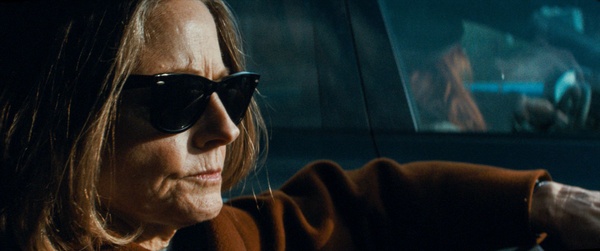
What kind of relationship was established between you?
He would pick me up in my hotel room with my mother, we would go to these bars and rehearse the lines. De Niro is one of the greatest American actors, I am very proud to have worked with him, but he is not the most interesting person in the world. At that time, he was very focused on the character, as he used to be in those days. I remember during lunches with him I thought: "When will this end and I can go home? What's happening?" He wasn't able to talk to me, he talked to the waiters and people in the restaurant. But then, during our third lunch together, he finally guided me through improvisation, opening my eyes to what acting could be. I was just reciting the lines, waiting for the next one, but building a character is something different. I remember how excited I was, I was sweaty, excited and euphoric, I went back to my hotel room to meet my mother and I said these words: "I had this enlightenment." I think from that moment everything changed.
And with Anthony Hopkins (in The Silence of the Lambs, editor's note) how did it go instead?
He was adorable, but also terrifying. I hadn't had a chance to talk to him before we started shooting, he was filming another movie, he only stayed for a couple of weeks. They put him in his cage and then we shot directly in front of the camera, he looked into the lens. We never got to talk to each other. At the end of the film, we realized that we were both really scared of each other. He told me, I was eating a tuna sandwich. "I was scared of you." I replied: "Me too." We've been friends ever since.

Among the many directors you've worked with, there's also David Fincher in Panic Room.
The longest film I've ever shot with five people in the dark in a building. I don't think I've ever learned as much from any other director as I have from David Fincher. It's a film school in itself, it was a very particular moment in my life, I was pregnant and already had a child, and I thought: "Oh, I wonder what this next child will be like." Here I am, stuck in a closet with a 12-year-old girl (Kristen Stewart, editor's note) for months. I wondered: "I wonder what this girl will be like when she grows up?" And of course, secretly, I thought: "Maybe I'll have a daughter and we'll be exactly the same."
Similar articles