The Paper, The Office Spin-off Review: Laughing at a Crumbling Institution
A declining newsroom, caught between stubborn idealism and inherited comedy. The format endures, the risk remains low!
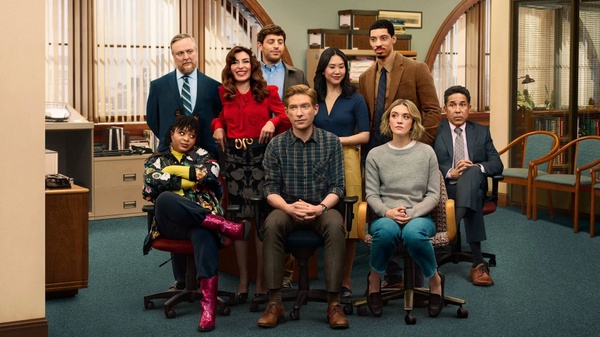


There's a clear, almost programmatic idea at the heart of The Paper: to take the mockumentary grammar that made a certain way of understanding sitcoms familiar and move it into a territory where comedy, by definition, stumbles upon already tragically exposed subject matter. The crew that documented Dunder Mifflin returns to the scene and finds a new subject: the Toledo Truth-Teller, a declining Midwest newspaper, now downsized and forced to coexist with the prosaic economy of "useful" paper (toilet tissue included) within the same corporate framework. The result is a spin-off that, at least in its stated intentions, doesn't want to merely replicate a comfort format, but aims to make it react to the contemporary erosion of local journalism. Here's our review of The Paper.
- A mockumentary that knows its DNA well
- Theme, setting, and plot
- Ned Sampson and Esmeralda Grand: the series thrives on the clash of registers
- A "group comedy," but at what cost?
- Rhythm and structure
- When is it released in Italy?
- Conclusion
The Paper is a mockumentary that knows its DNA well
The Paper explicitly places itself in the universe of The Office and inherits its most recognizable characteristic: the gaze of the camera as an active presence, the confidence in front of the camera, the choreography of glances, the constant friction between what is said and what is truly thought. The problem, when working on such a codified system, is not the echo, but the automatism. The series seems to know this. The only explicitly direct narrative bridge is Oscar Martinez, while the rest of the cast is designed to stand on its own. It's a prudent choice and, at the same time, revealing: The Paper wants to be recognizable without being "dependent," but it cannot prevent the viewer from interpreting every deviation as a comparison.
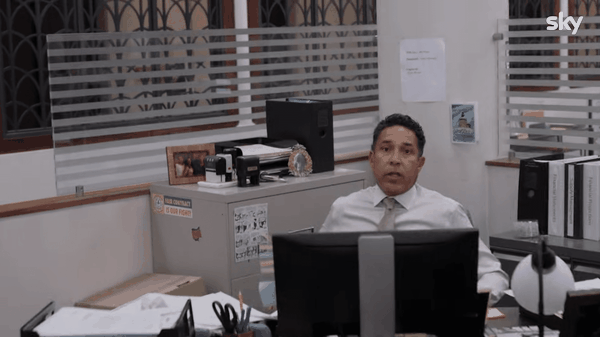
In its best moments, that familiarity becomes a clever shortcut to compress the time of engagement and immediately draw attention to the new environment: the impoverished newsroom, the coexistence of print and online, and the pressure of clickbait. In its less successful passages, the same shortcut risks transforming into a mode of consumption: one watches to rediscover an already internalized rhythm, rather than to discover a truly new identity.
The Paper: theme, setting, and plot
The setting is the most interesting choice. A historic newspaper reduced to a few employees, caught between precariousness and survival, with a digital presence that slides towards sensationalism and a print edition that also relies on agency material. The series declares its intention to portray the attempt to "do quality journalism" without adequate means, resources, and training, even relying on volunteer reporters. It's a dramatically current idea, but The Paper handles it with the instinct of a sitcom: the premise produces situations, chaos, an underdog story energy that seeks warmth and reconciliation more than true unease.

Here lies the critical point. Local journalism, portrayed as an institution that is both "necessary" and dying, would have the capacity to introduce contradictions that demand not only empathy, but also judgment. The Paper, however, tends to soften things, preferring affection for its characters over the radicality of the diagnosis. This is not a flaw in itself: it's an editorial line. But it's also what can make it appear more cautious than its subject matter promises.
Ned Sampson and Esmeralda Grand: the series thrives on the clash of registers
Ned Sampson arrives as the new editor-in-chief with enthusiasm for "good old print journalism" and an idealism that the series recognizes as potentially out of time. He is a figure designed to generate friction: he believes in the mission, must lead an unprepared group, and clashes with corporate logic and with those who have transformed online into a content factory. The risk is that this idealism becomes a narrative pose, a rhetorical engine that doesn't get dirty enough. The series seems aware of its protagonist's possible naivety and tries to complicate him, but his primary function remains that of a catalyst: someone must believe in it so that the viewer can hope the newsroom doesn't collapse.
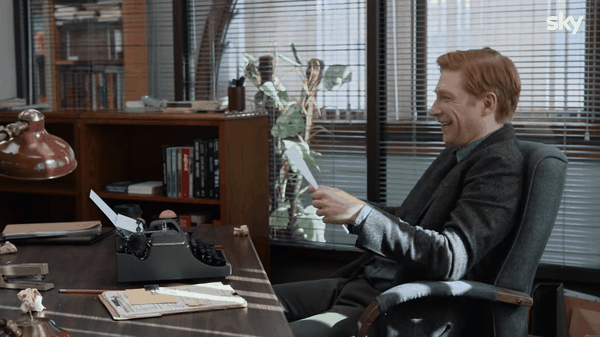
However, what truly makes the dynamic vibrate is Esmeralda Grand, the newspaper's editorial director and head of TTT Online, described as eccentric and manipulative, ready to sabotage the arrival of the new editor-in-chief after being demoted. Esmeralda is a centrifugal force: she pushes the series towards a more aggressive, more theatrical, more overt comedy. This creates both an advantage and a problem. The advantage is evident: when a character dictates a rhythm, the scene ignites. The problem concerns the balance of the narrative world. Such a caricatured presence, in a context that also wants to tell the agony of local journalism, can become an energy shortcut that doesn't always integrate with the credibility of the newsroom and its conflicts.
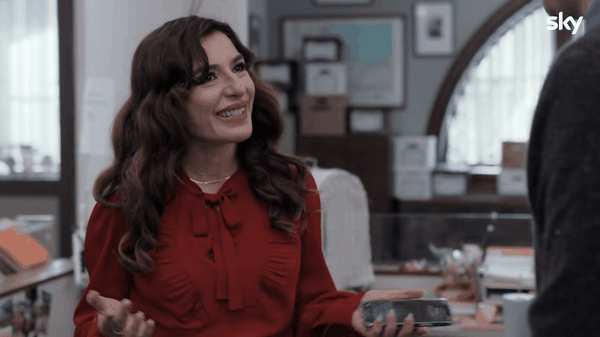
The Paper seems to build part of its charm precisely on this friction: comedy as deformation and, underneath, a melancholic idea of a crumbling institution. It works when the series maintains control of the register; it loses effectiveness when deformation becomes the default solution.
The Paper is a "group comedy," but at what cost?
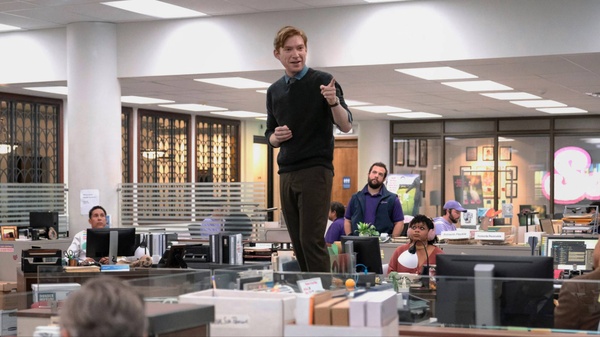
The ensemble cast is large, and the structure emphasizes the group: a reduced newsroom, non-editorial staff dragged into journalistic work, incompetence and good will coexisting. It's a typical workplace comedy machine: the community is built through friction and solidified by sharing disaster. Here, The Paper plays a delicate game, because the volunteer component is not neutral. Within a sitcom, it can be an irresistible narrative pretext; outside of a sitcom, it's an ethical and structural issue. The series, as also emerges from the synopsis and presentation, prefers to remain on the human and narrative side rather than the problematic one: this choice ultimately determines the depth of its discourse on cultural work and the crisis of information.
This doesn't mean the theme is absent. It means it's filtered by the need to make the ensemble work, to find a balance between telling the story of a declining institution and the need to make that decline watchable, even welcoming.
Rhythm and structure of The Paper: can ten episodes be enough?
The first season has ten episodes and, in the United States, was released entirely on September 4, 2025. This compact structure, for a sitcom built on office dynamics, produces an immediate effect: everything must happen quickly, especially relationships and transformations. It's a choice that makes viewing smooth and compact, but it also tends to compress character growth, which is traditionally what gives oxygen to serial mockumentaries when they need to move from the initial idea to true longevity.
The Paper appears designed to be ready-to-use, to quickly give the viewer the feeling of a world already in operation. This is an advantage in terms of accessibility. It's a limitation if one expects the series to slowly build those emotional cracks and daily obsessions that transform a setting into a second home, as The Office, How I Met Your Mother, and Friends did.
When is The Paper released in Italy?
For the Italian audience, the debut is set for January 26, 2026, streaming on NOW and airing on Sky Serie, with all episodes available immediately. The arrival of The Office on Sky and NOW from January 17, with all nine seasons available on demand, is also part of the same editorial package.
The Paper review: conclusion
The Paper has a clear strength: it moves the mockumentary into an environment that already possesses, in itself, a contemporary melancholy. The crisis of local journalism is dense ground, capable of conveying meaning even when the joke falls flat. The series, however, chooses to remain primarily within the perimeter of a "warm" sitcom: manageable conflicts, affection for the characters, and chaos as a unifying factor.
It's a series that seems to know exactly what it wants to be. Not a revolution, but a conscious variation. Its limit, so far, coincides with its strategy: when identity depends on the familiarity of the format, the novelty should be more fierce, more risky.
The Paper often prefers to be pleasant. And in a story about a dying institution, pleasantness is a choice... not always innocent.
Score
Editorial team
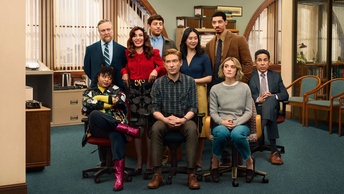
The Paper, The Office Spin-off Review: Laughing at a Crumbling Institution
The Paper inherits The Office's style without reducing itself to a mere exercise in nostalgia: it shifts its gaze to a declining newsroom and uses the crisis of local journalism as constant narrative pressure. It works when it allows the friction between idealism and compromise to emerge and when the clash of registers between Ned and Esmeralda creates real scenic energy. However, it shows its limits when the brevity of the season accelerates transformations and dynamics that would need time to settle. It remains a professional sitcom, often more "comfortable" than incisive: a solid variation, not yet a truly necessary work.
Similar articles