Spider-Noir Review: Nicolas Cage Transforms Pulp Noir into an Irregular, Yet Magnetic TV Experiment
Nicolas Cage leads a series that blends noir aesthetics and Marvel mythology in a visually magnetic, but narratively inconsistent television experiment.
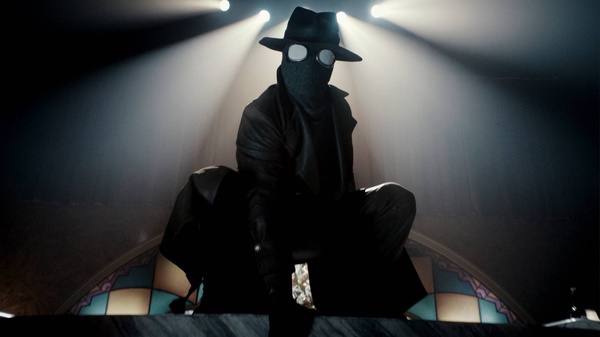


There's a moment during Spider-Noir when it becomes clear that the series doesn't really want to be "a new version of Spider-Man." It wants to be an operation of stylistic contamination, an almost stubborn attempt to merge the classic hard-boiled detective with the language of superhero comics. It is this ambition, even more than the Marvel component, that defines the series developed by Oren Uziel and Steve Lightfoot for MGM+ and Prime Video.
The result is far from perfect. Narratively predictable and not always capable of sustaining the weight of its aesthetic suggestions, Spider-Noir still manages to stand out within an increasingly saturated superhero television landscape. And it does so primarily thanks to Nicolas Cage, who transforms Ben Reilly into a melancholic and deliberately artificial creature, suspended between Humphrey Bogart and a mad cartoon.
- Nicolas Cage is the true gravitational center
- It works better as noir than as a Marvel series
- Better in color or black and white?
- The writing alternates brilliant insights and long periods of fatigue
- An imperfect experiment that at least dares
- Conclusion
Nicolas Cage is the true gravitational center of Spider-Noir
The smartest choice of the series is probably to build everything around Cage's presence, without attempting to normalize it. Spider-Noir perfectly understands that the actor doesn't work when he's contained. He works when he's allowed to deform the material.
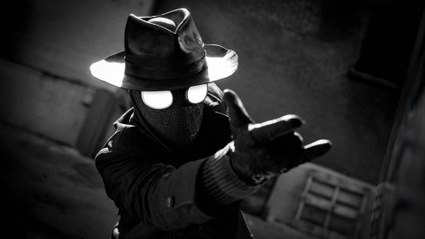
His Ben Reilly is not a realistic detective, nor does he want to be. He speaks like a 1940s actor who learned humanity by watching old movies at the cinema. He moves unnaturally, alternating sarcasm and melancholy with a deliberately unpredictable rhythm. In some scenes, he seems like a man destroyed by guilt; in others, a living caricature of classic noir.
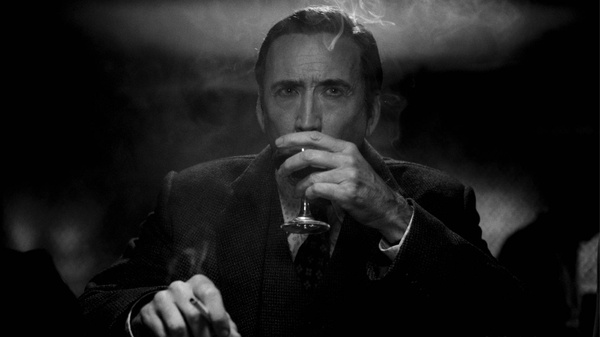
It's a performance that will inevitably divide audiences, but also the only real reason why Spider-Noir avoids turning into a soulless nostalgic exercise.
When Cage stops holding back, the series suddenly gains energy. His physical explosions, vocal shifts, almost arachnid postures, and certain moments of absurd comedy break the rigidity of writing that often risks relying too heavily on genre archetypes.
Spider-Noir works better as noir than as a Marvel series
The superhero component, paradoxically, is almost secondary. Spider-Noir seems much more interested in shadows, smoky corridors, jazz clubs, and alcoholic detectives than in the idea of expanding the myth of Spider-Man.
And it is precisely here that the series finds its most convincing identity.
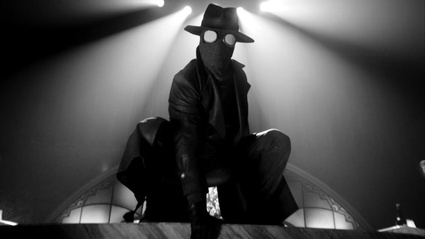
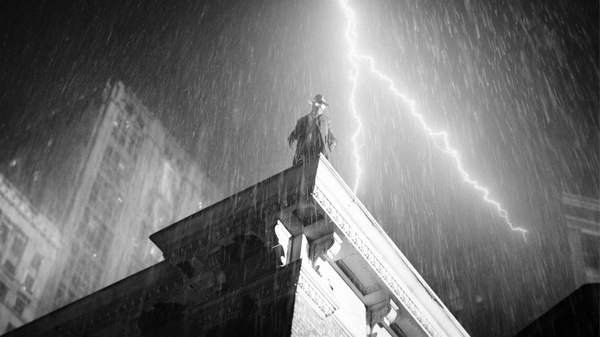
1930s New York is built through a declaratively artificial aesthetic, almost theatrical. Tilted shots, aggressive backlighting, rain-soaked alleys, faces sculpted by shadows, and deliberately unnatural characters do not seek realism: they seek the language of classic noir. In this sense, the cinematography is one of the most successful aspects of the production.
Spider-Noir: better in color or black and white?
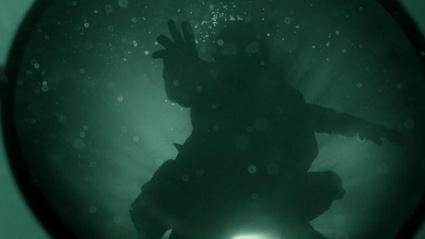
The black and white version is clearly the format in which the series acquires greater visual coherence. The nightclub scenes, backlit silhouettes, New York scenarios, shadows on faces, and even special effects take on a more credible consistency within the monochrome. The "True-Hue Full Color" version, on the other hand, often tends to highlight the artificiality of digital effects and to weigh down sets that appear decidedly more elegant in black and white.
The dual distribution remains an interesting idea, but it's hard not to perceive black and white as the format truly intended for this project.
Editor's note: for the review, I watched the series alternating between the black and white and color versions.
The writing alternates brilliant insights and long periods of fatigue
The main problem with Spider-Noir emerges when you look beyond the aesthetic surface.
The investigative plot rarely truly surprises: many developments are predictable well in advance, while some episodes visibly slow down the pace without adding real depth to the characters. The series loves to evoke noir more than it truly manages to understand its tragic component.
There is a substantial difference between quoting noir and truly possessing its moral pessimism. Spider-Noir often remains suspended in an ambiguous balance between sincere homage and stylized imitation.
Even several secondary characters suffer from this approach. Silvermane, played by Brendan Gleeson, has stage presence but remains confined within rather conventional dynamics. Cat Hardy, played by Li Jun Li, works much better on an iconographic level than on a psychological one, even if the actress still manages to give charm and vulnerability to a character that the script sometimes tends to treat as a simple archetypal figure.
Karen Rodriguez and Lamorne Morris are much more effective. Janet and Robbie are the only characters who seem to have a life outside the main plot. Their humanity helps the series not to completely sink into its stylistic exercise.
Spider-Noir is an imperfect experiment that at least dares
The most interesting thing about Spider-Noir is that it never tries to resemble the contemporary Marvel model typical of the MCU.
It prefers to enclose itself within a precise aesthetic and work on an extremely defined tone. It's a risky choice. Sometimes it produces truly inspired sequences; other times it reveals all the limitations of writing that doesn't always manage to sustain the weight of its cinephile ambitions.
But even in its most fragile moments, Spider-Noir maintains a recognizable personality.
Spider-Noir Review: conclusion
Spider-Noir is a deeply irregular series: often self-indulgent and narratively less incisive than it wants to appear. Yet, it possesses something that many Marvel productions have long lost: a true aesthetic identity.
Not everything works. Some episodes seem unnecessarily stretched, and the investigative plot rarely achieves the tension it promises. However, the combination of classic noir, comic pulp, superhero seriality, and the controlled madness of Nicolas Cage produces a television object that is at least interesting.
When the series stops worrying about its mythology and lets Cage freely transform Ben Reilly into a tragicomic arachnid detective, Spider-Noir finally finds its own voice.
Score
Editorial team
Spider-Noir Review: Nicolas Cage Transforms Pulp Noir into an Irregular, Yet Magnetic TV Experiment
Spider-Noir is an imperfect, yet surprisingly personal television experiment. The series struggles to maintain a consistently compact narrative structure, but compensates with a very strong aesthetic identity and a Nicolas Cage completely immersed in the character. More pulp noir than a classic Marvel story, the MGM+ and Prime Video production finds its strength in its atmosphere and its ability to transform Ben Reilly into a tragic and grotesque figure. Not everything works, but when the series stops chasing the superhero myth and fully embraces its own strangeness, it truly manages to stand out in the contemporary television landscape.
Similar articles