MOUSE: P.I. For Hire: Review of a Non-Disney Noir
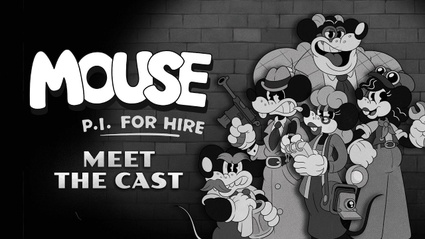
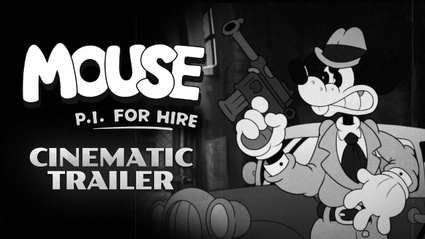
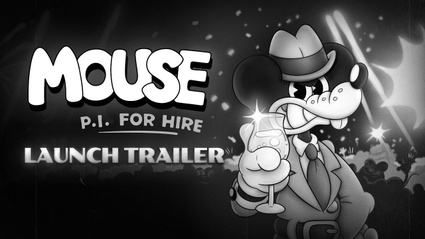
MOUSE: P.I. For Hire is a very iconic black and white game


Mouse: P.I. presents itself as an extremely ambitious stylistic and conceptual operation, capable of merging the soul of a first-person shooter with a narrative structure deeply indebted to classic noir, filtered through an aesthetic reminiscent of 1930s and 1940s cartoons. From the very first moments, the game makes it clear that its strength is partially relegated to visual originality, but also to the desire to build a melancholic and corrupt world, where every street, smoky office, or rain-soaked alley tells a story of moral compromises and ambiguity. The "cartoon" choice is therefore in contrast with the seriousness of the plot. The screenplay adopts a dry, disillusioned narrative style, made of internal monologues and sharp dialogues that seem to come out of an old hard-boiled novel: the protagonist is an anti-hero in the traditional sense of the term, a tired investigator, constantly suspended between the desire to do the right thing and the awareness that in this city no one truly comes out clean.
The Plots of MOUSE: P.I. For Hire
The plots and subplots intertwine naturally, prioritizing atmosphere and a sense of fatalism over a constant need for plot twists, creating a story that proceeds through suggestions, environmental details, and fragments of broken humanity. In this context, the collaboration with Troy Baker represents a decisive added value: his narrative voice, hoarse and full of undertones, does not merely interpret the protagonist, but becomes the emotional backbone of the entire experience, accompanying the player with a measured performance that recalls radio dramas and vintage noir cinema, further strengthening the illusion of being inside an old black and white film projected on a time-worn screen. This graphic style, moreover, helps to immerse us in those atmospheres, but visually it tends to mix the scene elements a bit too much, which at times will not be so simple.
The Gameplay of MOUSE P.I. For Hire: Kill the Mouse
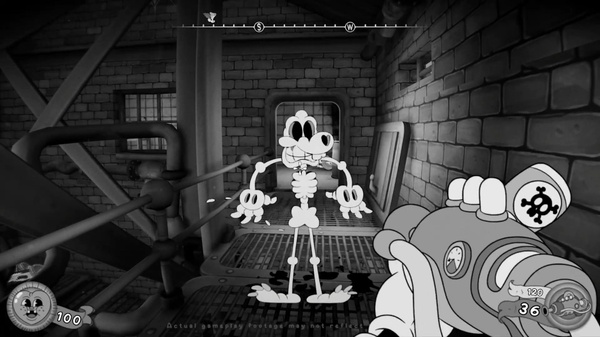
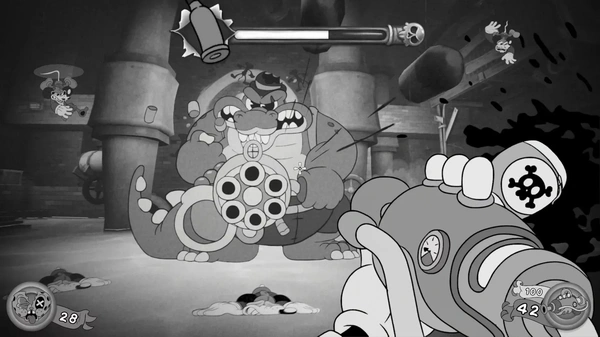
From a gameplay perspective, Mouse: P.I. is a first-person shooter that makes simplicity and solidity its manifesto. The weapon handling is immediate but never superficial, with gunplay that provides overall satisfying sensations, thanks to well-calibrated recoil and incisive audiovisual feedback, although the obvious repetitiveness causes that feeling to wane after a while. Each weapon clearly communicates its weight and its role within the encounters, favoring an instinctive yet reasoned approach, where managing distances and positioning becomes fundamental. Character movement is fluid and reactive, allowing players to traverse spaces naturally and engage in combat at a fast pace, without ever descending into uncontrolled chaos.
Thanks to the dash, you can escape complex situations, although I confess that the highest difficulty is not currently well-calibrated, given the imbalance of enemy strength. The level design accompanies this philosophy by proposing compact and readable environments, designed to support intense and well-paced encounters, where the player is constantly invited to move, use cover and corners, and react quickly to threats. The gameplay, as a whole, manages to maintain an effective balance between pure action and narrative immersion, even if the latter is more stylistic and recalls those films from over a century ago, but in substance never goes deep.
Notes that Give Rhythm
A central role in the game's identity is played by the sound component, which works in synergy with the visual compartment to reinforce the old noir film atmosphere. The soundtrack, strongly inspired by vintage jazz and swing, accompanies exploration and combat with tracks that oscillate between melancholic and menacing, emphasizing the protagonist's moments of solitude and amplifying tension during encounters. The musical themes are never intrusive, but slowly insinuate themselves, almost creeping under the player's skin, helping to make the game world credible and vivid. The sound design also deserves a special mention: from the dry, booming gunshots, to footsteps echoing in the corridors, to the ambient city noises, every sound element is designed to reinforce the sense of immersion and to convey that impression of an old-time film, slightly dirty and grainy, that characterizes the entire production.
Score
Editorial team
MOUSE: P.I. For Hire: Review of a Non-Disney Noir
Similar articles