Mrs Playmen: the sexual revolution in a not-so-revolutionary series
The seven episodes of the Netflix series tell the story of Adelina Tattilo, the first female editor of an erotic magazine in the prudish and patriarchal Italy of the 1970s.
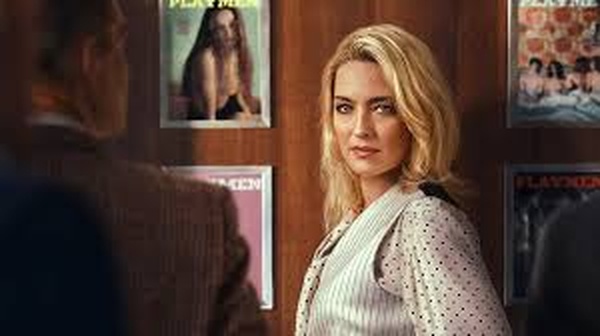


Rome, October 1970. The Piper Club, legendary temple of Roman nightlife, prepares to host a party that will make history: on the cover of Playmen, the first Italian erotic magazine, Brigitte Bardot appears with a nun's headdress and a fishnet bra that leaves little to the imagination. It's a calculated scandal, a provocation that shines a spotlight on Adelina Tattilo Balsamo, the woman behind what Time would call "Hugh Hefner in a skirt", ready to challenge Catholic and conservative Italy with a revolution made of elegant nudes, audacious themes, and intellectual debate.
As we tell you in the review of Mrs Playmen, a new Netflix miniseries in seven episodes directed by Riccardo Donna - also the author of Io sono Mia (2019) and Questo piccolo grande amore (2009) among others - we are faced with an operation that on paper had all the ingredients to prove to be a compelling story of female emancipation and cultural transgression. The true story of Adelina Tattilo - journalist, publisher, film producer who dared to bring sex and female freedom to newsstands in a country where divorce was not yet legalized and shotgun weddings were commonplace - deserved a more courageous and articulated treatment than it received here.
Gallery
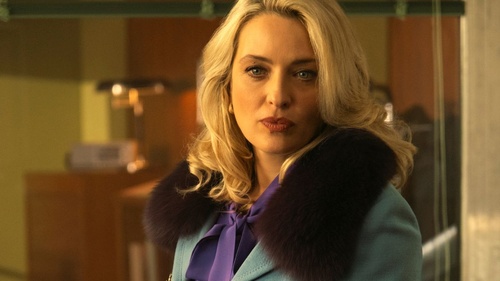
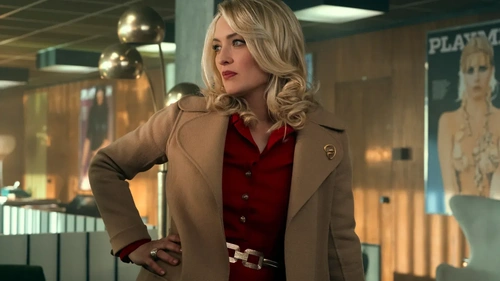
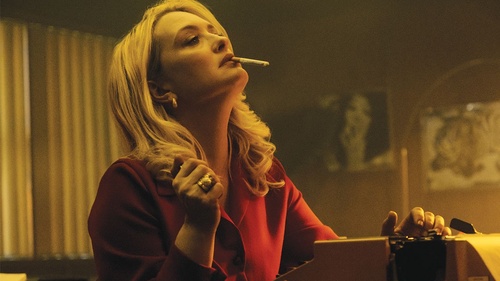

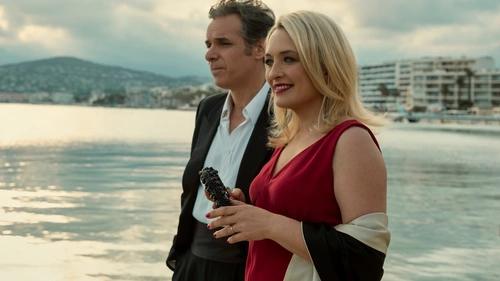
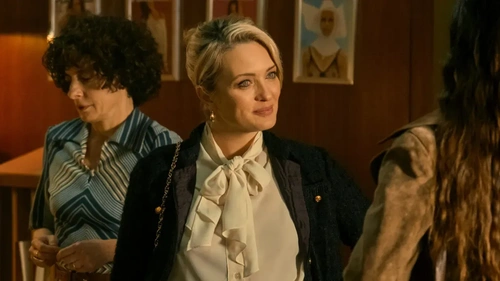
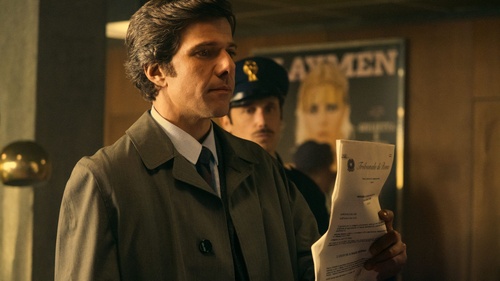
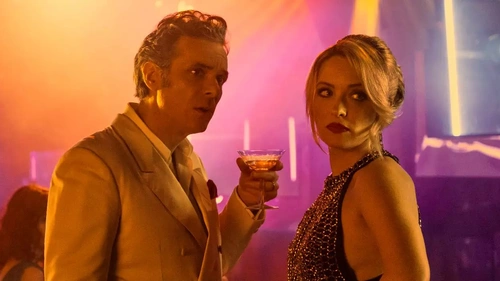
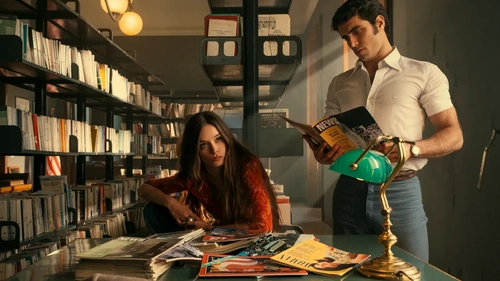
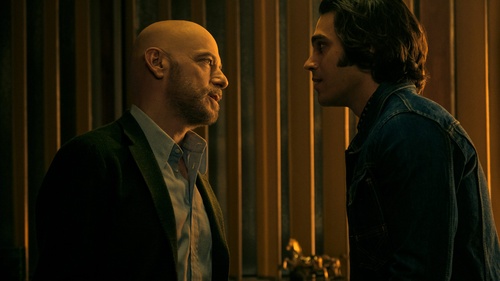
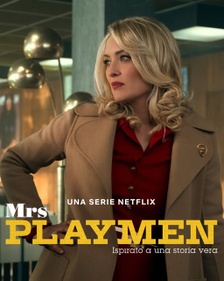
Mrs Playmen: Afraid to Dare
The potential, it must be said, was all there, with the possibility of dismantling the all-Italian idiosyncrasies of a society that was chaste and pure for convenience, with the 1970s setting as a further element of social disintegration and the interference of bigotry and Catholicism in everyday life and the need for excess. In the end, however, the result is a glossy and superficial series, not without interesting points, it must be said, but which often ends up reducing them to a sequence of pre-packaged situations and scenes, where every obstacle is overcome with disarming simplicity even in the most controversial passages, in a very fast-paced narrative that allows little time to reflect on what has just been seen.
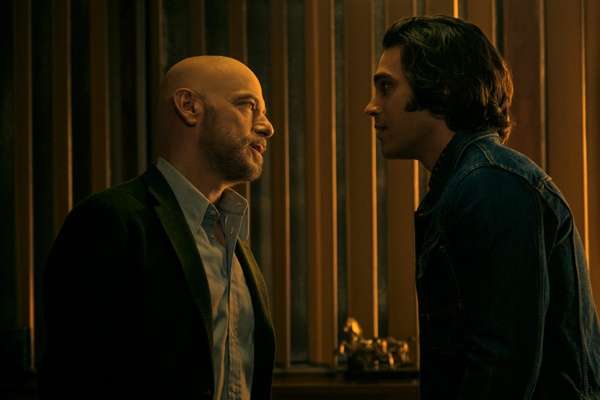
The depth of the premise, with homosexuality to be normalized, the clash between police and anarchists, female emancipation and so on, is systematically sacrificed in favor of a clean and forcibly cool aesthetic, which seems more interested in celebrating the protagonist a priori than in exploring her inherent and evident contradictions, which are then resolved through more or less rhetorical moralizing solutions. A wasted opportunity that transforms what could have been a rigorous social fresco into a standardized streaming product, designed for quick consumption rather than to leave a lasting impression.
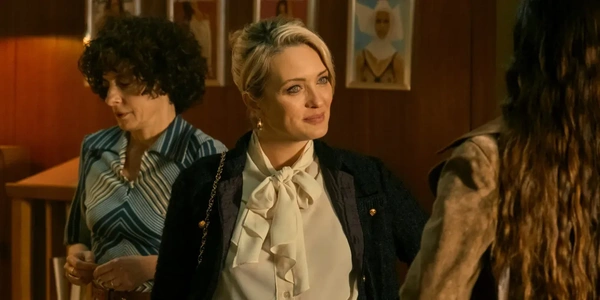
And it's a shame because Carolina Crescentini in the main role displays an undeniable stage presence on this occasion, often stealing the show from the numerous supporting cast. But this idea of a strong and determined woman, ready to take back control of her life and achieve progressive independence from her husband/owner, a philanderer and absentee, does not go hand in hand with a screenplay that is often timid, almost never able to sting effectively despite the millimeter assists granted by the script: many open-goal opportunities are missed, with a red-hot context barely exploited.
A Bit of Everything, But Without Verve
International scandals - with Onassis and Jacqueline Kennedy involved - the interference of the Church ready to suppress that magazine considered immoral and indecent, fascist raids against gay clubs, rape and the subsequent shotgun wedding, courts always ready to treat cases of violence, domestic and otherwise, against women with extreme dismissiveness, as in "they asked for it". There was plenty of hot material, but it was toned down in favor of a prime-time television narrative, designed for that general audience who will easily recognize themselves in the faces and events rendered here in a wearily accommodating way.
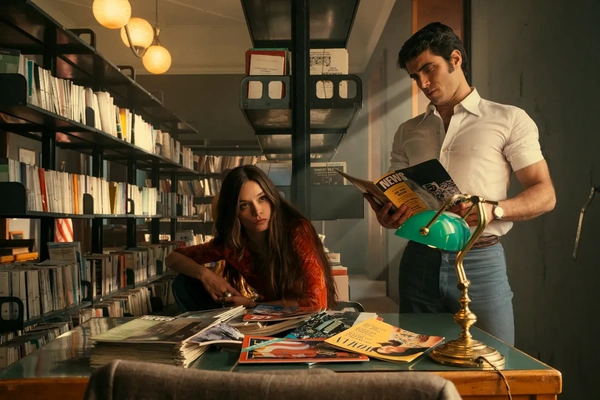
The impression is that the series was somehow afraid to get its hands dirty, to show characters grappling with truly difficult choices where there is no "right or wrong" answer, drastically impoverishing the entire meaning of the operation. Mrs Playmen thus loses that ambiguous complexity that could have made the story genuinely interesting, limiting itself to a more or less faithful account of Italy fifty years ago.
Gallery
Score
Editorial team

Mrs Playmen: the sexual revolution in a not-so-revolutionary series
There is a sometimes inexplicable haste in the seven episodes of Mrs Playmen, ready to race headlong towards the finish line of the season finale, leaving behind those thornier and more uncomfortable nuances that the screenplay introduces but never openly confronts. The result is a smoothed-out and glossy portrait of the social asperities of a country in profound transformation, amidst internal crises - political and moral - and that universe of sex as a taboo to be broken and normalized at all costs. Precisely for this reason, the excessive chasteness of the staging and the choice to scratch the surface, without ever delving into the intricacies of a moralizing and castrating power, with street violence, homophobia, and female emancipation as unexplored Trojan horses, leave a sense of deep disappointment.
Similar articles