The Voice of Hind Rajab Divides, But Leaves No One Indifferent: A Review of Venice 2025's Symbolic Film
It's not the first time Ben Hania has blended documentary and fiction, but The Voice of Hind Rajab makes such an extreme choice that it truly cannot leave anyone indifferent.


One can only start with the voice in the title: that which belonged to a child killed in occupied Gaza in early 2024. A voice already circulated on social networks during the desperate attempt to save her, published by rescuers in the hope of speeding up the bureaucracy needed to obtain permits to retrieve her. A gesture that was not enough to save her, but was sufficient to make her a symbol, one of the many voiceless victims of a very heated conflict, far from its resolution. The film starts from that real voice and builds around it just enough, in narrative terms, to transform it into cinema. Not into a documentary account, but into a visual narrative of the drama of the Palestinian people, told by a Tunisian director who convinced the family of the young victim to entrust her with her voice, her story.
Simply stating the choice behind The Voice of Hind Rajab explains what made it the most discussed film at the last Venice Film Festival, what will make it one of the symbolic films of this very troubled year of cinema and geopolitics. Tunisian director Kaouther Ben Hania is no stranger to the idea of transforming true stories into cinematic material: she had already done so with The Man Who Sold His Skin and Four Daughters, works in which documentary and formal invention intertwined in a fascinating hybridization. Here, however, the challenge is taken to its extreme consequences in a work that offers no respite, that transforms horror into a direct experience, almost impossible to sustain.
A Simple and Unbearably Real Story
On January 29, 2024, five-year-old Hind Rajab was trapped in her family's car in Gaza, surrounded by the bodies of her slain loved ones and Israeli tanks that had riddled the vehicle with bullets. For hours, the child remained on the phone with the Red Crescent, oscillating between the illusion that her parents were sleeping and the progressive awareness of their death, until she also perceived her own violent demise as imminent. "Come quickly, I'm afraid of the dark," she pleaded. Normal, almost trivial words that any child could say. And it is precisely this banality that makes them devastating: no narrative artifice could have had the same effect as knowing that the voice we hear is that of a child who, in the end, actually died in that car.
If that phrase had been written for an actress, it would have seemed calculated, manipulative, designed to elicit tears. But heard from Hind's real voice, trembling and insistent, it becomes irrefutable, pure truth. In the opinion of this writer, the film thus overcomes any moral shadow of exploiting pain and tragedy, precisely because it is reality itself speaking, without mediation. The subject matter is so current, the chosen medium so extreme, the reaction so visceral that there remains ample room for even diametrically opposed opinions, testifying to how deeply this film strikes and becomes something serious, profoundly personal to experience, loving or hating it.
It is equally true that the emotional impact of the film may seem excessive. The actors' tears, their desperation in re-listening to that voice, the crying in the theater during the Venetian screening: for some, all this may seem redundant, even manipulative. Yet, faced with the strength of the material, Ben Hania manages to maintain a fragile but sincere balance. It may seem that the story slips from her grasp, that it exceeds the capabilities of cinema itself, but the director approaches the material with delicacy, attempting at every moment to honor it and not exploit it.
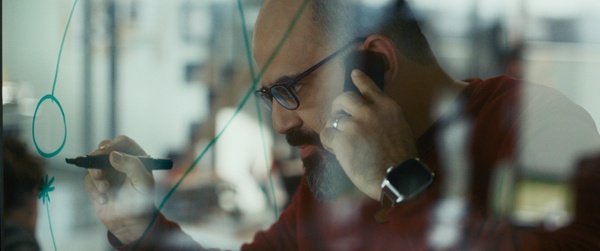
The Voice of Hind Rajab: Our Present, Absolute and Imperfect
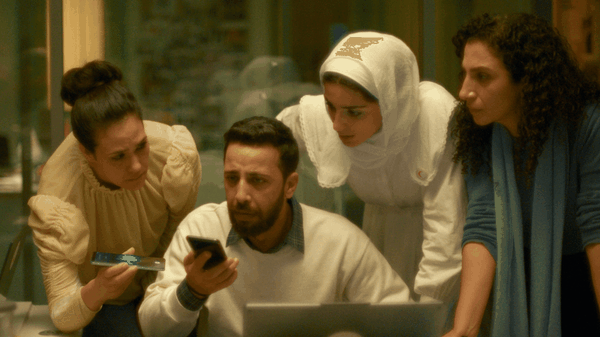
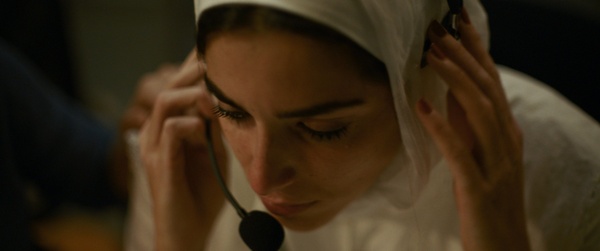
The film inhabits a liminal zone, suspended between reconstruction and archive. The real recordings of Hind's voice are juxtaposed with the acting of the actors who portray the Red Crescent team in Ramallah, engaged that night in a vain attempt to save her. Through their dialogues, the absurd bureaucracy of rescue efforts is reconstructed: the ambulance that must obtain authorizations from the Palestinian Ministry of Health, the Red Cross, the Israeli army – the same one that had just riddled the Hamadeh's car with 350 bullets. This chain of permits, also visualized with diagrams traced on the transparent glass dividing the head rescuer's office from the common areas, directly shows the mechanics of cruelty.
The most memorable moment comes when an off-screen hand holds a cell phone and frames the actors. On the phone screen, their faces fade into those of the real Red Crescent operators, filmed during the live broadcasts of that night. It is a technically crude image, but conceptually disruptive: cinema collapsing into journalism, reconstruction becoming evidence to make history, fiction dissolving into reality.
The Voice of Hind Rajab is not formally refined: it is rough, urgent, at times disordered. But this urgency is its strength. It does not tell a past tragedy, already filtered by historical distance. It tells the now, the burning present, while another Hind might at this very moment be pleading for help. There is no declared ideology, no political thesis to prove: only the voice of a child remains, and the darkness she feared.
Score
Editorial team
The Voice of Hind Rajab Divides, But Leaves No One Indifferent: A Review of Venice 2025's Symbolic Film
Given the enormous emotional impact recorded in the theater, given the overflowing media echo it generated, Ben Hania's film seemed predestined for the Golden Lion, which it only narrowly missed, stopping at the Grand Prix (the second most important award of the Festival). This is why it arrives in theaters this week, presented only with the original audio subtitled, with Hind's real voice, without subtitles, by precise decision of the distributor I Wonder. Not only for the unbearable weight of its subject, but for its ability to transform it into intimate and universal cinema, fragile and implacable, The Voice of Hind Rajab is a film that is almost too much to bear, yet impossible to ignore.
Similar articles