The new Wuthering Heights really loves being bold and excessive: film review
Emerald Fennell confirms her love for excess and extremity in her highly personal, and thus divisive, reinterpretation of a literary classic.


In a selection of great cinematic love stories chosen for a British Film Institute retrospective, Emerald Fennell listed thirteen films that, in her view, serve as a good appetizer before watching her “Wuthering Heights.” This list includes Liliana Cavani's The Night Porter and Catherine Breillat's always controversial Romance, but also celebrated “treacherous” adaptations with more than audacious aesthetics like Francis Ford Coppola's Dracula and Baz Luhrmann's Romeo + Juliet. Far from the melancholic delicacy of Sofia Coppola or the masterful stylistic and narrative elegance of Park Chan-wook (whom she also includes in her list of dark and somewhat toxic romantic stories), Fennell is more reminiscent of the maximalist and excessive Australian director of Moulin Rouge! and The Great Gatsby, or at least in this work, she shares and replicates his highly personal and capricious approach.
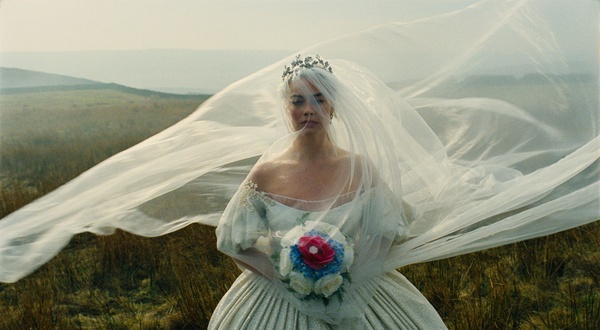
As widely anticipated (and somewhat exploited) by the film's impressive promotional campaign, “Wuthering Heights” is a particularly free adaptation of the eponymous literary classic, which unhesitatingly cuts entire characters and situations, reinterpreting its settings (interiors and exteriors) and dynamics in an allegorical, sometimes aestheticizing, manner. The world we are plunged into is not realistic, nor is it one with a clear historical connotation: it's somewhat like the Converse sneakers briefly visible in Sofia Coppola's Marie Antoinette, but taken to the extreme. Here, it's not a fleeting concession to the contemporary to suggest a parallel between a real adolescent feeling and a present, much more proletarian, but fundamentally similar one.
Heathcliff and Catherine are two empty shells filled with Fennell's obsessions
Indeed, it moves from two children who already behave and speak like adults to two actors who are “grown” (in age and fame) for quite some time. Heathcliff and Cathy are two names and two eggshells from which, without too much grace, Fennell extracts the original yolk to fill them with all the obsessions and recurring themes that have now permeated her cinema for three films. From the hair fetishism that runs through the films from the opening title to the contamination of the most vivid red color in which the protagonists' darkest feelings are drowned, from the allusive and brazen sensuality that permeates food, earth, furnishings, and everything artificial and natural that populates the story's spaces, Fennell conveys in this film the same destructive passionate impulse that was at the heart of Saltburn, dividing it between the two protagonists.
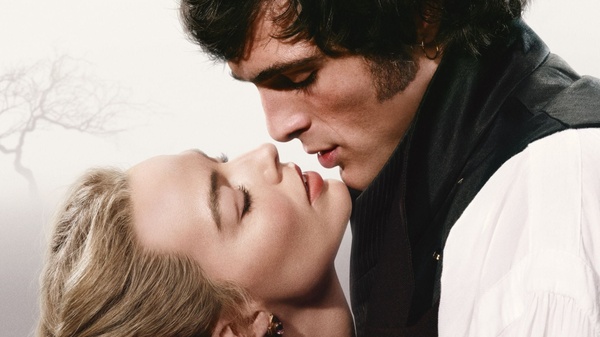
Jacob Elordi and Margot Robbie seem like the two protagonists of a romance novel with an increasingly “spicy” plot precisely because Fennell is looking for exactly that sensation. This is perhaps the most successful intuition of this “Wuthering Heights,” at times brilliant. Faced with a love story written by a young writer in a personal and family context that today we would not hesitate to define as problematic, and which has often been dismissed (rightly or wrongly) over the centuries as melodramatic and excessively adolescent in certain depressed and desperate turns, Fennell transforms her adaptation into precisely what its detractors have always seen within it. That is, she borrows the fiery sunset of Gone with the Wind, the handsome house servant chopping wood shirtless worthy of certain Latin American soaps, all the imagery of the once-modest romance novels and today's much more explicit smut, even including a roleplay between dominator and submissive in the film.
Fennell gets lost in her storm of impulses
This is something that, on a subconscious level, is not difficult to trace in the original novel. Fennell, in short, hunts for impulses and embodies them in the beautiful bodies of her protagonists, in the sumptuous sets that scream their never-delicate allegories, among hands holding candles, stuccoes biting pearl strands, and walls representing the protagonist's flesh and skin.
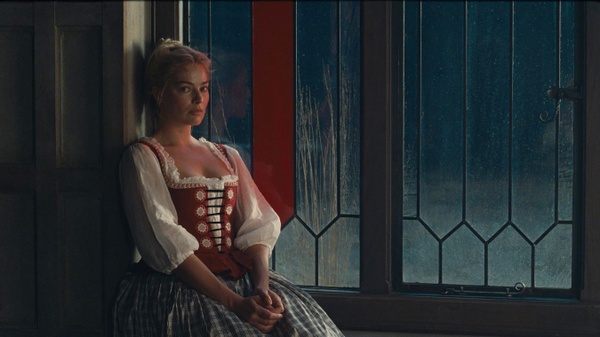
However, she gets lost within her own love storm. Partly because she remains an author on her third film (and her first “blockbuster” attempt), partly because after Promising Young Woman and Saltburn, it's still unclear if beneath the hints of necrophilia and the passion for fingering food and various material entities, there's a truly strong vision. Fennell has clearly stated that her “Wuthering Heights” is a product of her first reading of the novel, of the images and sensations it triggered in her. It is evidently an adolescent fantasy, in which the love between the two protagonists transforms into an obsession that everyone feels for the protagonist Margot Robbie: there is no character who cannot be reduced to an entity that desires her beyond reason or sense. Heathcliff is simply the ringleader. Capricious and cruel, but sensitive and irresistible when necessary, this Cathy is more the projection of a childish fantasy of being desperately loved and “seen” rather than a real person.
Opulent and brimming with visual and musical details, truly never subtle in introducing them to the viewer, “Wuthering Heights” stops just short of summing up its operation. In this, it is profoundly different from the films cited by Fennell, which had an undeniable ability to amplify the essence of the original story, stripping it of everything else. Luhrmann's Romeo + Juliet, for example, managed to convey the innocence of Shakespearean youthful love, looking it in the eye without condescension, while Coppola explored all of Dracula's demons and depravities to tell its most romantic, unyielding, sweet sentiment.
Fennell's detractors have long argued that beneath her taste for shocking the audience with strong images and daring in the sexually explicit, there is nothing authentic, nothing truly worth saying. The shock is the message. “Wuthering Heights” does not entirely disprove them; on the contrary: it is a court of empty simulacra where you wonder if a soul is hidden or if it is just an opulent summation of the many ways in which that love impulse, so strong as to be deadly, has been reduced and simplified to become a cliché.
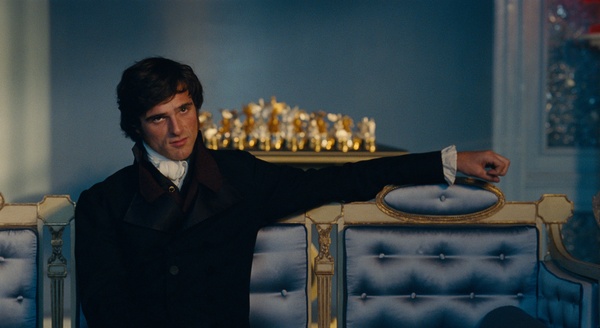
The best characters in "Wuthering Heights" are the most ridiculous
This time, however, there is something authentic, even if well hidden. “Wuthering Heights” has an exceptional character, and, not by chance, he is the most hateful of all. He is the protagonist's father, a fallen nobleman, an indefatigable drinker and gambler, a narcissist and emotional blackmailer without equal. His trajectory, tragic needless to say, is consistent until the end and, coincidentally, he is the only one who sometimes manages to escape the protagonist's fascination. In his vileness, in his inability to change, he has a humanity that goes beyond the visual fresco figure of the film. In fact, the most ridiculous and least attractive characters are the ones who would have something to say, see the little girl stuck in an eternal toy world whose embroideries and crafts exude an unexpressed libido, a powerful masochistic streak. It would be infinitely more interesting to explore the bizarre relationship that develops between her and Heathcliff, which is much more preordained and regulated in its excesses than the one with Cathy, but Fennell's problem is precisely that she doesn't know how to see what works in her story and indeed: she always tends to focus on the most trivial things she has to say.
Score
Editorial team
The new Wuthering Heights really loves being bold and excessive: film review
Emerald Fennell doesn't deny her love for visual shock, crafting an adaptation so personal and far from the original story that you can only love or hate it. It's a shame, however, that compared to the cinema she clearly draws from—the kind that, as a first step in the adaptation process, betrays its source—she doesn't fully complete the work. The operation would at some point require a landing, a destination, something of that same story that, stripped of its historical or literary boundaries, should shine. Fennell ends up merely staging her own passions and obsessions, greatly misrepresenting the concept of a “personal” adaptation.
Similar articles