The Last of Us Season 2: Love, Vengeance, and Fractures in 4K
Filmed natively in 4.6K and the show continues in ATMOS, even if in English
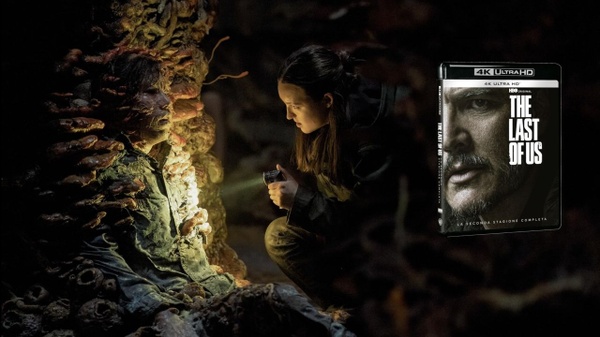


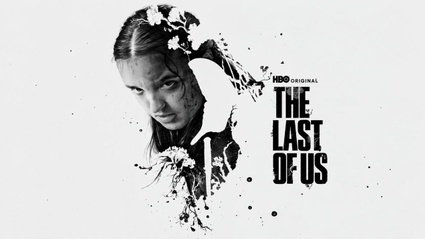
The second season of The Last of Us doesn't ask the viewer to become attached, but forces them to, only to then put them to the test. If the first television chapter had built a fragile balance between intimacy and horror, this new round of episodes decides to break it, more fiercely questioning the question that has loomed since the beginning: how far can love go when it becomes obsession?
The video game adaptation The Last of Us Part II chooses a particular path: it doesn't tell the entire story of the second chapter, but only stages a part of it. It's a decision that weighs on the narrative architecture. On one hand, it allows for a focus on precise emotional turning points; on the other, it deliberately leaves open fractures. For those who already know the structure of the original material, the choice has its own coherence, but arriving at the series without video game references, there's a feeling of incompleteness.
Yet, from a production standpoint, we are facing a further leap in quality. The season is more compact: 7 episodes and no perceived superfluous deviations. The pacing is decisive but not rushed. On the contrary, the willingness to pause in the most delicate moments, allowing space for silences, glances, and hesitations, is surprising. Tension doesn't arise only from the Infected or action sequences – which are more ambitious and spectacular – but from the cracks in human relationships.
In this sense, the work of Craig Mazin and Neil Druckmann demonstrates greater confidence compared to the first season. There's no longer a need to faithfully replicate the game scene by scene. The order of events is reorganized to better adapt to television language. Some choices work brilliantly, others are less natural, with dialogue that sometimes retains an almost “gameplay-like” rigidity. But overall, the operation is more conscious.
At the center remains the relationship between Ellie and Joel. Bella Ramsey portrays a profoundly different Ellie from the one we knew: less naive, more hardened, tempered by survival and an inescapable pain. It's a physically and emotionally exhausting performance, sustained with an intensity that rarely falters. If anyone were to miss the lightness of the first chapter, it's worth remembering that this transformation is the very heart of the story.
Alongside her, Pedro Pascal confirms his ability to make Joel a complex paternal figure, capable of extreme gestures and morally ambiguous choices. Their bond remains the emotional pivot of the series, but this season broadens the horizon. Dina, played by Isabela Merced, introduces a new dynamic, brighter but no less fragile. It's an essential counterpoint to the spiral of anger that envelops Ellie.
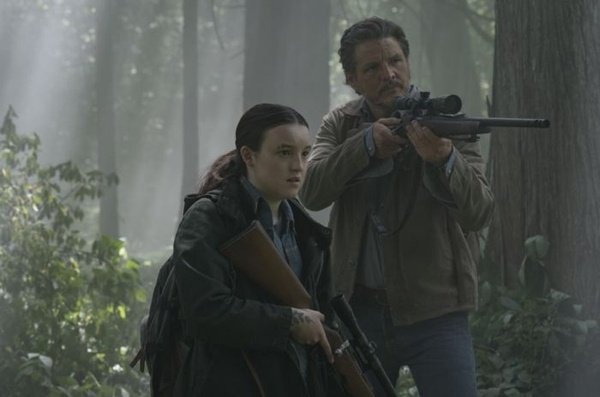
Then there's Abby. The arrival of Kaitlyn Dever had been met with some perplexity related to her physical appearance compared to her video game counterpart. Doubts that the series quickly dispels: her Abby doesn't need sculpted muscles to assert herself. It's her almost glacial determination that defines the character. Her presence alters the balance and expands the season's moral discourse, shifting the focus from a simple conflict between “heroes” and “antagonists” to a much more ambiguous zone.
Visually, the impact is remarkable. The most spectacular sequences reach a scale that, in ambition, recalls some battles from Game of Thrones. Horror is staged without filters, but it never becomes an end in itself. The context is the ground on which characters are forced into impossible choices.
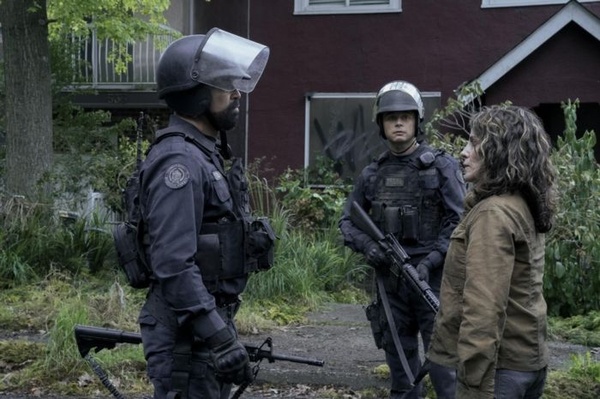
The real issue remains the structure. This season has an Empire Strikes Back effect: it doesn't offer a reassuring closure but stops in the middle of a larger conflict. It's a courageous choice, consistent with the desire to respect the complexity of the original work, but one that risks leaving part of the audience in suspense. Those who know the game will know that the journey is designed to be mirrored and fragmented. Those who only watch the series might feel frustration, especially knowing that the sequel won't arrive immediately.
Overall, the second season of The Last of Us confirms HBO's production excellence and reiterates that it is one of the best video game adaptations ever made. It is not a comforting chapter. It is darker, more divisive, more demanding. It is worth watching provided that you accept that this story offers no comfort but questions. Like its protagonists, it leaves the viewer in the middle of the storm, awaiting the third and concluding chapter of the saga.
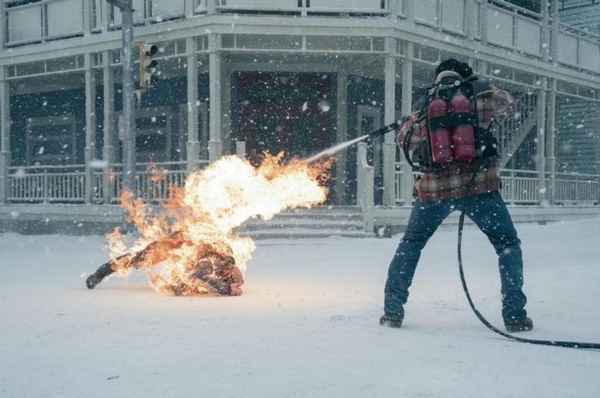
The Last of Us Season 2 4K - How it looks
Compared to the first season (3.4K), this time the footage has higher video resolution (4.6K), which should have allowed for a 4K master, presumably remaining within that scope even in the important phase of CGI post-production and the injection of creatures, effects, and set designs. Compared to the first season (Arri Alexa Mini), the visual quality of the new episodes (Arri Alexa 35) has taken another step forward. Filmed 1.78:1 (3840 x 2160/23.97p), HEVC encoding on 3x BD-100 triple layer, on which the 7 episodes + extras have been divided.
The visual frame is extremely defined and the “digital” component does not sacrifice naturalness but rather enhances set designs and textures. Dolby Vision plays a fundamental role in strengthening the color gamut and light dynamics with greater flexibility compared to HDR-10: it transitions from warm and enveloping tones to more rigid blues and grays that accentuate the hostile atmosphere of snowy environments. The integration between physical sets and digital interventions is particularly successful. The village of Jackson, actually built for the production, benefits from remarkable visual depth, while backgrounds generated in post-production blend convincingly with the rest of the elements.
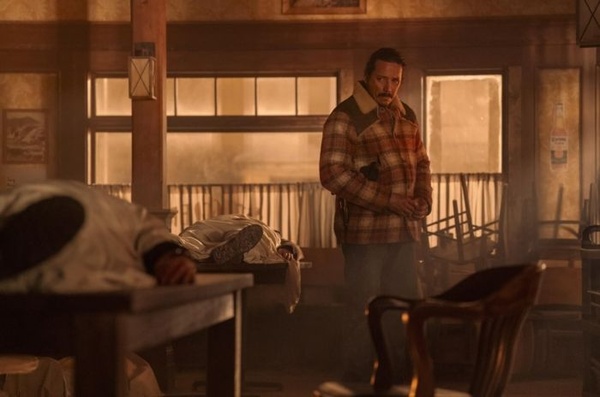
The level of detail on costumes and surfaces is excellent, with a sharpness that enhances materials, fabrics, and imperfections. The darker sequences, present especially in the final episodes, test the format and hardware chain: HDR slightly improves readability in the shadows, but without distorting the deliberately dark photographic setup. On the other hand, some CGI effects related to explosions and flames are less convincing, appearing less realistic at times compared to the rest of the production. Overall, a reference video department, capable of fully enhancing the series' visual ambition.
The Last of Us Season 2 4K - How it sounds
Dolby Digital 5.1 track (640 kbps) for Italian, listenable but not so exciting through the HT system, where the lack of greater stage presence from the rear channels is often felt. Subwoofer with decent depth.

A significant leap when switching to the original Dolby TrueHD 7.1 (24bit, 11 ATMOS objects) which opens up to a sometimes overwhelming scenario, rich in elements from every single channel, strong in dynamics and a wealth of discrete elements, boosting the adrenaline of the moment. The dialogues alone from the center channel provide greater body and charisma, delivering quite a few emotions.
The Last of Us Season 2 4K - The extras
Rich extras also in this second season.
Disc 1
Here we find elements dedicated mainly to the “Inside the Episode” insights related to the first three episodes. These are short featurettes that analyze narrative, directorial, and production choices, with contributions from the cast and creators. There is also a “Play All” option for consecutive viewing.
This is followed by a quick but interesting look at set construction with Growing the World of The Last of Us, while Welcome to Jackson (Set Tour) takes you through the streets of the reconstructed town for the series. Finally, Battle of Jackson, Deconstructed is a more substantial insight that breaks down one of the most complex sequences from a technical and logistical point of view.
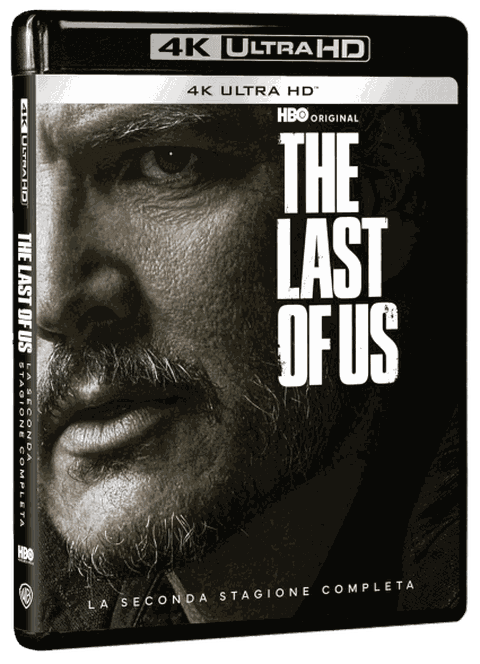
The Last of Us Season 2 4K - Amaray Box Edition
Disc 2
It continues with the “Inside the Episode” dedicated to episodes 4 and 5, again with a continuous playback option. The focus then shifts to the main characters: Joel’s Journey to Season 2 and Ellie’s Journey to Season 2 offer brief recaps of the two protagonists' evolution, while a series of mini-featurettes provide quick portraits of Joel, Ellie, Abby, and Dina. Among the lighter content, Mushroom Taste Test stands out, a curious and informal moment where some of the younger cast members interact with the series' symbolic element.
Disc 3
The picture is completed with insights into episodes 6 and 7. The tone becomes more intimate with the Q&A between Pedro Pascal and Bella Ramsey, followed by a conversation between Isabela Merced and Young Mazino. There are also contributions dedicated to individual sequences such as Stalker Showdown, Deconstructed and more spontaneous moments collected in Camera Roll. The disc is completed by a special on stunts and action scenes (In Action), an extended insight into Ellie's journey (Ellie’s Path) and a detailed behind-the-scenes look at visual effects with Beneath the Surface: The Visual FX of The Last of Us, which explores the technical work behind the most spectacular sequences. Subtitles in Italian everywhere.
Score
Editorial team
The Last of Us Season 2: Love, Vengeance, and Fractures in 4K
Filming and video post-production remain (presumably) within the scope of 4K video resolution, further enhancing the technical result also by virtue of Dolby Vision. The usual Italian AC-3 5.1 still offers some interesting moments, but for a totalizing experience, it's essential to switch to the original Dolby TrueHD 7.1 with ATMOS objects. High-level extras, worthy of the work.
Similar articles