The Last Mission: Project Hail Mary is a Grand Film that Puts Math and Heart into the Best Space Sci-Fi
Ryan Gosling and Sandra Hüller are the improbable yet highly effective duo that transforms a space mission into a comedic, emotional, and truly memorable blockbuster.


Certain problems can only be resolved thanks to the right person being in the right place at the right time: by chance, by luck, or because someone identified them, took them, and brought them where they were needed. A statement that holds true within the story of The Last Mission: Project Hail Mary, whether applied to the making of a film that is the result of the interaction of a whole series of professionals characterized by an empathetic mindset, open to emotions, and inclined to comedy.
Let's start from the outside and from the beginning: from the author of the novel the film adapts: Andy Weir, perhaps the most optimistic Anglophone hard SFF (i.e., so scientifically rigorous as to be plausible) writer in circulation, at least in Hollywood. He could contend with John Scalzi, if not for the fact that the latter has had much less luck than him: Weir is already known to cinema audiences for Ridley Scott's adaptation of his The Martian, one of the first films to which The Last Mission: Project Hail Mary is automatically compared.
Gallery
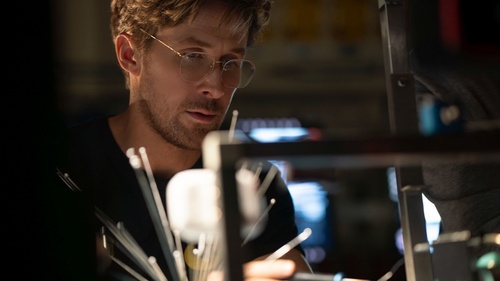
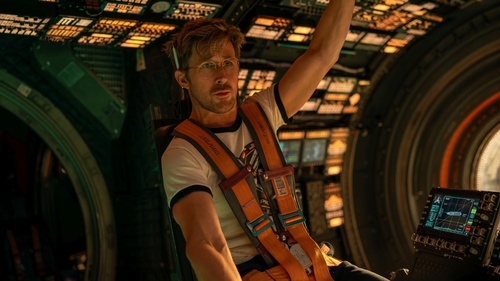
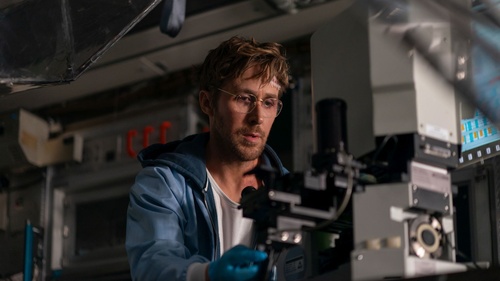
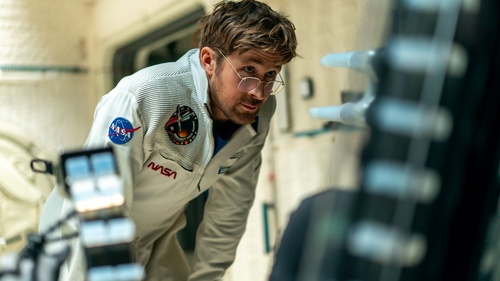
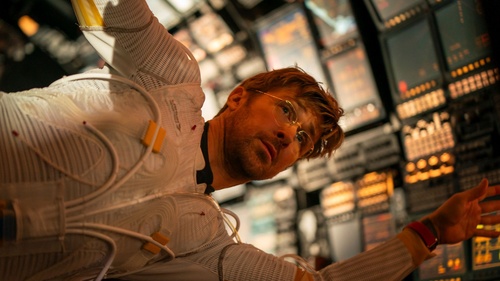


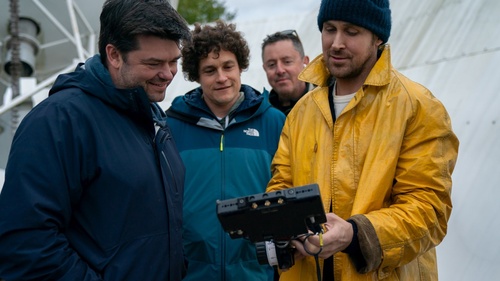
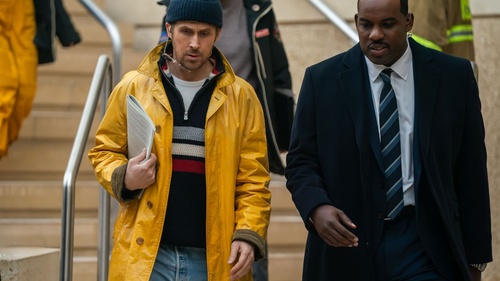
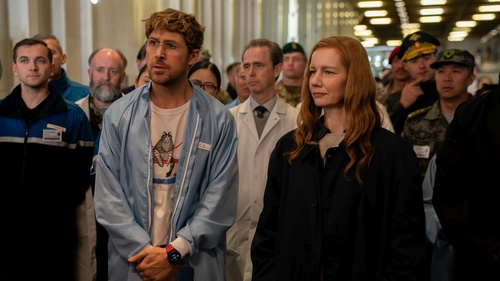
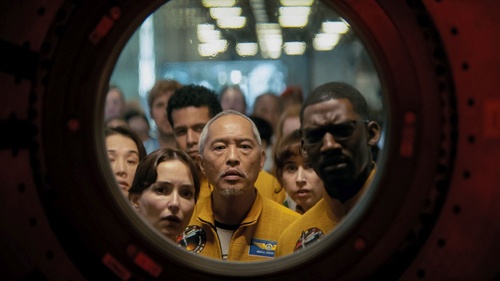
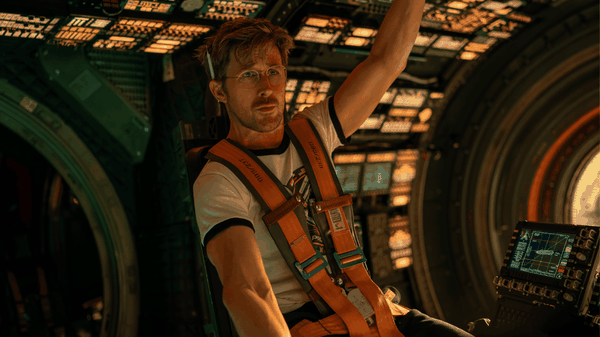
The starting point and development of the latter tell of a writer who loves to revisit similar narrative structures. Here too, we spend much of the film with only one human character, Dr. Grace (Ryan Gosling), and here too the protagonist has a strong mathematical-scientific background and an equally developed humorous, nerdy approach to situations where survival depends on his ability to apply creative solutions to space problems. Here too, the aforementioned character must face the fact that he will die far from Earth, even if he initially doesn't know why.
Andy Weir's Optimistic Sci-Fi Strikes Again
Grace awakens aboard the Hail Mary spacecraft far from home, with no memory of who he is, what he's doing there, or why. There's no one to ask or able to give him answers, including the onboard AI. Thus, the film is at once the resolution of the scientific problem that brought him where he is and the slow reconstruction via clues and fragmented memories of how he decided to sacrifice himself despite not being an astronaut for what, from the very first minutes, appears to be a suicide mission.
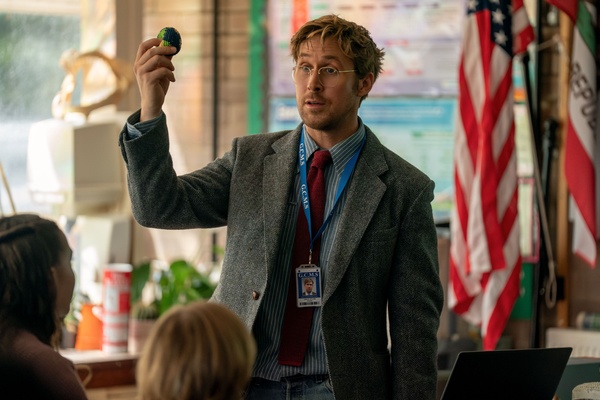
The Last Mission: Project Hail Mary, however, is intrinsically different from both The Martian and other space films that start from the same premises like Interstellar, Ad Astra, and Gravity. These are all more or less cerebral, analytical, “heady” films, even in exploring the fragmented and traumatized psychology of their solitary protagonists. Grace, on the contrary, with his t-shirts featuring terrible mathematical puns and his existential questions on the onboard whiteboard, is ironic even in his suicidal moments. Partly because Ryan Gosling is the sympathetic, empathetic, and likable face of this Hollywood era – in films and in reality. Partly because the writer is not a filmmaker like Christopher Nolan or Alfonso Cuarón who uses space to delve into the existential, but a nerd like Andy Weir, who derives his pleasure in the same way as the authors of the sci-fi golden age. He sets an impossible spatial horizon and creates a whole series of scientific explanations that explore and overcome the problem, entertaining himself and the audience in the process.
Phil Lord and Christopher Miller's Space Comedy is Perfect for Hail Mary
In other hands, The Last Mission: Project Hail Mary might have been more existentialist, darker, certainly more political, but it chooses the path of entertainment, of the blockbuster that speaks to those in the theater who want to have fun and be moved, thanks to those behind the camera: Phil Lord and Christopher Miller, two directors who, from animation to science fiction, have explored every possible comedic angle with remarkable success. The silliness of the two hilarious remakes of 21 Jump Street, the meta-pop culture of The Lego Movie, and the animation that entertains even adult audiences in Cloudy with a Chance of Meatballs. Their duo has an unusual comedic background, surprising for landing a film that in 2026 is almost a gamble.
A project for which Amazon secured the rights after a fiercely contested bidding war, with a budget of two hundred million dollars. The kind of approach today reserved for an established franchise and not for the adaptation of a science fiction novel in which much of the time is spent solving one scientific problem after another, saving Earth with samples on slides and mathematical equations, without even firing a missile or drawing a lightsaber.
The risky gamble of The Last Mission: Project Hail Mary is qualitatively won: the quartet Gosling - Weir - Miller - Lord (along with screenwriter Drew Goddard, who also adapted The Martian) is the squaring of the circle to elevate to the highest degree a science fiction that is as scientific as it is emotional, in a film so well-orchestrated, so emotionally engaging yet capable of being light (even if dramatic turns are not lacking) that it flies by in its two and a half hours of duration. Indeed, towards the end, you look at your watch with concern, because you simply wish the film wouldn't end. This is thanks to Phil Lord and Christopher Miller's choice to favor a certain type of entertainment not born of a certain intellectual height to which to elevate the viewer, but of an emotional commonality that makes him almost a travel companion of Grace along with his human memories and unexpected helpers of mysterious nature.
Hail Mary Said No to Special Effects
In this sense, Phil Lord and Christopher Miller look to both the latest "hard" sci-fi films that have left their mark in the last twenty years, but also to classic sci-fi, starting with Spielberg's cults, going back even further and drawing from even lower. I won't cite direct examples because I believe it's a mistake also made by the trailer to anticipate characters and situations that appear after an hour and more of space travel with Grace, but there is a precise choice that may seem proudly old-fashioned but which here makes absolute sense and has a strong impact.
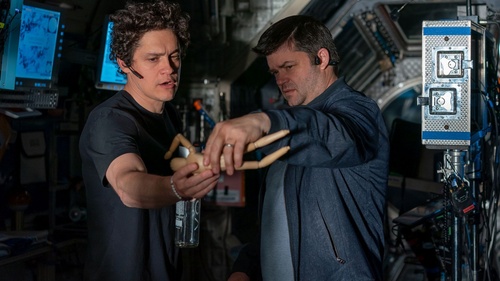
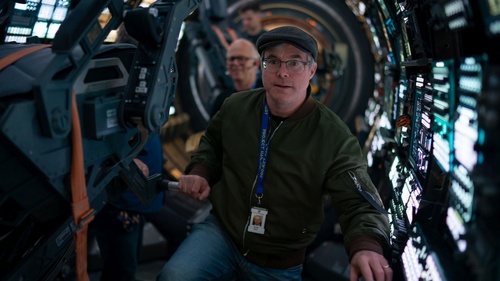
Phil Lord and Christopher Miller explained that the use of special effects is minimized: zero green screen, zero digital visual effects. Everything is achieved with incredibly complex sets created physically and materially (and splendidly lit and photographed by Greg Fraser, who after Dune continues to define our sci-fi visual expectations), with props, sets, puppets, and practical effects. The design and construction work of the Hail Mary is such that at a certain point we almost feel in a domestic dimension, despite it being a spacecraft consistent with its mission. Thus, in the same way, Gosling's interactions with everything that deep space puts before him (from space walks to, gradually, the pure and simple unknown) are exciting because they seem tactile, real in their alien mystery, yet tangible.
Sandra Hüller Proves Exceptional Once Again
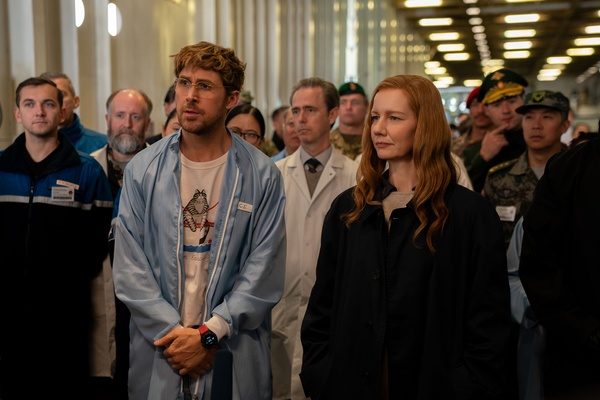
A particularly interesting aspect of this film is how terribly current it is: desperation and a sense of impending catastrophe constantly remain at the margins of the story and within the protagonist's psyche, who for different (and not too deeply investigated) reasons finds himself in a difficult moment of his life. Yet the film is cathartic, because while acknowledging the earthly difficulties of the moment, it manages to make a vague sense of hope plausible. The most beautiful aspect is that the one cultivating it is the most detached, analytical character, but not without sympathy: that of Sandra Hüller, here engaged in a role far removed from the tough, extreme, sharp ones in which we are accustomed to seeing her. She confirms herself as one of the best actresses globally for how she holds together, one might say, the utilitarianism of her role with a mediated but never denied or diminished humanity.
Score
Editorial team

The Last Mission: Project Hail Mary is a Grand Film that Puts Math and Heart into the Best Space Sci-Fi
The Last Mission: Project Hail Mary is a truly emotional blockbuster, giving us a new, great title in the recent sci-fi canon. It is worth not only its considerable runtime, but also the effort and cost of seeing it in theaters, because it is the perfect combination of IMAX and a technical department that takes no shortcuts, vivid and imaginative even visually. While it is perhaps too indulgent in its sweetness and optimism, it is so sincere, so engaging, at times so thrilling that its very few bursts of naivety are gladly forgiven, only to then notice how, beneath the surface, it does not hide a certain cosmic pessimism, but without denying us a smile first. Highly recommended: a must-see.
Similar articles