Suicide Club: the j-horror that set the standard
Sion Sono's cult film arrives in cinemas twenty-five years after its release in Japan, confirming itself as a horror film ahead of its time.
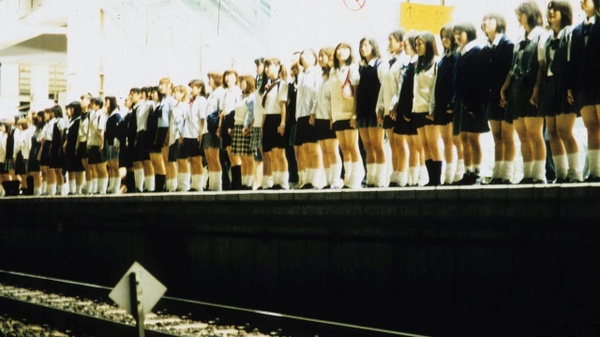


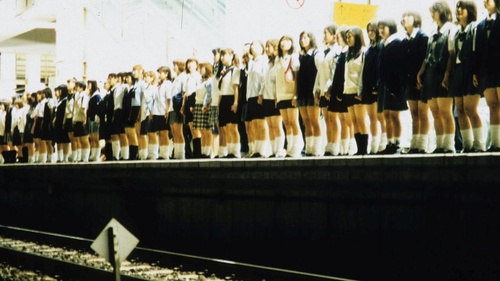
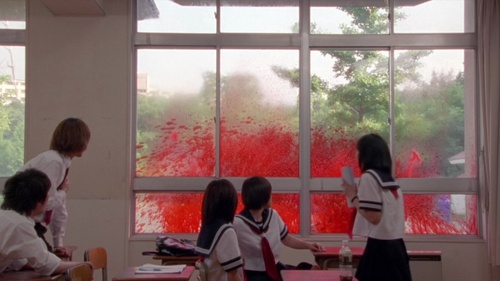
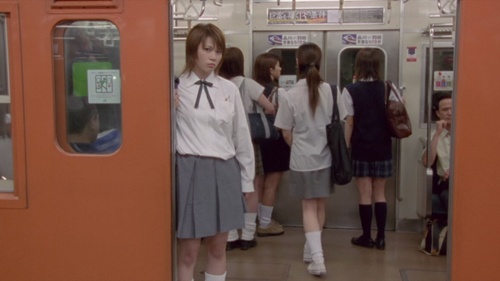
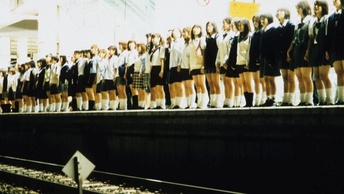
Fifty-four girls in school uniforms line up along the edge of the Shinjuku subway platform. Hand in hand, they slowly cross the yellow line and after a rapid countdown, they throw themselves onto the tracks just as the train enters the station. All together, in absolute synchronicity, with smiles still on their faces. In these initial minutes, made without permission from Tokyo Metro and with very limited financial means, Sion Sono created one of the most shocking and memorable sequences of the early 2000s.
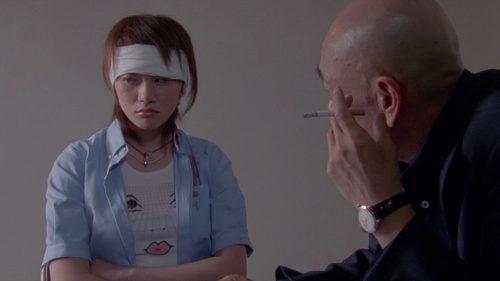
The investigations into the inexplicable event are entrusted to the experienced detective Kuroda, who soon discovers that this tragedy was not an exception, but the symptom of a phenomenon growing exponentially: waves of collective suicides spreading across Japan without an apparent motive, without logic, without an identifiable perpetrator. The only clue is a gym bag left near the tracks, inside which are disturbing rolls made of human skin sewn together, from different bodies. A website circulates online, updating the death toll in real-time, anticipating it. And the mystery deepens more and more.
Gallery
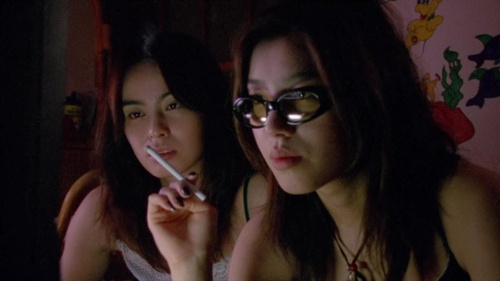
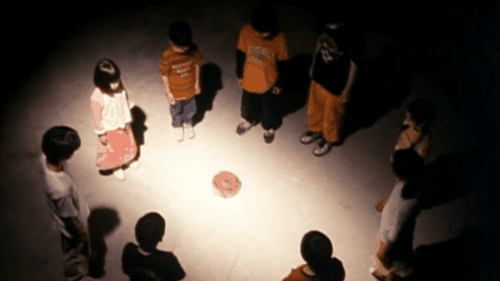
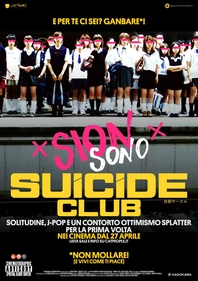
The Paths of Horror
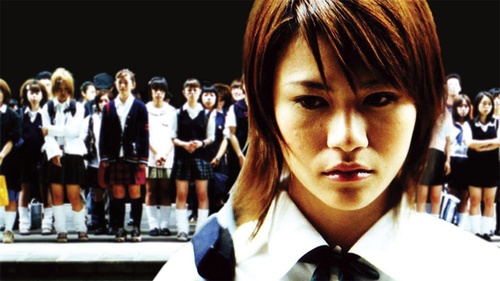
Those who approach Suicide Club expecting canonical j-horror, a genre popularized in the West thanks to Ringu (1998) and Ju-On - The Grudge (2002) and their Hollywood remakes, might find themselves relatively disoriented, as we are faced with something radically different. Sion Sono, in fact, has no interest in the instant jump-scare, nor in the grammar of calculated thrills: he uses horror as a metaphor, to speak of a much deeper and more real evil, inherent in Japanese society itself.
The declared objective is Japan, its lacquered surface of kawaii images and pop idols, beneath which an endemic loneliness, a silent dehumanization, and a relationship with death, moreover, deeply consolidated in a culture where harakiri was a widespread practice, between honor and fanaticism, simmer.
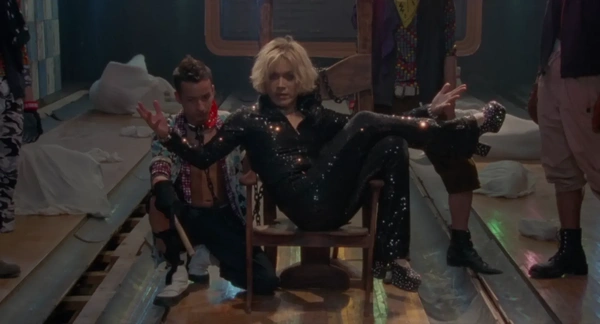
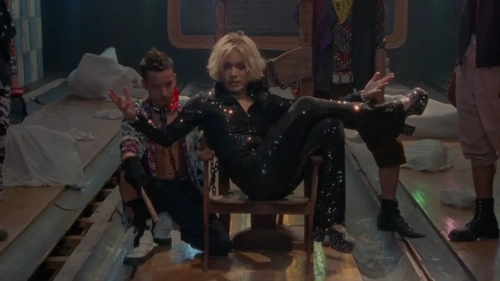
The narrative structure is deliberately unstable, accumulating leads only to abandon them, playing with characters starting with that glam villain who is both grotesque, feral, and "commercial," never truly resolving the mystery – but we recommend everyone to watch the companion film Noriko's Dinner Table (2005) for a broader perspective – and not because he doesn't know how to do it, but because the explanation doesn't exist. The point is not to find a culprit. The point is to understand why the question itself became necessary, and reason as such is just a useless embellishment, something avoidable.
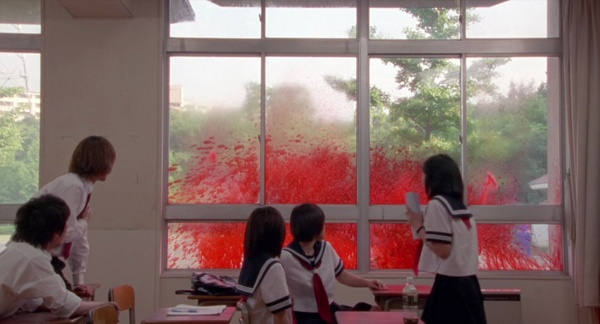
Sing Your Troubles Away
Just think of the numerous, repeated television performances of the pop group Dessert – five pre-teen girls, idols of a generation that consumes and forgets them at an industrial pace – which ultimately become the true symbolic engine of the entire operation. Their catchy songs accompany the darkest phases of the story with a lightness that clashes and disturbs, and it's no coincidence: Sion Sono shows us what hides behind the image, how much apparent joy is the result of invisible sacrifices, and how happiness is an unattainable chimera in a country that pushes individuals to the maximum, to the extreme.
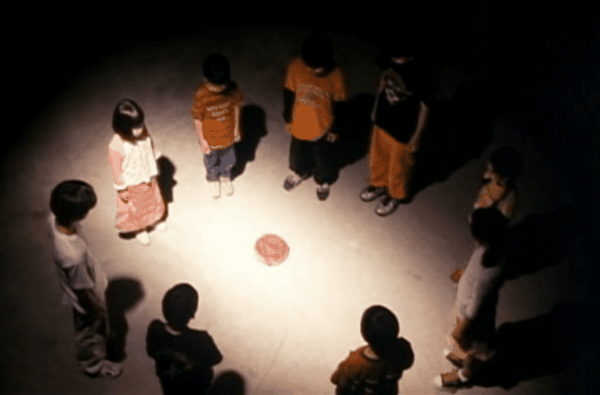
With Suicide Club, we are faced with a reinterpretation of Japanese genre cinema in an existentialist key: horror tropes are cited and emptied, narrative conventions of the investigative thriller are indulged and then betrayed. One cannot solve a case that has no reason, or rather, has many as a mirror of a country that looks at nothing and no one, assimilates and disturbs, hiding behind the carefree nature of manga and anime a darker, seething underbelly of pain and intolerance.
Gallery
Score
Editorial team
Suicide Club: the j-horror that set the standard
An uncomfortable film in the most precise sense of the term, which builds the foundations of a growing unease on uncertainty, exploiting the horror fuse to tell the ills of a society enslaved by appearances. Suicide Club does not grant the "reassuring fear" of canonical j-horror, but dissects it into an interlocking narrative where nothing is as it seems and everything can (not) be, without offering the catharsis of a mystery with an easy resolution. Sion Sono uses the genre to open up, like a can, an enchanting country, a stage for child idols and sequined singers, hiding pitfalls and illusions. He does so with a fierce gaze, destined to become an increasingly elevated and refined style in his future production, revealing this film as the ideal entry point for anyone wishing to approach the cinema of the mad and iconoclastic Japanese director.
Similar articles