My Family in Taipei: The Wrong Hand, The Right World in a Film That Conquers
Three generations of women against the silent weight of rules, in a bustling Taipei, characterize the irresistible film that won the Rome Film Festival.
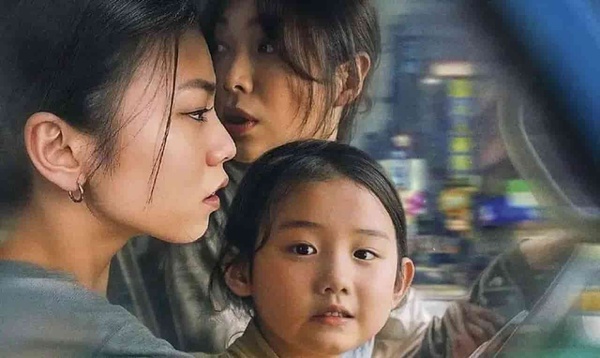


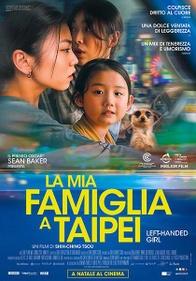
A paradox exists in contemporary Taiwan: while the island has transformed into one of Asia's most technologically advanced economies, becoming a global epicenter for semiconductor production and digital innovation, its night markets continue to teem with ancestral rhythms. It is in this microcosm of popular life that Shih-Ching Tsou sets Left Handed-Girl – which became a more "reassuring" My Family in Taipei in Italian – her second feature film more than twenty years after her debut Take Out (2004), co-directed with Sean Baker, future Oscar winner for Anora (2024). The same Baker who here was directly involved in production, editing, and screenwriting, co-written with the director herself.
We are faced with a work that marks a surprising stylistic maturation for a filmmaker who built her career primarily as a producer and technical collaborator for Baker himself, here called to her first solo direction and capable of winning over critics and audiences, so much so that she also won the main prize at the recent edition of the Rome Film Festival. Let's discover the plot and content together.
My Family in Taipei, between tears and smiles
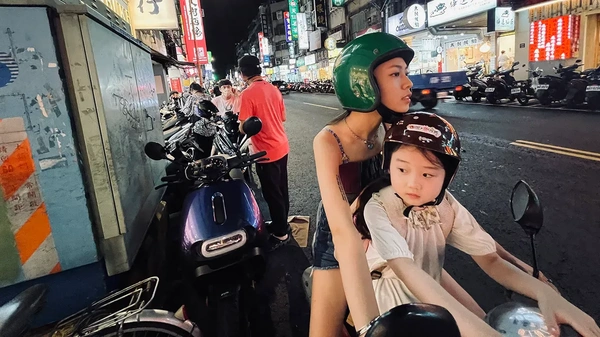
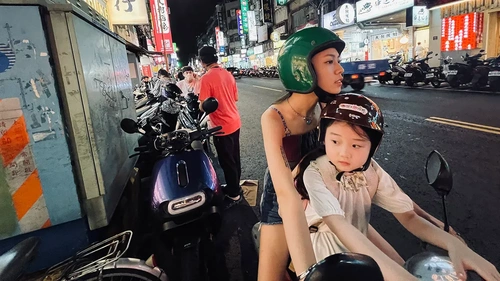
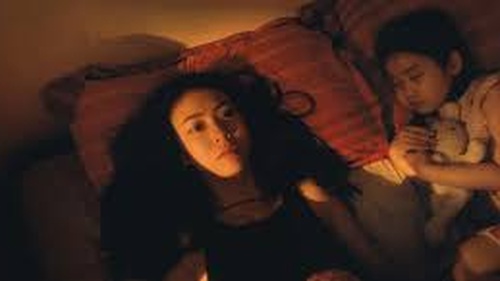
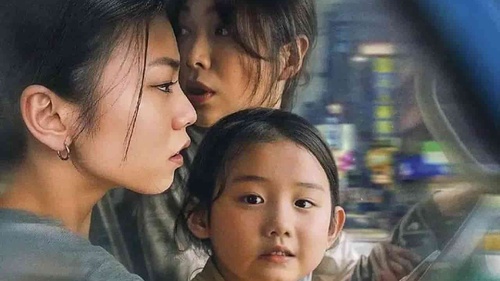
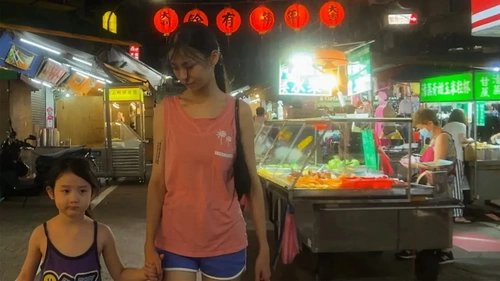
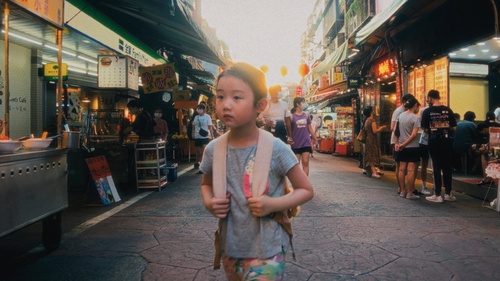
Among the crowded, neon-lit corridors of Taipei's night market, Shu-fen is a single mother who runs a noodle stall, trying to hold together an existence that has long lost stability. Her husband disappeared long ago, but the debts remained, as did the daily struggle of raising two very different daughters alone: twenty-year-old I-Ann, grappling with a rebellious restlessness that finds no outlet, and little I-Jing, just five, often left to explore the city alone with a still naive but already lively and open gaze to the world.
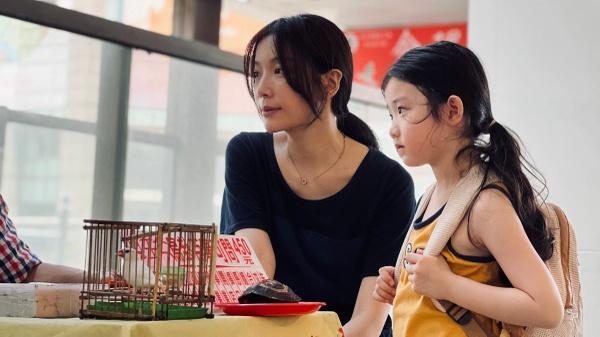
The eldest secretly works as a betelnut girl (girls in revealing clothes who serve in snack and cigarette stalls), while the child usually crosses the neighborhood's alleys. But when her maternal grandfather, a strong traditionalist, notices her left-handedness, he explains that this means possessing the "devil's hand", a curse that I-Jing internalizes to such an extent that she believes her limb acts of its own will, beginning to commit small thefts and mischief.
A cinema to (re)discover
Taiwanese cinema is unfortunately still little known to the general public, despite having given us authors and masterpieces that have rightfully entered the history of cinema. Just think of Ang Lee, Tsai Ming-liang, Hou Hsiao-hsien, and Edward Yang, to name only the most famous. My Family in Taipei, while maintaining a more commercial inclination and aimed at a wider audience in its modern comedy-drama atmosphere, is a film that has learned from this lesson, fully inserting itself into the current of the national new-wave, conquering with a sincerity of intent and emotions that goes straight to the heart.
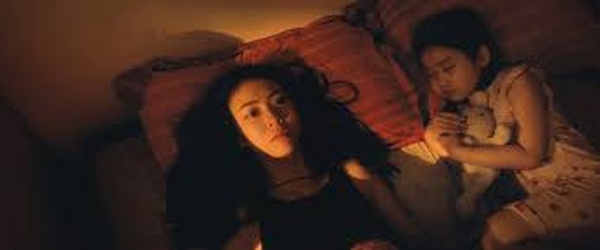
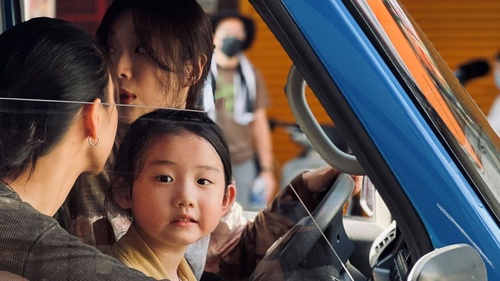
Much of the credit goes to the effective cast and especially to little Nina Ye, who, as I-Jing, manages to win over audiences with her tender and funny glances, already full of unspoken feelings, while awaiting that final plot twist that reshuffles the cards in a way that is only partially unexpected, as it was hinted at by at least one previous pivotal scene.
A matter of glances
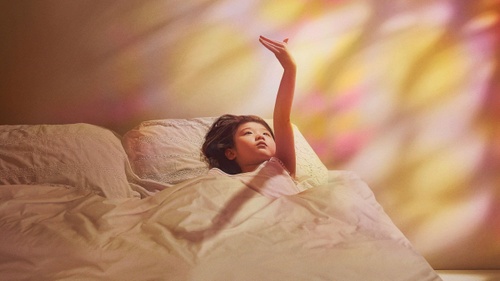
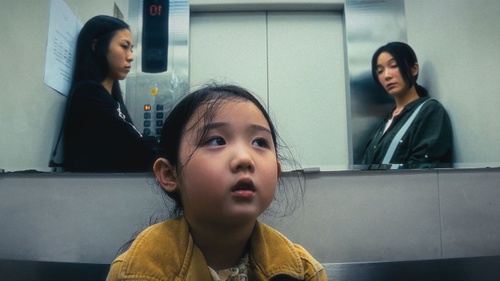
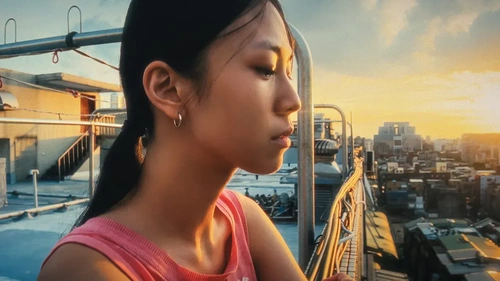
From a stylistic point of view, Shih-Ching Tsou makes a radical and coherent choice: shot entirely with an iPhone, the film aims to eliminate the distance between spectator and characters, transporting us directly into this complex all-female family story. The Taipei that emerges is not a postcard image, but a labyrinth of neon lights, cooking vapors, and cramped spaces, where chromatic saturation becomes almost tactile and city nights become true stages of life. The direction often finds itself trailing I-Jing in her solitary explorations among the stalls or lingering on Shu-fen's tired face or I-Ann's tormented one, a mapping of failures seeking redemption as everything seems to collapse around them.
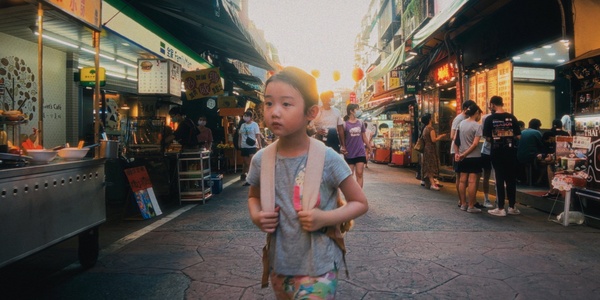
The writing, while proceeding by accumulation of daily situations, some more tragic, others more joyful, and others leading to incredible revelations, skillfully avoids melodramatic blackmail, never giving in to pathos but instead bestowing extreme dignity on these three generations of women: I-Jing's left-handedness becomes the central metaphor of the entire work – not by chance emphasized by the original and international title – a symbol of those forced to live differently in a society that rewards only conformity and right-handed efficiency. And that needs someone to definitively shake things up.
Gallery
Score
Editorial team
My Family in Taipei: The Wrong Hand, The Right World in a Film That Conquers
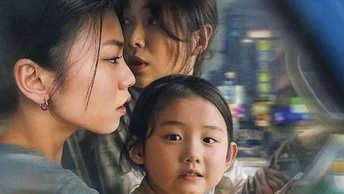
A family portrait that smells of street food and held-back tears, ready to find release in a finale that exposes uncomfortable secrets and unhealed wounds, without, however, slipping into easy rhetoric. The film instead chooses to rely on raw emotions, letting them emerge through the performances of a cast perfectly aligned with their characters. Three women, mother and daughters, called to stand together in a moment of crisis: My Family in Taipei thus configures itself as a domestic microcosm of existences suspended between what has already been and what tomorrow promises. A measured and sensitive story, capable of holding together a dark, almost neorealist soul, and an existential lightness that does not erase pain but dissects it, finding its brightest anchor in the mischievous and stubbornly hopeful gaze of the tiny protagonist.
Similar articles