Lee Cronin's The Mummy is Not Very Mummy, But It's Truly Scary: The Review
Bold, wicked, but also terribly fragmented and full of contradictions, The Mummy delivers horror spectacle without truly entertaining.


The mummy's curse continues to weigh on directors and actors who attempt to revive its cinematic franchise. Alex Kurtzman tried with a more swaggering Tom Cruise in 2017, dealing a significant blow to the actor's shining star. That mummy was a flawed but overall very entertaining film, which made the bandaged monster sexy and evil, meeting audience expectations with all that mystical (but very "fluff") aura of ancient cinematic Egypt. Perhaps Brendan Fraser's spirit hovers over the character after what happened to him on the set of Hollywood's last successful Mummy, but alas: Lee Cronin's reinterpretation is also a resounding failure, even though it moves in the opposite direction to Kurtzman and, like him, includes enjoyable passages and insights in his unsuccessful film.
Was Lee Cronin really ready to put his full name in a film's title?
Perhaps it was a bit premature to put the Irish director's full name in the film's title, even considering how his 2023 reinterpretation of Evil Dead had thrilled critics and audiences. Although Evil Dead Rise was a success, Cronin is not yet at the level of a Carpenter or a Coppola, with a surname that makes sense to place next to that of a monster with a possessive apostrophe. It's understandable, natural for a director on his third film.
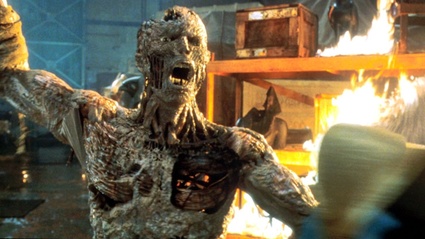
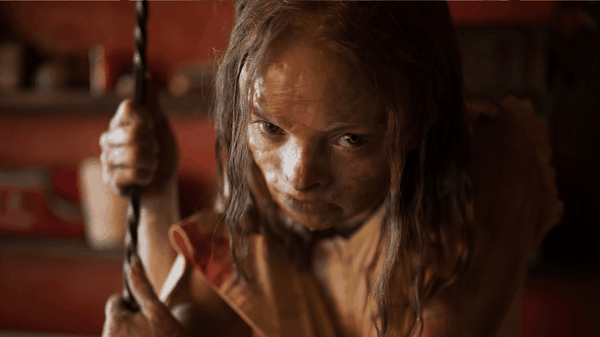
The mastermind behind this operation, who writes and directs, is at once the main culprit of its failure and the one responsible for the few things that work. So let's start with the positives: Cronin's mummy is truly scary. One split diopter after another (an optical solution for which the director seems to have an authentic fixation), it spares none of the ingredients of gore: black vomit, horrid liquids oozing from putrescent skin, nails flying off, blood splatters, still more vomit, insects burrowing under the skin and emerging to cause hideous wounds, atrocious and truly "unclean" deaths, caused by a truly evil entity.
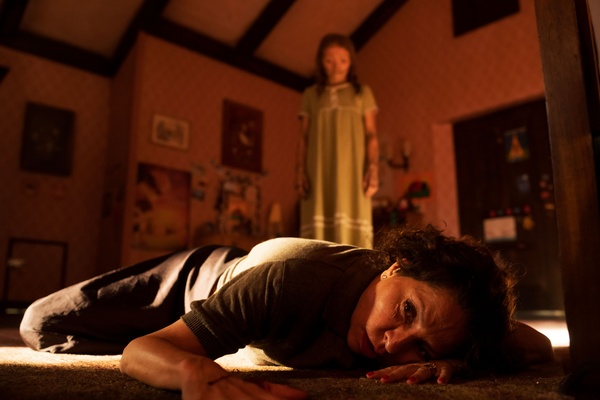
One thing Lee Cronin - The Mummy does very well is deliver a truly evil villain, for the simple pleasure of being so, without prior trauma or rational motivations. It is a malevolent being that takes pleasure in the tragedies of others' families and therefore does everything to cause them. Even the genesis of the mummy protagonist of the film is particularly sinister, with an almost disturbing scene: for horror fans, therefore, fright and gore are guaranteed.
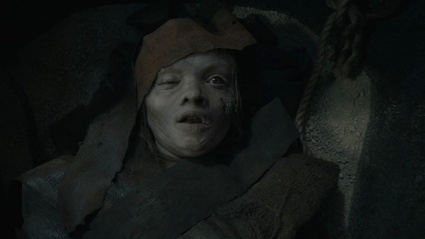
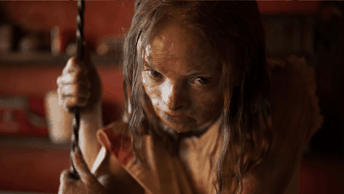
It's not a horror that flirts with irony or settles for the supernatural and magical packaging that the Egyptian premise would suggest. It's a feature film that opens with the disturbing kidnapping of an American girl living in Egypt because her father works there, lured by a stranger and taken from her family in the midst of a sandstorm. We are almost in crime territory, with an Egypt made up of bureaucrats and suspicious police towards the family and a child who seems already lost. Only, eight years later, little Katie is incredibly found alive but catatonic, at the scene of a plane crash, hidden in a sarcophagus. Horribly disfigured and afflicted with locked-in syndrome, she is sent back to her family, who in the meantime had returned to live in New Mexico.
More than the mummy, Cronin resurrects the possession narrative
From here, however, the film loses the tenuous contacts it had with the original character, transforming, both in terms of the events narrated and the preferred horror stylistic choices in the narrative, into a true possession story. More The Exorcist than Belfagor or Moon Knight, in short, and moreover proving enormously derivative compared to the unexpected inspiration it chooses. While visually the film holds up and offers some entertaining horror moments, narratively it's like trying to reconstruct an image seen through a mirror that someone has dropped, roughly reassembling it. The film, in fact, keeps jumping back and forth in space and time for a good half before laying all its cards on the table, before having a "mummy" available.
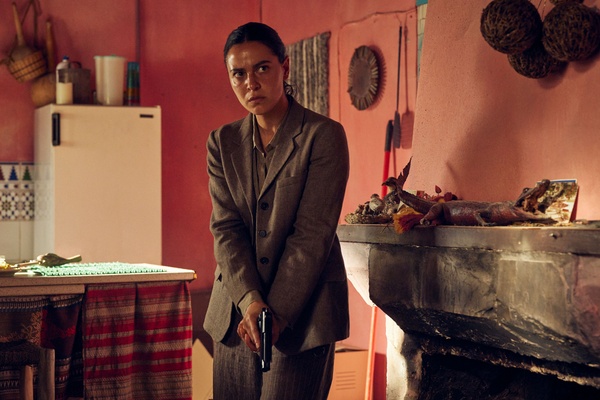
Furthermore, it runs into some bad passages due to an ungenerous stereotyping of the Egyptian part of the story. Besides not seeming to be shot in Cairo and its surroundings, the Egyptian branch of the story is bogged down by this absurd retrograde approach that confuses the viewer. Old black-screen terminals used in the police archive and the use of VHS as a recording tool for footage clash with a story that, at least in theory, is set in the present. The stereotype of the technologically backward nation, in short, even makes the historical setting confusing, to the point of becoming a problem in the second part of the story, when it is necessary for the "modern" American family to have an old CRT TV and a VCR at home so as not to block the narration of events. Not only that: the film builds the character of a woman who joins the police to search for missing persons, alludes to her personal story (the fact that she initially wears a veil and then doesn't, the unusual choice of the unit she works in) but then drops all these allusions into absolute void. Has she lost faith due to the dramatic cases she has investigated? Has Egypt become more secular? Mystery.
The Mummy tries to hide its problems behind the cruelty of its antagonist
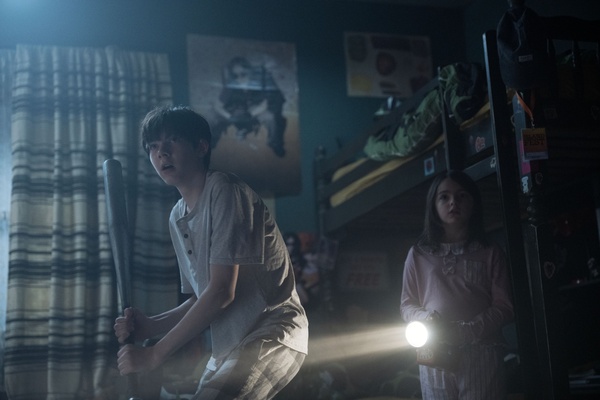
It's a small example of how characters, situations, and the narrative plot of Lee Cronin - The Mummy remain in precarious balance throughout the film, at times obscured by the cruelty of the creature being hunted and the guardians trying to keep it at bay. A wickedness that almost sounds like an excuse, in the face of impalpable characters, whose tenuous semblance is held together by buckets of pain and trauma constantly thrown at them to try to make them visible. Superficial characters entrusted to actors with equally laughable acting abilities: Jack Reynor in the role of the tormented father seems to possess no more than a handful of easy expressions, while Laia Costa as the wife Larissa only manages to be actively repellent in her unpleasantness. May Calamawy as investigator Dalia Zaki struggles even to pretend to eat the kebab (sic!) they put in her hand in a scene at the police station. The most convincing of all is little Katie: Emily Mitchell is intense and credible long before transforming into the film's monster and saves herself, as an actress, while the rest of the cast struggles to stay afloat.
Score
Editorial team
Lee Cronin's The Mummy is Not Very Mummy, But It's Truly Scary: The Review
Lee Cronin the director's visual talent saves Lee Cronin the screenwriter's messes. It's not entirely clear why The Mummy is so fragmented and confusing: perhaps because after initial negative reactions to test screenings, the production demanded cuts and edits to salvage what they could (there were many rumors to this effect a few months ago), perhaps because the film is truly a jumble of horror ideas without a real story behind them, which will satisfy gore fans more than those who want to see a successful film or rediscover the mummy in cinema.
Similar articles