In the thriller The Housemaid, “twins” Sydney Sweeney and Amanda Seyfried are blonde, wild, and fiercely loyal to the camp cause
Without fear of exaggeration, Sydney Sweeney and Amanda Seyfried deliver a thriller with surprising verve that, after a disastrous start, finds its delicious footing.


On the eve of the last Oscar ceremony, NEON CEO Tom Quinn participated in a well-known podcast to discuss the promotional campaign for Sean Baker's Anora, which would soon sweep the competition and win the Best Picture statuette. Quinn emphasized how NEON had bet on Baker's film, among many reasons, because it had a simply perfect ending. Awards like the Oscars are won when the film you promote is remembered by those who watch it, and one of the most effective methods is to make a good film with a splendid conclusion, capable of leaving a tangible and positive memory behind.
Gallery

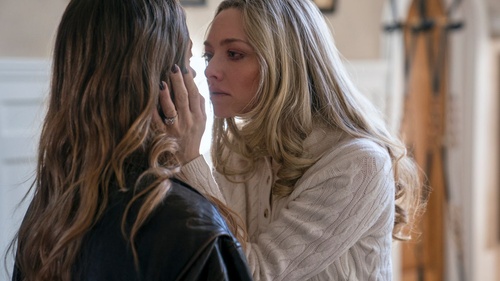
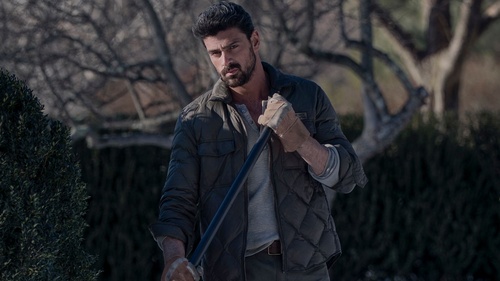
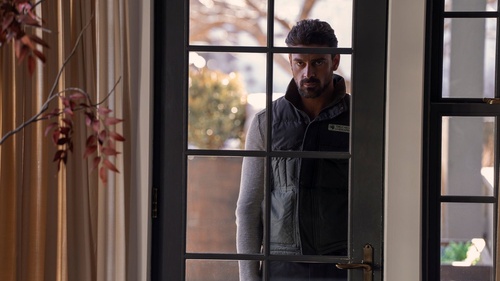


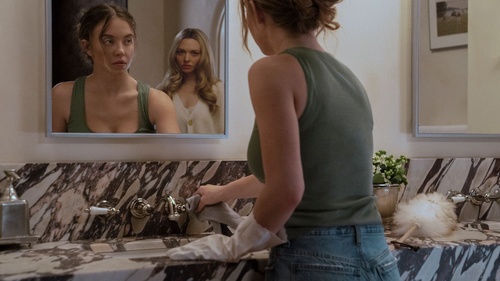
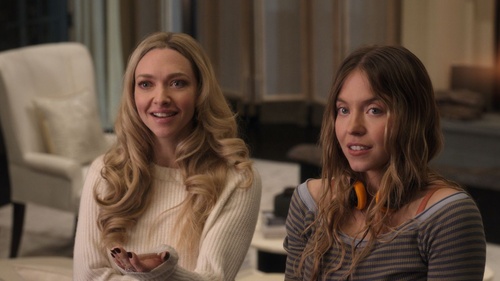
A B-movie with a top-tier glamorous cast
The Housemaid does exactly this, taking Quinn's advice literally. From Bridesmaids to A Simple Favor, director Paul Feig is building a small cinematic universe based on female protagonists with very distinctive traits, so exaggerated as to sometimes become voluntarily caricatural, often played by actresses who in turn enjoy a certain type of notoriety and who add, more or less directly, an additional layer of glamour and gossip to B-movies designed to provide entertainment without skimping on excess and exaggeration. Realism, verisimilitude, or calmness are not part of Feig's vocabulary; he prefers scandals, catfights, and conspiracies in a wide range of films spanning from comedy to thriller. Compared to the more recent A Simple Favor, The Housemaid harks back to pure thriller, so much so that Rebecca Sonnenshine's screenplay looks intently, in terms of structure and tone, to David Fincher's Gone Girl. That type of approach and the division of the story into two distinct points of view (which revisit and sometimes overturn the meaning of certain events) are also present here, though the ambitions are of a completely different kind, as are the tones and the degree of sophistication with which the story is told.
Trad Wife vs. Radical Zoomer
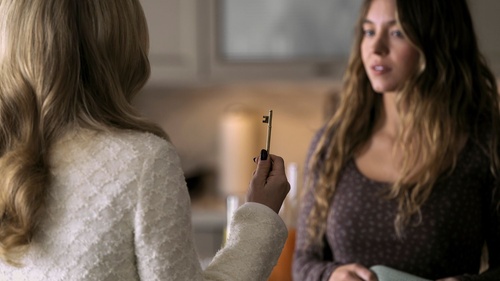
The Housemaid opens in a near-catastrophic way, which perfectly matches its protagonist's situation: despite presenting herself as an excellent, experienced housekeeper, Millie (Sydney Sweeney) is actually a young woman with no ties and no money, who uses her appearance as a beautiful and harmless girl to try to find a job and maintain a state of extreme precariousness, sleeping in her car, which is still preferable to the past she is trying to escape.
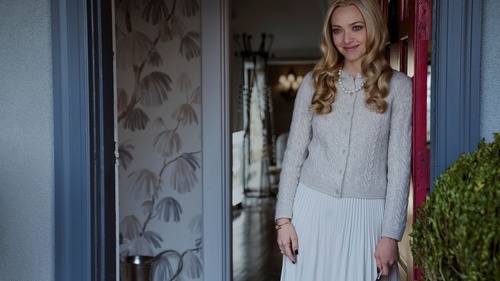
Being hired by the equally beautiful and blonde Nina (Amanda Seyfried) is a dream worth lying for and not paying too much attention to the neurotic obsessions and fits of rage that the employer immediately displays. Millie and Nina are two recent evolutions of the political and social female imaginary, which Feig and his screenwriter have the merit of being among the first to bring to the screen in a mainstream film. Nina is the embodiment of the tradwife, an updated version for Trump's second term of the perfect wife and mother who supports her husband, stays at home, always dresses in white and without a hair out of place, praising family values and dedicating herself to community activities related to her daughter's education and dance recitals.

Millie, on the other hand, is the restless embodiment of a Gen Z with no prospects, who does not hesitate to approach work and life from an amoral and personal perspective, aimed at extracting the maximum possible advantage, which is still barely enough for her survival and independence. As we discover her story, we understand that Millie has internalized and radicalized the most recent lessons of feminism or, to quote an old Sherlock line, “she’s on the side of the angels but she’s not one of them.”
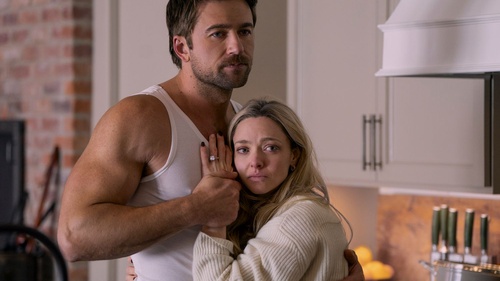
Millie is thus hired to cook, clean the large Winchester mansion, and take care of the daughter, receiving in return a cell phone, a small room in the attic to live in, board, and salary. The assignment, however, proves tortuous: Nina is as cunning and false as she is, and her relationships with her husband, daughter, mother-in-law, and neighborhood friends are full of sinister nuances and unknowns. Furthermore, the housekeeper realizes she feels an attraction for the husband Brandon (Brandon Sklenar), incredibly patient with his wife's hysterical scenes and supportive of the new hire, whom he defends from Nina's often irrational, but not entirely unfounded, attacks.
The Housemaid starts in the worst possible way, with a series of stereotypical shots and dialogues so fake as to be embarrassing. The film rushes to provide us with all the necessary information to introduce us to a story that, given the success of Gone Girl upon its release, has at least a couple of predictable turning points in the second half. The second half, however, is precisely where the film shows its cards and dares more than just the triangular tension between Millie's attraction to Brandon and Nina's hostility towards the employee. It is also where the initial hiccups are erased by an increasingly faster flow.

Amanda Seyfried and Sydney Sweeney have fun and entertain us
Once again, Feig is not afraid to resort to exaggeration and excess, seeking a continuous crescendo of tension and demanding a lot from his protagonists. Both prove perfect: Amanda Seyfried is excellent at throwing tantrums, reveling in pure hysteria without ever losing control of the role. Along with Ann Lee's The Testament, the other film of the year that sees her in the role of an extreme and radical woman, albeit with completely different registers and ambitions, The Housemaid demonstrates how Seyfried can naturally and genuinely convey roles of great intensity.
Sydney Sweeney is back here after a personally difficult year, surrounded by political scandals that have seen her become, more or less voluntarily, the face of a certain Republican political narrative. The Housemaid arrives after an advertising campaign that made her radioactive to part of the public and after Christy, her “serious” film project that crashed at the box office along with her dreams of an interpretive leap in quality. Yet here Sweeney once again presents herself as a kind of Hollywood unique: an actress who is not afraid to use her sex appeal, but also to get her hands and reputation dirty, in commercial films that, year after year, see her as the protagonist and producer of one silent hit after another.
On closer inspection, her role is certainly not complimentary: Millie doesn't come across as a genius or a good person. Yet she is the true protagonist of the film, which deliberately plays on the resemblance of its very blonde protagonists, on the resilience and weaknesses that both show and that, from a similar starting point, lead them to very different outcomes. The most intriguing idea, the real coup, The Housemaid reserves for the ending, which almost seems to transform the entire film into the genesis of yet another character with whom Sweeney is not afraid to be seen, if not as bad, then at least as a woman as voluptuous as she is ill-advised, ready to be unpleasant and to get her hands dirty when necessary.
Score
Editorial team
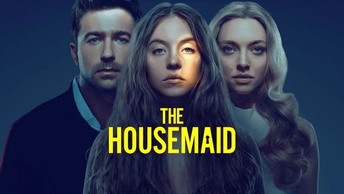
In the thriller The Housemaid, “twins” Sydney Sweeney and Amanda Seyfried are blonde, wild, and fiercely loyal to the camp cause
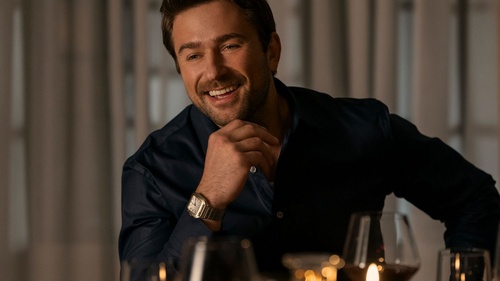
In its genre of excessive thriller that spectacularizes physical and psychological violence between blondes as a starting point for a plot full of twists, with exaggerated tones and continuous emphasis, The Housemaid can be delightfully entertaining if approached with the right lightness, forgiving its truly awkward and clumsy first half-hour. All the worst elements, including the presence of a Michele Morrone who is, as usual, overly exaggerated in his interpretive intensity, Feig uses as blunt objects to refine what is most absurd, clumsy, and facile in the film, until he makes it camp and entertaining in its continuous doing, undoing, and overdoing, cutting its fables' morals with the proverbial axe. It’s the exact opposite of A Simple Favor, which after an excellent start drowned in a growing exaggeration it could no longer manage.
Similar articles