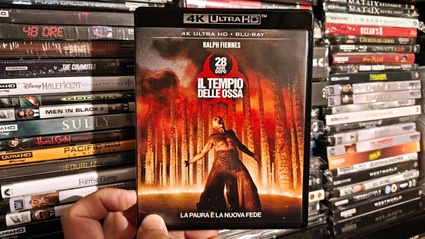
28 Years Later: The Temple of Bones Opens the Cinematic Year with the Best Auspices and a Bestial Ralph Fiennes
The 28 Years Later saga continues to prove its worth with a new trilogy, featuring a second chapter tonally different from the first but perhaps even more thrilling.
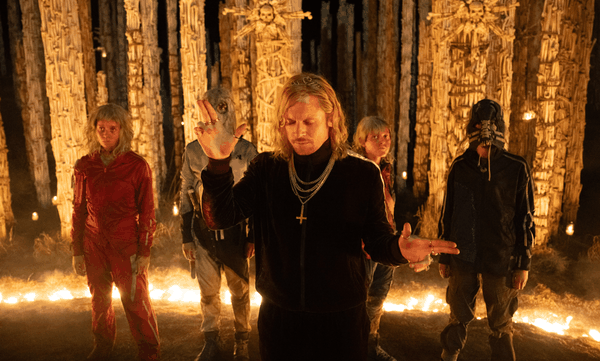


If a good cinematic year is judged by its January start, 28 Years Later: The Temple of Bones truly promises a great year for 2026. The second chapter of the new trilogy expanding the universe born from Danny Boyle's film is, without mincing words, thrilling. At this point, it's hard to argue that the revival of the horror franchise isn't just a commercial calculation, but a project supported by fresh ideas, a coherent imagination, and a willingness to deeply intervene in the original story to explore new themes, with clear commitment and authentic involvement from authors and performers.
The most evident surprise of this chapter is the radical tonal shift compared to its predecessor. The first 28 Years Later had divided audiences precisely for its ability to inject strong emotional resonance into a zombie-dominated horror framework: a story of family ties, of parenthood (paternal and maternal) that reached unexpected moments of lyricism. The Temple of Bones is its direct continuation in temporal and geographical terms, but it chooses a different path: it is more horrific, more violent, more explicitly splatter, and at the same time permeated by a surprising ironic streak. It doesn't take itself too seriously, except when necessary, and often devolves into a funny tenderness born from some characters' desire to protect and help others. The theme of fatherhood doesn't disappear, but it is expressed in deviant, sometimes grotesque forms, which confirm how crucial our upbringing is in determining who we might become.
Fathers, Sons, and Monsters
Alex Garland's screenplay constructs a complex tableau, entrusted to original and unpredictable characters who inevitably clash. In the first part of the film, Jack O'Connell dominates the scene, relegating former protagonist Spike (Alfie Williams) to a marginal role, sucked into the grotesque and sectarian "adopted family" of Sir Lord Jimmy Crystal. Jimmy is a disturbing figure: a kind of satanic prophet who practices perverse charity among human survivors of the zombies, traumatizing the young people who follow him and who, having no memory of the "world before," blindly believe his delusions. Father, leader, and "son of the Beast" all at once, Jimmy embodies the trauma inherited from the priest father, who symbolically concluded the previous film.
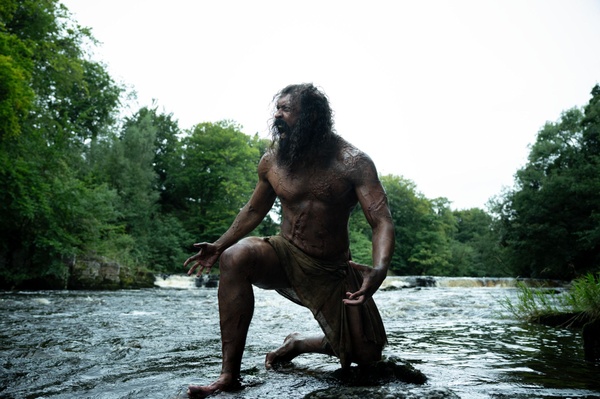
Jimmy is linked, more deeply than it seems, to Samson (Chi Lewis-Parry), the gigantic Alpha zombie (and father who lost his son) whom Dr. Kelson manages to sedate at the end of the first film. And it is precisely Kelson, played by Ralph Fiennes, who proves to be the true protagonist of The Temple of Bones.
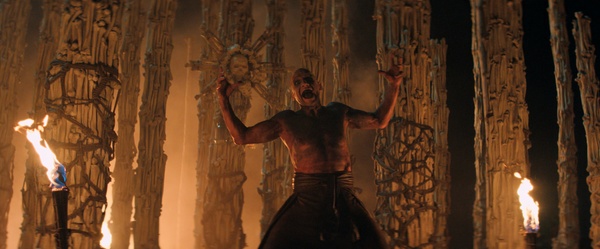
The solitary philosopher doctor, who was introduced as a madman, is confirmed as perhaps the only survivor still in full mental and physical control: he remembers little of the technological world before, as what he misses most are the human connections that his gigantic ossuary represents.
The relationship he develops with Samson takes an unexpected, almost paternal, sometimes even comical turn, allowing the mythology of the infection to advance and the film to carve out a memorable character, sketching him through his daily life of music, reading, scientific experiments, and one-sided "chats" with Samson.
A scholar, a thinker, guided by an instinctive but unconventional morality, Kelson is a figure of hope in a world of failed fathers, before and after the virus. With all his eccentricities, his passion for Duran Duran, his nudist attitude, his almost shamanic approach to medicine, he becomes the ethical heart of the film.
Fiennes, Shaman and Satanist, Delivers a Memorable Performance
In the film's most memorable passage, a powerful sequence set to the most "satanic" notes of Iron Maiden, Fiennes demonstrates his ability to create a character as iconic as his Lord Voldemort, but played on a surprisingly ironic register and, when needed, with great emotional depth. It is an enormous performance, destined to remain one of the most remembered of 2026.
Credit must be given to those managing this return: after The Temple of Bones, it is clear that 28 Years Later not only works, but evolves. Curiously, the film seems to reverse the approach of Trainspotting (which launched Danny Boyle's career) by transforming medicine and drugs, reduced to artisanal witchcraft, into tools to pierce the fog of a mind colonized by trauma. The message is surprisingly contemporary: the possibility of healing concerns zombies and humans alike. The ending, in this sense, is emblematic, because it finds humanity where we least expect it, subtly suggesting an invitation to take care of oneself, of one's mind, in a world that seems increasingly unstable, devoid of that "unshakeable sense of security" that Kelson associates with before humanity's fall.
As with the previous chapter, the film stumbles slightly in the very last scene, introducing the next chapter with a jarring cut and a moral lesson perhaps too explicit. It's a minor misstep, but it doesn't detract from the overall strength of the work, truly leaving us wanting to discover a new part of the story, to accompany a new father, and to conclude this unexpectedly compelling trilogy.
Score
Editorial team
28 Years Later: The Temple of Bones Opens the Cinematic Year with the Best Auspices and a Bestial Ralph Fiennes
Ironic, violent, original, 28 Years Later: The Temple of Bones opens 2026 with a rock-solid genre horror, capable of changing register without betraying its themes. And, above all, it delivers one of Ralph Fiennes's best performances ever, which alone would be worth the ticket price.
Similar articles