The Drifter Review: Powerhoof's Point-and-Click on Nintendo Switch 2 You Can't Put Down
A pixel art thriller starring Mick Carter, well-calibrated puzzles, and Italian subtitles: Powerhoof delivers one of the year's most successful narrative adventures
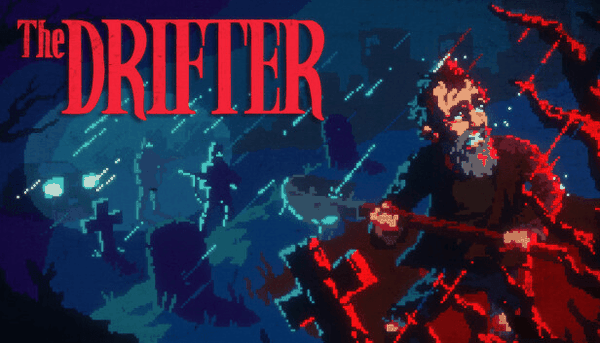


Some games captivate with their puzzles, while others make the story their strong suit. The Drifter, however, chooses a different path, managing to capture attention with a constant tension that accompanies every single moment of the adventure. It's one of those titles that push you to continue for a few more minutes, one more scene, one more revelation, until you find yourself completely immersed in its mysteries.
Developed by the Australian team Powerhoof, already known to indie enthusiasts for their love of traditional graphic adventures, The Drifter immediately demonstrates a strong personality. While rooted in classic point-and-click games, it avoids relying solely on nostalgia and instead builds an experience with a surprisingly modern pace, where narration, suspense, and plot twists intertwine with great naturalness.
The initial impression is that of an adventure that looks to the past for its gameplay foundations, but chooses a decidedly contemporary approach to storytelling. The result is a story with an almost cinematic feel, always in motion and capable of maintaining high curiosity from beginning to end. On Nintendo Switch 2, this structure works particularly well, adapting effortlessly to both longer sessions on the big screen and quick plays in handheld mode.
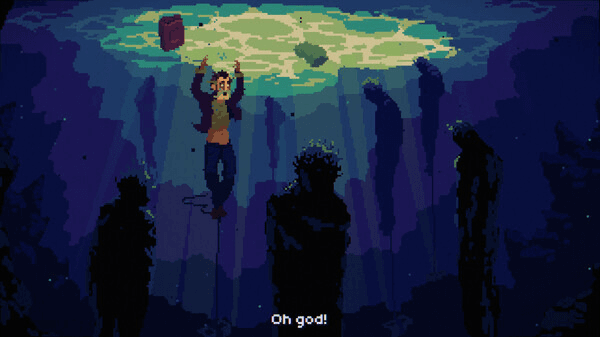
The Drifter Story: Mick Carter and the Nightmare That Keeps Restarting
Mick Carter is not the classic hero destined to save the world. He is a man marked by life, one of those who seem to drag themselves from one day to the next without a clear destination. When he decides to return to his childhood city, everything suggests a simple passing trip. Instead, in a very short time, he finds himself catapulted into a spiral of unsettling events that drag him into the center of a story much bigger than himself.
The strength of The Drifter lies precisely in how it manages to involve the player from the very first scenes. The story doesn't waste time with long introductions and immediately hits the ground running, chaining together events, revelations, and plot twists that make it difficult to stop playing. Every piece that finds its place in the narrative mosaic seems to open new questions, fueling a curiosity that constantly grows as the adventure progresses.
To avoid any spoilers, it's best not to go into too much detail, but the story crafted by Powerhoof skillfully blends thriller, mystery, and supernatural suggestions. The line between what is real and what appears inexplicable becomes increasingly thin, drawing the player into a story that often surprises.
What I appreciated most is the pace at which the story is told. There are no obvious lengthy sections or moments that seem inserted just to pad out the content: every dialogue, every character, and every discovery contributes to advancing the plot or enriching its context. It's a narrative that knows when to accelerate and when to take the necessary time to build tension, maintaining high attention until the credits roll.
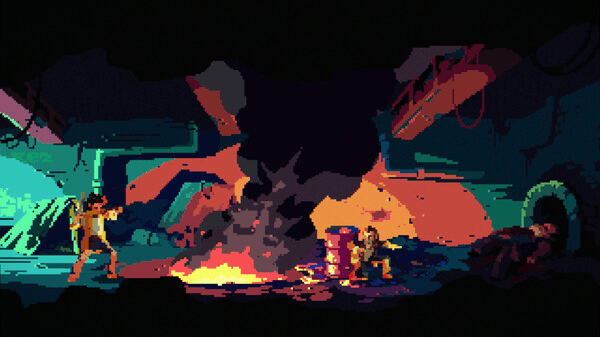
Gameplay: How Powerhoof Modernizes Point-and-Click Without Betraying Its Identity
One of the aspects that most convinced me about The Drifter is how it manages to modernize the structure of classic point-and-click adventures without betraying their identity. Exploration, dialogues, item collection, and puzzle solving remain central elements of the experience, but everything has been built with the goal of keeping narrative tension alive and never slowing down player engagement.
Powerhoof demonstrates a deep understanding of the limitations that often characterized the genre in the past. Here, you won't find absurd puzzles or nonsensical item combinations that force random attempts. The puzzles are generally well-contextualized and follow credible logic, allowing you to focus on the story and atmosphere without the frustration typical of some more traditional productions. When the game challenges us, it almost always does so intelligently, relying on observation and reasoning rather than arbitrary solutions.
What makes the experience particularly engaging, however, is how the gameplay merges with the narrative. Tense situations are not just told through cutscenes but become an integral part of the action. In several instances, you find yourself making quick decisions or acting under pressure, a choice that helps convey the feeling of truly being in a desperate and unpredictable escape.
The final result is an adventure that retains the charm of great point-and-click games of the past, but at the same time moves with a decidedly more modern pace. The Drifter does not try to slow the player down with artificial obstacles: it prefers to drag them from one situation to another, maintaining high curiosity and letting the mystery and the desire to discover what will happen next guide the entire experience.
Pros and Cons of The Drifter: Linearity, Length, and Some Unclear Puzzles
The greatest strength of The Drifter is its ability to immediately capture the player's attention and never let go. The story proceeds at a sustained pace, alternating moments of tension, mysteries to unravel, and plot twists that constantly push you to continue. It's one of those games that manages to create the classic "just five more minutes" feeling, transforming a simple gaming session into a narrative marathon that's hard to interrupt.
The gameplay also helps maintain high engagement. Puzzles are generally well-integrated into the context and rarely break the flow of the narrative, while the artistic direction gives personality to every environment and reinforces the unsettling atmosphere that accompanies the entire adventure. Making it all even more effective are convincing writing and a credible protagonist, capable of bearing the weight of an ambitious plot without ever appearing trivial.
However, there are some imperfections. The strongly linear structure limits freedom of action and makes the experience less suitable for those who like to explore alternative paths or experiment with different approaches. Some passages can also slightly slow down the pace, especially when the solution to a puzzle is not immediately clear. The relatively short duration might also leave a slight bitter taste for those who quickly become attached to the characters and game world.
These are, however, flaws that only marginally affect an adventure built with great care and personality. The Drifter knows perfectly what it wants to be and almost always achieves its goal, which is to tell an engaging, intense story capable of leaving a lasting impression even after the adventure concludes.
Artistic and Sound Design: Pixel Art, Cinematic Direction, and Italian Subtitles
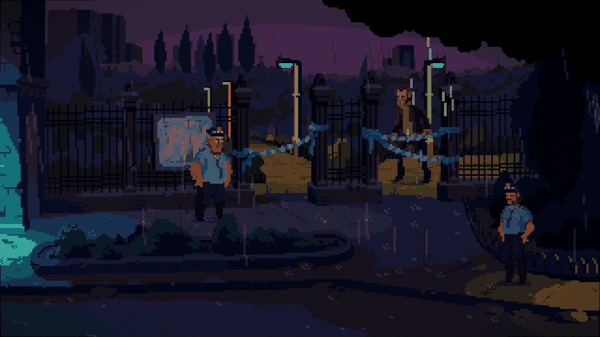
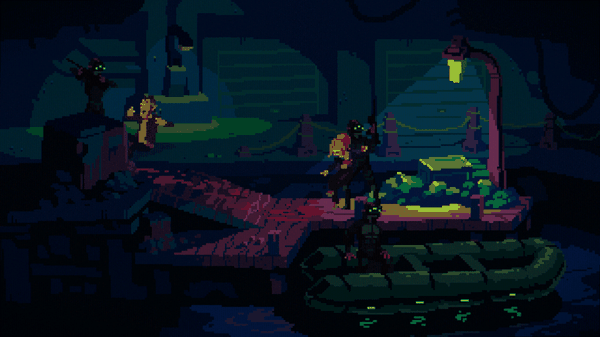
One of the most successful aspects of The Drifter is undoubtedly its artistic design. The pixel art created by Powerhoof manages to convey a strong visual identity, combining detailed scenarios, refined animations, and a skillful use of lighting to create atmospheric environments.
Every location helps reinforce the sense of unease that accompanies Mick's journey, alternating more contemplative moments with decidedly more tense sequences. While maintaining a retro style, the game manages to feel surprisingly modern thanks to effective direction and excellent camera management.
The sound design also plays a fundamental role in player engagement. The music accompanies the action without ever being intrusive, effectively highlighting both tense and more reflective moments. Sound effects further contribute to giving credibility to the environments, while the English voice acting successfully enhances the characters and numerous narrative scenes.
Also noteworthy is the presence of Italian subtitles, a particularly important element in a work that bases much of its charm on writing and dialogue. The localization allows players to follow the plot without difficulty and makes the title accessible to a much wider audience.
Score
Editorial team
The Drifter Review: Powerhoof's Point-and-Click on Nintendo Switch 2 You Can't Put Down
The Drifter is proof of how a great story can still make a difference. Powerhoof delivers a gripping interactive thriller, capable of maintaining high tension from start to finish thanks to quality writing, well-calibrated puzzles, and an always engaging narrative pace. Enhancing it all are an excellent pixel art audiovisual sector, surprisingly cinematic direction, and superb Italian localization that makes the experience even more enjoyable. On Nintendo Switch 2, it's one of the most successful and memorable narrative adventures released this year.
Similar articles