Super Mario Galaxy hasn't lost its shine on Switch 2
In a galaxy far, far away... yes, two masterpieces are coming!
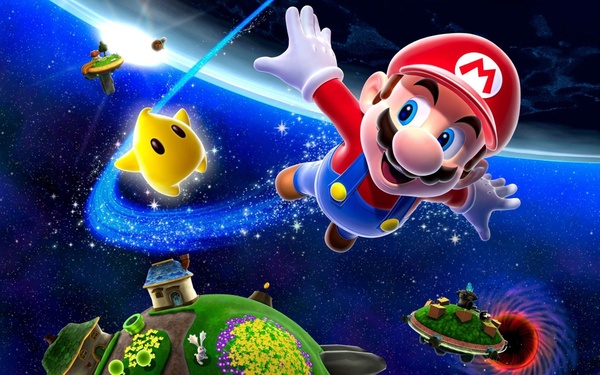


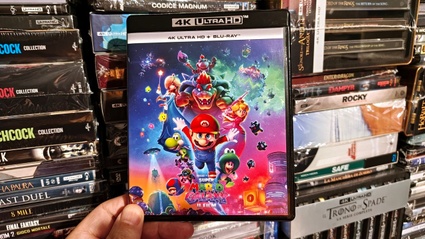
In the video game industry, the notable absentees are standards. There isn't a shared production model, and despite the sector being several decades old, it's difficult to know what to expect every couple of quarters. Among the various players in the field, Nintendo has always stood out for its proverbial Nintendo Difference, a slogan that summarizes Nintendo's habit of doing things its own way, without following fads or trends. Thus, it happens that today, in the era of remasters and remakes, we can count on various editions of an infinite number of more or less recent games, while one of the most influential and important titles ever, Super Mario Galaxy, is only available on Wii (where it was originally published) or as part of the limited edition collection Super Mario 3D All-Stars for Switch, without any particular technical upgrades. Or rather, that was the case until yesterday, because finally Super Mario Galaxy and its sequel Super Mario Galaxy 2 (until now exclusively available on Wii) enter the Switch 2 collection with a precious bundle that contains both.
Super Mario Galaxy + Super Mario Galaxy 2: the year was…
Okay, before any considerations, it's worth rewinding and explaining what Super Mario Galaxy is, beyond what it represents, for those who in 2007 were – bless their hearts! – too young to know it. Galaxy is the third iteration of the mustachioed plumber in a polygonal and three-dimensional universe (after Super Mario 64 and Super Mario Sunshine, both included in the aforementioned 3D All-Stars collection), but at the same time, it embodies a true Copernican revolution. The plot, as always, begins with a sudden intrusion by the evil Bowser, who appears uninvited at the Star Festival to kidnap Princess Peach, taking her entire castle with him… into space! The wicked lizard has, in fact, created his own universe, populated by bizarre galaxies that our mustachioed hero, supported by Luma and Rosalina, must explore in search of Power Stars, necessary to access other galaxies and thus challenge Bowser.
As mentioned earlier, the good Super Mario had already ventured among polygons before, on Nintendo 64 and GameCube, but never in this way, reaching where no platformer had ever gone before: into cosmic void. The levels of Super Mario Galaxy are true galaxies, constellations of planets, planetoids, asteroids, and comets on which the world's most famous plumber jumps, rolls, and attacks, constantly at the mercy of gravity. How revolutionary it was for its time is difficult to explain, but even playing it today (especially if you're trying it for the first time) you distinctly perceive the still unbridged gap between Galaxy and other exponents of the category, despite more than 15 years having passed. And a very similar discourse can be made for the sequel, Super Mario Galaxy 2, which expands the number of transformations and types of galaxies in a “more of the same” where the “same” being re-proposed is, to put it very briefly, a masterpiece.
Super Mario Galaxy + Super Mario Galaxy 2 in 2025
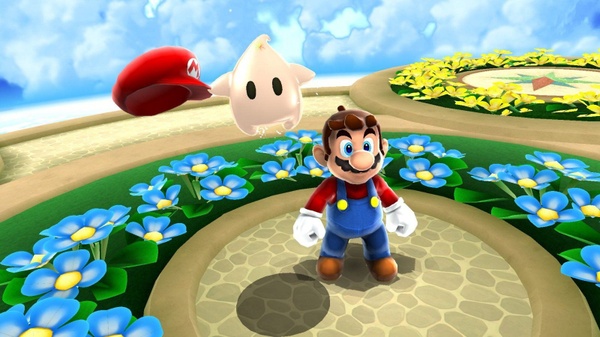
So, if based on what has just been said regarding the mechanics, there is little to add (we are still facing the most crystalline and ingenious platforming distillate ever), a few more words must be spent on the technical sector in a broad sense. Starting from the aesthetics, both games have been remastered so that they can be displayed at 1080p resolution in handheld mode and 4K docked on the TV. The leap forward in terms of cleanliness and pleasantness of the composition is quite evident, just think that the original titles ran on Nintendo Wii, which even in the context of its generation did not exactly stand out for particular hardware capabilities. The beauty of Nintendo games, however, is almost always given by the skill of programmers and designers and by the taste and talent of those who model a few polygons, making them achieve shapes and volumes conceived to please the eye. And, in other words, Nintendo has such visual talents that it often manages to offer high-quality graphics, even without mind-blowing hardware to support it. The litmus test of the goodness of this approach are precisely the remastered versions of Super Mario Galaxy and Super Mario Galaxy 2. Which today, in 2025, are still a great joy for the eyes as a whole: numerous assets have been involved in the retouches, but not all, and if here and there some slightly stretched textures can still be glimpsed, the skill in image composition prevails.
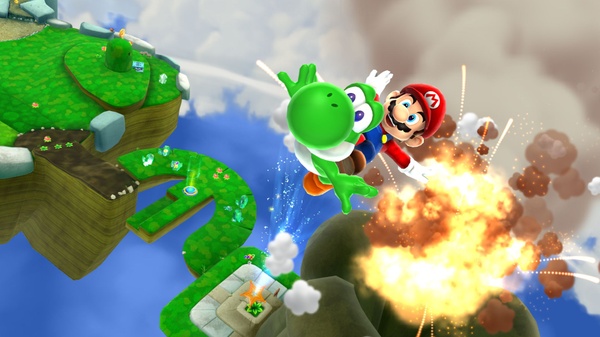
More delicate, however, is the discussion of controls because, if you remember correctly, Nintendo Wii used the famous Wiimote and Nunchuck combo as a control system, never again proposed in subsequent generations. In this new edition, therefore, Galaxy and Galaxy 2 are controlled entirely with the Joy-Cons. In handheld mode, the task performed by the Nintendo Wii pointer is taken over by the console's gyroscope, which can be tilted to move the virtual cursor; alternatively, the touch function can be used to move this cursor and collect all the star bits with a precise swipe of the fingers. When played docked on the television, however, to move the cursor it is necessary to use the two Joy-Cons in separate mode or alternatively use the gyroscope of the Pro controller. As you may have gathered from reading, cursor management is not exactly comfortable (and can even be entrusted to player 2, if desired), but it must also be said that its use is often more choreographic than indispensable, and in several situations, you can get by simply moving Mario's little legs towards the star bits; in the worst case, the R button that re-centers the view will soon become your great friend.
The most interesting addition, therefore, turns out to be the Assisted Mode, activatable in both titles and designed to reduce frustration for newcomers (but it's also great for those who can play for an hour after work and want to avoid the risk of throwing Switch 2 against the wall after yet another fall into the void). By letting Nintendo's charitable hands assist you, you can count on six health bars (instead of the canonical three), on recovering energy by standing still, and on a bubble ready to retrieve you from every fall at the cost of one energy bar (instead of an entire life as in ordinary mode). I imagine that gameplay purists won't appreciate it, but from my point of view, it compensates for the questionable management of save points (especially near bosses) which I have always found quite debatable (my opinion, feel free to shoot me with arrows).
As the analysis draws to a close, we inevitably approach what (for many) is the crucial point of judgment on Super Mario Galaxy + Super Mario Galaxy 2, namely the price. The two titles can be purchased individually for €39.99 each, or as a bundle for €69.99. The games also work on Switch, but on Switch 2 they receive an upgrade that increases the resolution on Nintendo's most recent console. While it's not nice to pry into anyone's finances, these are two masterpieces for the price of one, and two masterpieces that are difficult to find. Of course, if we had the guarantee that what we are buying would remain playable for the rest of our lives, certain investments would be made with a much lighter heart, but that's another, much broader discussion, and one that doesn't only concern Nintendo.

Score
Editorial team
Super Mario Galaxy hasn't lost its shine on Switch 2
Super Mario Galaxy and Super Mario Galaxy 2 remain masterpieces, and the slight technical adjustments made by Nintendo make them technically enjoyable for everyone even today (thanks to the magnificent design work of the original developers). The Assisted Mode is an excellent introduction, perfect for novices, but also for those who want to eliminate some frustration and tediousness from the equation. The only problematic point is the price: without judging anyone's finances, these are two masterpieces, difficult to find until now and optimized for modern enjoyment. At the price of a normal AAA. It's expensive, but what it offers is worth every single coin.
Similar articles