Romancing SaGa: Minstrel Song Remastered International: Review of the New Version
Romancing SaGa: Minstrel Song Remastered International: Review of the New Version
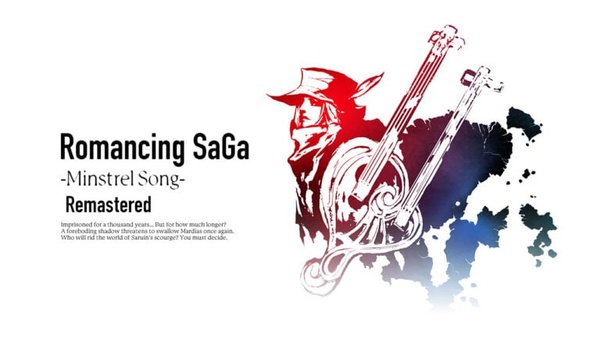


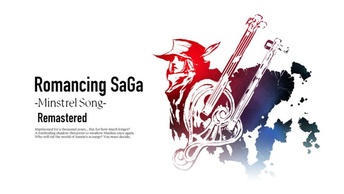
Romancing SaGa is a title that traces its roots back to 1992, when it debuted on Super Famicom [the Japanese version of the SNES] as the fourth installment in the SaGa series. In the subsequent thirty years, this Squaresoft title, in addition to lending its name to the two subsequent SaGa chapters – Romancing SaGa 2 and Romancing SaGa 3 – has returned to the market multiple times, the most important of which was undoubtedly the Remake created for PS2 in 2002 under the title Romancing SaGa: Minstrel Song, a release that followed the success of Unlimited SaGa. Twenty years after that chapter was remastered, three years after that release comes Romancing SaGa: Minstrel Song Remastered International. Of course, it's right to first take an overall look at the work for those who may not know it, but if you've already had a chance to try the 2022 Remastered version, you'll find the differences in the final comment.
Romancing SaGa: 8 Characters and a Minstrel
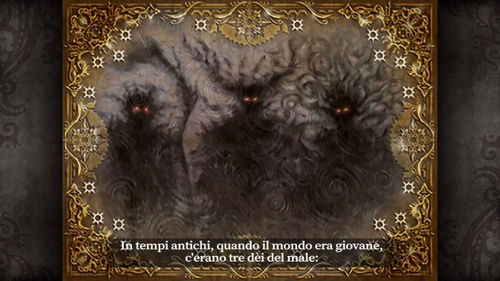
We are in the world of Mardias, divided into different regions that more or less all report to the Befal empire, whose capital Melvir remains the nodal hub of economy, politics, and wars. Although the world currently enjoys a period of peace, legends still speak of the war fought a thousand years ago between the evil deities – Death, Saruin, and Shirach – and Elore the benevolent, who ultimately emerged victorious, banishing two of his enemies to hell and shattering the third, Saruin, into ten Destiny Stones.
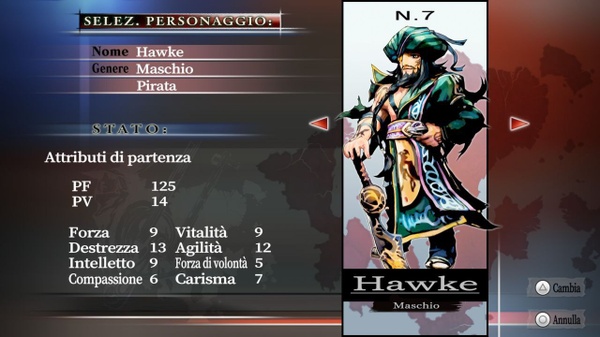
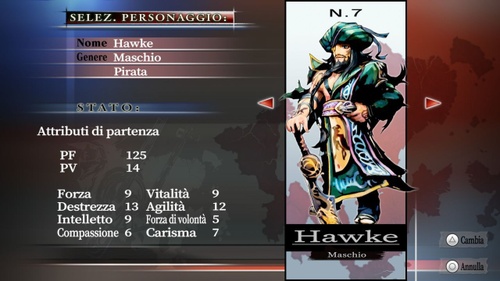
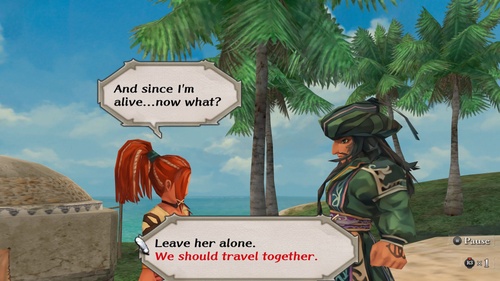
In this setting, we encounter no less than 8 protagonists to choose from, each with their own past, interests, and personal story to live: Albert the noble, Aisha the nomad, Jamil the thief, Claudia the ranger, Captain Hawk the pirate, Sif the barbarian, Gray the adventurer, and Barbara the dancer. For each of them, after overcoming the initial stages of the game, free exploration of the world will open up, although from time to time some events related to them personally will “pursue” them and modify the course of the adventure. During their journey, the chosen protagonist will meet other heroes willing to join their cause, not least some of the other 7 characters mentioned. A constant presence will also be the mysterious Minstrel who seems to know everything about everyone and who might even occasionally accompany the hero on their journeys – though not for long...
A Classic System with Many Original Points
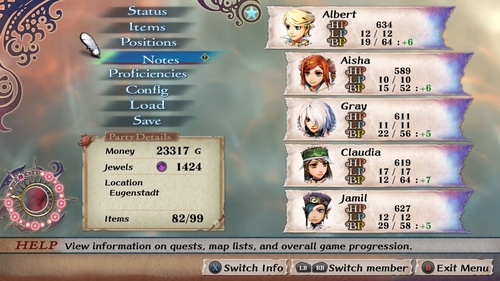
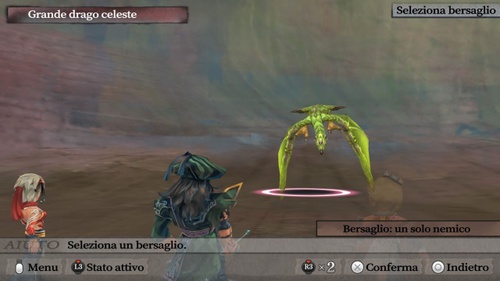
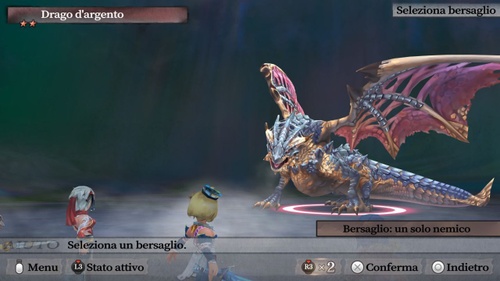
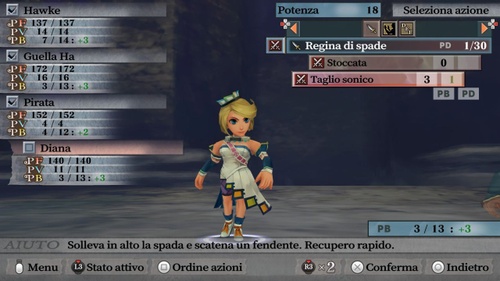
The basic setup of the game is that of a classic JRPG: from the real-time exploration screen, you transition to the battle arena the moment you come into contact with a monster. In the arena, the two sides face each other, and time is marked by turns: at the beginning of each turn, we will set the actions of each of the Party's units – a maximum of 5 – via a menu, but then the execution will be carried out according to an initiative order that we are not given to know a priori. Various techniques or spells will require Battle Points to be executed, a resource that can be accumulated turn after turn. Some techniques will test the structural resistance of the weapon used, reducing its durability [weapons can be repaired]. Damage received is understood in terms of fatigue and is cleared at the end of the battle, but if a character goes KO, they will begin to suffer “serious damage” in the form of much more severe Hit Points which, if reduced to 0, lead to definitive death.
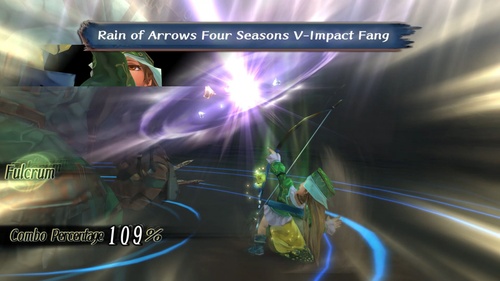
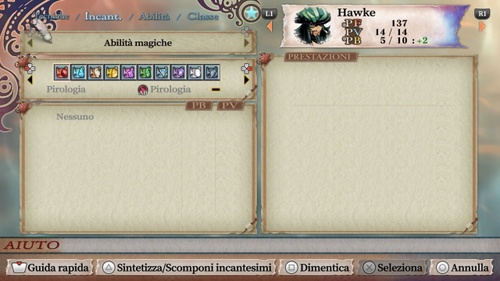
This damage management is not the only originality [for its time] of Romancing SaGa: proficiency in the use of weapons and spells will derive from the character's Class and Level, but these do not increase with battle but rather by spending specific Crystals at Trainers. On the other hand, at the end of each battle, we will see this or that character's characteristic grow based on the techniques used and random parameters. It will also be possible to perform group combos as well as learn new techniques simply by using those already known.
Technically a Blast from the Past
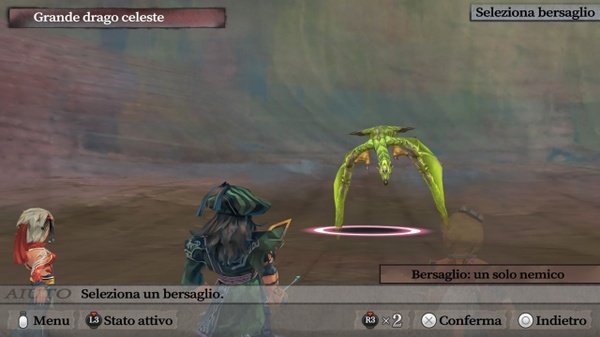
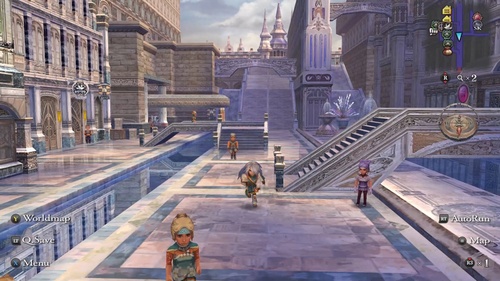
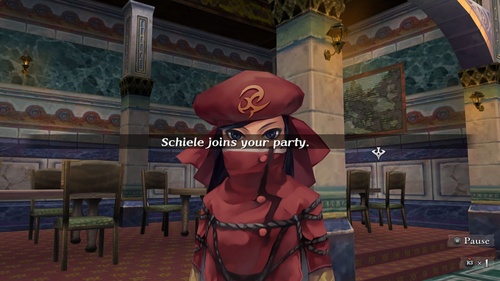
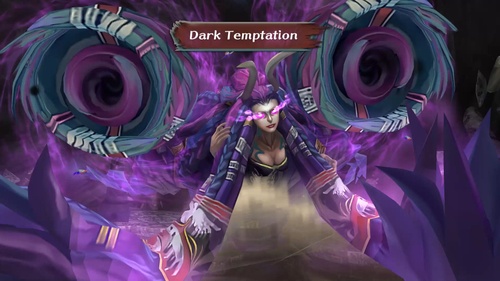
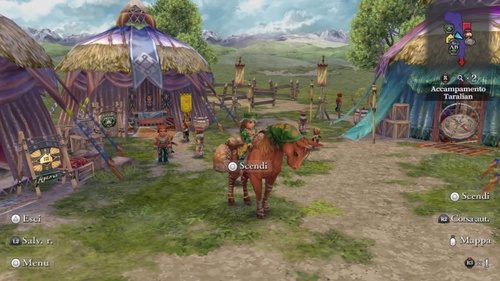
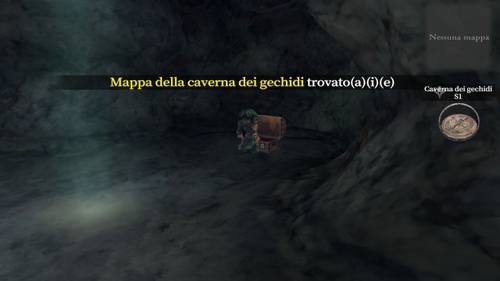
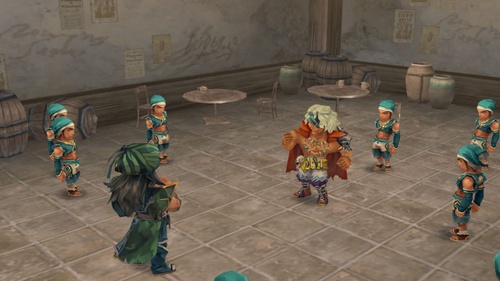
We won't deny that one of the most significant hurdles to overcome in the game experience is the technical department, which, although remastered again and again, still derives from a product over 20 years old; if you add that even back then, a style was chosen for the 3D models that somehow reproduced the original SNES-era sprites in their proportions, for example with very large shoulders and arms compared to the legs, it's understandable how the result today might appear a bit grotesque. The fact that the camera during exploration is tied to a preset camera and does not allow, for example, to clearly visualize the direction (and enemies) one is walking towards is also quite off-putting. And as for the textures, it's undeniable that an effort was made to do justice to the faces and some details of the protagonists' models, but for the rest, the nuances are significant, and there's a strong suspicion that the upscaling may have been largely done with AI.
Certainly more flattering is the opinion on the audio department: with the exception of some themes that perhaps needed a little more care – first and foremost the repetitive pirate island theme – in general, Kenji Ito's original work maintains its charm and undeniable quality, and the remastering has been carried out with due diligence. The voice acting, in English and Japanese, is also good, with all texts translated into Italian. The fact that it's always possible to activate or deactivate the 2X speed in explorations and battles, significantly reducing downtime, is commendable.


Romancing SaGa International: What Changes
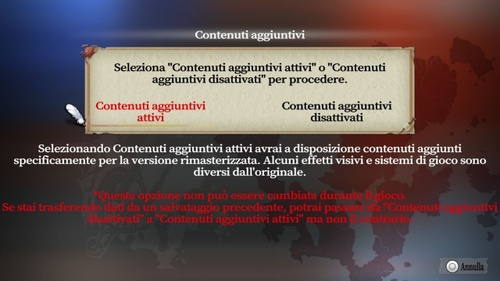
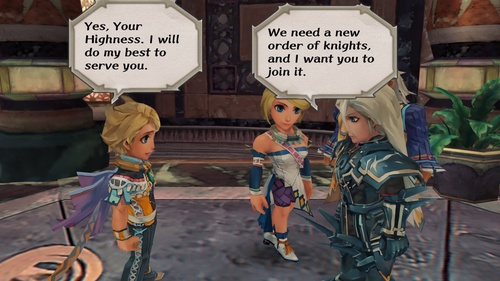
To understand how this International version of Romancing SaGa: Minstrel Song Remastered differs from the one three years ago, in addition to the aforementioned upscaling to higher resolutions, one must navigate a bit through the options at the beginning of the game. First, it's possible to choose whether to play the game in its original form, i.e., as it was originally offered on PS2, or to implement all the adaptations introduced in the first Remaster, including more aggressive bosses, new side stories, and some additional characters that can be recruited.
Secondly, you can set the game's time speed to “normal” or “slow,” keeping in mind that the former was designed for the Western version of the game and tries to condense the experience into fewer hours than the latter, which is actually the original Japanese version. This is not a marginal choice: time plays a crucial role in the game's economy, as it determines if and when a certain event will occur and consequently also the conditions of certain locations; depending on the turn the story takes, entire settlements could be wiped out or occupied by monsters, important NPCs could fall ill or die, thus precluding certain sub-plots. Finally, as time passes, monsters encountered even simply by wandering through already extensively visited places will tend to become more numerous and stronger.
Romancing SaGa: Minstrel Song Remastered International thus does its best to offer the player the same game in all its possible forms and combinations, allowing purists or those who have never played it to rediscover it in its original form, as well as allowing more experienced players to dive headfirst into the more articulated version. What is certain is that the game maintains a fundamental difficulty and a certain amount of repetitiveness [just think that to fully complete the story you will have to complete the runs of all 8 heroes one after another...] which makes it appealing almost exclusively to true Hardcore cultists.
Gallery

Score
Editorial team
Romancing SaGa: Minstrel Song Remastered International: Review of the New Version
Romancing SaGa: Minstrel Song Remastered International dusts off a great classic from the past in a completeness that allows the player to choose which version to tackle. While the adaptation work is notable, the technical limitations of a product native to PS2 and the gameplay choices make it difficult to digest for those accustomed to more modern products. In short, a product not for everyone.
Similar articles