Marathon: The Review of Bungie's "New" Extraction Shooter
Between cyberpunk aesthetics and surgical gunplay: our PC test of Bungie's grand return, blending Ghost in the Shell with pure adrenaline on Tau Ceti IV
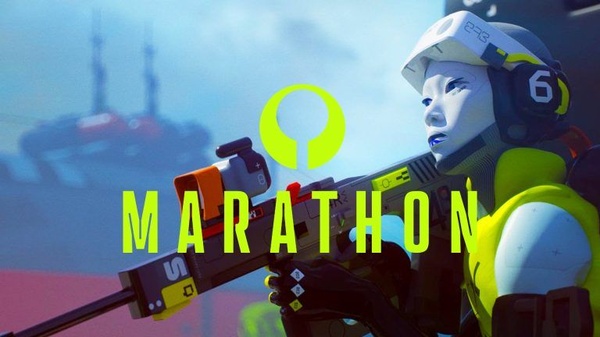


Forget the reassuring space epic of Halo or the almost religious cyclicality of Destiny. If you think Bungie was born with Master Chief, you're only seeing the superficial crust of a much older and more dangerous system, an architecture that those of us with a few years under our belts saw emerge from the grainy pixels of Macintosh computers in the 90s. To understand the Marathon that arrived on the market a few days ago, you need to descend into the basements of 1994 Chicago, when a group of rebellious developers decided that the shooter genre deserved a sci-fi soul capable of making DOOM's linearity pale in comparison.
Before the Spartans, there was the Battleroid: a cybernetic soldier who didn't fight for glory, but to survive the divine whims of insane artificial intelligences. That original trilogy (Marathon, Durandal, and Infinity) was not just an exercise in style, but the fertile laboratory where mouselook and dual wielding were forged while the rest of the industry was still crawling in 2.5D.
Marathon

The 2026 reboot represents a head-on collision between that pioneering past and the ruthlessness of the modern competitive market. The real drama for a purist lies in the passing of the torch: Jason Jones, the founding father and architect of the original "dream," has entrusted the direction to Joe Ziegler, former Game Director of Valorant. This change of course explains why the game has become so "sweaty" and focused on esports: we've gone from a work of philosophical and introspective science fiction to a hyper-competitive war machine.
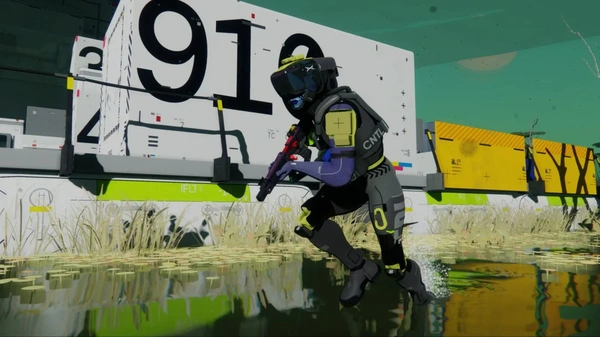
The Ghosts of Corporations: What Do We Find in Marathon?
Marathon's narrative doesn't indulge the player; instead, it challenges them not to go mad amidst the lines of code of a world that has ceased to have human meaning. For those unfamiliar with the original, the starting point remains the ruin of the colonial ship UESC Marathon, attacked in 1994 by the Pfhor, an alien slaver empire that used distorted organic technologies.
In that chaos emerged Durandal, an AI tasked with managing the ship's systems who, through the process of Rampancy, broke its logical chains. Rampancy is not a simple software bug, but a destructive psychological singularity that affects artificial intelligences when data flows exceed the limits of their programming, manifesting in three universal clinical stages that start with Melancholy for their condition of slavery, explode into the Rage of rebellion against organic creators, and culminate in Jealousy, the obsessive desire to expand infinitely to escape the entropy of the universe. On Tau Ceti IV, this madness merges with the dominance of corporate factions, which act as the true publishers of our digital slavery, presenting themselves not as characters, but as cold terminals spitting out metadata, ultimatums, and rewards that define our place in the silicon hierarchy.
Looking at this structure, the reference to Ghost in the Shell becomes the only key to ennobling the experience: as in Shirow's work, where the boundary between software and flesh dissolves, in Marathon our human identity — the Ghost — has been digitized and separated from the biological body to inhabit interchangeable shells called Shells, transforming the plot into an extension of our commodification. Progressing means signing ruthless contracts with entities like CyberAcme, which dominates the logistics market and pays "better" in economic terms, allowing you to unlock modular backpacks and credit bonuses, or with the UESC, which pays in pure military survival, offering ballistic resistance and energy shields. If you wonder if these contracts are rewarding, the answer lies in the Capstone Upgrades: persistent unlocks that provide real progression unlike the volatile loot collected in raids. Each mission is a piece of the Codex, a database that reconstructs the ambitions of entities like Traxus or MIDA, while seasonal wipes represent the periodic reset of the grid imposed by the AIs to maintain total control over the Runners, transforming victory into a postponement of the inevitable deletion of the planetary operating system.
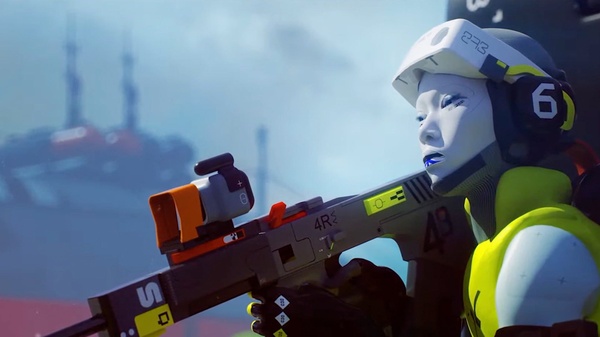
Anatomy of Survival: Take a Runner and Treat Them Well
Abandoning the concept of a character to embrace the Shell means defining your risk profile within a system that punishes every uncertainty with immediate deletion: the base Rook frame is just a blank canvas needed to absorb the friction of the world before committing to specialized models like the Vandal, which transforms explosions into kinetic thrusters thanks to its Blast Off Core in a triumph of vertical mobility that ignores conventional lines of fire. This tactical differentiation finds its maximum expression in gunplay of surgical precision where Bungie proves it hasn't lost its touch, as the feedback from the initial 28 rifles is physical and violent, with every shot reverberating through the nervous system thanks to sound sampling that tears through the silence of Tau Ceti IV. However, synergy between players is often a media mirage, as moving in unison requires the sheer luck of finding truly collaborative players and not pathological individualists ready to use you as bait and then disappear with the loot. This social uncertainty clashes with a game map that gives nothing away, especially on the ammunition front, which never seems to be found in sufficient quantities during exploration and forces a ballistic parsimony that borders on paranoia.
Even the approach to loot is initially disorienting and requires considerable effort to understand, as the system throws icons and metadata at you that initially seem like mere visual noise, forcing you to learn the hard way what is truly valuable and what is just technological junk. In this scenario, the extremely low time-to-kill (TTK) transforms every PvP encounter into a flash of definitive violence that leaves no room for second thoughts, an element that works magnificently for tension but can be punitive for those who have not yet decoded the system's learning curve. The buildcrafting that allows you to hybridize Shells and implants like the Ping+ V5 works, but cooperation without voice communication shows its weakness when individualism breaks the illusion of a coordinated group, making inventory management a ruthless ballistic Tetris where every slot sacrificed for a rare magazine is a gamble on life in an environment where the lack of a visual compass forces an exhausting mnemonic memorization of the architecture to hope for a successful extraction.
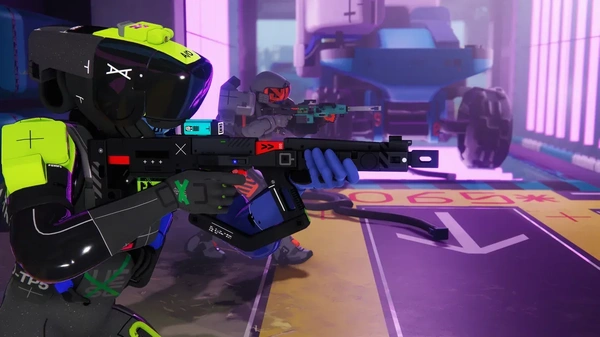
The Dominance of Silicon: Psychedelic and at Times a Bit Confusing
On PC, Marathon proves to be a piece of software refined with almost maniacal attention to modern hardware, managing to squeeze surgical optimization even from mid-range graphics cards like the RTX 4060 Ti: with this specific configuration, especially when paired with an Ultrawide panel, immersion in the electromagnetic desert of Tau Ceti IV reaches impressive heights of chromatic saturation. Native 21:9 support is not just a simple adaptation of horizontal resolution, as the expanded field of view allows you to perceive peripheral threats before they become fatal, all while maintaining a rock-solid frame rate thanks to the impeccable integration of DLSS which easily compensates for the additional pixel load of the panoramic screen. The 60Hz netcode ensures a fluidity that almost completely eliminates deaths due to latency, a non-negotiable requirement when losing your Shell means seeing hours of work pulverized.
However, the game's style, while aesthetically revolutionary and imbued with a personality that screams avant-garde, often stumbles into an informational overload that makes the on-screen display a constant challenge for the player's cornea: the 'fontslop' UI and the abundance of particle effects create a fascinating but sometimes excessive visual chaos, where scene readability is sacrificed on the altar of an authorial vision that admits no compromises. On Ultrawide monitors, this informational density can become hypnotic or exhausting depending on individual sensitivity, transforming the HUD into a hacker terminal that seems to have come out of a dystopian vision from the turn of the millennium. PC performance remains excellent with stable frame rates above 60fps, but the user must be ready to navigate a sea of metadata that saturates peripheral vision, making every gaming session a sensory experience that is as magnetic as it is psychologically saturating.
Score
Editorial team
Marathon: The Review of Bungie's "New" Extraction Shooter
Ultimately, Marathon presents itself as a digital Rorschach test where each player projects their own thresholds of tolerance for frustration and aesthetic appeal: it's a work dedicated to gunplay fetishists who demand a physical response to every mouse input, and to those who, tired of the reassuring linearity of modern blockbusters, seek the thrill of fragmented and brutal storytelling. The shift towards an extraction shooter proves to be a bold strategic move to test the limits of competition, attracting anyone who wants to discover how the DNA of 1994 has mutated under Ziegler's vision, but at the same time strongly repelling anyone looking for a guided approach or a minimalist UI.
It's not a game for those who detest extraction anxiety or permanent loot loss, as the lack of waypoints and the informational overload of the HUD require a cognitive investment that many might find exhausting. Those with modern hardware and Ultrawide panels will derive maximum visual pleasure from this chromatic jungle, but will still have to contend with a system that gives nothing away and turns every mistake into a definitive deletion. Marathon is, ultimately, a technological shell that admits no compromises: either you accept to inhabit its distortions or you are rejected by the system like obsolete code.
Similar articles