Call of Duty: Modern Warfare 4 PS5/Xbox Review — Korean Campaign and Ambitious DMZ: Infinity Ward Finds Its Way.
Captain Price returns to Korea, DMZ becomes a pillar of the experience, and Omnimovement disappears: MW4 knows what it wants to be, but the final verdict awaits multiplayer.


Call of Duty MW4: After Recent Ups and Downs, Infinity Ward Tries to Reclaim Modern Warfare's Identity
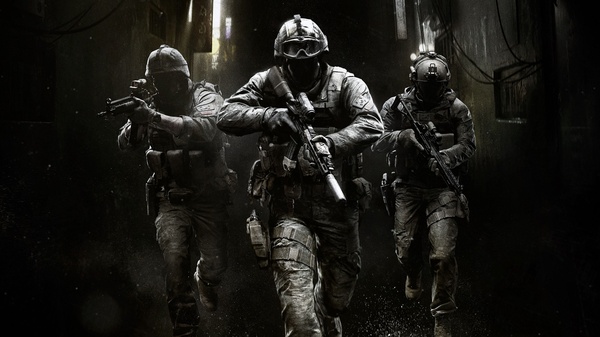
After a recent journey of ups and downs, Call of Duty: Modern Warfare 4 arrives with an important responsibility: to prove that Infinity Ward's series still has something to say, without merely rehashing an established formula. The result is a chapter that aims to recover Modern Warfare's more classic identity, maintaining the cinematic spectacle that made the franchise famous, but also trying to give more space to tension, narration, and freedom of approach. The two components examined in this review are the campaign and DMZ, the latter returning to the center of the project with the ambition of becoming much more than a simple secondary mode. The comparison with Modern Warfare III is inevitable. The previous chapter of the Modern Warfare saga had divided the public, especially due to a campaign that mixed traditional structure with open-area missions, leaving the feeling of a less cohesive experience compared to the series' best installments. MW4 tries to correct course, recovering a more recognizable narrative structure and complementing it with a more articulated extraction experience.

The MW4 Campaign: South Korea, Captain Price Off the Books, and a New Squad of Soldiers
The new story moves to the Korean peninsula, where North Korea's invasion of South Korea triggers a conflict destined to spread far beyond regional borders. Alongside the return of Captain Price, now forced to operate outside official channels, we find a new squad of young South Korean soldiers, through whom the war is told from a more direct and human perspective. The choice of setting represents one of the project's most interesting elements. After exploring scenarios now familiar to the series, Infinity Ward introduces a context that allows for alternating urban combat, clandestine operations, and large-scale clashes. The conflict is not just the backdrop for the missions, but becomes the engine of a story that intertwines the fate of the new protagonists with that of historical characters.
The campaign also focuses on variety of situations: from battles in Korean cities to close-quarters combat, passing through chases and night raids. The goal is to recover that cinematic progression that has always been one of Modern Warfare's main strengths. The comparison with MWIII primarily revolves around cohesion. MW4 seeks to restore a stronger narrative identity to the campaign, without sacrificing more open moments and a less rigid management of certain situations. Initial critical impressions are encouraging, while highlighting some limitations in the handling of the plot and less linear missions. It remains to be seen how much the narrative truly enhances the new characters and how much, instead, it ends up depending on the weight of the historical figures. This is an important question, because a chapter that aims to close a narrative cycle must be able to look forward, not just celebrate its past.
Gameplay Without Omnimovement: More Controlled Movement, Revised Ballistics, and a Different Combat Philosophy
One of the most significant aspects of the new direction concerns movement. After the introduction of Omnimovement in recent Black Ops titles, MW4 chooses not to adopt this system, returning to a more traditional setup more closely tied to the physicality of combat. The absence of Omnimovement is a choice that deserves attention. The system had expanded movement possibilities, allowing players to approach engagements with greater freedom and utilize more dynamic trajectories. Giving it up means reducing some acrobatic possibilities, but also reaffirming a precise game philosophy: movement must serve combat, without necessarily becoming its dominant element.
This does not mean that MW4 is devoid of innovations. Transitions between actions, climbing possibilities, movement through obstacles, and contextual animations aim to make environments more exploitable. The desired result is more controlled mobility, allowing players to change position and utilize verticality without abandoning the feel of a traditional military shooter. The ballistic system also receives attention: the removal of bloom from hip-fire and the revision of recoil management aim to make weapon behavior more consistent with player input. The real question, however, is whether this choice represents a step forward or simply a change of direction. The absence of Omnimovement might be appreciated by those who desire more readable and deliberate engagements, but risks disappointing those who found the more advanced movement systems to be one of the main reasons to keep playing. In any case, it's important to distinguish the campaign from multiplayer: the choice of movement system affects the two experiences differently and will warrant a separate analysis when it's time to evaluate the competitive component.
MW4's DMZ: Deeper Extraction, Dynamic Environments, and the Bet on Long-Term Persistence
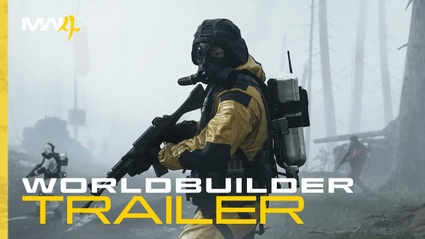
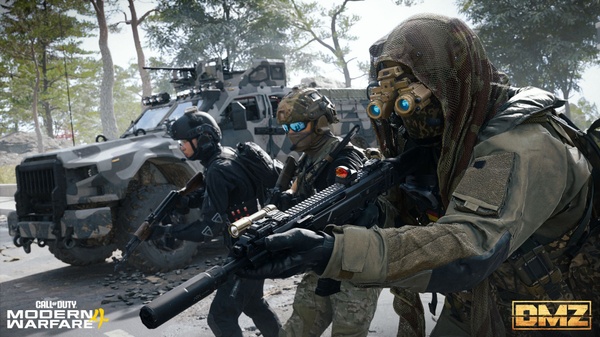
Modern Warfare 4's real gamble might be the DMZ. Originally introduced into the Modern Warfare II and Warzone ecosystem, the extraction mode returns with a more ambitious setup, seeking to build an experience capable of existing in parallel with the campaign and traditional multiplayer. The principle remains what made the formula interesting: enter a hostile zone, complete objectives, collect resources, and decide when to risk more and when to abandon the mission. Each expedition presents the player with a concrete choice, because the loot acquired only has value if it can be brought out of the combat zone. The new DMZ focuses on a more dynamic environment, with variable weather conditions, changing military objectives, and hostile forces distributed across the map. The ability to tackle operations alone or in a squad should encourage different approaches, from cautious planning to more aggressive incursions.
Compared to the previous version, the ambition seems to be to make the system deeper and more persistent, increasing the weight of progression and decisions made during each incursion. It's not simply about surviving an encounter: it's about assessing risk, managing what you carry, and deciding if an additional objective justifies the possibility of losing what you've collected. This is precisely the most interesting potential of the mode. In a franchise often associated with short matches and fast paces, DMZ introduces a different kind of tension, built on uncertainty and the possibility that an seemingly secondary encounter could completely change the outcome of an expedition. Naturally, the success of an extraction mode doesn't just depend on the quantity of content available at launch. The quality of progression, the balance between players and AI-controlled adversaries, the variety of objectives, and the ability to keep the experience interesting in the long term will be crucial. Then there's an unavoidable variable: the community. Interactions between players can generate some of DMZ's most memorable moments, but they can also turn every expedition into a succession of ambushes and unrewarding clashes. It's a delicate balance, on which much of the mode's longevity will be measured.
MW4 vs MWIII: More Cohesive Campaign, No Omnimovement, and a DMZ That Wants to Be a Protagonist
The direct comparison with the previous chapter highlights three main directions.
A more recognizable campaign. MW4 seeks to recover the cinematic structure and narrative continuity typical of the series, after criticisms leveled at MWIII's open-area mission formula.
A different movement philosophy. The absence of Omnimovement marks a departure from the more extreme mobility experimented with in recent Black Ops titles. The goal is to prioritize control, precision, and a greater adherence to Modern Warfare's identity.
A more ambitious DMZ. The mode is not treated merely as an addition to the package, but as one of its central components. Dynamic environments, variable objectives, and persistent progression are the elements on which its evolution hinges. These differences do not automatically guarantee a better result, but they indicate a precise direction: less dispersion, greater attention to the identity of individual modes, and an attempt to build an experience that does not end in the traditional cycle of competitive matches.
Call of Duty: Modern Warfare 4 seems to want to correct some of the problems that emerged in recent installments, recovering a campaign closer to the series' tradition and investing more decisively in DMZ. The choice to forgo Omnimovement represents one of the most discussed changes in terms of gameplay. It is not necessarily a step backward: it is a decision that prioritizes a specific idea of combat, giving up some acrobatic freedom in favor of more controlled movement.
The actual feel will determine if this philosophy works better in practice. DMZ, on the other hand, could be the component with the greatest growth potential. The extraction formula offers space for emergent experiences, cooperation, and long-term progression, but it will have to prove capable of sustaining player interest even after the first few weeks. The initial picture is therefore encouraging, but the final judgment requires verifying the overall quality of the campaign and especially the DMZ's resilience in public play. We can only refer you to the final review, where the multiplayer component will also be analyzed, but the prerequisites for a game that more closely reflects Call of Duty's identity are there, and they bode well.
Similar articles