Phantom Blade Zero PC Review: S-GAME's Kungfupunk Promises a Masterpiece but Buries it Under Too Many Flaws
Soul, Sha-Chi, and Phantom Edges build a spectacular combat system, but camera, collisions, and balancing suffocate it before it can shine


When they first presented Phantom Blade Zero, I immediately thought it could be my new Wukong, but faster, "meaner," perhaps comparable to a Ninja Gaiden… unfortunately, the final result proved to be very far from reality and, I'll say it upfront, what you'll read here will hopefully be very different in the final version, and even if not, I have mathematical certainty that if the developers are astute enough to read the various feedback, it will be completely rewritten in its logic within the first six months of release, but now I'll tell you about my journey.
Gallery
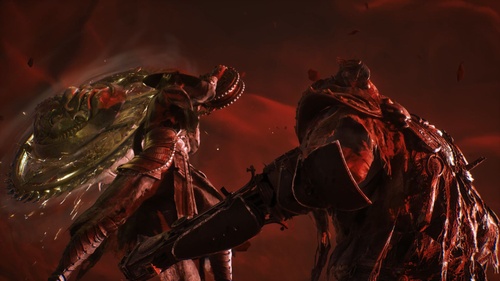
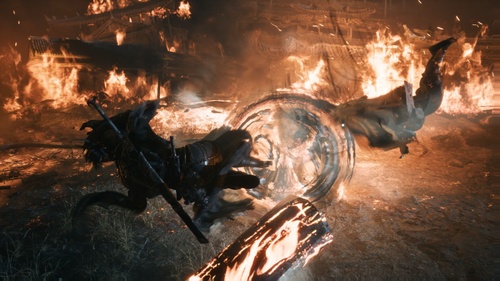
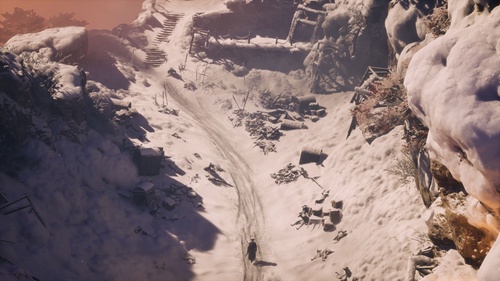
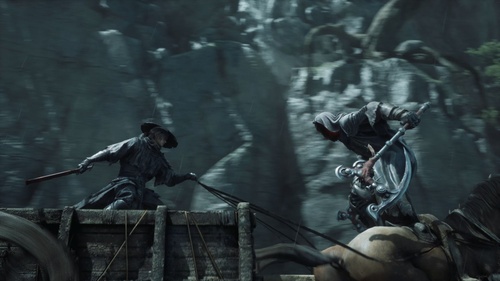
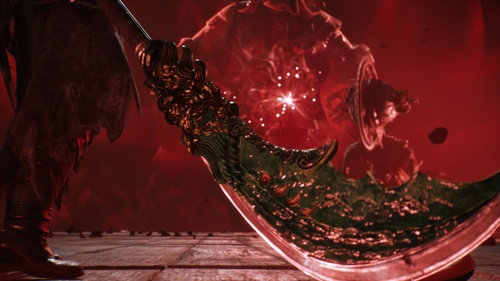
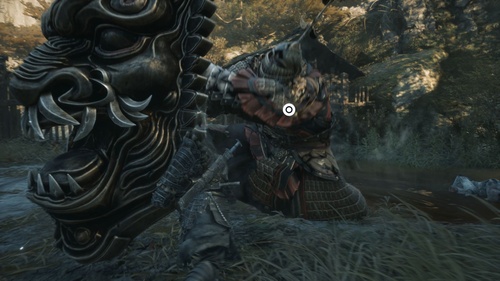
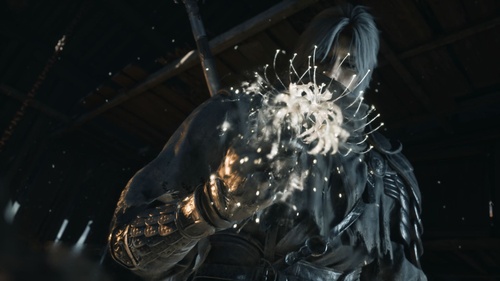
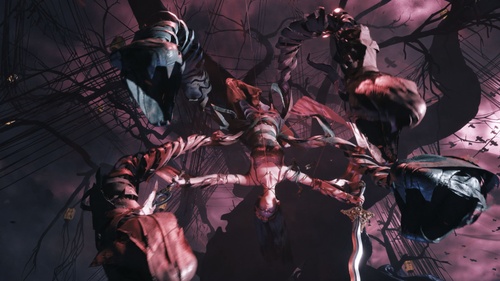
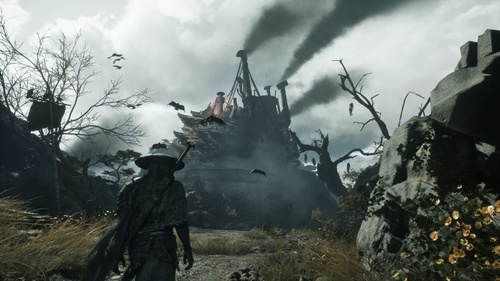
The Kungfupunk World of Phantom Blade Zero: Soul, the Order, 66 Days to Live, and a Conspiracy to Unravel
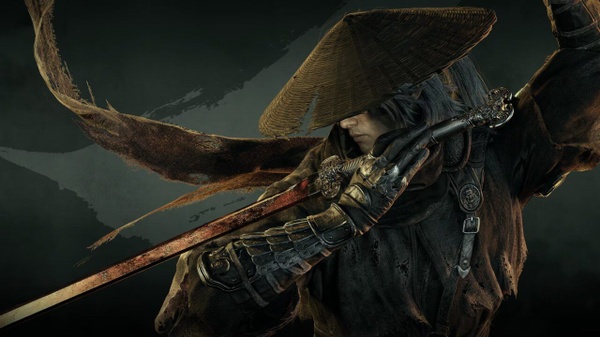
The video game plunges us into a dark and decadent world inspired by the Wuxia tradition, where martial arts, intrigues, and supernatural suggestions coexist within a universe defined by its authors as "Kungfupunk." At the center of the story is Soul, an elite warrior serving a clandestine organization known as the "Order," accused of murdering his own leader and left for dead after being hunted down and severely wounded. Saved by a mysterious healer through a remedy capable of temporarily snatching him from death, Soul discovers, however, that he has only 66 days to live.
Thus begins a desperate race against time to discover who framed him, shed light on his master's death, and reach the true mastermind behind the conspiracy, traversing a world dominated by assassins, warriors, and enigmatic figures where the line between revenge, redemption, and destiny progressively blurs. The premises may seem trivial but they are not at all; you will embark on a journey towards darkness rather than trying to escape it, and along the way, you will encounter figures and NPCs who, in a few lines, manage to restore charisma and dignity to a world you will discover one piece at a time.
The Combat System: Sha-Chi, Phantom Edges, Blue and Red Attacks — Spectacular on Paper
The combat system of Phantom Blade Zero focuses entirely on speed, precision, and the spectacular nature of martial arts, seeking a balance between the careful reading of opponents typical of more demanding action games and the fluidity of character action games. Soul can rapidly chain attacks from different weapons, alternating offensives, parries, dodges, and counterattacks without breaking the rhythm of the fight. A central element is Sha-Chi, a resource linked to both offensive and defensive possibilities: its management thus encourages avoiding indiscriminate attacking and finding the opportune moment to switch from pressure to defense.
Particular importance is given to reading enemy attacks: some moves are anticipated by different visual signals, with blue attacks that can be countered with a precise parry, while red ones require relying on dodging and the so-called Ghost Step. Combat gains further depth thanks to the variety of the arsenal: Soul can use different primary weapons, each characterized by its own sequences and techniques, alongside Phantom Edges, secondary weapons designed to further expand tactical possibilities. The result is a system that primarily rewards timing, controlled aggression, and the ability to adapt to enemy behavior, transforming encounters into extremely choreographed duels where defense and attack continuously tend to merge.
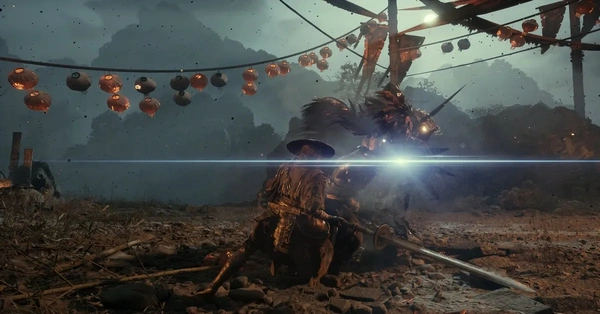
The Reality of Controllers: Camera, Collisions, Unreadable Bosses, and Balancing That Frustrates Even at the Lowest Level
The result, unfortunately, is very, very inconsistent, at least with the build we were given. Let's start with the difficulty level. The developers promised that the game wouldn't be too difficult, which is curious for the genre, but in practice, it didn't turn out that way; in fact, unfortunately, it was an unbalanced and frustrating experience, but let's understand the details better. The animations are part of the game's enjoyment, a majestic fluidity of blade dances and choreographies worthy of a circus show, but it's a shame that many of these are ends in themselves; a gameplay more stripped of all your or your opponents' movements would have helped the action to be more readable, and often it's not at all.
You often won't understand what or how you are being attacked or how to predict moves; we even experienced lag at the moment enemies attacked (this often happened with bosses), with those few frames that, instead of helping you channel your hits better, made your counter-move much more complex to execute. Dodge, parry, and counterattack are fundamental and within very tight timings, ingeniously used dynamically and how they engage the player's brain, but with the flaws highlighted above and the difficulty of correctly interfacing with the contexts you'll be engaged in, you'll find yourself not understanding what you're doing or what your opponents are doing. Common enemies are all too simple to defeat and with very few stimuli or totally incomprehensible.
If they attack you en masse, you won't know how to deal with them, or they'll attack you from behind, and you won't know they're doing it, due to a camera flaw, and while you might overlook it for some encounters, when they are numerous and lethal, it completely changes the game. The attack-defense premises then mix (poorly) with the enemy assault patterns, resulting in just a big mess of punches and blows, but the entire choreography is aesthetic but poorly cohesive with the action. Imagine the magnificence of Ninja Gaiden 4 or Wukong and how everything blends perfectly; here, we are very far from an optimal result. The scenarios also seem a bit self-contained, beautiful to look at, but full of invisible walls where you can't advance, you constantly get stuck in architectural structures while moving around, or even worse, this happens during fights.
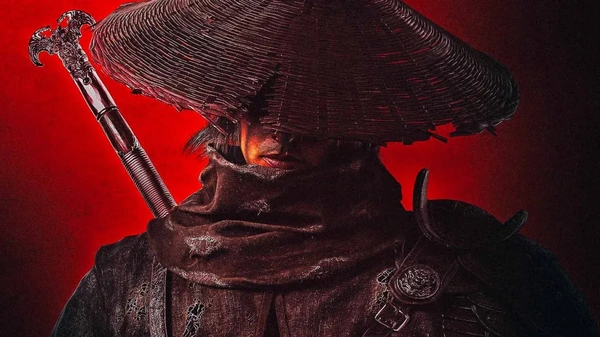
Despite what has just been highlighted, one cannot fail to emphasize the effort put into the bosses: unique, requiring attention, reading, commitment, very deep and on paper magnificent and ideally beautiful to understand, even before facing them, where behind every battle, study and attention are required. Unfortunately, at the moment, however, they are almost always frustrating and unreadable even at the lowest difficulty level – which is absurd when it is expressly indicated that it should be almost exclusively for story mode. The graphics then jump from incredible quality to scenarios that seem to have come out of a PS4 game, with very little cohesion in this artistic work, despite the fact that often you will find yourself surprised by some landscapes or grimacing at a profound repetitiveness of the same structures.
Despite the initial trailers and the latest presentations showing a fluid and dynamic game, this is very different from what we were given. I am certain that the flaws, many, too many to be ignored, can be resolved, perhaps by transforming the game design which, for now, was perhaps a beta version that revealed very little of the presented structure, but which cannot be ignored at the moment. A deep and fun game but one that perhaps would have needed another year of work to smooth out all the rough edges, a great pity, but keep an eye on it, I am sure it will evolve into the masterpiece we all expected.
Score
Editorial team
Phantom Blade Zero PC Review: S-GAME's Kungfupunk Promises a Masterpiece but Buries it Under Too Many Flaws
Similar articles