My Hero Academia: All's Justice Does Justice to the Anime
Byking's third fighting game chapter expands to embrace the entire universe of the saga
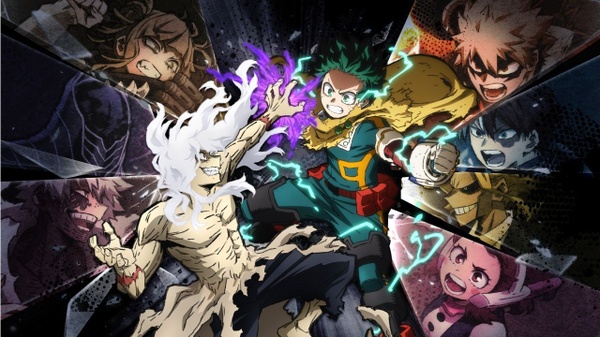


There is no term that better describes the entertainment of these early years of the millennium than "synergy," the password to unlock any project, a chain of productions and different media linked together whose benefits have not always been clearly seen. Rarely, however, has there been a more precisely calibrated and executed example of the anime and video game adaptations of My Hero Academia, which have reached their final dance practically simultaneously. While Final War Arc, the eighth and final season of the My Hero Academia anime, closed 2025 with its last episodes, leaving room for a special scheduled for 2026, in a few days My Hero Academia: All’s Justice, the third and final chapter of the trilogy (following My Hero: One's Justice in 2018 and One's Justice 2 in 2020) will arrive on PC and consoles, re-proposing the homologous events of the anime in a fighting game style, in addition to adding a good deal of other content, which after the preview a few days ago we have now been able to try in its final version.
My Hero Academia: All’s Justice is the Apex of the Saga
My Hero Academia: All’s Justice thus arrives at the culmination of the saga, the last chapter of the video game trilogy as well as a kind of concluding act for My Hero Academia as a whole. This need to put an exclamation point is somewhat felt, for example, in the vast roster of heroes and supervillains, which includes practically every character who has appeared on the pages of the saga, or the refinements to the combat system (in some aspects much more than refinements, such as the introduction of 3v3 battles or the Rising bar) up to the Story mode that reproduces the final saga by linking together cutscenes that recall the anime and gameplay sequences. Its most evident limit is that it is "stuck" in the franchise, speaking to an audience that is now perfectly at ease among the numerous characters and slowly intertwined stories of My Hero Academia, while trying to be attractive to players outside the circle.
It is in this light that the dual combat system proposed should be understood, in which one of the two modes allows you to essentially use only one button for each action, letting the CPU translate it into the most suitable command for the situation. A good way to level the entry barriers that a new player would face when approaching My Hero Academia: All’s Justice without any experience of the previous ones (or even the manga/anime). For more experienced players, however, once full control of the combat system is gained, My Hero Academia: All’s Justice offers an intriguing challenge, with good doses of strategy linked to the timing of using Rising and Ultra, but also in the combination of Quirks among the different elements of the available trio. Nothing to shout about a revolution, but a solid, gratifying combat system, decently supported by the technical sector with arena destruction, as well as a coherent evolution of what was seen in previous iterations.
At the End of the Story, There's Another Story
Defining My Hero Academia: All’s Justice as "just" the apex of the saga is ultimately limiting: it is in some way its end and its overcoming, its celebration and a wish for a long life. So much care has been put into the Story Mode, especially in the attempt to guarantee players continuity in terms of sensory experience with the television counterpart, replicating its style and also enlisting the original voices. But this still represents only a part of a much larger game, which includes numerous other modes, several of which are equally substantial and built on unpublished materials that enrich the mythology of My Hero Academia and its narrative universe. A good part of the game takes place outside the section that hosts the Story Mode and is explorable through a mini-open-world of city dimensions that serves as a hub connecting the other different modes. Team Up Mission comes from a My Hero Academia paper spin-off and uses the direct connection to "canonize" the 3v3 formula through small missions that offer the game an almost adventure dimension, without betraying its fighting game backbone.
Hero’s Diary also plays its role equally well, a mode that even expands and extends the universe created by Khei Horikoshi through small and light mini-quests dedicated to a long list of characters not necessarily chosen from the most famous of the series, who often play on small daily situations resolved with irony on which to build small new bricks in the relationships between the different characters. Finally, it is worth spending a few words on the tutorial, which is clear, well-made, and complete, indispensable for those approaching the series for the first time and finding themselves face to face with a combat system that is not necessarily difficult, but also not to be underestimated if one truly wants to master every single aspect.
Score
Editorial team
My Hero Academia: All's Justice Does Justice to the Anime
There could be no better conclusion for My Hero Academia than My Hero Academia: All’s Justice, a game worthy of the epicness of the Final War Arc, the anime's last saga. Byking Inc.'s latest effort for Bandai Namco is a grand celebration for the conclusion of a trilogy and the end of the animated series, but also an attempt to demonstrate that there are still stories to tell in the My Hero Academia universe. Its main flaw is fundamentally an intrinsic characteristic: it is the third chapter that tells the end of a story begun on another medium many years ago, its target is necessarily limited by this choice, but it must be acknowledged that the game does its best to make everyone feel welcome.
Similar articles