Death Howl: Review of a Tactical Game with a Retro Flavor
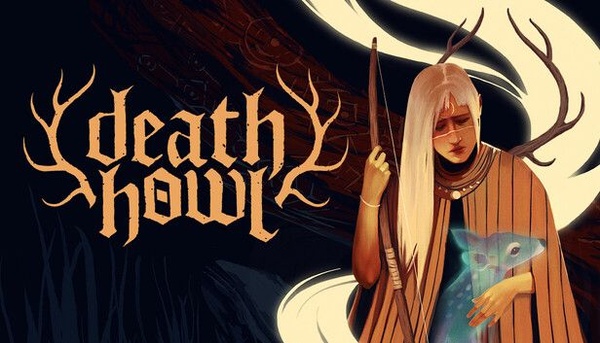


Ro, a mother devastated by grief, embarks on a journey into the spirit world to bring her son Olvi back to life, encountering mystical creatures, cryptic rituals, and an ancestral spirit embodying the cycle of death and rebirth; the narrative, inspired by Scandinavian Neolithic folklore, is deliberately fragmented and silent, allowing for interpretation while maintaining a palpable emotional tension that accompanies every sacrifice and encounter (clash).
The Essential Traits
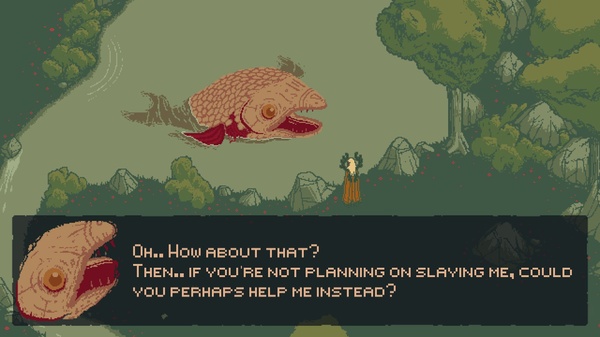
Death Howl's graphics are a key element in conveying its dark and disturbing identity. The team chose deliberately imperfect pixel art, with broken lines and visual glitches that evoke instability and tension. The color palettes are dominated by dark tones, with violent contrasts that emphasize the desolation of the landscapes and the fragility of the characters. Every environment (even the map to consult) is designed to tell a story: spectral forests, ritual altars, and deformed creatures merge into scenarios that seem to have emerged from a folkloric nightmare. The use of dynamic effects, such as distortions and vibrations, amplifies the sense of unease, while the animations, though essential, manage to convey strong emotions, especially in moments of sacrifice and combat. The artistic work aims to amplify a sense of unease, as well as to build a world that breathes pain and mystery, where every pixel becomes part of a visual narrative that accompanies the player on a journey that is as aesthetic as it is emotional.
A Few Steps on the Grid
The heart of Death Howl's gameplay is a refined fusion of tactical strategy and deck-building, which unfolds on a grid where every movement and every card played carries such fundamental weight that the difference can change the outcome of battles. The combat system is not limited to a simple exchange of blows: it requires planning, resource management, and careful evaluation of positioning, because the arrangement of characters and the use of action points directly influence the outcome of the clash.

The variety of available cards, over 160, introduces considerable depth, allowing for the creation of complex synergies and adapting one's playstyle to the challenges posed by different biomes, each with varying costs and conditions. Added to this is the constant tension generated by the bosses, who are not just obstacles but true tests of strategy, capable of challenging the player's ability to use every card and every movement with surgical precision. The learning curve is steep and you die often (on average every two encounters, at least at the beginning), but in this way, you collect resources that can be used to power up cards and thus make subsequent encounters more achievable.
Its repetitiveness is not necessarily a weak point, but the lack of variety in encounters and tactical logic takes away a good part of the desire to replay. The resource-card management part is certainly interesting, but few of these are particularly stimulating, although they still offer fun on the field. Another drawback is the quantity of enemies and patterns, but it is still sufficiently inspired, especially in the more advanced levels.
Score
Editorial team

Death Howl: Review of a Tactical Game with a Retro Flavor
Death Howl is a game that deserves attention, certainly for its story, which, while not entirely original, is well-narrated, and its gameplay is partially satisfying, even if its shortcomings are somewhat typical of the genre; if you can't maintain interest in the repetitiveness of the action, the risk of losing attention is high.
Similar articles