Assassin's Creed Black Flag Resynced Review
The West Indies have never looked so good


The era of piracy is one of the favorite settings in narrative in all its forms, yet at the same time, it is also one of the least faithfully represented. Pirates, usually described as brutes with rough manners, but also with abundant charm and charisma, probably were all of this, but not only this. Piracy is a practice known to humanity since the invention of boats (and is still practiced today), but the one that entered the collective imagination, the one that arose amidst the clamor of chronicles simultaneously with the rise of modernity, had a different characteristic: the pursuit of freedom.
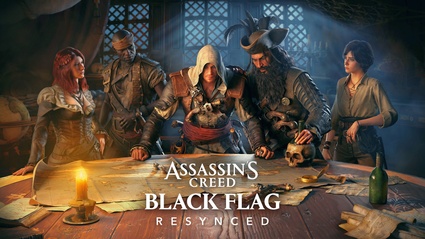
In a world where governments and corporations began to impose social and economic control through the exploitation of new lands, for some, piracy was a way to escape the stringent rules of the new society that was emerging. For many, the dream was of a land where every man could be free, regardless of his birth status, and part of a community based on sharing. Not all were criminals, but many were dreamers. Including Edward Kenway, the protagonist of Assassin's Creed Black Flag Resynced, a remake of the piratical chapter of the saga that pits Assassins against Templars, originally released in 2013 and now returning with a new look completely remodeled for the occasion.
Gallery
The Beauty of the Caribbean in Assassin's Creed Black Flag Resynced
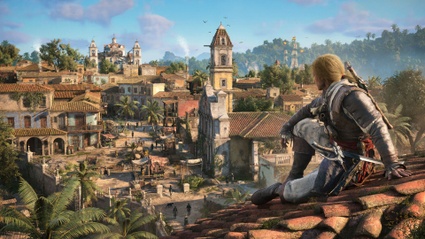
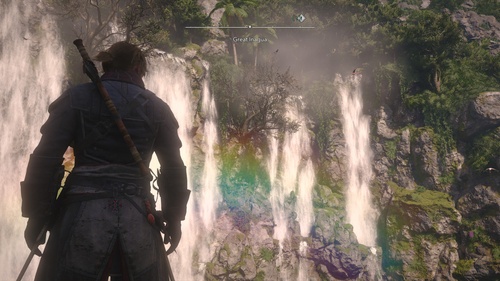
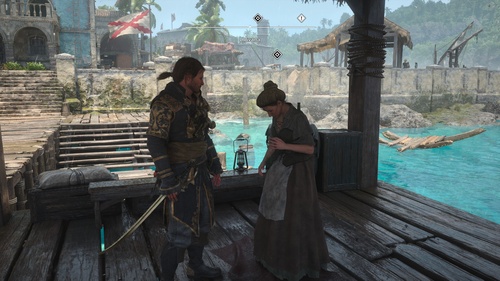
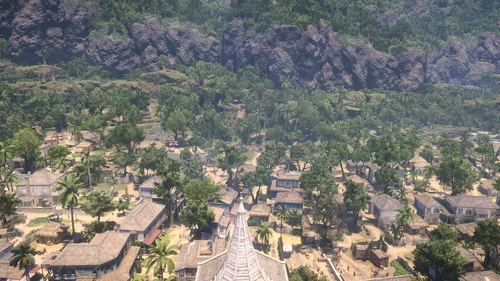
It's impossible not to start by talking about the beauty of the settings in Assassin's Creed Black Flag Resynced: the transition to the Anvil Engine has given Edward's adventures a graphical leap that places them among the most impressive experiences ever witnessed through a monitor. The great protagonist is the sea, a turquoise expanse that kisses enchanting white beaches, capable at the same time of quickly transforming into a churning of waves, while a suddenly dark sky is crossed by terrifying flashes of light and sudden lightning. And when you set foot on land again, the wonder doesn't diminish, quite the opposite. Among the green and lush Caribbean vegetation constantly stirred by the winds from the sea, the fauna of the islands moves. On the shore, placid turtles leave lazy footprints in the sand, while venturing inland, menacing crocodiles and imposing hippos roam warily, aware of being the apex predator of the area.
It's better then to get lost in the dusty alleys of Havana, among perimeter walls decorated in characteristic pastel shades and the elegant colonial facades of the houses, rich in decorations that can serve as handholds for climbing. And even nature is no less impressive: the most striking detail is probably the fidelity with which rocks and small islets emerge from the waves, but also the depth of field and the detail with which elements in the distance can be discerned evokes sincere astonishment. Net of the obvious reduced distances, whereby navigating between Havana and Kingston is a matter of minutes and not days, Assassin's Creed Black Flag Resynced is one of the most impressive graphical experiences of this generation. And it's natural to share the same wonder as the men and women who, centuries ago, from a creaking wooden boat from Europe, found themselves facing these paradisiacal scenarios for the first time.
Improvements in Assassin's Creed Black Flag Resynced
Obviously, the aesthetic retouching is not the only adjustment that this Resynced version has reserved for Assassin's Creed Black Flag, a title with a couple of gaming generations under its belt. Simplifying, one could say that Ubisoft Singapore (and the many other studios around the world involved in the project) has updated Black Flag to the modern formula, but the adjustments are so many and varied that it's worth mentioning at least some of them. The most influential is undoubtedly the ability to crouch and the revision of the stealth system. Since the architecture of the West Indies does not allow for great vertical excursions, being able to exploit the numerous wild bushes, plantations, but also the shadows offered by columns or the protection of the night (and even the rain!) greatly expands the options for engaging the enemy.
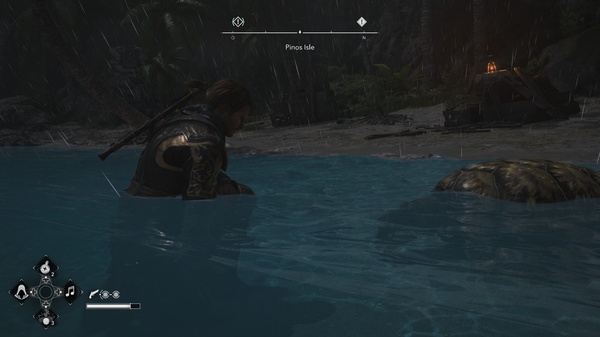
The combat has also been profoundly revised, introducing several new moves (and even a kind of Scorpion-like harpoon from MK) which, if landed, can lead to quick takedowns (each with its own rather bloody animation). Since the enemies have learned to move in groups since the original, although always attacking one at a time because honor comes first, parrying now carries new weight, and if executed with timing, it can also lead to an immediate takedown, even against the most imposing enemies.
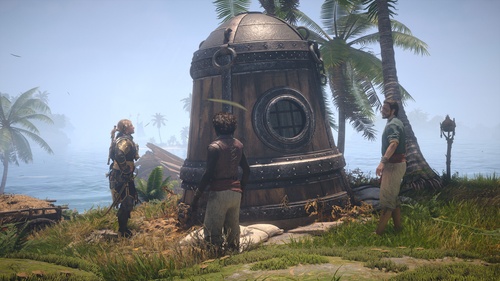
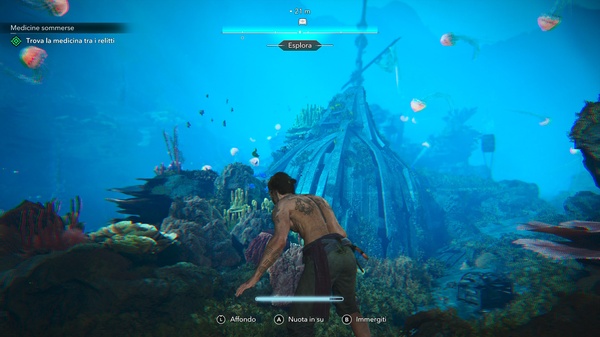
On the additions front, however, the diving bell expands the explorable areas below sea level in Assassin's Creed Black Flag Resynced. This is a tool equipable on the ship that allows for maintaining an underwater air chamber that Edward can access to catch his breath and thus extend his diving time in search of treasures among shipwrecks. Personally, I found the underwater sessions a bit claustrophobic, but beyond personal discomforts, the seabeds are undoubtedly fascinating and as teeming with life as the emerged portions of the map. And speaking of the map, this too has been revised, with new areas and new islands not present in the original version, but also several new sets of collectible missions, contracts, activities, crew members to hire, Templars to hunt...
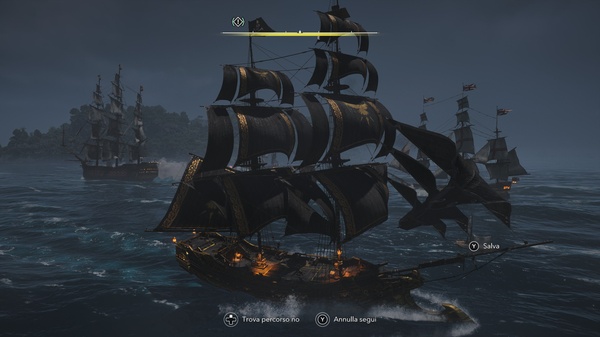
Related to the removal of the original Black Flag's present-day subplot are the Fractures, alternative gameplay sections set in the Animus with a strong platforming vocation whose narrative is linked not only to Edward's story but also to the saga's broader mythology. Minor, however, are the tweaks to naval combat, which can be summarized by the introduction of secondary attack modes for weapons: clashes with the ships of European kingdoms remain the cornerstone of the game, always delivering furious and entertaining engagements.
Assassin's Creed is Still Itself
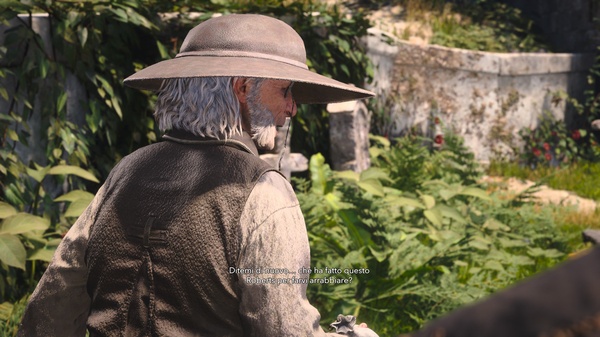
For better or worse, Assassin's Creed Black Flag Resynced has strong traits of continuity with its more recent predecessors. There are a few bugs, from physical glitches to NPC dialogues changing language (Ubisoft is already preparing a patch to further refine the game closer to launch), but nothing that affected the experience or even forced a mission restart. But it's the vastness of the scenario and the endless secondary activities that approach the saga's more recent philosophy. In this sense, the masterful work done on sea travel (not as fun as in Sea of Thieves, but still always fascinating) helps to give a sense of cohesion to the game experience (a big leap compared to Valhalla). However, the quantity of information and requests one is overwhelmed by remains certainly bewildering, and due to a not-so-simple management of tags and markers on the map, one sometimes feels a bit lost.
Adding to the disorientation is also a certain amount of friction between the narrative component (not bad, but not too deep either) and its gameplay translation: why would an Assassin wait for us on a desolate rock, patrolled by Spanish galleons no less, only to then await us in the next sub-quest at the tavern on the next island? And while the ability to automatically follow the character who accompanies us from one point of the mission to another is certainly appreciated, after the tenth occasion of spending minutes observing automatic walks that serve as exposition, the suspicion arises that a more elegant solution could have been found.
On one hand, the work done by Ubisoft Singapore in terms of technical updates and adjustments to the original Black Flag's mechanics is remarkable. Assassin's Creed Black Flag Resynced is worth a few hours of gameplay just for the experience of sailing the sea under the Caribbean sun while black clouds suddenly gather and a squall throws our ship among waves as high as the mainmast, or of rounding an unspoiled island and finding oneself facing English and Spanish vessels engaged in sudden maneuvers while incandescent cannonballs trace arcs between their respective positions, and a whale emerges for a few seconds nearby before diving back into the waves. From another perspective, however, one could have hoped for a greater dose of courage in exploiting the opportunity of a remake to make the gameplay formula take another leap, as happened with Resident Evil (albeit under quite different conditions). Instead, Assassin's Creed Black Flag Resynced is "only" a chapter that raises the technical standard of the saga and perfects a well-established formula without major upheavals.
Gallery
Score
Editorial team
Assassin's Creed Black Flag Resynced Review
Assassin's Creed Black Flag Resynced is an excellent remake that preserves the spirit of the original and expands upon it, combining the philosophy of the saga from that era with its more modern evolution. The reproduction of the settings is astonishing, but in reproducing the saga's more recent formula, it could have dared a bit more. It takes the AC saga a step forward technically, but settles for a gameplay that's already been seen and with few leaps.
Similar articles