Whisper Mountain Outbreak, a perfect horror game to play with friends
Pixel art nostalgia meets immediate co-op experience
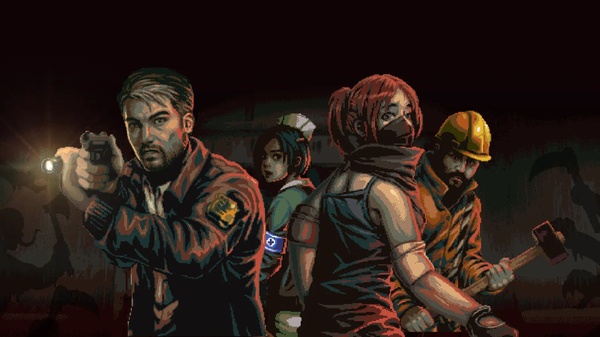


What happens when the management mechanics and claustrophobic tension of a classic survival horror, like the early chapters of Resident Evil, meet the need for collaboration and the frenzy of a co-op title? The answer is Whisper Mountain Outbreak, a courageous but, I anticipate, successful experiment: developed and published by Toge Productions, it is set in 1998 and throws us into the heart of the night on Mount Bisik, where an ancient horror has been awakened. Enveloped by an relentless fog and threatened by grotesque creatures, players are called to fight for their escape, in an experience that manages to be both fresh and deeply nostalgic. This title does not just aim to scare, or at least not in the conventional sense of the term, despite including some occasional jump scares, but rather to force players to depend on each other in every single, agonizing decision.
A small, great pixel art horror
The visual impact of Whisper Mountain Outbreak is undoubtedly one of its greatest strengths and a central element in its ability to generate tension. The developers have managed to create a retro 2.5D graphic hybrid that draws heavily from the raw charm of past consoles - and we have already seen this in titles like 2Dark, which is now a few years old. The characters are pixel art sprites, with a style that immediately evokes a sense of familiar nostalgia, but this contrast is intelligently used against the player.
The environments, in fact, are made with low-poly 3D models and the entire action takes place through a rigid isometric perspective. This framing is not accidental: it is a deliberate filter that constantly narrows the field of view, making every blind spot a potential hiding place for enemies. Darkness is the real protagonist: light sources are rare and often provided by flickering flashlights, amplified by the persistent fog that covers every area and prevents clear vision of what lurks a few meters ahead. This skillful management of light and framing, combined with the peculiar design of the monsters - some also inspired by Indonesian folklore - demonstrates how photorealism is not the only solution to instill a sense of the grotesque and oppressive paranoia. The result is an aesthetic that is simultaneously fascinating, for its stylistic coherence, and unsettling.
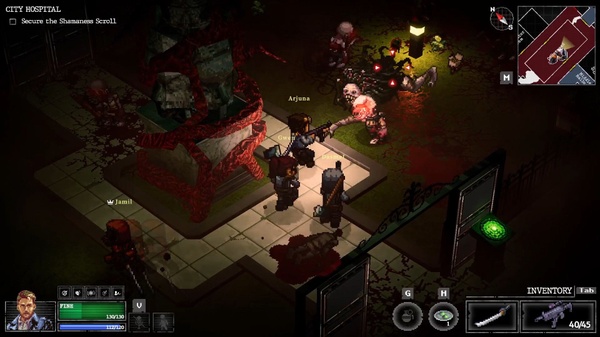
Completing the effectiveness of the retro graphics is excellent sound design, crucial for understanding what you are getting into. The game's title itself evokes whispers, and ambient audio is fundamental in establishing tension. The whispers heard in the distance, the sudden noises of broken glass, or the metallic clang of larger enemies moving through corridors, all contribute to a perfectly fitting soundtrack that increases player tension. The soundscape is crafted in such a way that every floor creak or the distant cry of a companion via the integrated proximity voice chat becomes a stress element not to be underestimated. Hearing the heavy footsteps of a creature larger than the usual infected approaching while you are busy deciphering a code is a perfect example of how audio amplifies the sense of danger.
An Escape Room-like gameplay model
The beating heart of Whisper Mountain Outbreak lies in its intense gameplay loop, which successfully balances exploration, puzzle-solving, and survival combat. The game is configured as a PvE for up to four players where teamwork is not optional, but the only way out. You can also play alone, however, the challenge level grows exponentially, especially in the face of the hordes I will talk about shortly; even more so if these are your first games and you don't know, rightly, what to do or where to move, every second lost is an invitation for the creatures around you to come forward en masse.
Missions take place in settings like abandoned hospitals or infested markets, as well as an always iconic police station, and require the retrieval of key items or the solution of more or less complex puzzles before being able to proceed with the extraction of our valiant characters. These "escape room" sections are a clear tribute to classic management horror: decoding combinations, restoring electrical circuits, unlocking complex locks, or finding access badges are commonplace. Often, solving a puzzle requires the team to split up to gather separate clues, such as deciphering a code found in one area to unlock a safe in another, elevating the level of communication and coordination required.
However, the pressure does not come from the cerebral difficulty of the puzzles, but from the fact that you are constantly in danger. Threats arrive in periodic waves, forcing the group to interrupt puzzle-solving to defend themselves and heal, transforming moments of apparent calm into terrifying races against time. I remember perhaps one of the most tense moments, where my partner and I had to get the access password to a computer in the police station: I was in front of the computer giving him the clues, he was in another room to cross-check and try to give me the solution, all while we were aware of an incoming horde (sound is crucial here) and that we would face it separately. Just a few seconds before it started, we unlocked access, got the code for the armory, and ran to the location, reuniting only shortly after the horde had unleashed itself and managing to survive by a narrow margin.
Crucial for survival is resource management, intentionally restricted and punitive. Ammunition, melee weapons, and healing items like "green herbs" are limited, and the crafting system forces strategic choices. With a restricted inventory, players must constantly decide their next moves rather quickly, even facing the difficult choice of leaving resources behind because they don't have space or it's not worth creating it forcibly. These tactical dilemmas are amplified by the constant presence of hordes. The game calibrates its threats so that there is never a moment of true rest, pushing for frantic exploration and calculated risk. In all this, exploration is crucial not only for the success of the mission itself but also for obtaining materials with which to upgrade ourselves, once at base, and consequently be able to build ever better equipment before setting off on a new assignment. Inventories at the base are not shared, nor are collected resources, which is why each player can move autonomously, and with eventual synergy, without running the risk of spoiling someone else's plans.
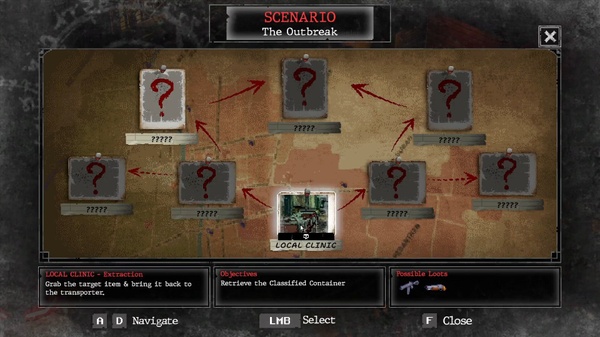
Combat is made complex by the variety of enemies and the clunky feel of firearms in an isometric view, which emphasizes the player's vulnerability. There are not only slow infected; you encounter creatures that attack from a distance with toxic substances, giant "Crawlers" that try to immobilize with surprise attacks, or armored enemies that require concentrated fire or the use of explosives. Each type demands a different tactical response, making it essential for the team to have a balanced and well-coordinated arsenal to avoid being overwhelmed, or consuming too many resources.
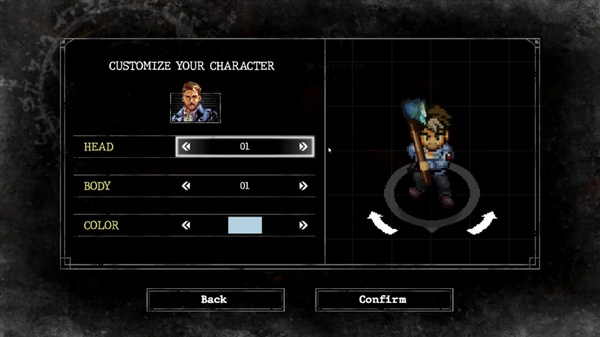
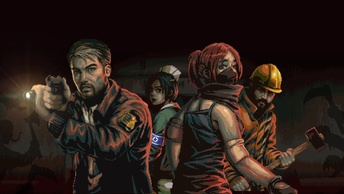
The introduction of roguelike elements gives the title depth and replayability. The randomization of classes at the start of each run is what prevents the game from becoming repetitive. If you get support-oriented classes (like the Medic, essential for prolonged survival) and classes with high melee damage (like the Firefighter), the team must adopt a more cautious and strategic approach. Conversely, with an emphasis on aggressive classes or those with firearm bonuses, you can aim to clear areas quickly. The ability to learn new skills, as I mentioned above, and to apply the experience gained between missions also ensures a sense of long-term progression and empowerment.
Developers open to user feedback
It is essential to note that the landscape of Whisper Mountain Outbreak is constantly evolving, and the developers have shown to actively listen to community feedback, particularly regarding initial critical issues. The first significant update introduced a series of crucial improvements that strengthen the overall experience and quality of life. The most anticipated was undoubtedly the implementation of the save/load function, a vital addition that mitigates the frustration of losing progress in long runs, especially for solo players who previously found themselves facing particularly long and frustrating sessions. This intervention resolves one of the major obstacles to accessibility.
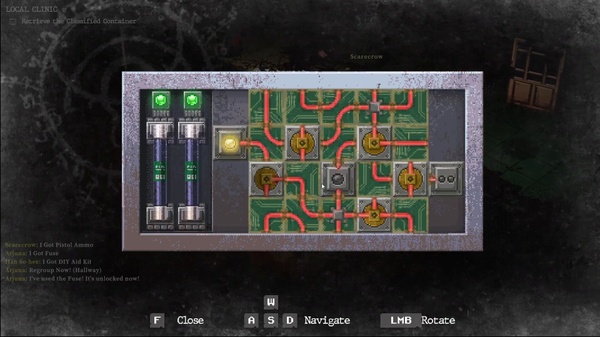
In parallel, the introduction of Quick Join has significantly streamlined the matchmaking process, allowing players to dive into co-op action more quickly and smoothly, encouraging shorter and more dynamic game sessions. Other improvements have also been implemented, such as the ability to freely zoom and drag the map for better navigation, Steam Cloud support for progress synchronization, and a rebalancing of enemy scaling in defensive waves. These interventions demonstrate a clear intention to refine the experience, making it less punitive and more fluid, while maintaining the high level of difficulty typical of the genre. Looking at the updates page, you can also get an idea of the interesting future implementations.
Whisper Mountain Outbreak, a perfect horror game to play with friends
Ultimately, Whisper Mountain Outbreak is an excellent example of how to honor the past while offering a modern, co-op focused experience. Although Early Access showed some initial critical issues, now largely mitigated by the first updates, the game shines when played with friends, offering a tense and rewarding experience that will delight low-resolution horror fans. It remains to be seen how the balance will evolve for future classes and content.
Similar articles