Five Things to Know Before Playing Nioh 3
Preview and opinion on the Nioh 3 trial, Team Ninja's new title. 5 things you should know before playing it.


In recent years, Team Ninja has dedicated itself to a series of experiments with titles like Rise Of The Ronin, Stranger Of Paradise, Wo Long, and Ninja Gaiden 4, which hinted at a willingness to explore new ideas and mechanics, with results sometimes successful and other times less so.
It’s no surprise then that the announcement of Nioh 3 during the State Of Play in June 2025 sent more than a shiver down my spine.
The first two Nioh games are true gems that interpreted the soulslike genre phenomenally, and knowing that the third installment would have a series of new features made me dive into the demo released immediately after the State Of Play; which left me with good impressions but also some doubts.
Consequently, as soon as I received the review code for Nioh 3, I plunged into the game world, and after spending dozens of hours dismembering Yokai, I am happy to write that Nioh 3 has exceeded all expectations.
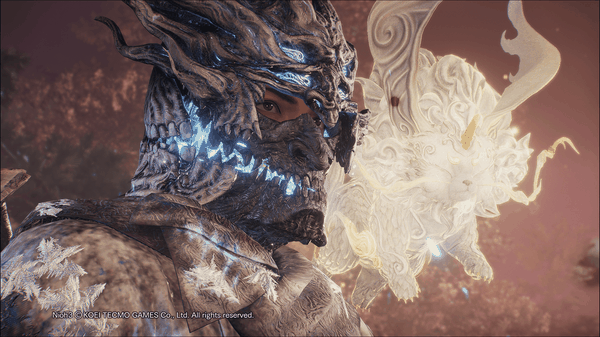
The new title in the saga brings with it a whole series of innovations that ensure Nioh 3 is not just a sequel to the first two chapters, but the evolution of these towards something bigger and more authentic.
Nioh 3 maintains its strong foundations that nod to the soulslike genre, but also manages to open up to those who don't get along with it; all while maintaining and strengthening a very strong identity that sets it far apart from the many other "more of the same" soulslike games.
Since the full review is still a few days away, I want to satisfy your hunger for Yokai with 5 things you should know before playing Nioh 3.
Explore with Open Maps in Nioh 3
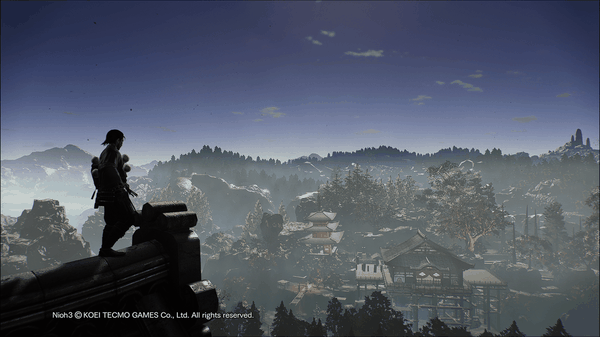
One of the biggest innovations in Nioh 3 is the presence of open maps freely explorable by the player.
Each of these maps will represent an area of Japan in a specific historical period, offering an architectural and cultural representation of the country in that specific era.
The maps will be divided into areas, each with its own level – which helps and guides exploration – and a series of things to do and secrets to uncover.
Given the generous size of the various maps and the absence of means of transport, fast travel between the various shrines we unlock will be immediately available; a mechanic that will also allow us to save game progress and refill our health bar, but will also revive all defeated enemies.
Nioh 3's open maps are incredibly fun to explore as they are packed with things to do.
We can enjoy liberating villages occupied by Yokai or enemy bases full of soldiers, facing a series of master swordsmen looking for one last glorious challenge, defeating supreme Yokai roaming through the various forests, or dedicating ourselves to the various side missions that will make us discover more about the devastation that has struck those lands and the fate of the people who inhabited them.
The Crucibles
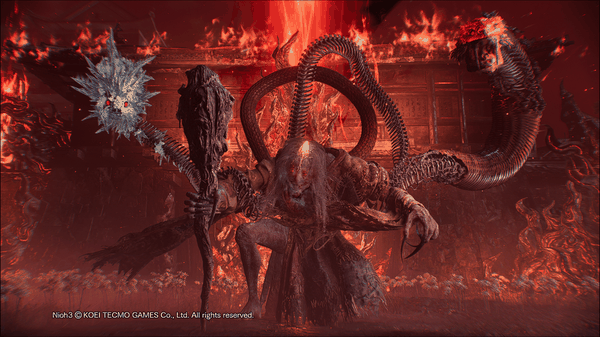
Every map we explore will have a Crucible that allows Yokai to infest those lands.
Crucibles are areas where the demonic realm has taken over and those trapped within must contend with the Yokai that inhabit them.
Our task will be to enter the various crucibles, fight our way through the various demons with slashes, confront whoever or whatever is behind the crucible, and purify it.
The Yokai found within the crucible are much more powerful than those normally roaming around, and some of them will also possess a series of abilities capable of giving us more than a headache.
However, our ability to use various skills will also be greater when fighting in the crucibles.
The presence of more powerful enemies is not the only characteristic of these places. When we are inside a crucible, our character will receive a corrosion of the health bar which will reduce its total.
To restore it, we can defeat the various enemies present in the crucible, use special items, or recover previously lost Amrita.
In the crucibles, it will also be possible to find a series of weapons belonging to the demonic world that are particularly effective there, but at the same time, for every hit made, our health bar will be reduced.
It should be noted that each crucible we encounter will have a series of different environmental characteristics and challenges; a factor that significantly increases the level of challenge and fun.
A Dual Combat Style in Nioh 3
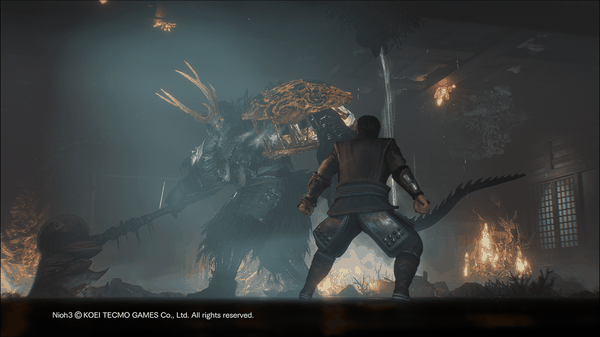
Nioh 3's gameplay follows the path laid out by the previous two installments. We can perform quick and heavy attacks that consume a certain amount of Ki (stamina) or parry and dodge enemy attacks.
However, it is precisely in the gameplay that Nioh 3's second major innovation lies; the game introduces no less than 2 combat styles: that of the samurai and that of the ninja.
The samurai style looks to the tradition of the saga and is based on heavy weapons and stamina management, typical of soulslikes, while the ninja style looks more to the Ninja Gaiden saga, with fast and dynamic attacks, almost reminiscent of a hack and slash.
Choosing one style or the other will not compromise our game as it is possible to switch between styles at any time; which allows for many different combinations.
Team Ninja also seems to want to push players to use both styles as much as possible, so much so that some enemy attacks can only be blocked by switching from one style to the other at the right moment.
Double style, double the fun.
Exaggerated Loot and Equipment

One of the characteristics of the Nioh series is the presence of a lot of different equipment; in Nioh 3, it is necessary to manage equipment for both the samurai and ninja styles, assigning a main weapon, a ranged weapon, armor pieces, and usable items to each.
Once again, the game encourages players to try as many combinations as possible through a decidedly generous looting system.
Almost every enemy, even the most common ones, tends to drop weapons or pieces of equipment, with some even dropping entire armor sets. So much so that after a few hours of gameplay, your menu will be packed with items...
Navigating this abundance might intimidate those new to the Nioh series, so my advice is to use the first few hours of gameplay to try everything you get your hands on and then decide which weapon types suit your style and build a series of builds around them.
Items, however, are not the only thing present in excess; Nioh 3 also offers an enormous quantity of abilities.
Each weapon type has its own skill tree, to which specific abilities for the samurai and ninja styles must then be added.
As if that weren't enough, there are also the souls of defeated Yokai that can be used in Onmyo Boxes, giving the possibility to summon said Yokai or to create various items.
To all this must then be added the various moves, the blessings of benevolent Yokai, the titles received based on our reputation, and much more that will help us transform our character into a living war machine.
Discovering the History of Japan
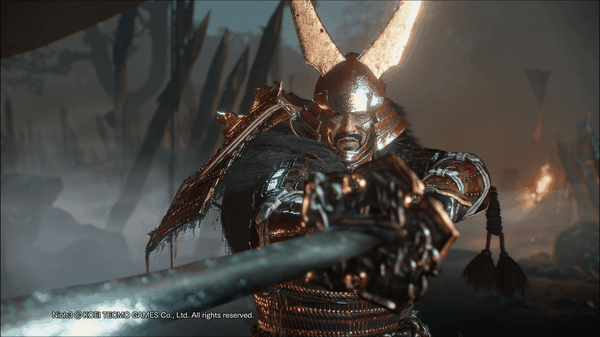
Nioh 3 introduces a new protagonist, Takechiyo Tokugawa, and does so by placing him in real historical events that affected Japan.
The story begins in the year Genna 8 (1622) and takes us within the walls of Edo Castle (old name for Tokyo) in the midst of the ceremony for our appointment as Shogun.
The castle is suddenly attacked by an army of Yokai led by Takechiyo's brother, Kunimatsu, who, blinded by jealousy, has been devoured by darkness.
The clash with Kunimatsu does not go in our favor, however, just before receiving the killing blow, a mysterious force saves us and drags us back in time, to the Warring States period (1572) where Ieyasu Tokugawa is about to clash with Takeda Shingen, who has an army of Yokai on his side.
We soon discover that our savior was Himiko, who explains that behind Takeda and Kunimatsu lies her brother Hiruku, King of the Yamatai Kingdom, who, consumed by the will to conquer, has sent his clones through time to take control of various influential figures in Japanese history.
With Himiko's help, we will therefore find ourselves visiting a series of historical periods of Japan, such as the aforementioned Warring States period, the Heian period (1190), the Yamatai era (247), and the Bakumatsu period (1864), all with the aim of putting an end to Hiruku's actions.
Nioh 3 is Coming Soon

Nioh 3 promises to be a true revolution for the franchise, but also a test of maturity for Team Ninja, which seems to have learned from the experiences created after Nioh 2.
To speak of Nioh 3 as merely a soulslike is decidedly reductive because the game manages to bring to the table a quantity of unique and distinctive features and mechanics that allow it to break away from the rails imposed by the genre created by From Software and try to represent an evolution of it.
For now, we have to wait a few more days for the full review of Nioh 3, however, you can satisfy your hunger for Yokai by taking a look at the review of the demo we tried a few months ago, and by waiting for the next content regarding Team Ninja's new title.
Similar articles