Dragon Quest VII Reimagined, Our Preview
We tried out the video game.


There are video games that never stop being talked about, that remain etched in players' memories as fundamental chapters of an era. Dragon Quest VII is one of those titles. First released in 2000 on PlayStation, it represents one of the most ambitious episodes of the historic JRPG saga by Square Enix (then Enix). A huge project, it became famous for its off-the-charts longevity and for a narrative that took all the time it needed to grow, unfold, and surprise.
For those who experienced it on the first Sony console, Dragon Quest VII was a regular appointment with adventure: a journey through islands lost in time, brought back to life by solving mysteries of the past, while witnessing the slow reconstruction of a shattered world. A behemoth of tens and tens of hours, where every conquered piece of the map told a unique story, often melancholic, but always capable of leaving its mark.
Over the years, this chapter has become almost a myth: for some, a timeless masterpiece, for others, a difficult title with a sense of time passing, but no one can deny its historical weight in the saga. Precisely for this reason, over time, new attempts have been made to introduce it to younger generations, with a remake for Nintendo 3DS and, today, with an even more ambitious project.
Dragon Quest VII Reimagined is much more than a simple nostalgia operation: it aims to bring the magic of the original game back into the spotlight, rethinking graphics, interface, pacing, and sensations to adapt them to modern standards, without betraying the spirit of the work. Because this is precisely the biggest challenge: to allow veterans to relive an unforgettable journey and, at the same time, give those who have never played it the opportunity to discover one of the most important JRPGs ever.
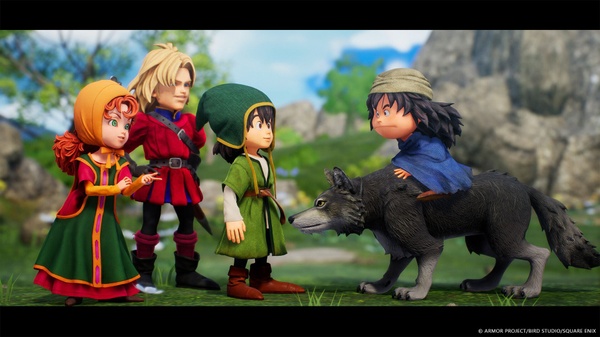
During a preview that took place in Bandai Namco's offices in Milan, we had the opportunity to play the title for about 90 minutes, just enough time to complete a couple of quests, face two bosses, and understand what to expect from one of the remastered titles of the year. But let's start with the controls.
The Controls of Dragon Quest VII Reimagined
The controls are easy and intuitive: the left stick moves the character, R1/L1 rotate the camera, pressing the right stick makes you sprint, square opens the map, triangle opens the main menu, and X interacts with the various objects and characters you will encounter during the adventure. Nothing could be simpler. During combat, the D-pad moves through the various menus, and the action button attacks or selects the magic or item to use. Here too, everything is as per tradition.
The Story of Dragon Quest VII Reimagined
Moving on to the story that underpins the game, Dragon Quest VII essentially tells the journey of a boy from Estard Island, the only known land in the world, who, along with his friends, discovers mysterious stone tablets that allow them to travel into the past, revealing that many other islands once existed but have now disappeared. Each temporal journey uncovers a place threatened by the forces of evil: by saving it in the past, the group brings it back to life in the present. Step by step, the world recomposes itself, and a plot unfolds that intertwines destinies, tragedies, and hope, leading to the final confrontation against an ancient evil entity responsible for the world's destruction. But don't worry, everything will be explained to you as soon as you start the campaign.
The missions were not difficult to understand and solve, especially because opening the map shows you the exact point where you need to go to follow the main story, making it impossible to get lost or wonder which of the dozens of characters on an island you need to talk to to progress in the game. In the first quest, we had to solve the mystery of the Cratrya Church and delve into a dungeon located inside a volcano (practically the first mission, so don't worry about any spoilers). In the second, we were further into the game with more powerful characters compared to the first mission, which was practically at the beginning. This allowed us to understand a few more abilities that unlock as missions progress and how to manage combat with significantly stronger characters and with more options and spells to rely on in various encounters.
First Impressions of Dragon Quest VII Reimagined Gameplay
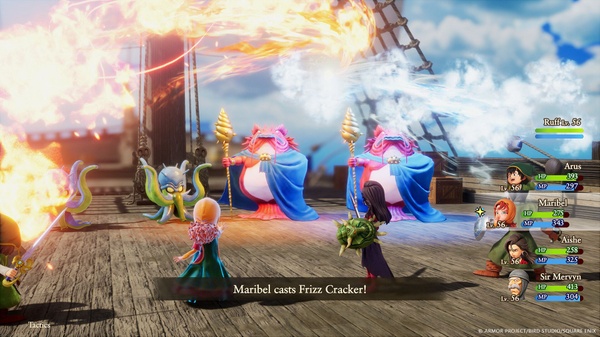
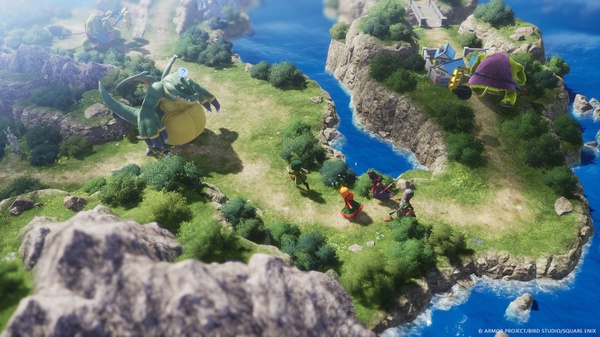
In the Reimagined version, Dragon Quest VII retains the soul of the original game: exploration and narration remain the true engines of the adventure. The maps are now richer and more readable, with a design that guides the player better without sacrificing discovery. The pace has been lightened, especially in the early hours, historically considered a slow start. Combat remains turn-based, simple but strategic, with smoother animations and an interface that eliminates clutter, making everything more dynamic. The tablet-related sections, the heart of the game, are finally clearer: finding the missing pieces is no longer an exercise in infinite patience, but a gratifying part of the journey. If we have to find any flaws, we noticed that boss fights are particularly long right from the start, and this could discourage someone who is forced to restart from the last save (fortunately right before the boss) to face it multiple times.
Remastered Novelties: What Really Changes in Dragon Quest VII Reimagined
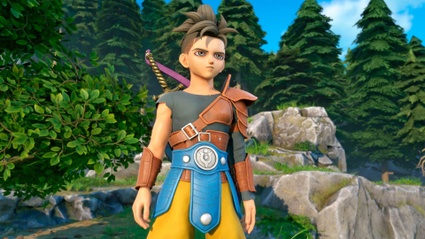
The graphics have been completely (and pleasantly) renewed, with characters and environments reimagined in a modern style but consistent with Toriyama's classic aesthetic. Italian voice acting is present, enriching the narrative sequences, while the interface has been redesigned to adapt to current platforms, with more intuitive navigation than in the past. A new health management system has been introduced, with clearer indicators of where to go in the mission, an automatically updated game diary, more immediate world traversal, and improved class management, which now unlock and develop with greater balance. After all, the stated goal was to bring out the charm of the original game by eliminating what could be annoying and frustrating flaws today. The ability to activate automatic combat by instructing the various characters on how to behave depending on the situation is also welcome. For example, you can assign the mage the task of healing characters who fall below a certain health threshold, tell the strongest character to attack relentlessly without worrying about injuries, while our main hero behaves in a more balanced way, conserving strength. This will save you time and often help you avoid frustration during combat with minor enemies in grasslands or dungeons, which for some could be frustrating in the long run.
Comparison with the Original
Those who remember the original will find this Reimagined version to be a more streamlined and less cryptic title, but no less profound. That sense of living a gigantic epic made up of many small stories has remained intact, and the islands brought back to life continue to be absolute protagonists, ensuring that each chapter of the story maintains its unique atmosphere. The difference is in the pace: more concentrated missions, fewer unnecessary returns to the same area, and fewer mandatory passages. It's still a classic JRPG, mind you, but with an eye towards those who today no longer have tens or hundreds of hours to invest in a single game.
What the Development Team Says
The team worked to enhance the emotional memory of fans, removing what weighed down the experience. The episodic structure was maintained because it was considered the very essence of the game; in fact, each island is a story in itself, with its subquests, its characters, its dramas, and its mysteries, where each of them contributes to the grand mosaic of the world of Dragon Quest VII. After all, the development team's priority was to ensure that those who have never played it discover it with wonder, while those who already know it can say: “yes, this is exactly Dragon Quest VII.”
DRAGON QUEST VII Reimagined will be available from February 5, 2026 for Nintendo Switch 2, Nintendo Switch, PlayStation 5, Xbox Series X|S, and PC via Steam and Microsoft Store on Windows.
Similar articles