Jarhead – Discovering the Universal 4K Edition
Native 4K material from a 500 ASA negative scan and the pleasure of the DTS audio track
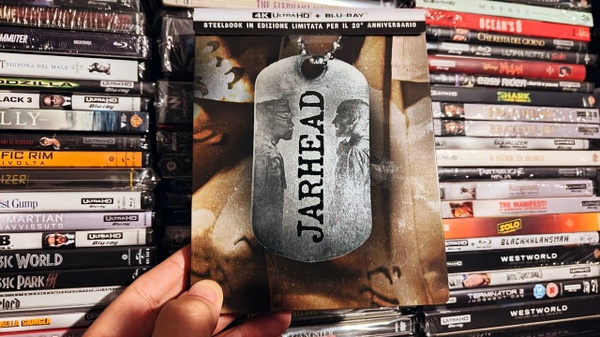


Jarhead is not a war film in the traditional sense of the term: it is rather a film about the waiting, frustration, and emptiness that war can generate in those who experience it without even truly fighting. Directed by Sam Mendes and based on Anthony Swofford's memoir, the film recounts the experience of a young Marine during the First Gulf War, focusing not on heroism but on absurdity.
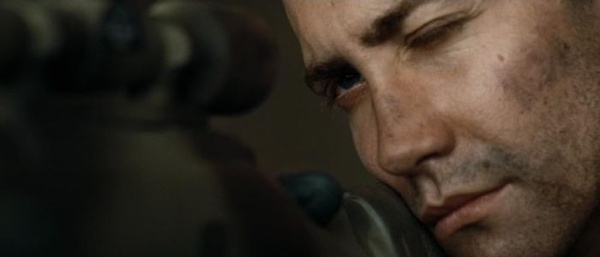
Portrayed by an intense Jake Gyllenhaal, the protagonist is a sniper who, along with his observer, is trained to the point of obsession and then deprived of the very possibility of truly being a protagonist. His war is exhausting and does not even involve a single shot. It is here that Jarhead finds its strength: in the contradiction between extreme preparation and ultimate futility, between military discipline and a total lack of meaning.
War between suspension and madness
Mendes depicts a group of young soldiers suspended in a limbo of unbearable heat, boredom, repetitive rituals, sexual frustrations, and forced friendships. There are no heroes, grand actions, or patriotic rhetoric. Only ordinary men trying to make sense of what they are experiencing. The relationship between Swofford and his spotter Troy (Peter Sarsgaard) becomes the emotional heart of the film, especially in the key scene where the pair is denied the shot that would give meaning to an endless wait.
Visually powerful, Jarhead is an existential rather than a war film, closer in spirit to Camus than to classic war movies. It tells of a war without glory, where the true enemy is emptiness, where all that remains are personal stories, inevitably important to those who lived them, even if the rest of the world remains indifferent.
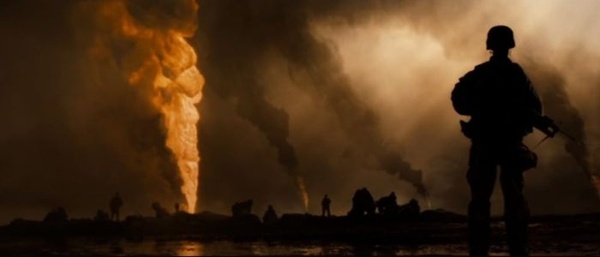
Shot on analog 35mm (Arricam LT, Arriflex 35-IIIC) on 500 ASA negative with high light sensitivity, which contributed to a certain background grain and a greater sense of environmental presence, especially when the narrative moves to the Kuwaiti desert. Original image format 2.35:1 (3840 x 2160/23.97p), HEVC encoding on a BD-100 triple layer disc.
With Dolby Vision and a native 4K master, we have the necessary foundation to enhance the spectacular cinematography of Master Roger Deakins, who would later return to oversee lighting and colors for Mendes on 007 – Skyfall. Intense chromatics, deep blacks for a nearly excellent result, with the exception of minimal banding on the brighter orange tones in shots depicting the burning oil wells at night.
For audio, the "old" DTS lossy 5.1 (754 kbps, 24 bit) Italian track from the 2K Blu-ray (BD-50, VC-1) is included here. Despite the impossibility of reaching reference peaks, this is a track that favors viewing on a true HT system with separate speakers, offering a wide soundstage with explosions, hisses, and jets rapidly moving laterally and front-to-back. The original Dolby TrueHD 7.1 with ATMOS objects (16 bit) is superior, opening up an even more immersive soundscape: deeper bass, even more pronounced dialogue, and more substantial discrete elements. On the BD-50, we find the English DTS-HD MA 5.1 (24 bit) instead.
The extras on the Jarhead 4K disc (all previously released) are rich and designed to offer multiple levels of interpretation, covering creative, production, human, and historical aspects.
"Swoff’s Fantasies" collects 4 clips, with optional commentary by the director and editor, which expand the protagonist's inner world. The complete interviews with the Marines, also with optional commentary by Sam Mendes and editor Walter Murch, allow viewers to see the full material only partially used in the film.
There are 11 deleted scenes from the final cut. The documentaries "Jarhead Diaries" (31') and "Background" (31') offer a behind-the-scenes look and material shot by the actors. "Semper Fi: Life After the Corps" is perhaps the most touching content: through interviews and archival material, it explores the difficulties veterans face returning to civilian life. The picture is completed by the audio commentaries: one by Sam Mendes, detailed and analytical on the directorial level, and one with screenwriter William Broyles Jr. and Anthony Swofford, more autobiographical and reflective. Italian subtitles are available everywhere.
Similar articles