Fable: Choices Won't Change Appearance
Farewell to one of the brand's most distinctive features
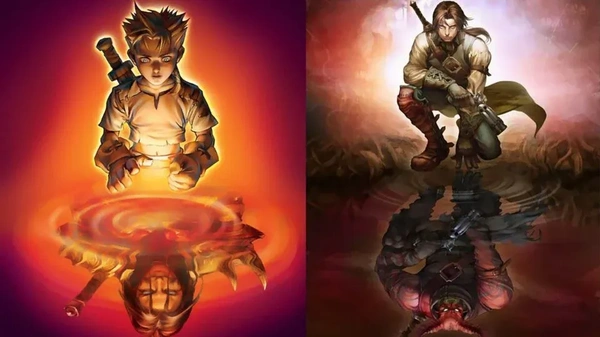


Fable is making a comeback, as you probably already know if you've even fleetingly glanced at the announcement from Microsoft and Playground Games. The RPG – originally conceived by Peter Molyneux and Lionhead Studios – is preparing for a new beginning that will completely detach from the original saga.
Immediately after the announcement and the presentation of the first in-game images, many long-time fans bombarded the developers with questions about what would be in the game and what, instead, would not find a place. One of the features many focused on was the fact that in the saga, the protagonist's moral choices would alter their external appearance, making them progressively more "angelic" if they opted for good or more "diabolical" if they turned to evil.
Well, on this point, Playground Games has decided to make a clean break with the past: interviewed on the subject by colleagues at IGN, spokesperson Ralph Fulton replied:
"That kind of character transformation was obviously a core part of the original games. It's not in ours, and I'll explain why: there are probably two main reasons. The first: I guess at a high-level principle, there isn't an objective good and evil. In the original games, it preached the existence of objective good and evil, and the player was judged on that scale, with their appearance adapting accordingly. But for us, it doesn't work: our moral system absolutely doesn't work that way. You will be different things to different people based on what you do and what they value. So that's one reason why it can't work."
"There's a second reason – Fulton continues – which is that in our game, you'll build your reputation based on the settlements, villages, and towns you're in, the part of the world you're in. But when you go to a new place, a place you've never been before, you arrive without any reputation and without anyone knowing what to think of you. And you can, with your actions, with your choices, form completely different reputations, completely different identities. And you can do that in all locations of the game. You couldn't do that if you arrived with horns and a trident: your reputation would precede you. And honestly, the ability to have full control over your identities and what people think of you seems much more important to us than that historical feature. So, as well as it worked in those games, it doesn't have a place in ours."
Fulton's motivations are quite solid, and after all, the good-evil dichotomy is a classic of creator Molyneux, who, for example, built a large part of his masterpiece Black & White on it. Nevertheless, several fans of the Fable saga have turned up their noses at these statements, complaining that appearing as an angel or a devil based on one's choices was – even – the most important and characteristic element of the game.
Fable is in development for PC, PS5, and Xbox Series X/S with a release set for Autumn 2026.
Similar articles