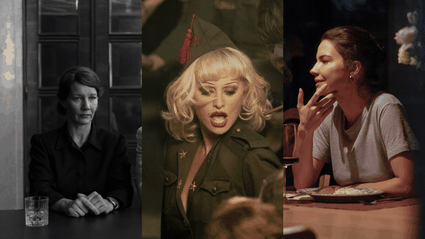
Who will win in Venice? The most difficult Golden Lion predictions in a year rich with great films
After a Venice rich with excellent films, the race for the Golden Lion becomes a choice of alignment: is it better to prioritize cinephilia or politics?


This year's predictions from the Venice Lido are more difficult than usual for the press. While in other years the exercise was to narrow down the deserving titles and distribute them into the correct slots on the awards list, the overabundance of high, sometimes very high-level films seen during this Festival makes it particularly difficult to determine who will win. There are a handful of films whose ultimate victory would be hard to dispute, and preferring one over another, more than a judgment of quality, this time is a choice of alignment. All the favorites deserve to win, for different reasons: it's up to the jurors to understand which elements to prioritize in their choice.
A few hours before the awards ceremony, therefore, there isn't a clear favorite this time, because there are at least four strong titles fighting shoulder to shoulder for the win. Much will depend on how politically exposed the jury wants to be and how much, instead, it will weigh the intrinsic artistic value of the works, perhaps at the expense of the messages they carry.
A year without a true favorite, because there are many contenders
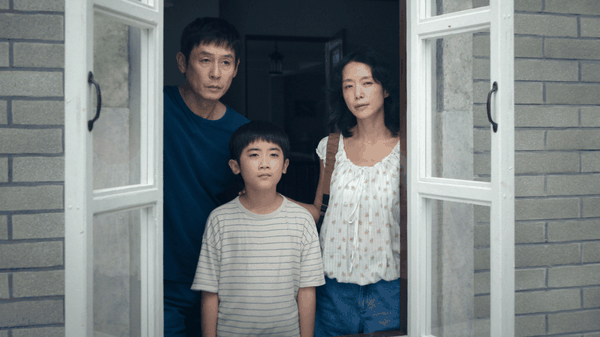
If Gyllenhaal and her team decide to award the Lion to a film that expresses the highest artistic quality seen at the Lido and the ability to innovate in cinema, there are two great auteur films that could win. Last-minute rumors give a slight edge to the Korean film Possible Love by Lee Chang-dong: a monumental film of almost three hours, produced by Netflix with a quartet of great Korean stars as protagonists, which the director of Burning has planned and realized, dedicating the last ten years of his career to it. Reviews are exceptional, and the film also has the advantage of speaking, but not only, about a world of work increasingly hostile to the working classes, while a few rich people live sheltered from the consequences of financial speculation.
Even more monumental and daring is the Russian Dau by Ilya Khrzhanovsky, a director who has dedicated over twenty years to this gigantic project, repeatedly called "the European Brutalist" or "the Soviet Oppenheimer." The film, the last of a dozen experimental films edited from over three years of footage shot in a citadel built in Ukraine, tells the life of Nobel laureate in physics Lev Landau, one of the scientists involved in the Soviet atomic program. Dau is a grand historical fresco and a visionary film, which traces the genius and recklessness of its protagonist, as well as being a complex and brutal account of the violence and repression exercised by the Soviet regime on the world of science and on the protagonist himself.
Slightly behind in qualitative terms, but decidedly more commercial and no less exciting, is Wild Horse Nine by Martin McDonagh, who presents his most mature and solid film after the highly successful Venetian runs of Three Billboards Outside Ebbing, Missouri and The Banshees of Inisherin. Even in this black comedy, on closer inspection, there is a harsh condemnation of a government that manipulates the lives of its citizens: the American one, whose interference in Allende's Chile on the eve of Pinochet's coup and the establishment of the US-backed military dictatorship is reconstructed. The film has been much discussed, not only for its great writing and fascinating setting on Easter Island, but also for John Malkovich's great twilight performance, which already seems headed for the Oscar race.
If the Golden Lion becomes a political choice
However, if the jury also wanted to emphasize a strong political message, it could converge on the title that garnered something like twenty-five minutes of applause: NAZA by Yuval Abraham and Rachel Szor, a chilling journalistic report that reconstructs the genocide in Palestine through the voices of members of the Israeli military and intelligence apparatus, interviewed on the rooftops of Tel Aviv as they recount the mechanisms and tactics employed by the IDF in the war in Gaza.
It is not often that the final victory goes to such politically aligned and polarizing titles. If the jury were to split between supporters of the artistic option and those of the political message, as often happens, it could instead try to reach a compromise solution, breaking out of mutual cross-vetoes with a film as neutral as possible, which everyone agrees on as a second or third choice. Look Back by Hirokazu Koreeda, a delicate coming-of-age drama that tells the friendship of two Japanese girls united by their passion and dream of becoming professional manga authors, is the most emotionally powerful and moving film of the edition and could really bring everyone together. If, however, the Festival continues to prove gerontophilic as it has been in recent years, the surprise could come from Werner Herzog, the great documentarian who returned to fiction with Bucking Fastard: an imperfect film, yes, but with a big heart and great imagination, which could prove to be the right occasion to honor the master.
Not just the Lion: all the other awards to be assigned
According to these predictions, Italy and France would be out of the running for the most important awards, but it should not be forgotten that this discussion is only applicable to the Golden Lion and its possible winners. There is a whole awards list to fill, where the ambitions of the performers with the Volpi Cups will inevitably also come into play. This could be one of the biggest obstacles to a Lion for McDonagh: Malkovich indeed seems the natural winner of the Best Actor Volpi Cup, and even if the rules exceptionally allow the award to be combined with the Golden Lion, it would require the jury's unanimity to do so.
Then there is the Marcello Mastroianni Award for young performers, which seems almost a done deal for one of the young girls starring in Look Back. If NAZA proves too political to win the Golden Lion, it could become an excellent candidate for the Silver Lion - Grand Jury Prize, as The Voice of Hind Rajab was last year. Dau, on the other hand, could become a deserved Special Jury Prize for a film against which, at the beginning of the Festival, a formal protest was lodged by the Ukrainian authorities for its presence in competition.
Without forgetting, of course, that the jury might have focused its attention on some title overlooked by the press, throwing all these predictions into disarray. We will find out in a few hours in the Sala Grande, where the winner of the 83rd edition of the Venice Film Festival will be crowned.
Similar articles
The Drama will be compared to many films, but the one it most resembles is our own Perfect Strangers
Paramount Promises 30 Films a Year if Warner Bros. Acquisition Goes Through
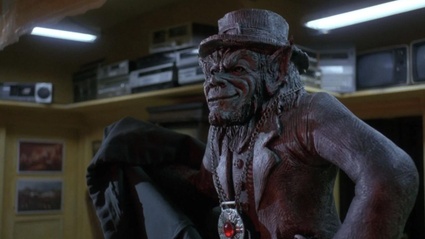
The evil leprechaun returns to cinema: who will write the new film