Bruce Dickinson on Burning Ambition: "The Iron Maiden documentary almost didn't work"
Between ambition, hard work, and absolute devotion to live performance, Iron Maiden: Burning Ambition chronicles forty years of Iron Maiden without turning them into monuments.
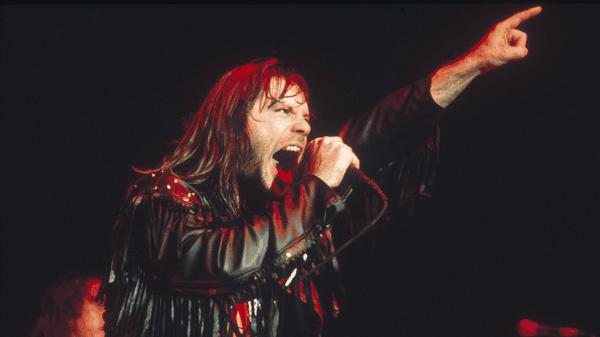


Once they decided to tell their story in a documentary, they who are proverbially reluctant (almost hostile) to media attention, Iron Maiden wanted to go all the way. To photographer and director Malcolm Venville (one with a curious portfolio, leaning more towards westerns than music, documentaries, or metal) the band gave unprecedented access to the group's official archives. Yet the doc doesn't start with some rare unreleased clip, from recordings of their first performances in the ramshackle pubs of Leyton, an East London borough. Concerts put on starting in 1975 at the initiative of Steve Harris, in a working-class, poor, gloomy area of the capital. There would later be performances at the Cart and Horses, a Stratford pub closely linked to the band, and at the Ruskin Arms in Bayswater, where those who saw them live swear they were already a musical bomb ready to explode.
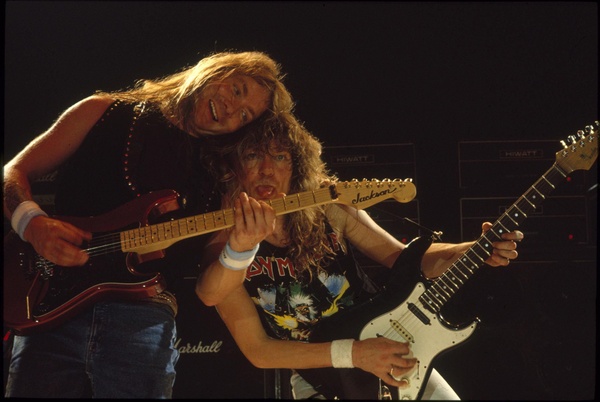
Among these witnesses is also the current frontman and vocalist of the group, Bruce Dickinson, tasked with a battery of promotional activities that the band tends to be reluctant about. When I ask him if he can still remember that first time under the stage with Iron Maiden, still as a spectator, he nods and gives me a taste of that burning ambition that seems to still blaze more than forty years after the band's debut. Some members have left the lineup, others have died, but they are still there on stage, playing live that immense heavy metal repertoire around which they have built one of the most loyal followings in the music scene. Dickinson understood it first: when he heard them play in East London, he knew he wanted to be part of that something, to play with them.
He continues to do so, between breaks and solo careers, three decades later. Malcolm Venville mixes ordinary fans who follow the band for multiple stops (as many as their financial means allow) and unsuspected celebrities who are "Maidenists" to the core: Jack Black of course, but also fellow actor Javier Bardem. There are also musical colleagues like Lars Ulrich, in a doc that is both an introduction to the band's myth for those who don't yet know them and a celebration of a group of musicians who emerged from a complicated reality and are eager to remain grounded and popular in the most authentic sense of the term, even when everything around them in the world of music (and geopolitics) has changed.
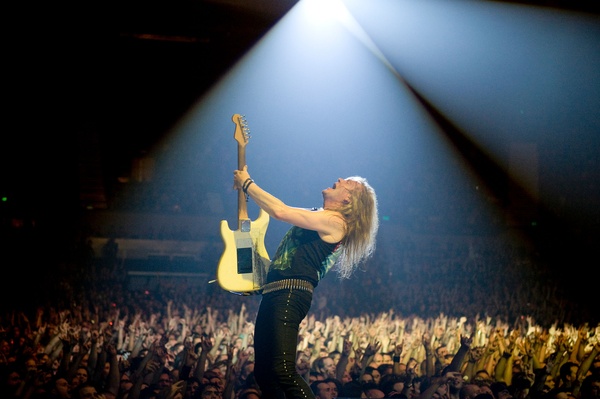
First, I'd like to ask you about your 1984 tour in Poland, in the midst of the Cold War. You talk about it in the doc as a unique moment, a goal achieved with no small difficulty. What did that experience leave you with? Bruce Dickinson – It was a peculiar situation. Few Western bands played beyond the Iron Curtain, and often these were events heavily controlled by authorities, with a tense atmosphere. When we went, there seemed to be a kind of revolution in the air, even if we didn't realize it: we understood later that these were the harbingers of what would happen in 1989. Shortly after, in fact, the whole system collapsed. At the time there was a strong need for escape from a very oppressive reality: it was clearly perceptible playing in front of that audience. An audience that theoretically had no way of knowing us, our music was not sold in the USSR. The incredible thing was the way our music circulated: pirated cassettes passed from hand to hand, with the risk of ending up in prison if you were caught listening to or duplicating one with a tape recorder. It was truly an authentic underground and remains one of the most emotional memories related to the band for me.
What is the funniest and most tragic moment in the film, in your opinion? Bruce Dickinson – The most tragic moments are linked to the passing of people like Paul Di’Anno and Clive Burr: they died far too young, it's hard to accept even today. It seems incredible, but we palpably miss them both on stage and when we're working on new songs.
As for the funny ones, there are several and some even made it into the doc. Often I say some nonsense with great confidence, like "you can't make heavy metal with synthesizers" and the others laugh at the conviction with which I say it.
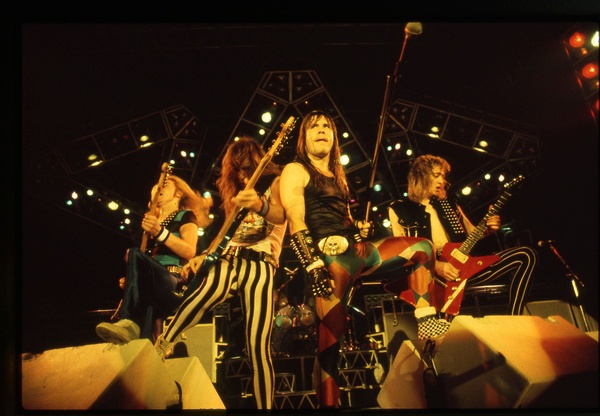
In the film, someone says that in the 80s you were the most suitable person for "world conquest". What drove you then? Bruce Dickinson – You know, I was young. Back then I simply wanted to be in the best rock and roll band in the world. For me, Iron Maiden had to be that band and I tried in every way to lead them to that goal: we put in so much effort, for years, without holding back. Writing songs, pushing the limits, seeing how far we could go.
Now, when I look back, I think that both the mistakes we made and the choices we got right are products of that attitude, which all in all was right for that era, for that age. I was twenty-four, always full of energy. So much so that I think it shows in the doc too.
Let's talk about the fans. The documentary opens with their stories. Not just ordinary people: there are fans and colleagues like Gene Simmons or Javier Bardem. How important is this recognition to you? Bruce Dickinson – It was fantastic, really, and not for flattery. For me, the best moment is Javier Bardem reciting the lyrics of "Run to the Hills" as if it were a poem: amazing. It makes you realize how good he is as an actor, but also that we've written some truly remarkable lyrics over the years.
Not to fall into the stereotype of the difficult heavy metal band, but I know there were many criticisms from you regarding the first version of the doc, so much so that you vetoed it. Do you confirm?
Bruce Dickinson – I'd say so. I only saw the film when it was practically completed. To be honest, my concerns weren't so much about the content as about the editing, especially in the initial part. And it wasn't even an issue related to the director, Malcolm: a lot depended on the record label. I made some notes on the narrative structure and, quite interestingly, they almost perfectly coincided with those Steve had separately pointed out, as well as with the impressions of Ben Smallwood, who creatively supervised the project. Ben then confided to us that he was almost relieved to see those observations shared, because he finally had solid arguments to go back to the production and explain that the film needed to be re-edited differently. It wasn't necessary to eliminate scenes or material, but the first segment felt disjointed. Just a few changes in the order and way of presenting certain parts would make the story much more effective.
What was it that was really wrong?
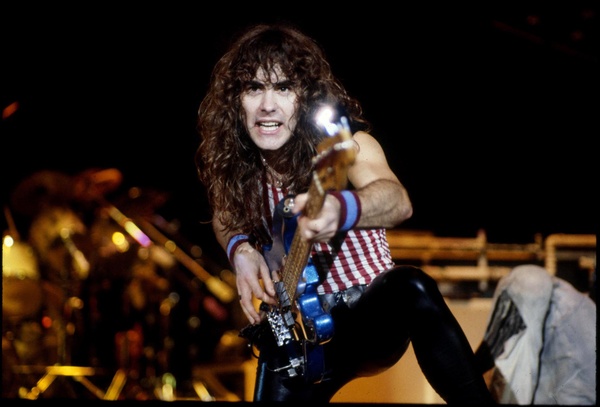
Bruce Dickinson – I kept wondering what had happened to Clive Burr. When I joined Iron Maiden with The Number of the Beast, Clive was a fundamental presence, and yet in the first version of the documentary he barely appeared. I insisted that he be given more space. I think those who don't follow Iron Maiden closely find it hard to understand how strong the emotional ties are with figures like Clive or Paul Di’Anno. Even if they hadn't been in the band for years, and unfortunately are no longer with us today, they remain very important people to the fans.
Similar articles