Promises and Dilution: The Ashes of Creation Case
An analysis of Intrepid Studios' project: why the "node system" and Steven Sharif's promises continue to divide the community.


The genesis of Ashes of Creation is inseparable from the historical context in which it was born.
The 2017 Kickstarter arrived at a time of profound crisis for MMORPGs, crushed between aggressive free-to-play models, designed seasonal content, and a progressive loss of genre identity. World of Warcraft had long been trapped in the logic of serial expansions and daily quests, Black Desert had normalized a microtransaction system that was far from insignificant, while projects like Bless Online or ArcheAge embodied yet another unfulfilled promise of a “next-gen MMO” quickly hollowed out by predatory design. The genre survived, but appeared devoid of creative momentum, fragmented, and increasingly hostage to ruthless retention metrics. A shake-up was needed.
The Three-Card Monte Game
Into this void, Intrepid Studios presented itself as an ideological correction to the course of events: an MMO “like the old days,” technologically advanced, player-governed, hostile to stagnation and prefabricated solutions. The crowdfunding campaign quickly surpassed all expectations, raising over three million dollars and positioning itself among the most funded independent video game projects of the era. The popular acclaim spoke of economic success, but above all, the spread of an anti-establishment narrative that propagated like wildfire on the official subreddit. Ashes of Creation was perceived as a manifesto, an act of resistance against the profit-oriented flattening of the genre.
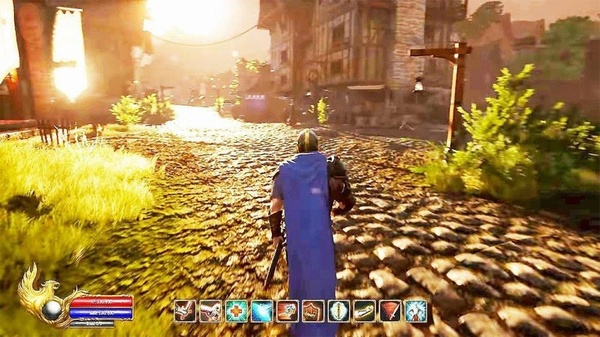
Where there were pervasive microtransactions, paid boosts, and systems designed exclusively to monetize frustration, Ashes promised an ethical model, cosmetic-centric, and free from any form of pay-to-win. Where other MMOs froze the game world in repeatable scripts, Intrepid proposed dynamic nodes, cities that rise and fall, emergent economies, and politics entirely in the hands of players. This surge in popularity was not an anomaly, but the direct consequence of a supply vacuum: the project unequivocally presented itself as a systemic response to widespread fatigue.
It was a totalizing vision that, from the outset, required resources, time, and AAA studio expertise, while maintaining a rhetoric of independence and an almost symbiotic proximity to the community. Already at this stage, however, the first signs of a structural disproportion emerged: the campaign's stretch goals, easily reached, added to a list of extremely complex features to coexist. Player-driven economy systems, active politics, seamless intertwining of PvP and PvE, and territories capable of organically changing based on collective actions all appeared. Reviewed with 2026 eyes, this vision appears more like a wishlist drafted to impress during a preliminary pitch, rather than a project plan to be progressively scaled down during implementation. This, in Ashes' development, would never happen: ambitions were not calibrated within a general framework, but remained unaltered, as if capital and time were elastic and potentially infinite resources.
The Long and Winding Road
Development proceeded fragmentarily and slowed almost immediately, without ever losing that media spotlight constantly pointed at Intrepid. Weekly livestreams, closed tests, technical showcases, and new cosmetic packs became the center of the experience for a community increasingly involved emotionally and financially. Updates multiplied, but progressively became more intangible, until in the eyes of the mainstream public, the game stopped being driven by its potential quality and began to gravitate into the same gray area as numerous “fluff projects” that had passed through the green-and-white site. As seen in similar cases, the constant visibility of the development process did not coincide with real progress towards release, but ended up normalizing the idea of a permanently unfinished work.
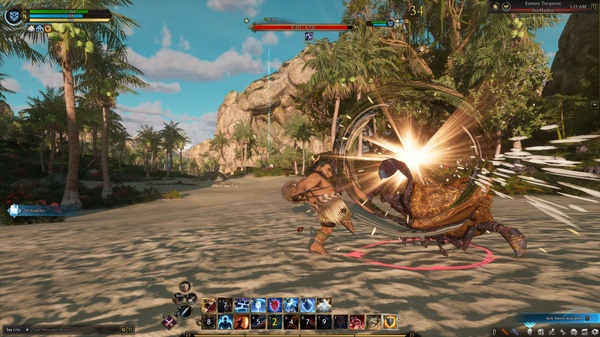
Ashes of Creation accumulated dozens of public updates between pre-alpha, alpha 0, and alpha 1, with an irregular but continuous cadence for several years. According to one estimate, there were over 80–100 updates including patches, builds, and showcases, without any marking a true phase transition. Each version introduced new mechanics, but rarely consolidated existing ones. The project grew in scope, layering designs that would require systemic refinement incompatible with the declared timelines. It was a dynamic already observed in other famous cases: titles that try to regain trust by continuously relaunching the horizon, without ever truly closing the loop.
The breaking point came with early access, when the game finally became accessible to a wider audience. The asymmetry between promise and reality could no longer be mediated by promotional language. Widespread bugs, instability, incomplete systems, and a structure still clearly in an embryonic stage made evident what had remained abstract for years: Ashes of Creation was a project weighed down by years of undigested additions, lacking a solid backbone. After almost a decade of development and an impressive fundraising, early access appeared as an attempt at economic recovery during a phase of evident difficulty. After a debut with over 30,000 concurrent players, the current player count seems to have stabilized at a plateau of a few hundred users, partially attributable to bots. A decade-long journey that, instead of approaching a complete form, demanded further credit to survive. A project that chose never to reduce its ambition, trusting that the promise, reiterated long enough, could replace delivery.
Pyramids and Trapezes
What we are facing today is a Frankenstein's monster without a creator.
A situation that definitively exploded with the departure of the old guard who first sold Ashes of Creation to backers. In the public narrative, Steven Sharif had always been presented as the heart and mind of Intrepid Studios: founder, CEO, and the face of the monthly livestreams that for years kept communication with the community alive. He was the one who raised millions through Kickstarter and subsequent campaigns, repeatedly stating that the title had no external investors and that development was “totally self-funded,” safe from venture capital or corporate pressures on creative choices. His resignation, announced on January 31, 2026, broke this narrative.
Sharif spoke of control “passed to the board” and declared that he could no longer ethically support the decisions made by that governance structure. A version that directly conflicted with corporate documents published at the end of 2025, in which Sharif appeared as the sole member of the board of directors, with John Moore as president and COO, with no trace of third-party entities capable of ousting him. Where, then, did this alleged loss of control come from?
Despite the substantial grassroots fundraising, Intrepid had long appeared to be in difficulty, with accumulated debts that, according to reconstructions, could amount to several million dollars. It was in this context that a figure previously on the margins of public discourse appeared: Karen L. Boreyko. Boreyko's name appeared in documents related to debt management and asset control, entering the story through a UCC lien procedure, a US legal instrument that allows a creditor to tie a debtor's assets as collateral for repayment. In practice, a form of control that can translate into indirect decision-making power over the company without formal acquisitions. The profile is particularly controversial: Karen Boreyko is co-founder of Vemma Nutrition Company, a nutritional supplement company based on a multi-level marketing model and which ended up at the center of a federal lawsuit with the Federal Trade Commission.
In 2016, Vemma and its executives agreed to a court order banning them from pursuing further pyramid schemes and deceptive claims about associate earnings, combined with multi-million dollar penalties that led to their closure. To these shadows are added further legal problems that emerged close to the collapse: in December 2025, a lawsuit was filed against Intrepid for approximately $850,000 in unpaid cloud services, accompanied by demands for payment for overdue insurance premiums, possible tax irregularities, and informal reports of unpaid salaries to some staff.
Defining Ashes of Creation as a scam, however, risks flattening a more complex story. What is emerging is rather a managerial collapse, where project ambition was never supported by an adequate organizational structure. It is the paradox of the indie that wants to operate like an AAA without accepting its constraints, while maintaining an emotional and personal communication that makes any form of formal responsibility difficult. The collateral effect is broader than the single episode: Ashes of Creation further erodes trust in an entire segment of the industry, making user-funded projects based on years of patience, upfront funds, and ideological adherence increasingly suspect.
Every protracted development is now read through this lens, as part of a model that normalizes incompleteness. In this sense, the case is not isolated but symptomatic of a broader drift, where early access stops being a tool and becomes a permanent condition. Its impact, however, is already evident, as a concrete example of what happens when promise replaces project and narrative takes the place of structure. The scandal, if it should materialize as such, concerns the very ecosystem that made this type of time-diluted failure possible, and even desirable.
BIBLIOGRAPHIC REFERENCES
- Ashes of Creation: Was it a Scam from the Beginning?
- Ashes of Creation Faces Uncertain Future Amid Leadership Exodus
- Ashes of Creation Has Poisoned the Well for Indie Devs
- Ashes of Creation Is a Scam – Here Is Some Evidence
- Ashes of Creation: I Played a Scam Game for 100 Hours
- Ashes of Creation’s Downfall Exposed: Lawsuits, Unpaid Debts, and Rug Pull Accusations Grow
- Facebook Group Discussion on Ashes of Creation
- Is Ashes of Creation a Scam?
- News: Ashes of Creation Purchase
- Newly Released MMO Ashes of Creation Left in Tatters as Senior Team Quits and Management Issues Mount
- Saying Ashes of Creation Is a Scam Is Giving…
- Vemma Reaches Settlement Agreement in FTC Pyramid Case
Similar articles